


This article was automatically translated from the original Turkish version.
+1 More
Direct current (abbreviated as DC in English and DA in Turkish) is a type of electric current in which electric charges (typically electrons) flow in a single direction without changing direction over time. In an ideal direct current source, both the magnitude of the current and the voltage remain constant over time. This unidirectional and constant flow is the fundamental characteristic that distinguishes direct current from alternating current (AC), in which both direction and magnitude vary periodically.
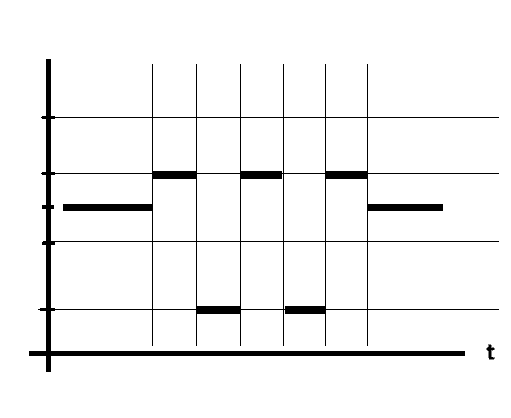
Representation of direct current signal over time (Image: Mikdat Ramazan Köşker)
A historical note on current direction: Before the discovery of electrons, scientists such as Benjamin Franklin assumed that current flowed from positive (+) to negative (-) charges. This “conventional current direction” is still used in many circuit diagrams and analyses. However, in physical reality, the charge carriers in metallic conductors—electrons—move from the negative (-) terminal to the positive (+) terminal. While this distinction does not affect analytical methods, it is important for understanding the underlying physical process.
One of the pioneers of practical applications of direct current was Thomas Edison. In the late 19th century, Edison made significant contributions to the development and widespread adoption of DC-based systems, particularly for electric lighting. Although DC is defined as a steady flow, even the most stable practical DC sources, such as batteries, can exhibit small voltage variations over time or under load. DC obtained from other sources, such as rectified AC, often requires additional filtering to achieve ideal stability. This illustrates that the definition of DC describes an ideal condition, while practical implementations approximate this ideal to varying degrees.
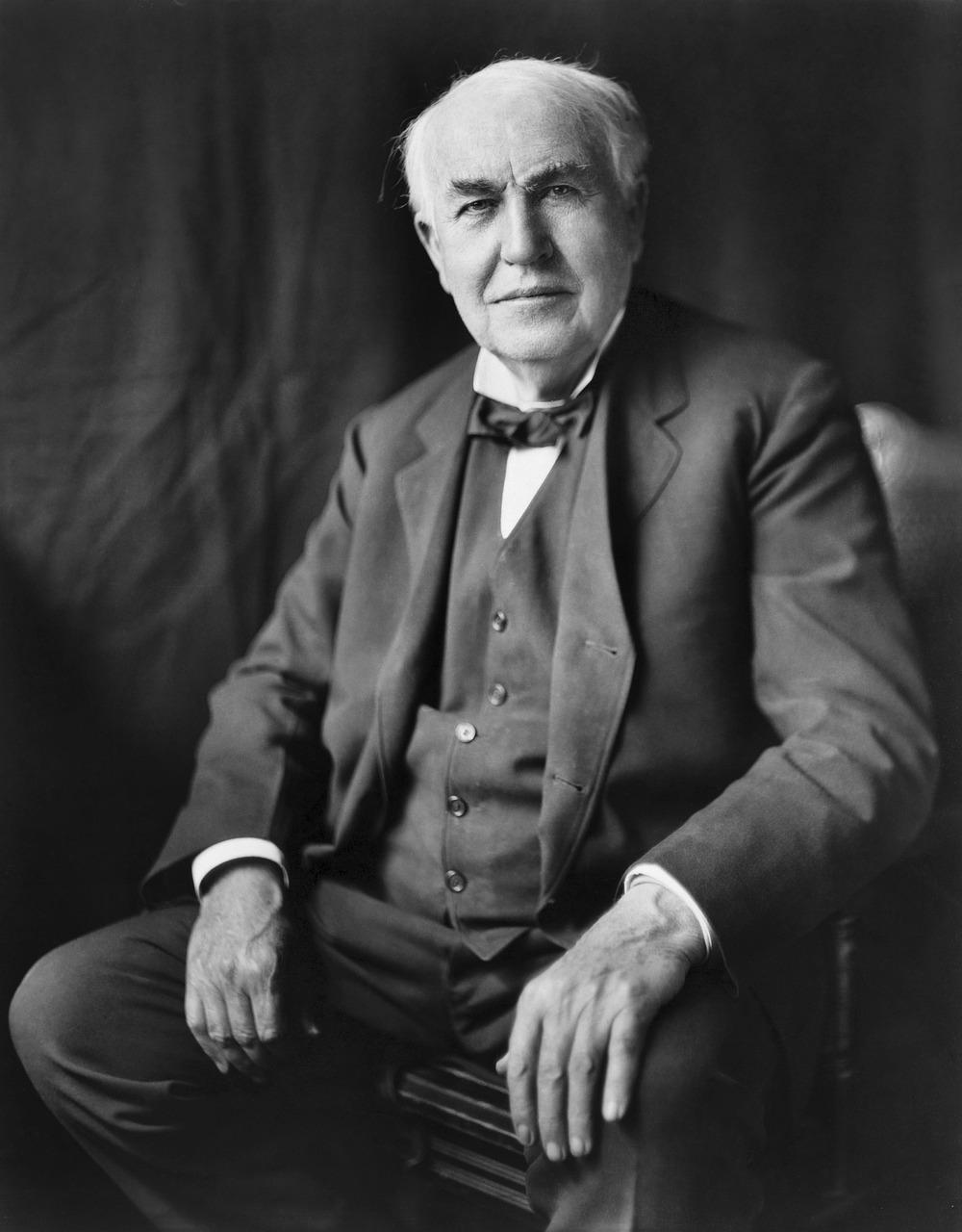
Thomas Alva Edison (ABD Kongre Kütüphanesi)
Direct current (DC) does not occur naturally and must be generated by converting other forms of energy. DC sources are broadly classified into two categories:
DC generation relies on the controlled conversion of chemical, light, or mechanical energy into a unidirectional electric current.
The analysis and understanding of direct current circuits are based on several fundamental principles:

Direct current symbol [Unicode U+2393 (⎓)]
Direct current plays a critical role in many areas of modern technology:
These applications demonstrate that DC not only forms the foundation of low-power portable technologies but also provides critical solutions for specialized high-power transmission scenarios. Stable, low-voltage power for electronic devices is supplied by batteries (DC), while technical challenges associated with AC transmission over very long distances (reactive power, stability) can be overcome using HVDC.
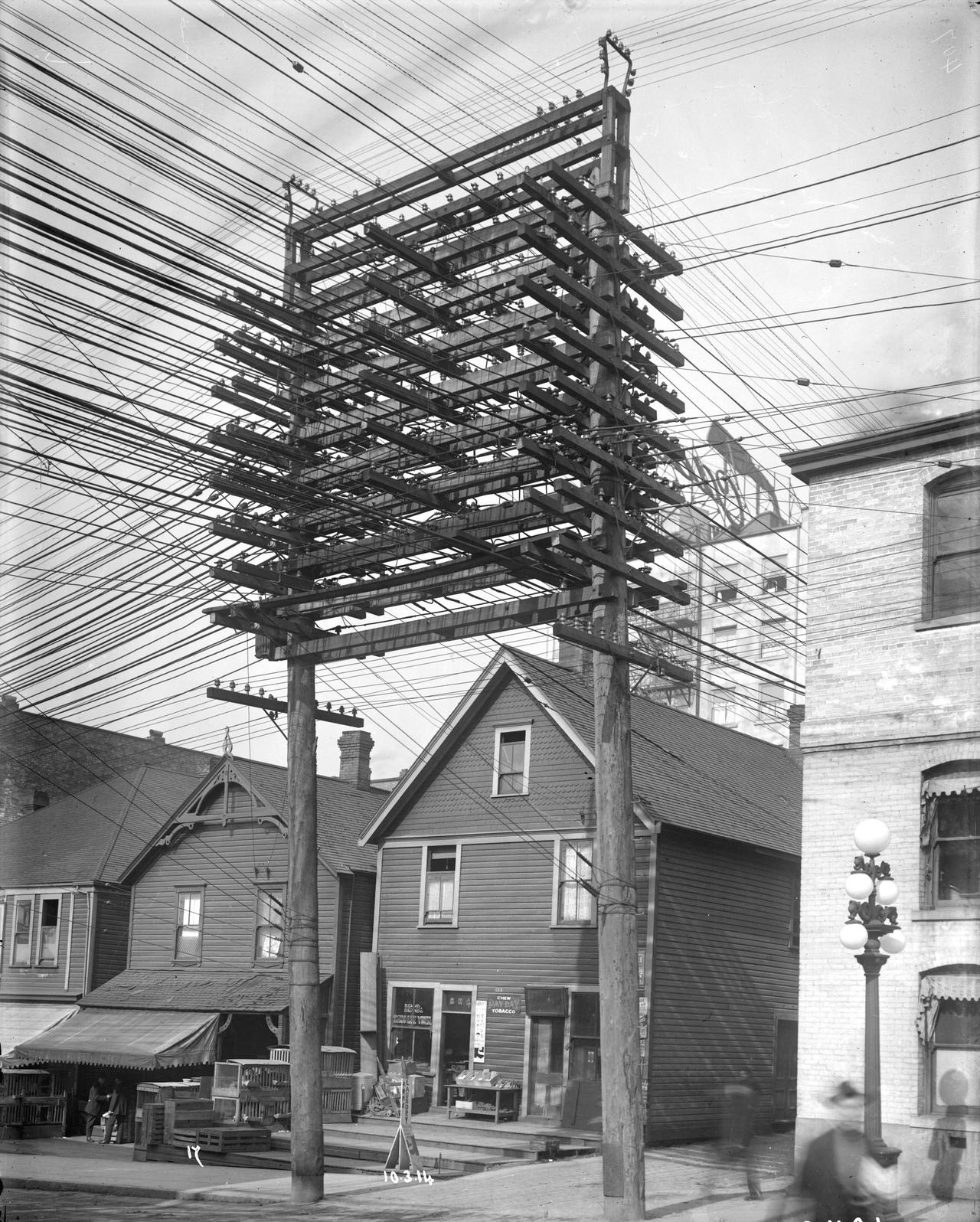
Direct current power lines (Source: AM54-S4-: LGN 1241 Vancouver Şehri Arşivleri)
DC and AC are the two fundamental forms of electricity and differ significantly:
The fundamental difference lies in the direction of flow. The ability of AC voltage to be easily stepped up or down using transformers provides a significant advantage for long-distance energy transmission. Increasing voltage to reduce current minimizes I2R losses in transmission lines. For this reason, global electrical grids are predominantly AC-based. However, when technical challenges of AC transmission over very long distances or undersea cables increase—such as reactive power losses—HVDC becomes a more efficient alternative. Energy storage is possible only in DC form.
Direct current is a type of current in which electric charges flow in a single direction and whose magnitude remains constant (ideally). Despite the dominance of alternating current in electrical grids, DC has become ubiquitous in modern life. Its role in powering all portable electronic devices, enabling energy storage in batteries, forming the basis of electric vehicles, directly generating electricity from solar energy, and providing specialized solutions like HVDC for long-distance power transmission, clearly demonstrates its indispensable role.
Adedayo, A. A., et al. "Improvement in battery technologies as panacea for renewable energy crisis." *Scientific African* 26 (2024): e02197.https://doi.org/10.1016/j.sciaf.2024.e02197
DHMI (Devlet Hava Meydanları İşletmesi). "Elektrik Mühendisliği." Accessed April 24, 2025. (https://www.dhmi.gov.tr/PublishingImages/Lists/Duyurular/NewForm/4-%20Elektrik%20M%C3%BChendisli%C4%9Fi.pdf)
EBA Kitap. "Elektrik ve Elektronik Esasları." Accessed April 24, 2025.https://kitap.eba.gov.tr/panel/dosyalar/upload/1674/0/U_0_28_06_2021_9_34_16_784.pdf
ETMD (Elektrik Tesisat Mühendisleri Derneği). "Doğru Akım Nedir?" Accessed April 24, 2025.https://www.etmd.org.tr/dogru-akim-nedir/
MEGEP (Mesleki ve Teknik Eğitim Genel Müdürlüğü). "Doğru Akım Esasları." 2018. (https://megep.meb.gov.tr/mte_program_modul/moduller/Do%C4%9Fru%20Ak%C4%B1m%20Esaslar%C4%B1.pdf)
OMU AVYS. "Doğru Akım Generatörleri." December 20, 2010. (https://avys.omu.edu.tr/storage/app/public/atalayt/132892/dogruak%C4%B1mgenerator.pdf)
Tarih Dergi. "Alternatif Akım ile Doğru Akım Arasında Elektrikli Bir Mücadele." Accessed April 24, 2025.https://tarihdergi.com/alternatif-akim-ile-dogru-akim-arasinda-elektrikli-bir-mucadele/
TÜBİTAK Bilim Genç. "Yenilenebilir Enerji Kaynakları: Güneş Enerjisi Nedir? Nasıl Elde Edilir?" February 4, 2025.https://bilimgenc.tubitak.gov.tr/makale/yenilenebilir-enerji-kaynaklari-gunes-enerjisi-nedir-nasil-elde-edilir
TÜBİTAK Yayınları. "Enerji Teknolojileri Lise." February 16, 2024.https://yayinlar.tubitak.gov.tr/themes/classic/assets/img/dummies/pdf/12_enerji_teknolojileri_lise_16022024.pdf

Generation and Sources of Direct Current
Direct Generation Sources
Sources Obtained via Conversion
Fundamental Principles and Characteristics
Applications of Direct Current
Comparison of Direct Current (DC) and Alternating Current (AC)