


This article was automatically translated from the original Turkish version.
+1 More
A battery is an energy storage unit that stores electrical energy as chemical energy and converts it back into electrical energy to power devices when needed. In today’s world, devices used across all areas of technology make life more comfortable and accessible, and batteries serve as one of the fundamental components meeting the energy demands of these systems. With applications ranging from smartphones and laptops to electric vehicles and renewable energy storage systems, batteries have become a fundamental element of modern life.
A battery is an electrochemical device that converts chemical energy into electrical energy. A battery consists of fundamental components such as electrodes (anode and cathode), electrolyte, and separator. Energy conversion occurs through ion transfer between the anode and cathode.
Batteries are generally classified into two main categories:
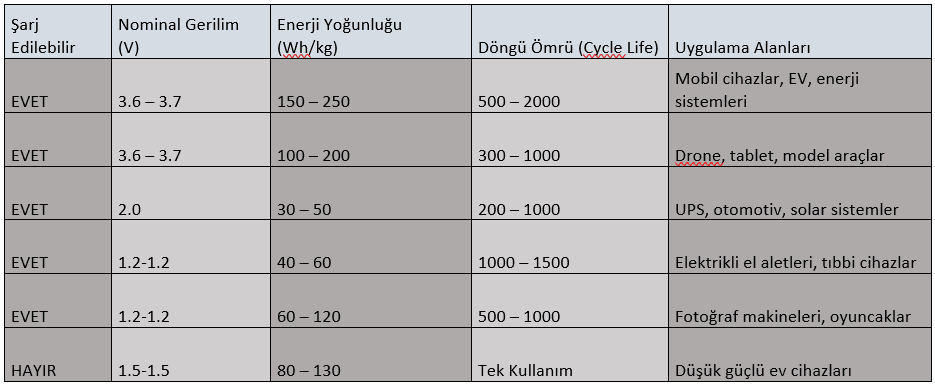
Battery technologies vary depending on the application scenario. The table below presents a comparative overview of the technical characteristics of common battery types:
The history of the battery is rooted in significant scientific developments related to the discovery and storage of electricity. The earliest structures resembling batteries date back to ancient times. An artifact discovered in Iraq in the 1930s and known as the Baghdad Battery has been considered by some researchers as a primitive battery, but no definitive evidence supports this claim. The real breakthrough began in 1800 with Alessandro Volta’s invention of the voltaic pile using zinc and copper plates. This was the first system to generate a continuous electric current and greatly expanded the applications of electricity.
In 1836, John Frederic Daniell improved Volta’s battery by making it more stable, developing the Daniell cell, which became widely used in telegraph networks. In 1859, Gaston Planté invented the first rechargeable battery, the lead-acid battery, a technology that forms the basis of modern automotive batteries. In 1866, Georges Leclanché developed the dry cell, which laid the foundation for modern zinc-carbon batteries.
During the 20th century, batteries designed for portable devices began to be developed. In the 1980s, the invention of lithium-ion batteries provided high-efficiency energy storage for electronic devices and electric vehicles.
Today, research continues on solid-state batteries and other innovative technologies.
Battery performance varies depending on environmental conditions and usage habits. Many users complain about the shortening of battery life. The most common concern is the rapid depletion of smartphone batteries. However, we must not forget that extending battery life is possible through simple yet effective practices that users can follow.
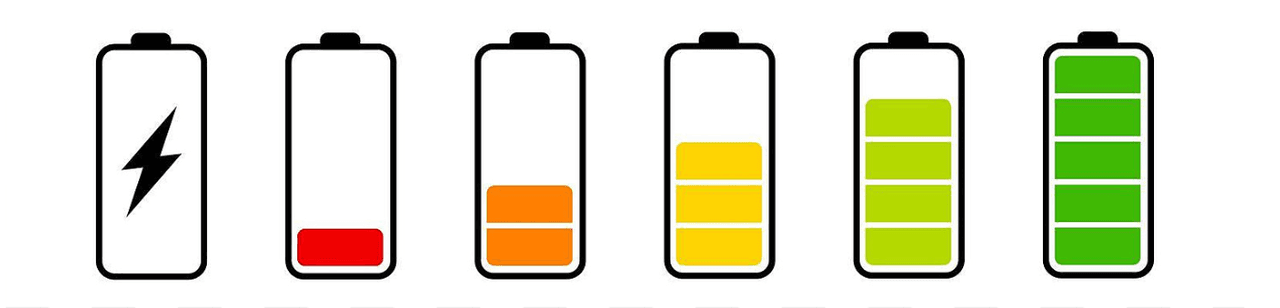
Illustrative image regarding the battery charging process.
Batteries may contain hazardous heavy metals such as mercury, lead, nickel, and cadmium. Therefore, disposing of used batteries directly in household waste poses serious environmental risks. In Türkiye, the Portable Battery Producers and Importers Association (TAP), the authorized body on this issue, manages battery collection and recycling processes.

Logo of the Portable Battery Producers and Importers Association, 2024
The battery recycling process proceeds as follows:
Battery technologies have evolved beyond merely enabling device operation to become one of the foundational building blocks of sustainable energy systems. Thanks to high energy density, long cycle life, and advanced management systems, batteries form the sustainable basis for mobility, renewable energy, and digitalization. Efficient use of these technologies, reduction of environmental impacts, and effective management of recycling processes are responsibilities shared by both users and manufacturers.
Batteries are expected to play a role in the energy infrastructure of the future as critical as oxygen and carbon.
"Batarya." Türkiye Akü ve Pil Sanayicileri Derneği (TAP).https://tap.org.tr/.
"Battery." Battery University. 2024. "Battery Maintenance and Care."https://batteryuniversity.com
European Commission. "Batarya." 2006. Directive 2006/66/EC on Batteries and Accumulators and Waste Batteries and Accumulators.
Linden, David, and Thomas B. Reddy. "Batarya." 2010. Handbook of Batteries. 4th ed. New York: McGraw-Hill Education.
Nagaura, Tamotsu, and K. Tozawa. "Batarya." 1990. "Lithium Ion Rechargeable Battery." Progress in Batteries & Battery Materials 9: 209–217.
Tarascon, Jean-Marie, and Michel Armand. "Batarya." 2001. "Issues and Challenges Facing Rechargeable Lithium Batteries." Nature 414 (6861): 359–67.

What Is a Battery?
Battery Types and Technical Characteristics
History and Technological Evolution
Technical Methods to Extend Battery Life
Recycling and Environmental Impact