


This article was automatically translated from the original Turkish version.
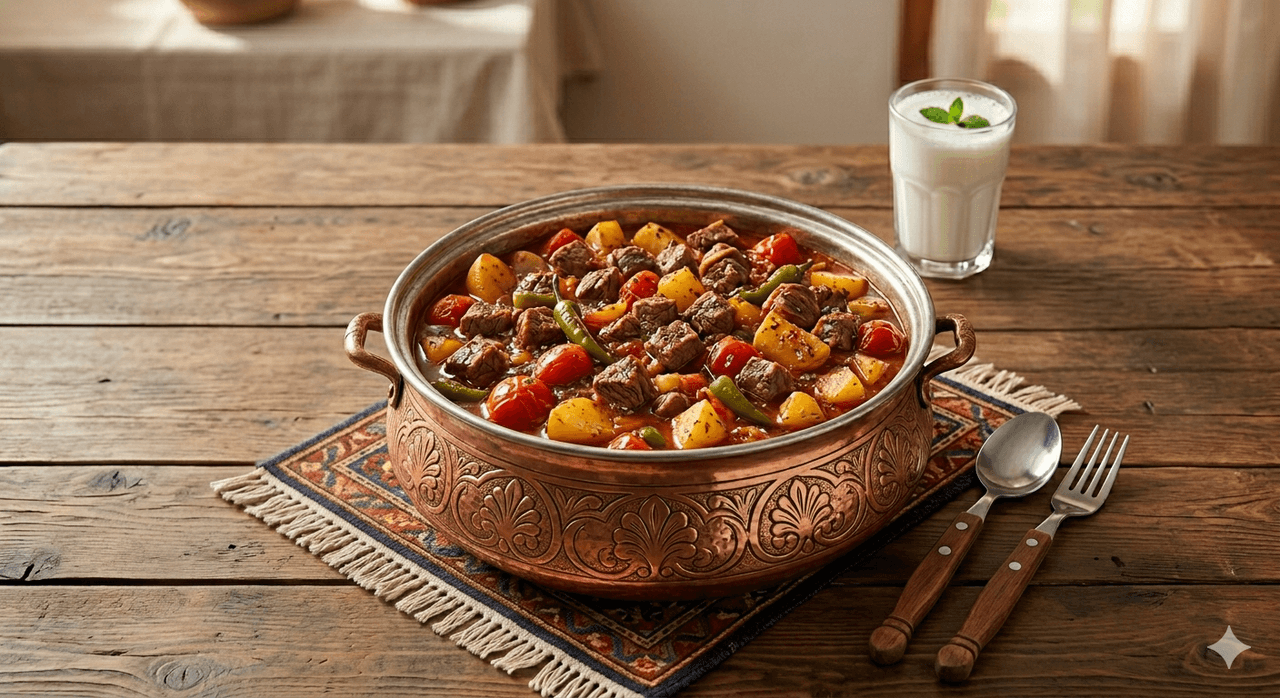
(Generated with Artificial Intelligence)
Darende Wedding Kebab
Registration Date | 21 February 2013 | ||||||||
|---|---|---|---|---|---|---|---|---|---|
Registration Type | Traditional Cuisine, Meat Dishes | ||||||||
Production Site | Malatya Province, Darende District | ||||||||
Meat Source | Sheep meat, Beef | ||||||||
Region | Malatya Cuisine | ||||||||
Darende Wedding Kebab is a traditional meat dish unique to the Darende district of Malatya, typically prepared for weddings and large communal gatherings. In local gastronomic literature, this kebab is also referred to as Darende Wedding Dish and is based on specific preparation and presentation standards.
The defining characteristic of Darende Wedding Kebab lies in the combination of the meat-cooking method and the rice pilaf preparation technique. The dish is based on the principle of searing boneless meat and serving it atop rice pilaf that has been cooked and rested using a special method. This structure reinforces the dish’s dual identity as both a meat dish and a cohesive pilaf presentation.
Sheep meat or beef is primarily used as the main protein source. For the fat component, animal-based butter and sheep tail fat are used together. Rice constitutes the fundamental carbohydrate element of the dish. In ingredient selection, it is essential that the meat is completely deboned and that the cartilage parts of the tail fat are thoroughly removed, as these factors significantly affect the final texture of the product.
The production technique of Darende Wedding Kebab consists of two main stages: meat searing and pilaf preparation. The process begins with the physical preparation of ingredients. In the first stage, the deboned meat is cut into small pieces. Simultaneously, butter and sheep tail fat are also chopped to complete the preparatory phase. During cooking, heat transfer and chemical changes in the ingredients are carefully controlled.
The production cycle follows these technical steps:
The dish derives its name from its traditional role as the main course served at wedding celebrations in the region. As part of the broader kebab and frying culture of Malatya, it holds a central position in communal dining rituals. While it shares similarities with other regional wedding dishes such as Arapkir Wedding Kebab, its unique identity is established through specific technical details and ingredient usage in its preparation.
Preservation of the traditional recipe for Darende Wedding Kebab depends on adherence to the specified ingredient ratios and cooking sequence. Production steps documented in sources—such as cutting the meat into small pieces, removing cartilage from the tail fat, and measuring water at a three-finger level above the rice—are recognized as control criteria that define the dish’s standard.
T.C. Ministry of Culture and Tourism. "Darende Düğün Yemeği." Accessed April 28, 2026.https://www.kulturportali.gov.tr/turkiye/malatya/neyenir/darende-dugun-yemegi.
T.C. Ministry of Culture and Tourism. "Kebaplar ve Kızartmalar." Accessed April 28, 2026.https://ekitap.ktb.gov.tr/TR-78776/kebaplar-ve-kizartmalar.html.

(Generated with Artificial Intelligence)
Darende Wedding Kebab
Registration Date | 21 February 2013 | ||||||||
|---|---|---|---|---|---|---|---|---|---|
Registration Type | Traditional Cuisine, Meat Dishes | ||||||||
Production Site | Malatya Province, Darende District | ||||||||
Meat Source | Sheep meat, Beef | ||||||||
Region | Malatya Cuisine | ||||||||
No Discussion Added Yet
Start discussion for "Darende Wedding Kebab" article
Distinctive Features
Ingredient Quality
Production Technique and Process
Production Stages
Cultural and Historical Context
Monitoring and Preservation Mechanism