


This article was automatically translated from the original Turkish version.
Coral reefs are underwater ecosystems of complex structure and rich biodiversity, formed by the accumulation over thousands of years of skeletons of various marine organisms, primarily hard corals. Despite covering less than 1% of the ocean floor, they provide habitat for approximately 25% of all marine life.【1】 These structures also serve as natural barriers that protect coastal communities from storms and erosion, while providing feeding, shelter, and breeding grounds for marine organisms.
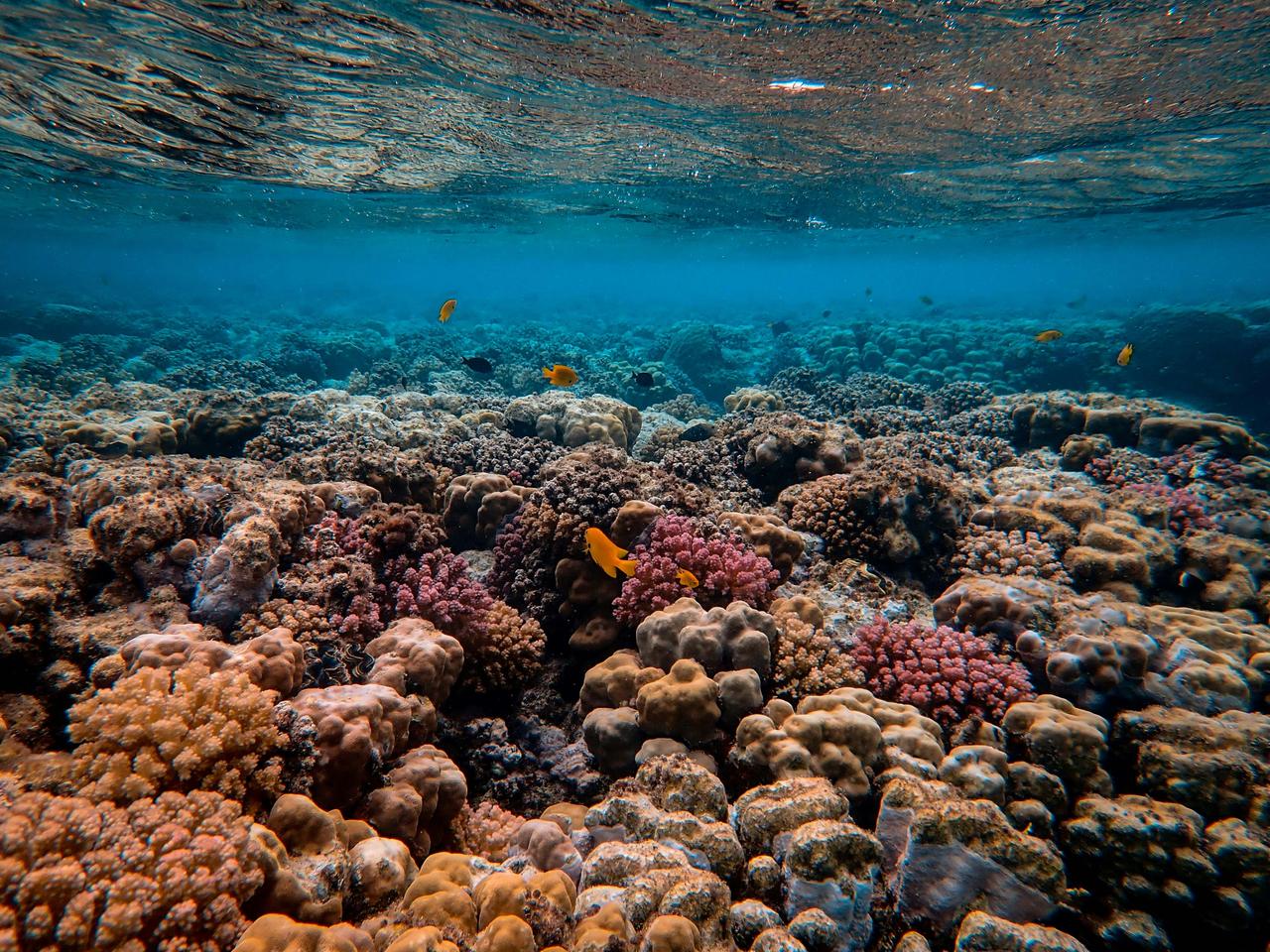
Coral Reef (Pexels)
To understand the concept of coral reefs, it is necessary to distinguish between the terms reef, coral, and polyp.
A coral reef is a type of reef whose primary structure is built by living organisms such as corals. Therefore, while every coral reef is a reef, not every reef is a coral reef.
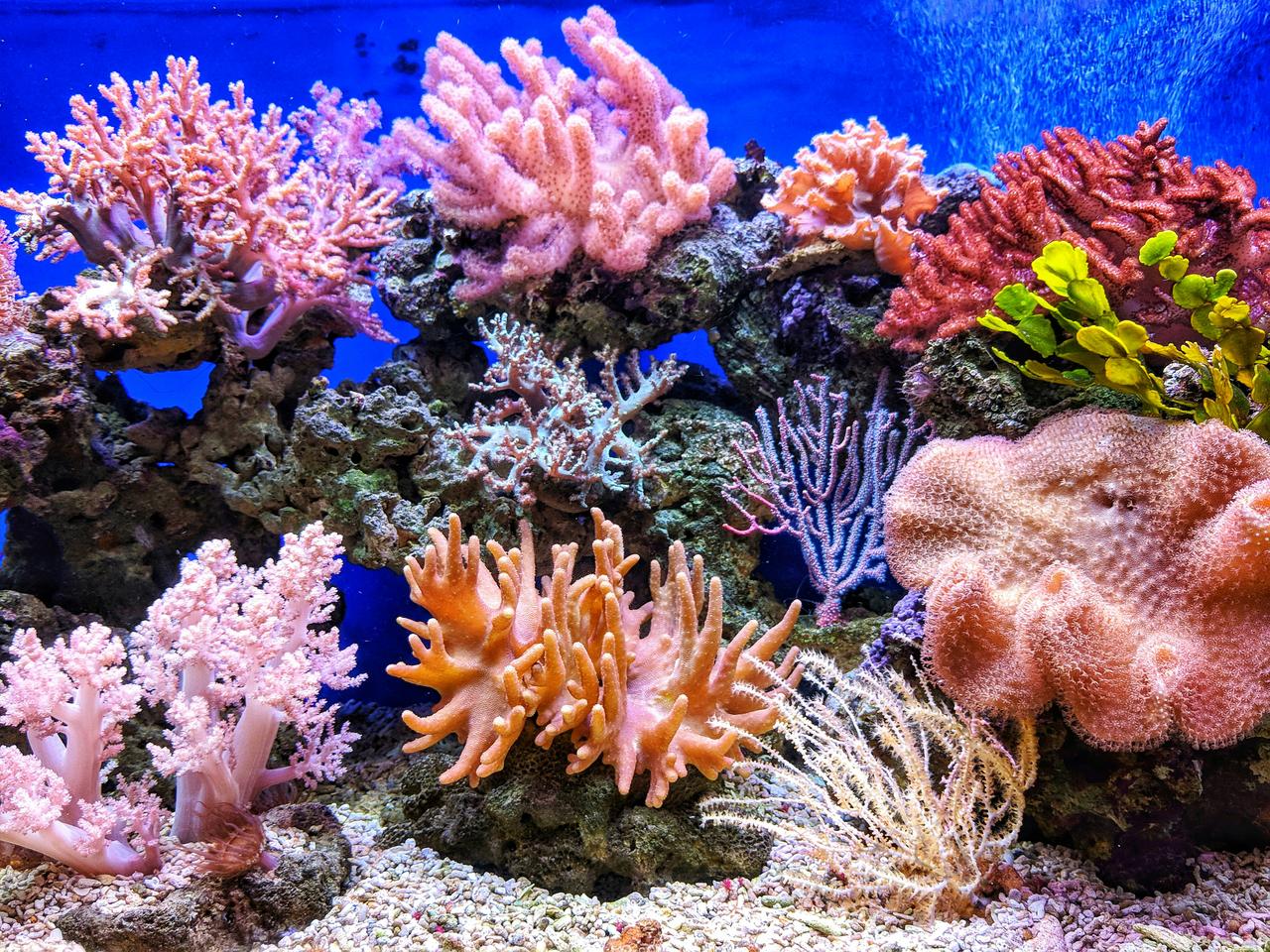
Coral Reef (Unsplash)
Coral colonies can take various forms such as tree-like, branch-like, flower-like, brain-like, deer antler-like, or mushroom-like, and are often named according to their shape. Broadly, they are divided into two main groups:
Corals that secrete calcium carbonate to form a rigid external skeleton. These skeletons constitute the foundational building blocks of coral reefs. The skeletons of dead polyps remain beneath and contribute to reef growth. Examples of this group include staghorn corals (Acropora cervicornis), which play a prominent role in reef formation due to their rapid growth rates.
Corals that lack a calcium carbonate skeleton and instead have fleshy, flexible structures. They derive their rigidity from small needle-like calcareous structures in their outer tissues. They typically resemble trees or fans. Black corals (Antipatharia) are another branching type of soft coral whose skeletons are composed of protein and chitin. The colors of corals originate from pigment cells within their bodies and from microscopic algae called Zooxanthellae with which they live in symbiosis.
Corals obtain nutrients through multiple methods. The primary method is predation on zooplankton, microscopic animal-like organisms. They immobilize or trap prey using stinging cells called nematocysts located in their tentacles or by secreting sticky substances.
A second and widespread feeding method is symbiosis with single-celled marine algae known as Zooxanthellae. These algae live within the tissues of coral polyps and use the carbon dioxide produced by coral respiration to perform photosynthesis. They share a large portion of the nutrients they produce with the coral. Thanks to this relationship, corals can survive in nutrient-poor but clear, sunlit ocean waters. When corals experience stress, they expel these algae; this phenomenon is known as coral bleaching and results in the loss of color and a critical food source for the coral.
Corals can reproduce both sexually and asexually. Asexual reproduction typically occurs through budding. Sexual reproduction involves the simultaneous release of sperm and eggs into the water. The resulting larvae, called planulae, float in the water column for a period before settling on a suitable surface and developing into new polyps.
Coral reefs are generally found in warm, shallow, and clear waters between 30° north and 30° south latitude. Reef formation requires seawater temperatures to remain between 20°C and 29°C throughout the year. These conditions are most commonly met in tropical regions of the Indian and Pacific Oceans and the Red Sea.
Naturalist Charles Darwin proposed that reefs begin as fringing reefs along the edges of volcanic islands; as the islands subside, these become barrier reefs, and when the islands are completely submerged, they transform into atolls.
This theory links reef formation to global sea level fluctuations during the Pleistocene glacial periods. During periods of lowered sea level, carbonate platforms exposed above water were eroded by rainfall. When sea levels rose again, corals recolonized the edges of these eroded structures, forming atolls.
Reef-like structures have existed on Earth for approximately 2.7 billion years. The first animal-origin reefs were built around 530 million years ago during the Early Cambrian by sponges known as Archeocyathus. Throughout the Paleozoic and Mesozoic eras, sponges, various corals, and during the Cretaceous, rudists—a type of bivalve mollusk—dominated reef biotas. The ancestors of modern corals (Scleractinia) diversified in the Mesozoic and formed widespread reefs during the Cenozoic, particularly during periods of rising global temperatures.
Great Barrier Reef of Australia: The World’s Largest Coral Reef | Documentary (Bilimin Peşinde)
Coral reefs are described as the “rainforests of the sea” and represent the most biodiverse ecosystems in the oceans. They provide habitat for over one million species, including fish, starfish, sponges, mollusks, crustaceans, and seaweeds.
Reefs function as natural barriers that reduce wave energy during storms and hurricanes, thereby protecting coastal areas. Globally, they contribute approximately $36 billion annually to economies through fisheries and tourism.
Coral skeletons are used to reconstruct past climate conditions based on their geochemical data. Additionally, chemicals derived from certain corals are being investigated as potential sources for developing new drugs against antibiotic-resistant pathogens.
Scientists predict that a large portion of the world’s coral reefs could disappear by 2050.
The protection of coral reefs and oceans in general involves complex legal and political challenges. Open ocean waters, classified as “universal common heritage” beyond national jurisdiction, require international cooperation for effective conservation.
Ahmet Cangüzel, Taner. "Küresel Okyanus Sularının Isınması, Asitlenmesi Sonucu Deniz Ürünleri Çeşitliliği Azalmasının Önlenmesi ve 2015 BM İklim Anlaşması Açmazı." Fizik Mühendisleri Odası. Accessed August 4, 2025.https://www.fmo.org.tr/wp-content/uploads/2011/07/Kuresel-Okyanus-Sularinin-Isinmasi-Asitlenmesi-Sonucu-Deniz-Urunleri-Cesitliligi-Azalmasinin-Onlenmesi-ve-2015-BM-Iklim-Anlasmasi-Acmazi.pdf
Bilim Peşinde. "Avustralya Büyük Set Resifi: Dünyanın En Büyük Mercan Resifi | Belgesel." YouTube. Accessed August 4, 2025.https://www.youtube.com/watch?v=ReadzIszr5Y
Francesco Ungaro. "Scenic Photo of Coral Reef JPG." Pexels. Accessed August 4, 2025.https://www.pexels.com/photo/scenic-photo-of-coral-reef-3157890/
Köseoğlu, Fitnat, and Sultan Kocaman. "Mercan Resiflerinin Sualtı Fotogrametrisi ile 3 Boyutlu Modellenmesi." VII. UZAKTAN ALGILAMA-CBS SEMPOZYUMU, 2018. Accessed August 4, 2025.https://www.researchgate.net/publication/327106539_MERCAN_RESIFLERININ_SUALTI_FOTOGRAMETRISI_ILE_3_BOYUTLU_MODELLENMESI
NASA. "What Is a Coral Reef?" NASA. Accessed August 4, 2025.https://www.nasa.gov/general/what-is-a-coral-reef/.
Sakınç, Mehmet. "Canlılığın Cangılı Resifler." *Bilim ve Gelecek Dergisi* (2025): 48–55. Accessed August 4, 2025.https://www.researchgate.net/publication/393120853_Canliligin_Cangili_Resifler
TÜBİTAK Bilim Genç. "Mercanlar." Bilim Genç. Accessed August 4, 2025.https://bilimgenc.tubitak.gov.tr/makale/mercanlar.
Unsplash. "Live Corals JPG." Accessed August 4, 2025.https://unsplash.com/photos/live-corals-0G01UI1MQhg
[1]
Mehmet Sakınç, ''Canlılığın Cangılı Resifler,'' Bilim ve Gelecek Dergisi (2025), syf 55, erişim 4 Ağustos 2025, https://www.researchgate.net/publication/393120853_Canliligin_Cangili_Resifler
[2]
Ahmet Cangüzel Taner, "Küresel Okyanus Sularının Isınması, Asitlenmesi Sonucu Deniz Ürünleri Çeşitliliği Azalmasının Önlenmesi ve 2015 BM İklim Anlaşması Açmazı," Fizik Mühendisleri Odası, syf 1, erişim 4 Ağustos 2025, Erişim adresi
[3]
Ahmet Cangüzel Taner, "Küresel Okyanus Sularının Isınması, Asitlenmesi Sonucu Deniz Ürünleri Çeşitliliği Azalmasının Önlenmesi ve 2015 BM İklim Anlaşması Açmazı," Fizik Mühendisleri Odası, syf 2, erişim 4 Ağustos 2025, Erişim adresi


Definition and Key Concepts
Biology and Ecology
Structure and Types
Hard Corals (Scleractinia)
Soft Corals (Alcyonacea)
Feeding
Reproduction
Habitats and Geographic Distribution
Theoretical Approaches and Historical Development
Reef Formation Theories
Darwin’s Subsidence Theory (1842)
Sea Level Change Theory (Modern View)
Geological History
Types and Formation of Coral Reefs
Ecological and Societal Importance
Biodiversity
Coastal Protection and Economic Contributions
Scientific and Medical Applications
Current Threats, Conservation Efforts, and Law
Threats
Conservation Efforts, Governance, and Law