

`ocean-acidification` Related Article Results
 Oc
OcOcean Acidification
Ocean acidification is the process by which the pH of seawater decreases due to the dissolution of increasing amounts of carbon dioxide (CO₂) gas from the atmosphere into ocean waters. This process leads to seawater becoming more acidic and is recognized as one of the most significant environmental impacts of global climate change. Chemical Mechanism The in the atmosphere spreads across the ocean surface and reacts with water to form carbonic acid (): Carbonic acid rapidly dissociates in water i
EN
Yeşim Can
Biodiversity Loss
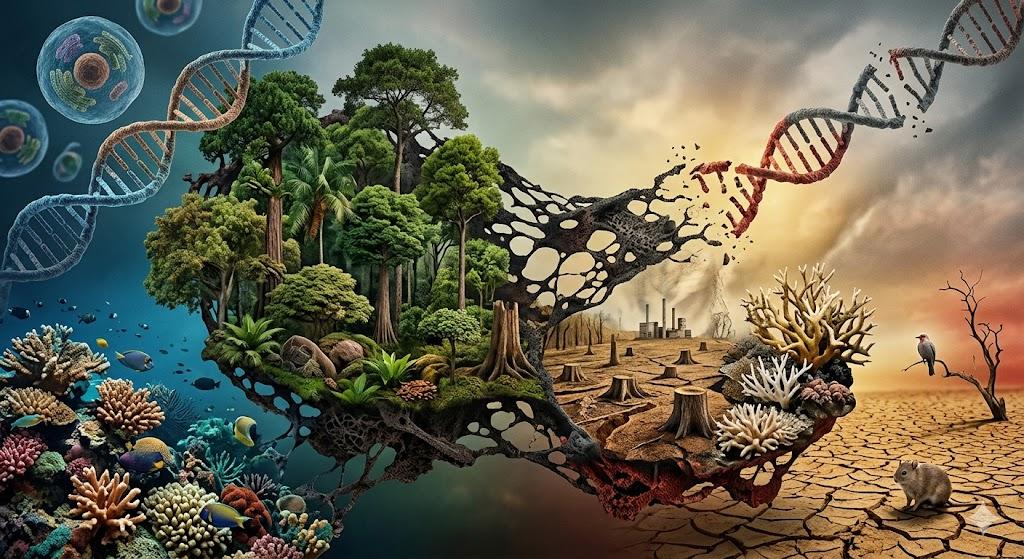
Loss of Biodiversity refers to the decline or complete disappearance of the genetic, species, and ecosystem-level diversity of living organisms on Earth. Biological diversity is a composite of genetic diversity, which encompasses genetic variation; species diversity, which includes all organisms in a given area; and habitat diversity, which arises from varied environmental conditions. Today, this diversity has increased to hundreds of times the natural extinction rate predicted by geological rec
EN
Büşra Tuğa
CoCoral Reefs
Coral reefs are complex and biodiverse underwater ecosystems formed by the accumulation over thousands of years of skeletons from various marine organisms, primarily stony corals. Despite covering less than 1% of the ocean floor, they provide habitat for approximately 25% of all marine life.Mehmet Sakınç, ''Canlılığın Cangılı Resifler,'' Bilim ve Gelecek Dergisi (2025), syf 55, erişim 4 Ağustos 2025, https://www.researchgate.net/publication/393120853_Canliligin_Cangili_Resifler ">【1】 These st
EN
Yunus Emre Yüce
OcOcean Acidification
Ocean acidification is the process by which the pH of seawater decreases due to the dissolution of increasing amounts of carbon dioxide (CO₂) gas from the atmosphere into ocean waters. This process leads to seawater becoming more acidic and is recognized as one of the most significant environmental impacts of global climate change. Chemical Mechanism Carbon dioxide from the atmosphere spreads across the ocean surface and reacts with water to form carbonic acid (): Carbonic acid rapidly dissociat
EN
Yeşim Can
CoCoral Reefs
Coral reefs are underwater ecosystems of complex structure and rich biodiversity, formed by the accumulation over thousands of years of skeletons of various marine organisms, primarily hard corals. Despite covering less than 1% of the ocean floor, they provide habitat for approximately 25% of all marine life.【1】 These structures also serve as natural barriers that protect coastal communities from storms and erosion, while providing feeding, shelter, and breeding grounds for marine organisms. Def
ENYunus Emre Yüce
What Is Ocean Acidification?
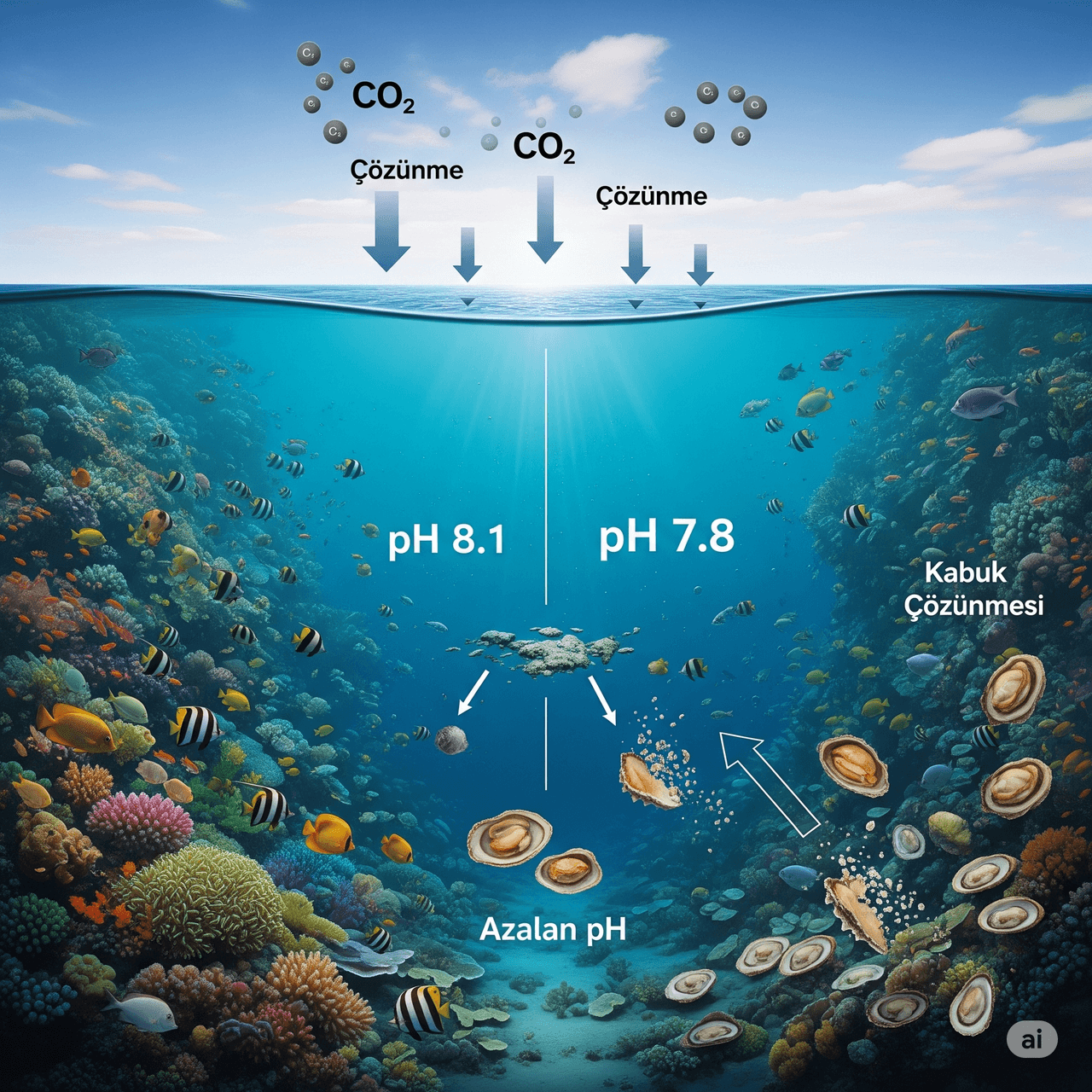
Ocean acidification means the oceans are becoming more acidic. This occurs when carbon dioxide (CO₂) from the atmosphere dissolves into seawater. The dissolved CO₂ alters the water’s chemistry, lowering its pH value. As a result, the oceans gradually become more acidic. Why Does It Happen? Humans burn coal, oil and natural gas to produce energy. This releases large amounts of CO₂ into the atmosphere. A significant portion of this emitted gas is absorbed by the oceans. Normally, oceans play a pro
EN
Rüya Dumlu
Ocean Acidification
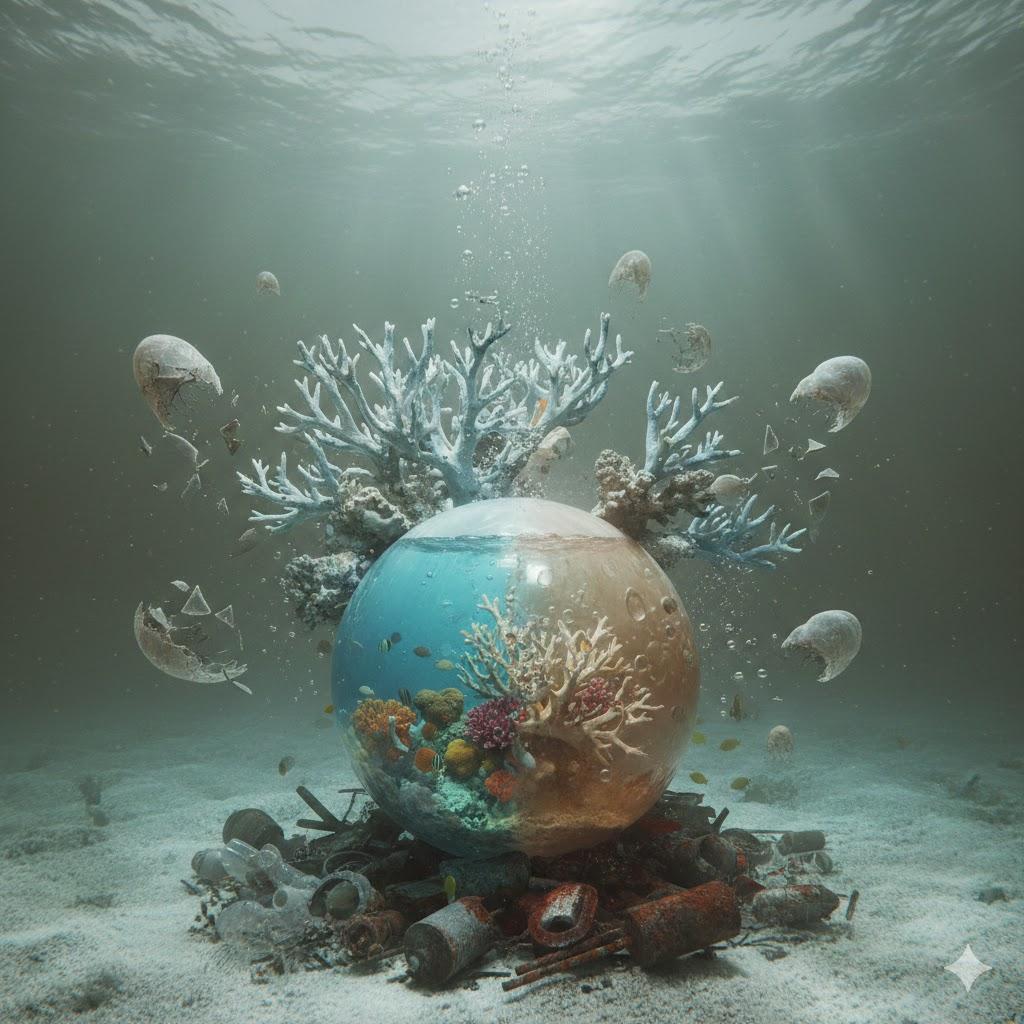
Ocean acidification is a global process characterized by a decrease in seawater pH and an increase in acidity due to the absorption of atmospheric carbon dioxide by the oceans. Since the Industrial Revolution, approximately 25 to 30 percent of the carbon dioxide emitted into the atmosphere by human activities has been absorbed by the oceans. This phenomenon, commonly referred to in scientific literature as the “evil twin of global warming” or the “other CO2 problem,” poses critical threats to ma
EN
Sevde Köktaş