This article was automatically translated from the original Turkish version.
+1 More
Architectural Feature(s) | Three Entrance Doors Pentagonal Outer Apse Corinthian-Capital Columns Cross-Vaulted Ceiling | ||||||||
|---|---|---|---|---|---|---|---|---|---|
Location | Türkiye Isparta | ||||||||
Construction Date(s) | Approximately 1750 (Estimated) | ||||||||
Plan Type | Rectangular Plan, Three-Nave, Apse | ||||||||
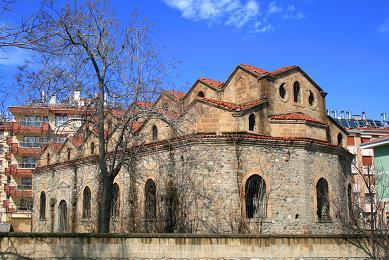
The structure located in the Turan Neighborhood of Isparta is believed to have been constructed in the 1750s and is an Orthodox church. Although dated to the Late Ottoman period the building has entrance doors on its north west and east sides.
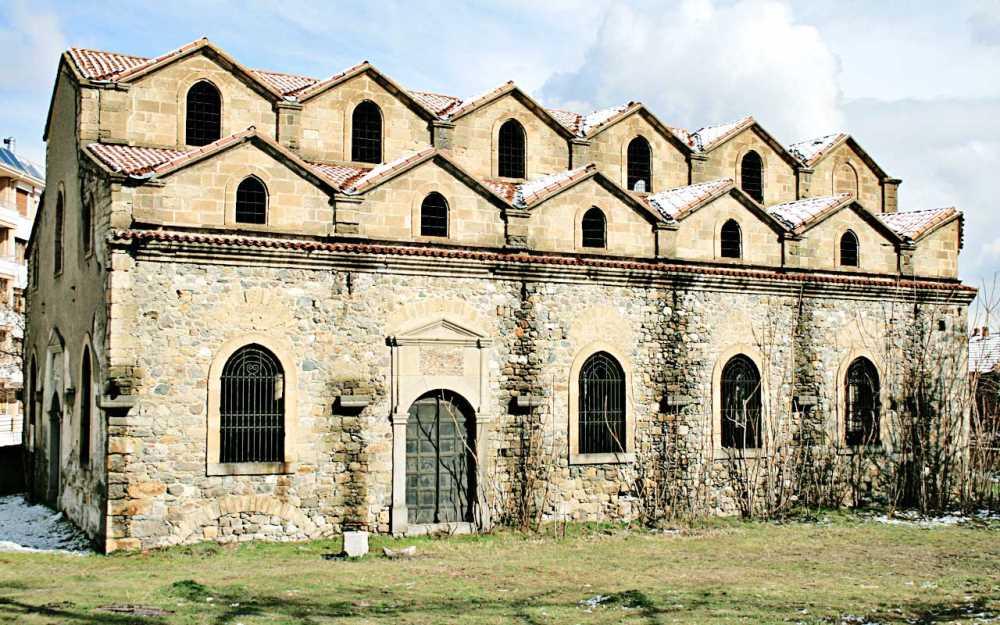
Isparta Aya Baniya Church (Cultural Portal)
The structure is generally accepted to have been built in the middle of the 18th century around the 1750s.【1】 It functioned as an Orthodox church during the Late Ottoman period. Although dated to the 18th century its architectural plan continues the basilical layout typical of earlier Byzantine churches which is noteworthy.
The building preserves traditional church architectural features through its three-aisle basilical plan apsidal form and column-supported interior space. In this regard it demonstrates the continuity of the basilical plan type within the religious architecture of the period.
The structure was included in restoration efforts under the Lakes Region Project in 1993. The roof was replaced in 1999. The Ministry of Culture and Tourism carried out landscaping and some repair works. It is noted that the baroque-style wooden elements of the building are preserved in a museum storage facility.【2】
The building has a rectangular plan and three aisles. A total of ten columns are present in the interior space. The columns lack bases and feature Corinthian capitals with surfaces covered in plaster. The ceiling is timber-framed and constructed with a cross-vault system. Externally the roof is a broken-pitch form covered with traditional Turkish clay tiles.
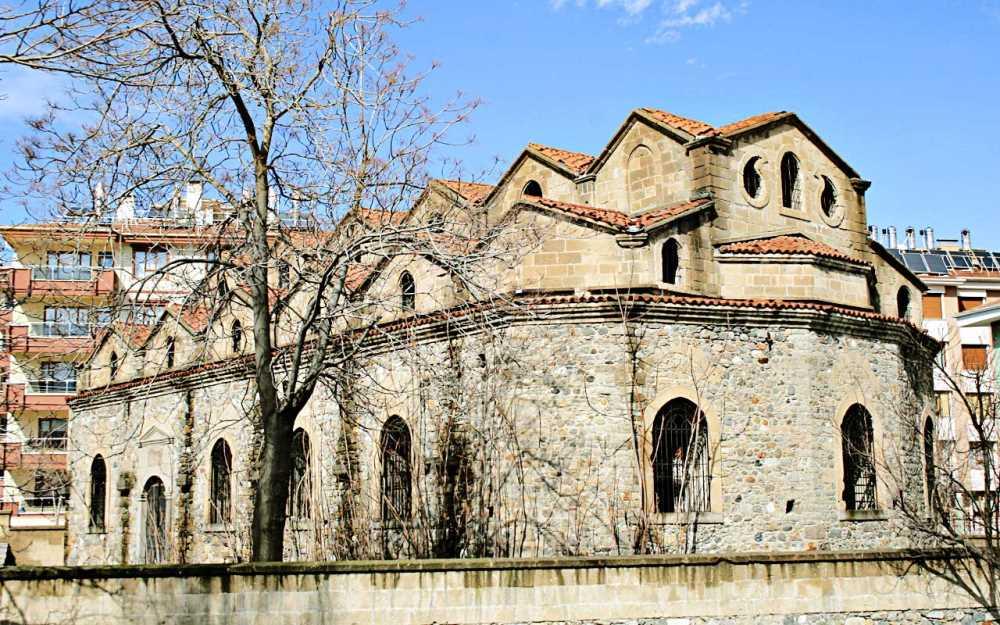
Aya Baniya Church (Cultural Portal)
The apse is illuminated by three large windows in the lower row and three smaller ones in the upper row. The window openings on the exterior façade are framed with cut stone in arched form. Metal tension rods are placed between the columns inside the interior space. Plaster medallions adorn the side walls and above the entrance doors. Both plaster and stonework are used together on the façades. The front façade is plastered while the other façades consist of rough-hewn stone walls without plaster. The doors are small pedimented portal forms with columns. Cross motifs appear at the door and arch transitions. The interior floor is finished with concrete laid to resemble stone. Wooden tension elements remain where the iconostasis once stood between the apse and the naos.
Aylan, Serkan. "Aya Baniya (Aya Payana) Kilisesi." *Türkiye Turizm Ansiklopedisi.* 2019. Accessed April 7, 2026. https://turkiyeturizmansiklopedisi.com/aya-baniya-aya-payana-kilisesi
Culture Portal. "Aya Payana (Baniya) Church." Ministry of Culture and Tourism. Accessed April 5, 2026. https://www.kulturportali.gov.tr/turkiye/isparta/gezilecekyer/aya-payana-baniya-kilisesi
Isparta İl Directorate of Culture and Tourism. "Kiliseler." Ministry of Culture and Tourism. Accessed April 5, 2026. https://isparta.ktb.gov.tr/TR-70963/kiliseler.html
[1]
Turkey Cultural Portal "Aya Payana Church / Baniya Church - Isparta" Ministry of Culture and Tourism of the Republic of Türkiye, Access Date: 6 April 2026 https://www.kulturportali.gov.tr/turkiye/isparta/gezilecekyer/aya-payana-baniya-kilisesi
[2]
Serkan Aylan "Aya Baniya (Aya Payana) Church" Turkish Tourism Encyclopedia 2019 Access Date: 7 April 2026 https://turkiyeturizmansiklopedisi.com/aya-baniya-aya-payana-kilisesi

Architectural Feature(s) | Three Entrance Doors Pentagonal Outer Apse Corinthian-Capital Columns Cross-Vaulted Ceiling | ||||||||
|---|---|---|---|---|---|---|---|---|---|
Location | Türkiye Isparta | ||||||||
Construction Date(s) | Approximately 1750 (Estimated) | ||||||||
Plan Type | Rectangular Plan, Three-Nave, Apse | ||||||||
No Discussion Added Yet
Start discussion for "Church of Aya Baniya (Aya Payana)" article
History
Its Place in the Architecture of the Period
Current Condition
Architectural Features