This article was automatically translated from the original Turkish version.
+1 More
Origin | Shang Dynasty (c. 1600–1046 BCE) oracle bone inscriptions | ||||||||
|---|---|---|---|---|---|---|---|---|---|
Basic Font Types | Clerical script (Lishu) Large seal script (Dazhuan) Small seal script (Xiaozhuan) Cursive script (Caoshu) Regular script (Kaishu) Semi-cursive script (Xingshu) | ||||||||
Materials | Paper (zhi) Inkstone (yan) Ink (mo) Brush (bi) | ||||||||
Prominent Masters | Wang Xizhi Wang Xianzhi Ouyang Xun Yan Zhenqing Liu Gongquan Zhao Mengfu | ||||||||
Chinese calligraphy is the art of writing Chinese characters in a disciplined manner using brush and ink. It transcends mere writing, carrying philosophical and social meanings. Through elements of line arrangement, brush movement, rhythm, and composition, calligraphy seeks to reveal the visual and intellectual value of writing. In Chinese culture, it is regarded as one of the four fundamental arts alongside literature, painting, and music, and has been recognized for centuries as an indicator of both intellectual and social identity.
Chinese Calligraphy (Chinese Culture)
The origins of Chinese calligraphy are linked to inscriptions carved on oracle bones during the Shang Dynasty (14th–11th centuries BCE). These writings, used for divination, are among the earliest examples of the Chinese writing system. During the Zhou Dynasty (11th–3rd centuries BCE), the formal structure of writing evolved through inscriptions on bronze vessels, with lines becoming more distinct and symmetrical.
During the Qin Dynasty (221–206 BCE), standardization of the writing system occurred alongside Emperor Qin Shihuang’s political unification. The “small seal script” (xiaozhuan) was established as the official script during this period. Subsequently, during the Han Dynasty (206 BCE–220 CE), the “clerical script” (lishu) was developed as a more practical alternative to the complexity of seal script and became widely used in bureaucratic documents.
During the Three Kingdoms and Jin periods (3rd–4th centuries CE), calligraphy transformed into an art form characterized by individual style. In this era, Wang Xizhi and his son Wang Xianzhi laid the foundations of classical calligraphy through their innovations in semi-cursive script (xingshu) and cursive script (caoshu).
During the Tang Dynasty (618–907), regular script (kaishu) reached maturity, with artists such as Ouyang Xun, Yan Zhenqing, and Liu Gongquan defining both the technical and aesthetic standards of calligraphy. The Tang period is also notable for calligraphy’s emergence as a vital tool in state examinations and cultural life.
The Song Dynasty (960–1279) was a period in which personal expression and creativity came to the fore. Artists such as Zhao Mengfu reinterpreted classical styles from the past while strengthening the relationship between painting and calligraphy. During the Yuan Dynasty (1271–1368), calligraphy diversified under the influence of different cultural traditions; in the Ming (1368–1644) and Qing (1644–1911) dynasties, both traditional styles were preserved and individual experience gained prominence.
In the 20th century, Chinese calligraphy entered into dialogue with modernization and Western artistic concepts. While traditional methods continued to be practiced, new forms and experimental approaches also emerged.
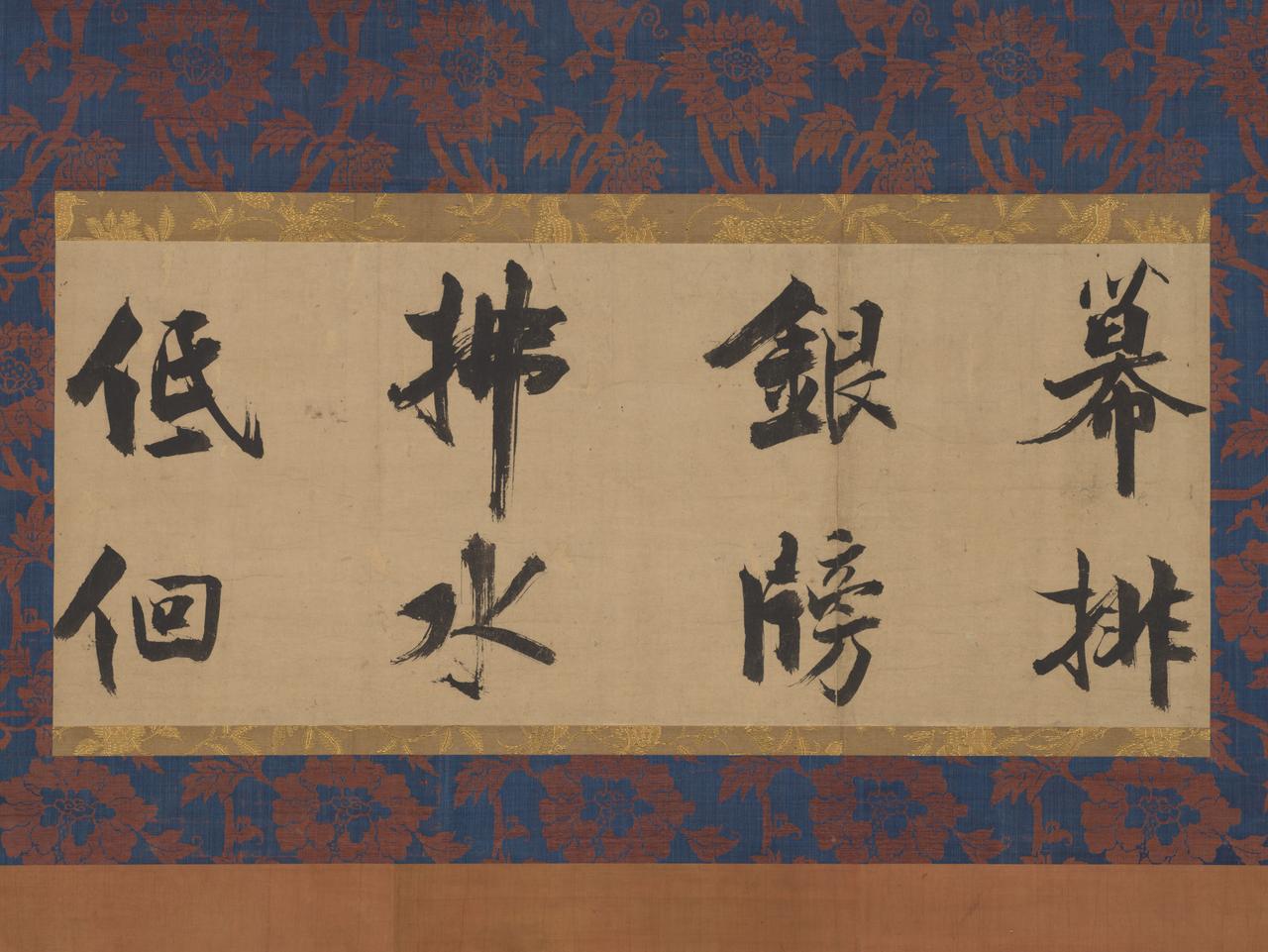
Excerpt from ‘Song of Leyou Park’, 13th century, Zhang Jizhi (THE MET)
Large seal script emerged in the early stages of Chinese writing during the Zhou Dynasty and gained prominence through inscriptions on bronze vessels, particularly during the Western Zhou period. Characters are formed with long, proportional lines, exhibiting a ceremonial appearance through thick, curved, and symmetrical structures.
Dazhuan contributed to the formalization of writing through its use among aristocratic circles and in state documents. Historically, it is significant as the foundation for the later small seal script (xiaozhuan) developed during the Qin Dynasty. Its aesthetic value is highlighted by its decorative qualities and balanced composition; thus, it is regarded not only as part of the writing system but also as a reflection of early Chinese art.
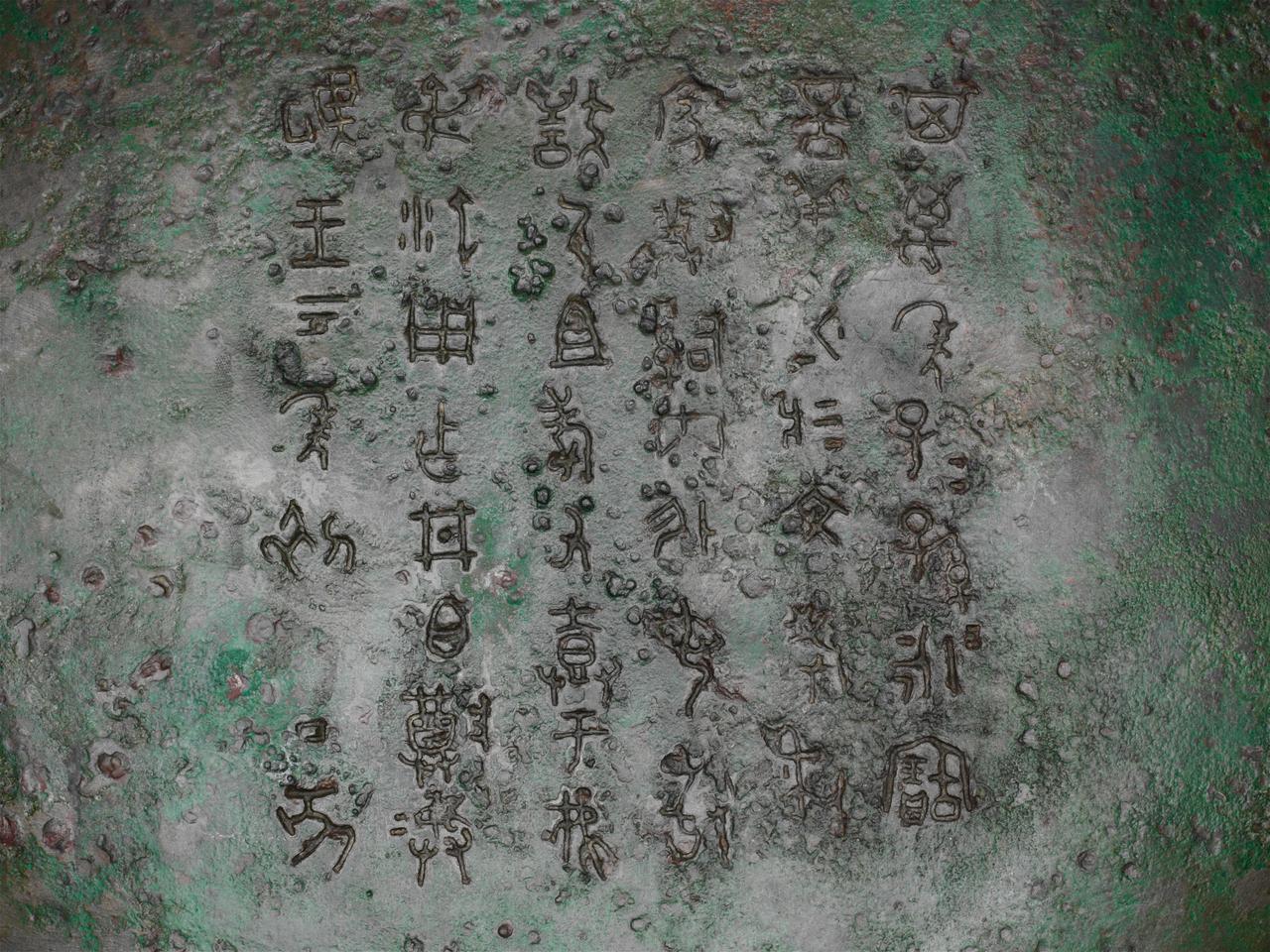
Dazhuan on a Vessel (THE MET)
Small seal script was standardized during the Qin Dynasty (221–206 BCE) as part of Emperor Qin Shihuang’s policy of political unification. It replaced the complex and varied structure of large seal script with more regular, symmetrical, and easily recognizable characters. Lines were refined to be thinner, balanced, and aesthetically harmonious.
This script was adopted as the official standard for imperial administrative and legal documents. It was widely used on seals, stone inscriptions, and monumental steles. The regular form of xiaozhuan enhanced character legibility while simultaneously elevating the aesthetic value of writing.
Small seal script represents a turning point in the Chinese writing tradition, marking the process of official standardization. Although it was later superseded by more practical scripts, it retained its importance for centuries in seal carving and the art of calligraphy.
Clerical script emerged during the Han Dynasty (206 BCE–220 CE) and marked a pivotal development in Chinese calligraphy. The aesthetic but complex structure of small seal script proved inadequate for bureaucratic needs, prompting the creation of a simpler, faster, and more practical script. Lishu is characterized by dominant horizontal strokes and angular, pronounced brush marks.
This script was widely adopted in state administration and official documentation. Its easier form enabled officials to perform daily tasks more efficiently, expanding calligraphy’s social function. It was also valued aesthetically for its strong, solid, and balanced lines, securing a distinguished place in the history of calligraphy.
One of lishu’s most important contributions was laying the groundwork for the development of regular script (kaishu). The structural order and legibility it introduced provided the foundation for the technical and aesthetic advancement of calligraphy in subsequent centuries.
Regular script is one of the most important and enduring forms of Chinese calligraphy. Its earliest examples appeared during the Three Kingdoms period (3rd century CE), developed during the Jin Dynasty, and reached its classical form in the Tang Dynasty. Kaishu stands out for its clear, precise, and legible character structure. The harmony between vertical and horizontal strokes, balanced spacing, and consistent brushwork are its defining features.
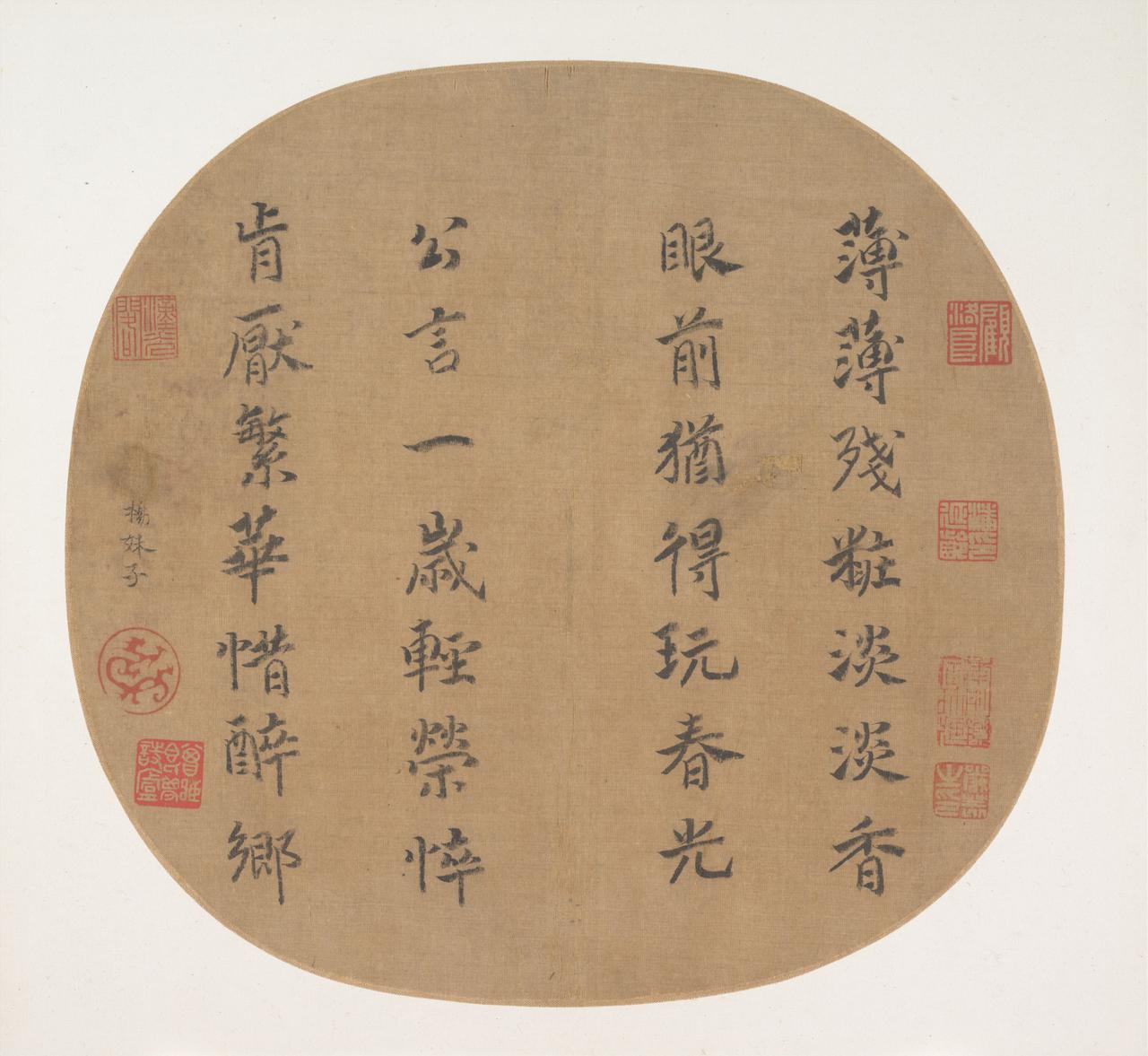
Poem by Empress Yang (THE MET)
Kaishu is important not only aesthetically but also functionally. It was adopted as the standard script in the imperial examination system and became the foundational script in education and official documents. This helped spread writing across broader segments of society.
During the Tang period, masters such as Ouyang Xun, Yan Zhenqing, and Liu Gongquan elevated kaishu to its peak, establishing technical refinements and leaving behind model works for future generations. Even today, kaishu remains the first stage of calligraphy education; students master this script before progressing to other forms.
Semi-cursive script emerged during the Jin Dynasty as a more fluid and flexible variant of regular script and quickly gained an important place in the calligraphy tradition. Xingshu retains the basic structure of characters but allows freer brush movements, increasing both legibility and writing speed. Connections between strokes are more evident than in regular script but less complex than in cursive script.
This script was particularly favored in personal correspondence and literary works. Its ability to combine the seriousness of official documents with the speed and practicality of daily writing contributed to its widespread adoption. Sources emphasize that semi-cursive script is among the most suitable forms for expressing individual style.
Wang Xizhi and Wang Xianzhi are regarded as the most important representatives of xingshu. Their works revealed not only the practical aspects of writing but also its artistic and aesthetic value. For this reason, xingshu holds a significant place in calligraphy history as a symbol of both technical development and personal creativity.
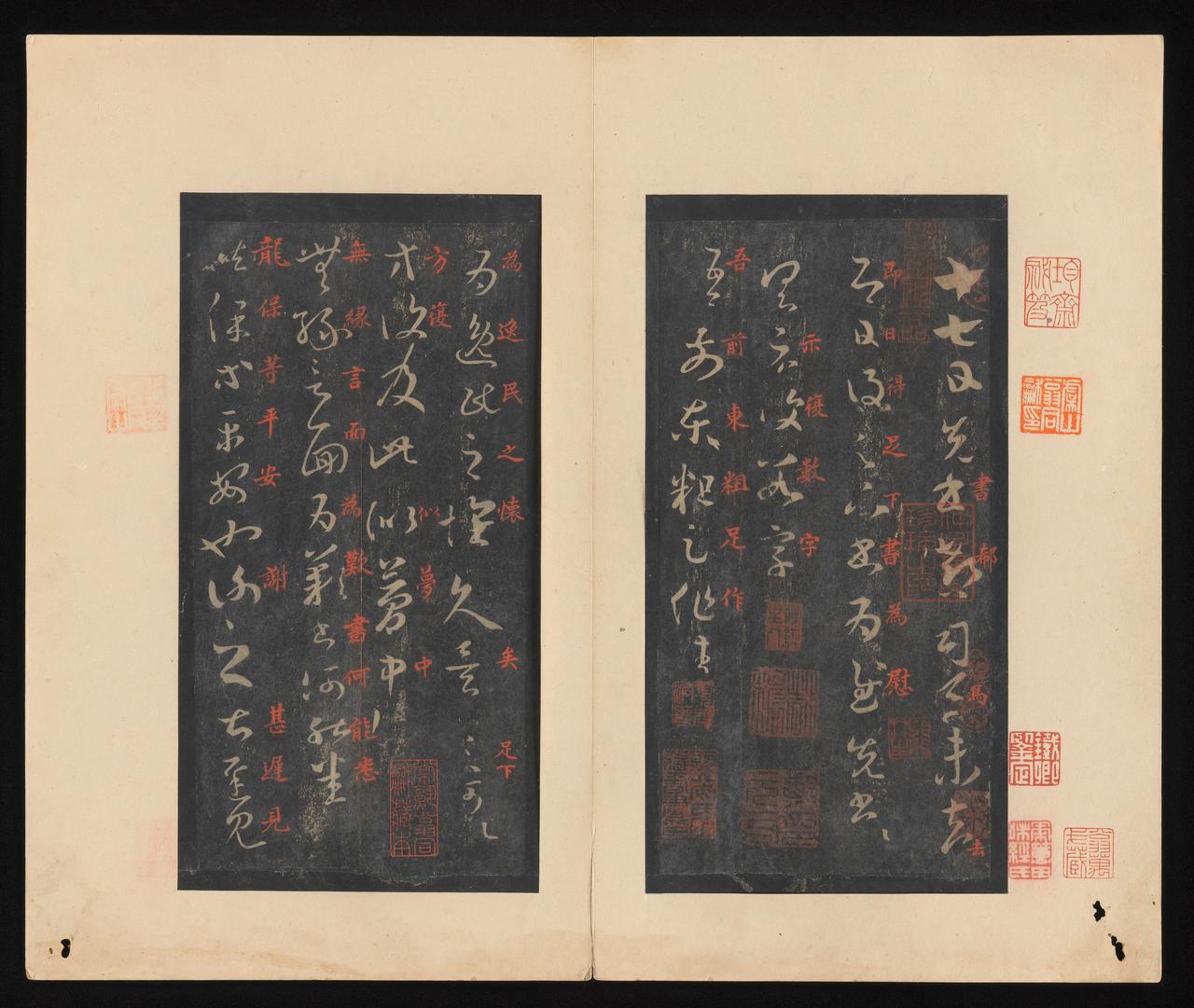
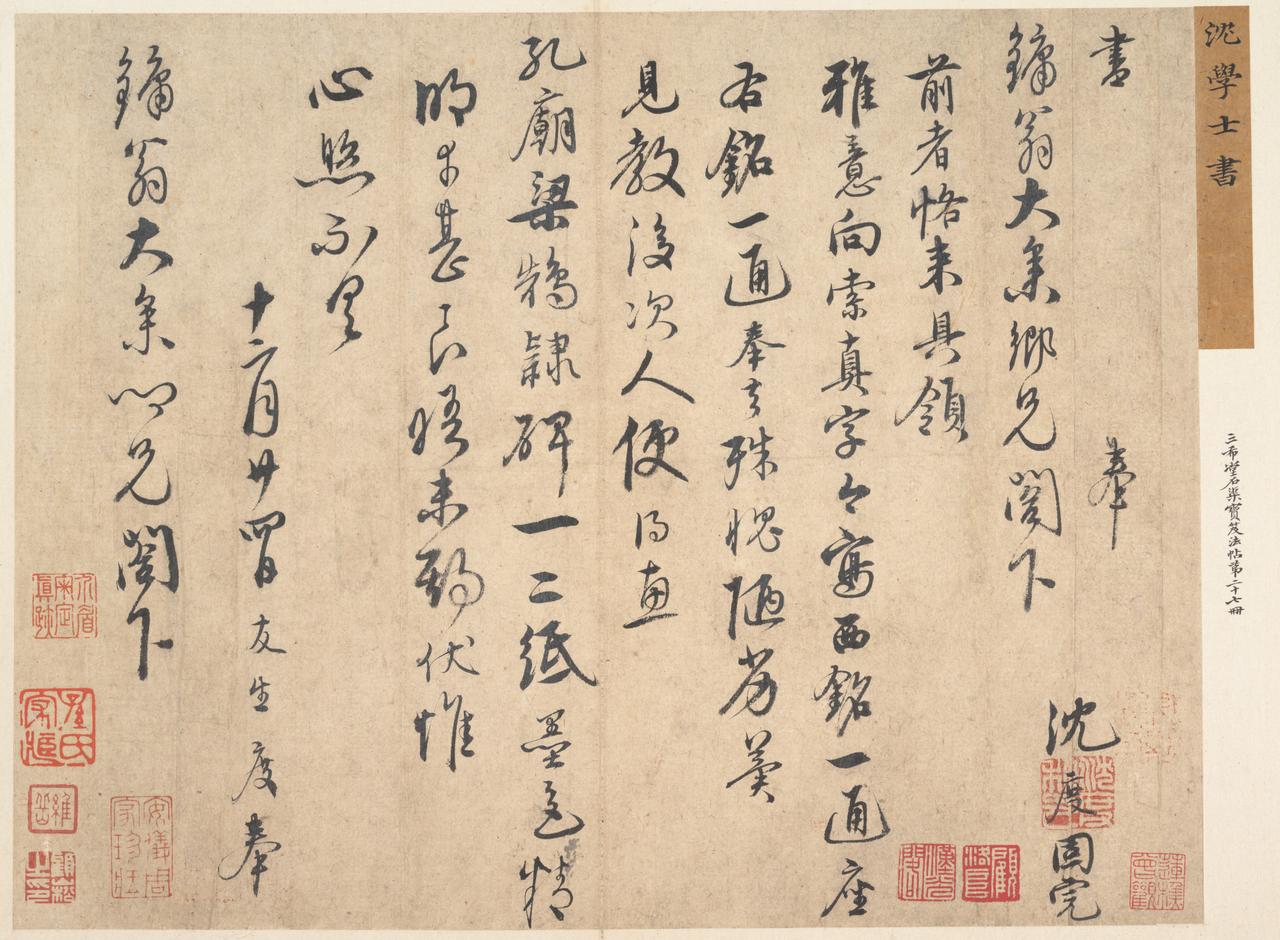
Letter from ‘On the Seventeenth Day’ Series, Wang Xizhi (THE MET)
Cursive script, or running script (caoshu), is the most free and fluid form of Chinese calligraphy. Its earliest examples appeared during the Han Dynasty and became widespread among calligraphers from the Jin Dynasty onward. Caoshu is characterized by rapid brush movements and continuous lines; sometimes multiple characters are formed in a single uninterrupted motion. This feature imparts dynamism and emotional intensity to the writing, though it reduces legibility.
Caoshu was primarily used for personal expression and artistic creativity. In contrast to the disciplined structure of regular and semi-cursive scripts, caoshu grants the calligrapher freedom; brushstrokes reflect the artist’s mood and energy. Thus, it is valued not only for its aesthetic qualities but also as a vehicle of individual expression.
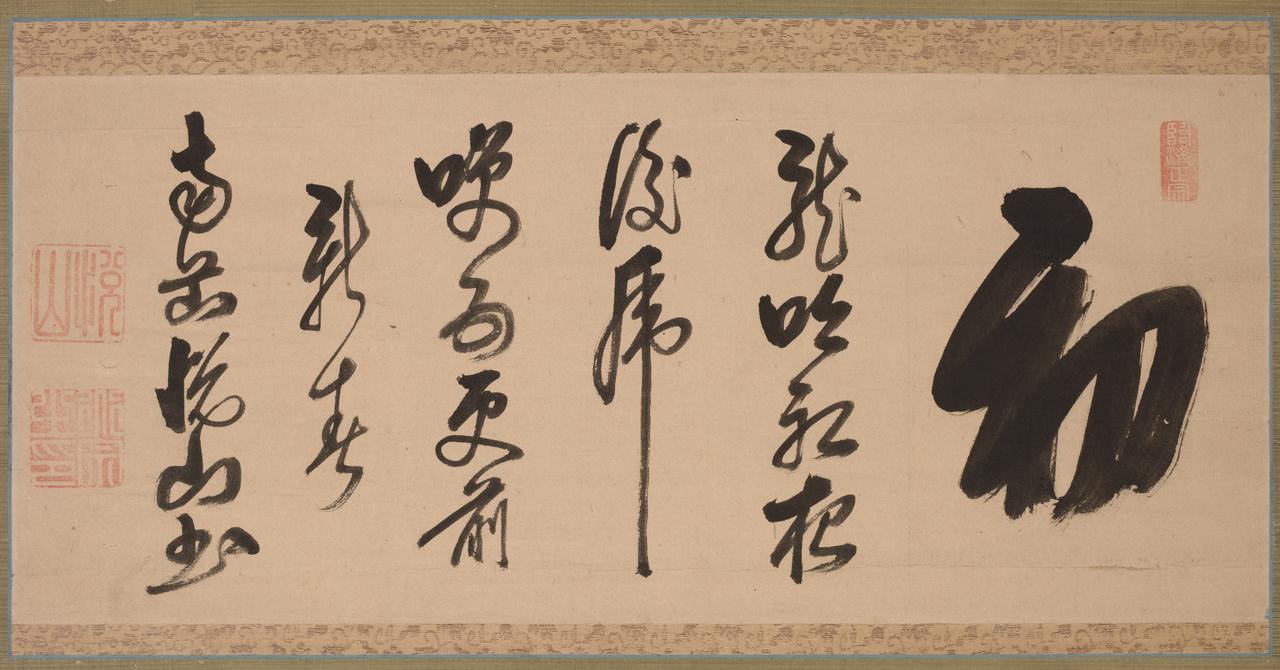
Example of Caoshu (rawpixel)
The materials used in Chinese calligraphy have directly shaped its form and aesthetic value. These elements are collectively known as the “Four Treasures”: brush, ink, paper, and inkstone.
The most fundamental tool of calligraphy. Brushes typically have bamboo handles and tips made from goat, wolf, rabbit, or mixed animal hairs. Brush types vary according to tip length, stiffness, and hair arrangement. The brush is the primary determinant of calligraphic style; the thickness, fineness, speed, and rhythm of strokes are shaped by the brush’s properties.
Brush technique is regarded as the central element determining not only legibility but also the aesthetic value of calligraphy. For this reason, throughout history, masters have prepared instructional texts to transmit different brush movements to their students.
Traditional Chinese ink is made by mixing soot with animal glue and pouring the mixture into molds. This solid ink is ground with water on an inkstone to produce liquid ink. Although black is dominant, different tones are achieved by varying the amount of water. Ink is a crucial element in determining the intensity and vitality of lines.
Paper, invented during the Han Dynasty, is the most commonly used surface in calligraphy. Xuan paper (xuanzhi) stands out for its flexibility, absorbency, and durability. Paper types influence calligraphic expression; highly absorbent papers better reflect rapid brush movements, while denser papers emphasize distinct lines.
Inkstones are stone vessels used to prepare ink. Water is dripped onto the surface, and the ink stick is rubbed to produce liquid ink. They possess both functional and aesthetic value; many inkstones are regarded as works of art in their own right.
Wang Xizhi (303–361): Considered the most important calligrapher of the Jin Dynasty, he is renowned for his works in semi-cursive script (xingshu) and cursive script (caoshu). His masterpiece, the “Preface to the Poems Composed at the Orchid Pavilion” (Lanting Xu), is regarded as one of the supreme achievements in Chinese calligraphy.
Wang Xianzhi (344–386): Son of Wang Xizhi, he gained recognition for his original style in cursive script (caoshu). His innovations in character connections and stroke flow strengthened the expressive dimension of calligraphy.
Ouyang Xun (557–641): A master of the Tang Dynasty, he is known for his contributions to regular script (kaishu). His sharp, precise lines and symmetrical compositions established the classical model of kaishu.
Yan Zhenqing (709–785): Another great master of the Tang period, his works in kaishu and xingshu combine technical strength with emotional intensity. His characters are distinguished by powerful vertical strokes and balanced structures.
Liu Gongquan (778–865): He lived during the late Tang Dynasty and is known for his disciplined and robust style in kaishu. Liu’s works were widely adopted as models in bureaucratic documentation.
Zhao Mengfu (1254–1322): One of the most important calligraphers of the Yuan Dynasty, he revitalized traditional scripts and fused them with innovative aesthetics. He excelled in both regular and semi-cursive scripts and, through his active involvement in painting, strengthened the relationship between calligraphy and painting.
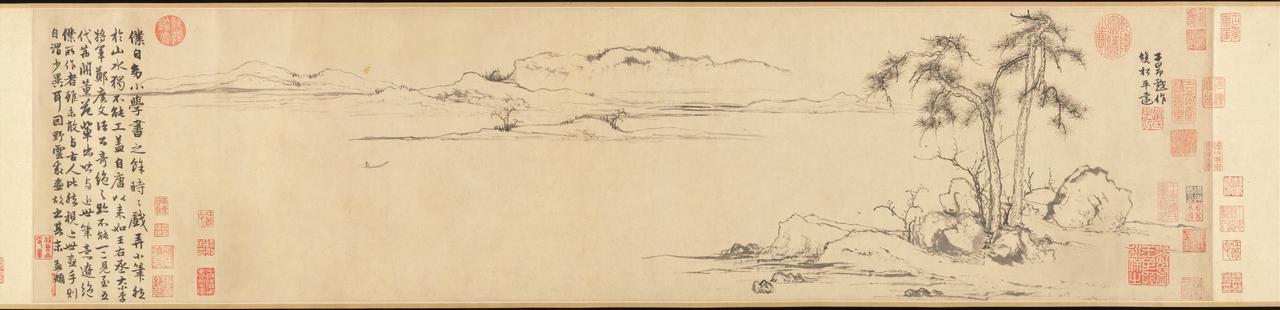
Twin Pines, Level Distance – Zhao Mengfu (THE MET)
The Chinese writing system and its calligraphic tradition were transmitted historically to Korea, Japan, and Vietnam. The characters used in these regions—for example, hanja in Korea, kanji in Japan, and chữ Nôm in Vietnam—demonstrate how calligraphy shaped writing culture across East Asia. Techniques involving brush, ink, and paper were adopted in these countries and, over time, merged with local styles to form unique calligraphic traditions.
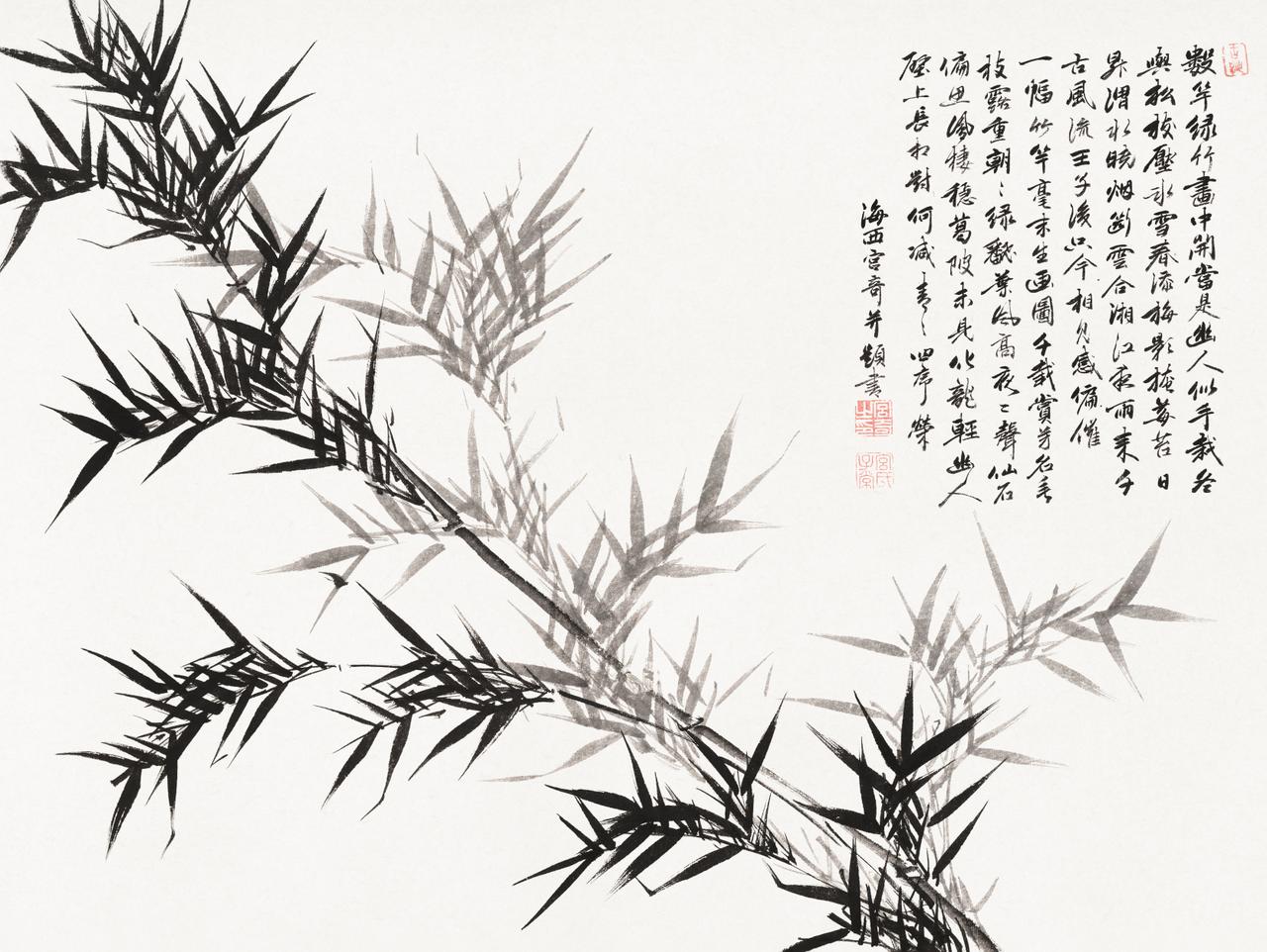
Japanese Bamboo Poem (rawpixel)
Calligraphy, together with painting and poetry, is regarded in China as one of the “Three Perfections.” This triad found resonance in East Asian aesthetics; specifically, Japanese “shodō” and Korean “seoye” traditions are founded upon the fundamental principles of Chinese calligraphy.
Cao, Hengyuan, and Champadaeng, Sitthisak. “The Art of Chinese Calligraphy: Educational Protection and Literacy Study of Cultural Heritage.” *International Journal of Education & Literacy Studies* 12, no. 3 (2024): 160–171. Accessed September 15, 2025.https://files.eric.ed.gov/fulltext/EJ1435043.pdf
Chen, Ziyuan. “Chinese Calligraphy: An Ancient Art in the Modern Era”. SHS Web of Conferences, no. 159 (2023): 1–5. Accessed September 15, 2025.https://www.shs-conferences.org/articles/shsconf/pdf/2023/08/shsconf_iclcc2023_02003.pdf
Chinese Culture. "Living Heritage: Chinese calligraphy." YouTube. Accessed September 25, 2025.https://youtu.be/aDeszso8Nrw?si=jrKAqyg_9UJhW_Jn
Delbanco, Dawn. “Chinese Calligraphy”. THE MET. Accessed September 15, 2025.https://www.metmuseum.org/essays/chinese-calligraphy
Du, Xiaohan. “Chinese calligraphy, an introduction.” Smarthistory. Accessed September 15, 2025.https://smarthistory.org/chinese-calligraphy-intro/
Hung, Ruyu. “Self-Cultivation through Art: Chinese Calligraphy and the Body”. *Educational Philosophy and Theory* 56, no. 7 (2021): 621–625. Accessed September 15, 2025.https://www.tandfonline.com/doi/citedby/10.1080/00131857.2021.1977624?scroll=top&needAccess=true
Qian, Zhuzhong, and Fang, Desheng. “Towards Chinese Calligraphy.” *Macalester International* 18, no. 12 (2007): 100–125. Accessed September 15, 2025.https://digitalcommons.macalester.edu/cgi/viewcontent.cgi?article=1339&context=macintl
Rawpixel. "Japanese bamboo and poem (1717 - 1774) vintage painting by Miyazaki Impo JPG." Accessed September 25, 2025.https://www.rawpixel.com/image/7642548/image-art-vintage-leaf
Rawpixel. "Letter to Liang Zhongren JPG." Rawpixel. Accessed September 25, 2025.https://www.rawpixel.com/image/9087800/letter-liang-zhongren
Rawpixel. “Calligraphy in Semi-Cursive Style (xing-caoshu) by Yueshan Daozong JPG”. Accessed September 25, 2025.https://www.rawpixel.com/image/9716169/calligraphy-semi-cursive-style-xing-caoshu-yueshan-daozong
THE MET. "Quatrain on spring’s radiance." *THE MET.* Accessed September 25, 2025.https://www.metmuseum.org/art/collection/search/40103
THE MET. "Twin Pines, Level Distance." Accessed September 25, 2025.https://www.metmuseum.org/art/collection/search/40508
THE MET. "Wine container (Pou)." Accessed September 25, 2025.https://www.metmuseum.org/art/collection/search/52617
THE MET. “Excerpt from ‘Song of Leyou Park’”. Accessed September 25, 2025.https://www.metmuseum.org/art/collection/search/39534

Origin | Shang Dynasty (c. 1600–1046 BCE) oracle bone inscriptions | ||||||||
|---|---|---|---|---|---|---|---|---|---|
Basic Font Types | Clerical script (Lishu) Large seal script (Dazhuan) Small seal script (Xiaozhuan) Cursive script (Caoshu) Regular script (Kaishu) Semi-cursive script (Xingshu) | ||||||||
Materials | Paper (zhi) Inkstone (yan) Ink (mo) Brush (bi) | ||||||||
Prominent Masters | Wang Xizhi Wang Xianzhi Ouyang Xun Yan Zhenqing Liu Gongquan Zhao Mengfu | ||||||||
No Discussion Added Yet
Start discussion for "Chinese Calligraphy" article
Historical Development
Fundamental Script Types
Large Seal Script (Dazhuan)
Small Seal Script (Xiaozhuan)
Clerical Script (Lishu)
Regular Script (Kaishu)
Semi-Cursive Script (Xingshu)
Cursive Script / Running Script (Caoshu)
Materials and Techniques
Brush (Bi)
Ink (Mo)
Paper (Zhi)
Inkstone (Yan)
Notable Calligraphers
Influences of Chinese Calligraphy