


This article was automatically translated from the original Turkish version.
+2 More
Sadaka stones were one of the significant structures used during the Ottoman period to foster social solidarity. These stones reflected the culture of assisting those in need within society and formed part of a system that enabled mutual aid without compromising individuals’ dignity. Found widely across the Ottoman territories, sadaka stones drew attention as a practice that encouraged the open giving of zakat and charity while ensuring it was carried out with humility.
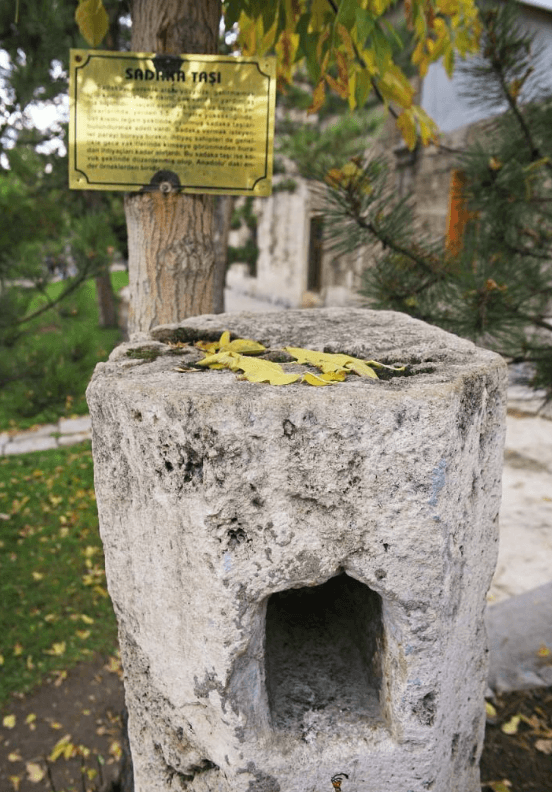
Example of a Sadaka Stone (Source: Sadaka Taşı)
Sadaka stones were typically column-shaped stones made of marble or granite, approximately one to two meters in height. A recessed compartment at the top held cash donations. Sometimes, special compartments or similar spaces were provided alongside the stones for in-kind contributions. Most individuals in need took only the amount of money they required from the stone and refrained from taking more. This reflected the deeply rooted Ottoman values of contentment and generosity.
The absence of direct contact between the donor and the recipient was considered an important virtue in Ottoman society. The donor did not know to whom they gave, and the recipient did not know who provided the support. This condition ensured that charitable acts remained free from showiness while allowing those in need to receive assistance without feeling shame.
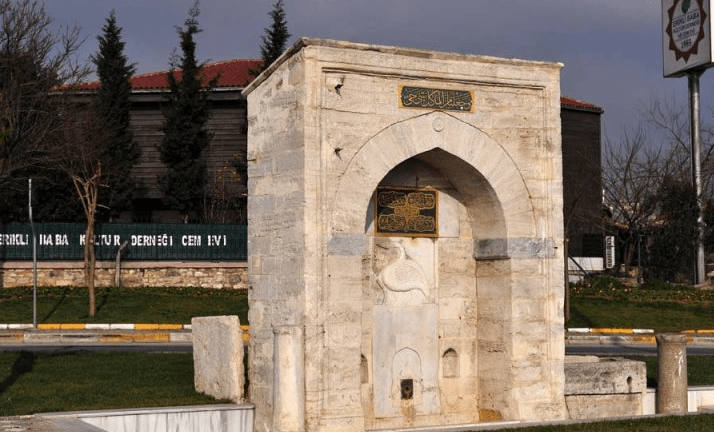
Example of a Sadaka Stone (Source: Sadaka Taşı)
Sadaka stones were concentrated in specific areas within Ottoman city planning. They were commonly located in mosque courtyards, near tombs, at the heads of fountains, and in the vicinity of madrasas and tekkes — that is, within the grounds of waqf institutions. Sadaka stones were also erected in front of places such as the Miskinler Tekkesi in Üsküdar, which housed those in need. Additionally, sadaka stones were placed near cemeteries designated for executioners, who were socially stigmatized and often lived in poverty, relying on these stones to meet some of their basic needs.
While large-scale charitable institutions such as waqfs, soup kitchens, and zakat systems existed in Ottoman society, sadaka stones functioned as a more localized and individualized mechanism of mutual support. As such, they served as an instrument that encouraged assistance not only between the rich and the poor but also among individuals of similar social standing.
In Islam, the concepts of sadaka and infak are regarded as acts of worship that contribute to social balance. Several verses from the Qur’an and the hadiths of the Prophet Muhammad (sav) emphasize that charity should be given discreetly and without humiliating those in need. In this context, sadaka stones are considered one of the concrete manifestations of these religious and ethical principles in Ottoman society.
For example, verse 2:272 of Surah Al-Baqarah states:
“You are not responsible for guiding them; rather, Allah guides whom He wills. Whatever good you give, its benefit returns to you. You give to the poor only for the sake of Allah’s pleasure. The good you give will be multiplied for you, and you will not suffer injustice.”
After the revelation of this verse, it is known that the Prophet (sav) stated that charity should be given not only to Muslims but to anyone in need. The sadaka stone practice in Ottoman society is a tangible example of this universal spirit of mutual aid.
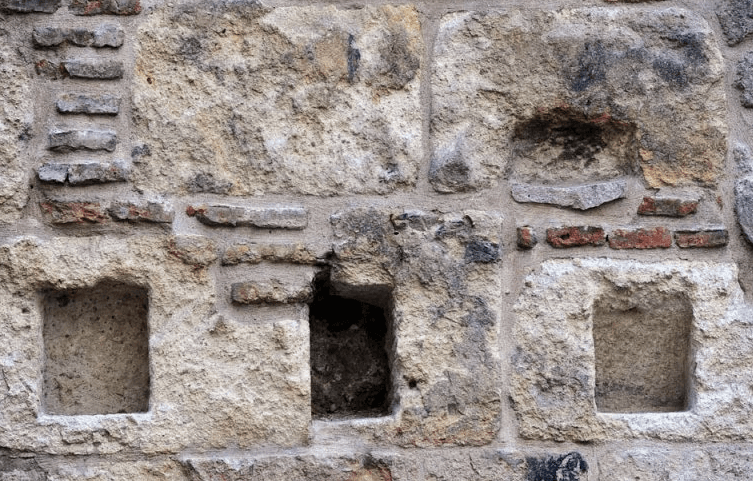
Example of a Sadaka Stone (Source: Sadaka Taşı)
Sadaka stones have survived to the present day in Istanbul and various cities across Anatolia. Some of these include:
These structures offer important insights into the Ottoman social assistance system.
Today, sadaka stones have largely been forgotten or lost their functionality. Changing social and economic conditions have diminished the use of such traditional forms of mutual aid. Nevertheless, some municipalities and waqfs are undertaking initiatives to revive the practice. It can be said that modern applications such as “hanging bread” or “hanging coffee” operate on a similar logic to the sadaka stone system. However, the sadaka stones of the Ottoman period are seen as offering a more meticulous system in preserving the dignity of those receiving aid.
"Sadaka Taşları." Sadakataşı Derneği. Accessed February 27, 2025.https://www.sadakatasi.org.tr/page/sadaka-taslari/216.
Acar, Şinasi. *İstanbul’da Sadaka Taşları.* Büyük İstanbul Tarihi: Afetler ve Sosyal Yardımlaşma, 449-451. Accessed February 27, 2025.https://istanbultarihi.ist/assets/uploads/pdf/istanbulda-sadaka-taslari-134.pdf.
Çetin, Ensar. "Bir Sosyal Yardımlaşma Pratiği Olarak Askıda Kahve ve Sadaka Taşı." *Akademik Bakış Dergisi*, no. 41 (March–April 2014).https://dergipark.org.tr/tr/download/article-file/383828

Function and Use of Sadaka Stones
Place of Sadaka Stones in Ottoman Society
Religious and Cultural Foundations of Sadaka Stones
Primary Locations of Sadaka Stones
Sadaka Stones Today and Cultural Heritage