


This article was automatically translated from the original Turkish version.
+2 More
Cell culture is the process of growing and multiplying cells obtained from living organisms under controlled laboratory conditions. This technique, widely used in modern biotechnology and medical research, plays a crucial role in many fields including genetic studies, drug development, cancer research, and tissue engineering.
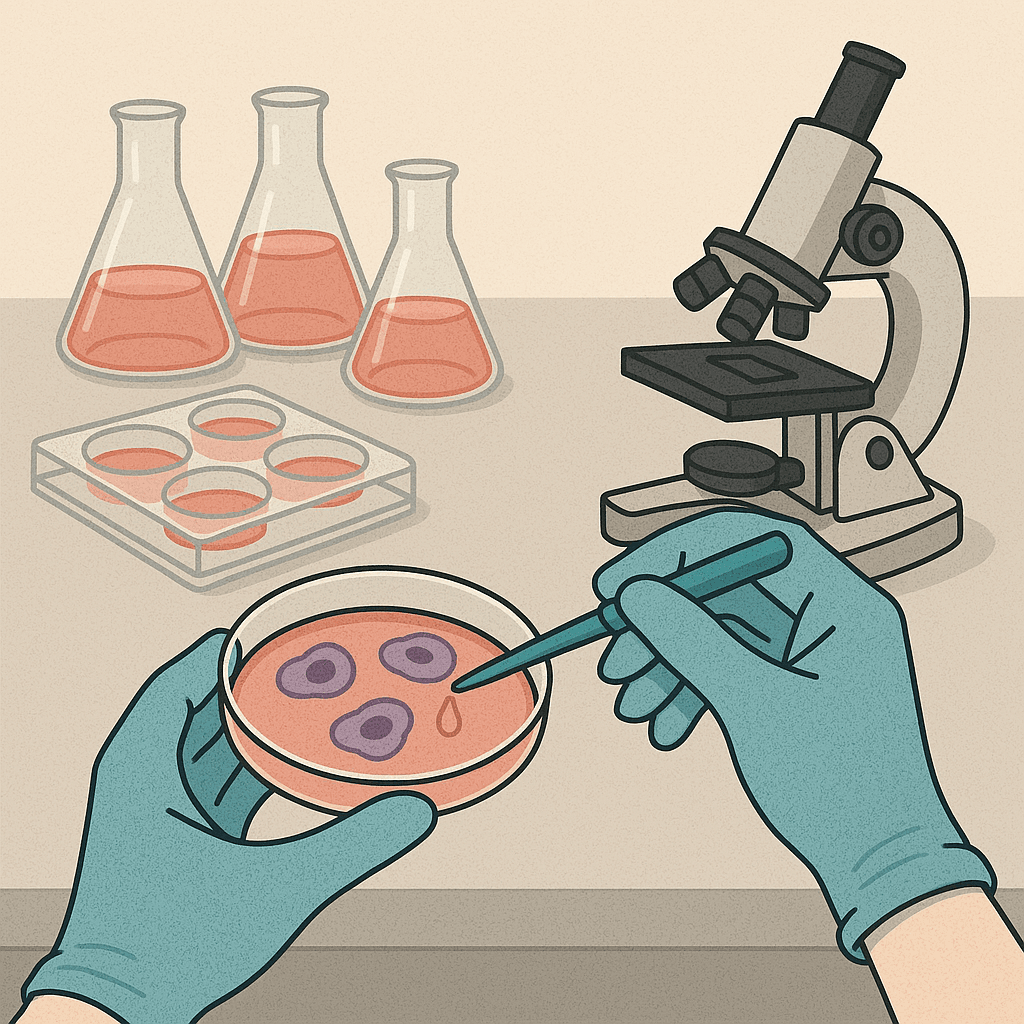
class=\
Cell culture is carried out under sterile conditions to ensure optimal growth of cells in a suitable environment. The key components used in this process are:
Cell culture can be performed using various techniques:
Cell culture is employed in numerous areas of biological and medical research:
Cell culture is a technique that has enabled revolutionary advances in many areas of biology and medicine. Alongside advancing technology, it contributes to the development of more sophisticated cellular models and personalized therapeutic approaches. Progress in cell culture will continue to open new horizons in medicine and biotechnology.
Alberts, B., Johnson, A., Lewis, J., Raff, M., Roberts, K., and Walter, P. (2015). Molecular biology of the cell (6th ed.). Garland Science.
Freshney, R. I. (2015). Culture of animal cells: A manual of basic technique and specialized applications (7th ed.). Wiley-Blackwell.
Kaur, G., Dufour, J. M. (2012). Cell lines: Valuable tools or useless artifacts. *Spermatogenesis, 2*(1), 1-5.https://doi.org/10.4161/spmg.19885
Pampaloni, F., Reynaud, E. G., & Stelzer, E. H. K. (2007). The third dimension bridges the gap between cell culture and live tissue. *Nature Reviews Molecular Cell Biology, 8*(10), 839–845.https://doi.org/10.1038/nrm2236

Fundamental Principles of Cell Culture
Cell Culture Techniques
Applications of Cell Culture