


This article was automatically translated from the original Turkish version.
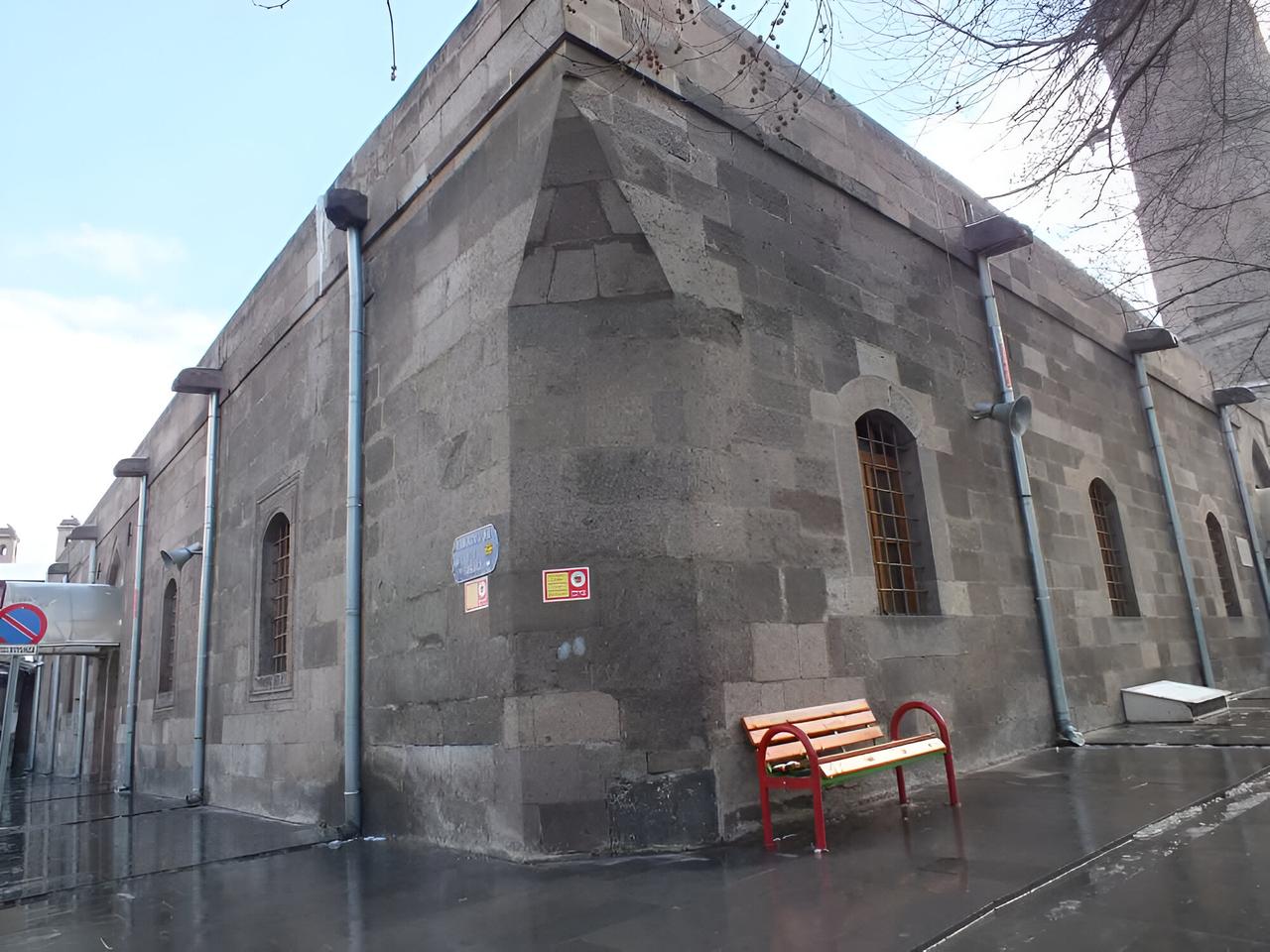
Great Mosque (Ulu Cami)
Location | Kayseri city center Beside the Kapalıçarşı | ||||||||
|---|---|---|---|---|---|---|---|---|---|
Other Name | Sultan Cami Ulu Cami | ||||||||
Construction Date | H.530 / M.1135 | ||||||||
Founder | Danişmendli ruler Melik Mehmet Gazi | ||||||||
Size | 47.5 m (length) x 27 m (width) | ||||||||
Base Area | Approximately 30 m x 50 m | ||||||||
Domes | 2 units (original mihrab area, central dome added later) | ||||||||
Minaret | 47 m high, brick with stone base; considered Kayseri's oldest minaret | ||||||||
Material | Pine beams with reed mat concrete covering (later addition) Roman and Byzantine columns | ||||||||
Architectural Style | Seljuk style, pointed arches, open central area (later closed) | ||||||||
Cami Kebir is a historic mosque located in the center of Kayseri, next to the Kapalıçarşı. It is commonly known among the public as Ulu Cami, and is also referred to in various sources as Cami-i Kebir or Sultan Cami. Built in 530 AH/1135 CE by Danişmendlid ruler Melik Mehmet Gazi, this mosque is one of the simplest yet elegant examples of Seljuk architecture.
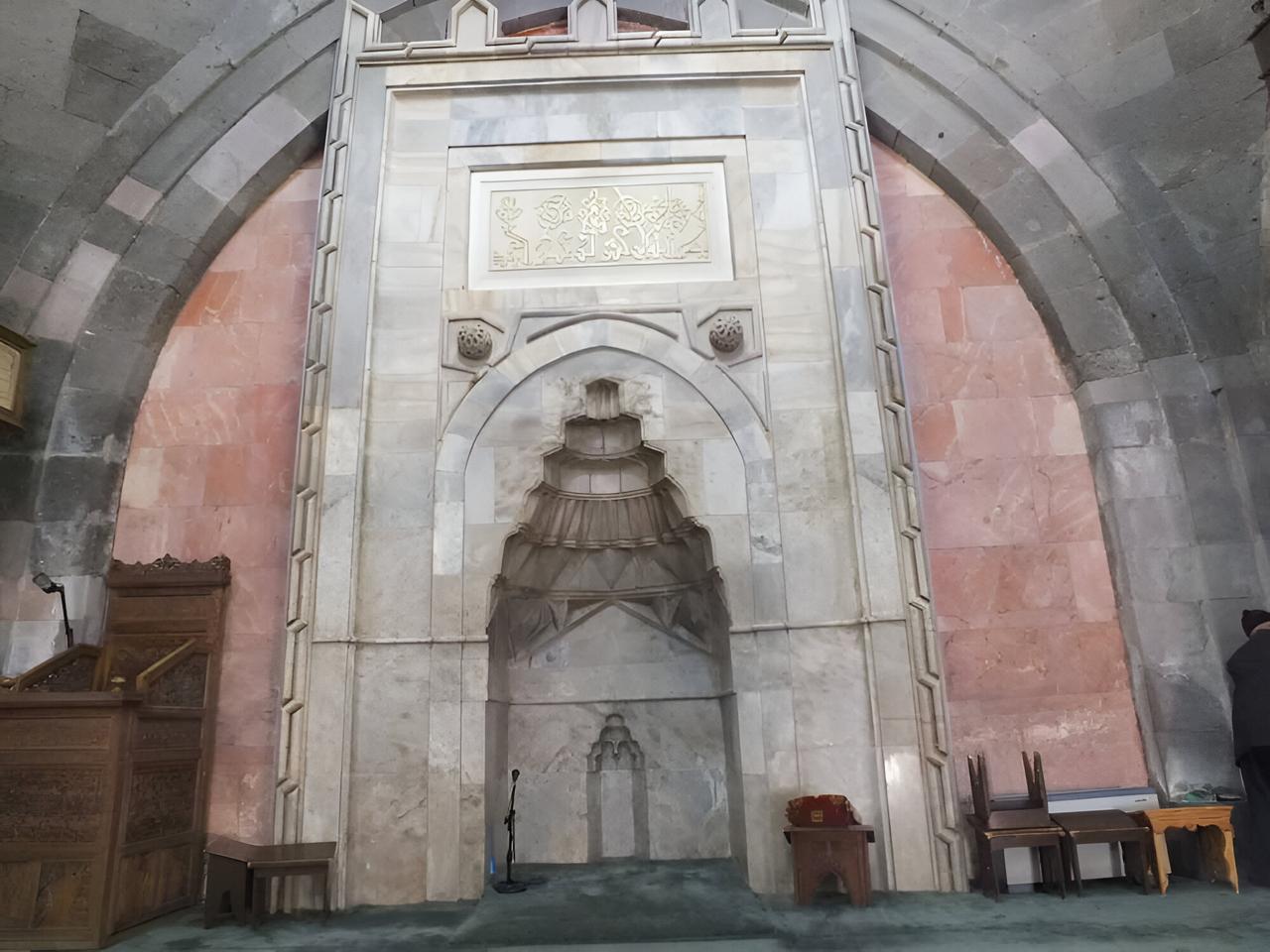
Cami Kebir(Kültür Portalı)
The mosque was originally constructed by Melik Mehmet Gazi, and an inscription on the wall beside the northern entrance has survived as evidence of a later restoration. This inscription records a repair carried out in 602 AH/1206 CE by Yağıbasanoğlu Muzaffereddin Mahmud, a nephew of Melik Mehmet Gazi. The inscription reads: "This mosque was restored in 602 AH/1206 CE by Yağıbasanoğlu Muzaffereddin Mahmud during the reign of Kılıçaslan’s son, the great Sultan Kayhusrev—may God exalt his aid." In the same period, Muzaffereddin Mahmud’s daughter, Atsuz Elti Hatun, restored the Gülük Camii.
The mosque suffered damage during the major earthquake in Kayseri in 1716 and remained in ruins for five to six years. In 1723, it was restored by Matbah-ı Amire Emini Kayserili Hacı Halil Efendi. During this restoration, the collapsed dome and minarets were repaired, and the ruined cupola of the minaret was rebuilt.
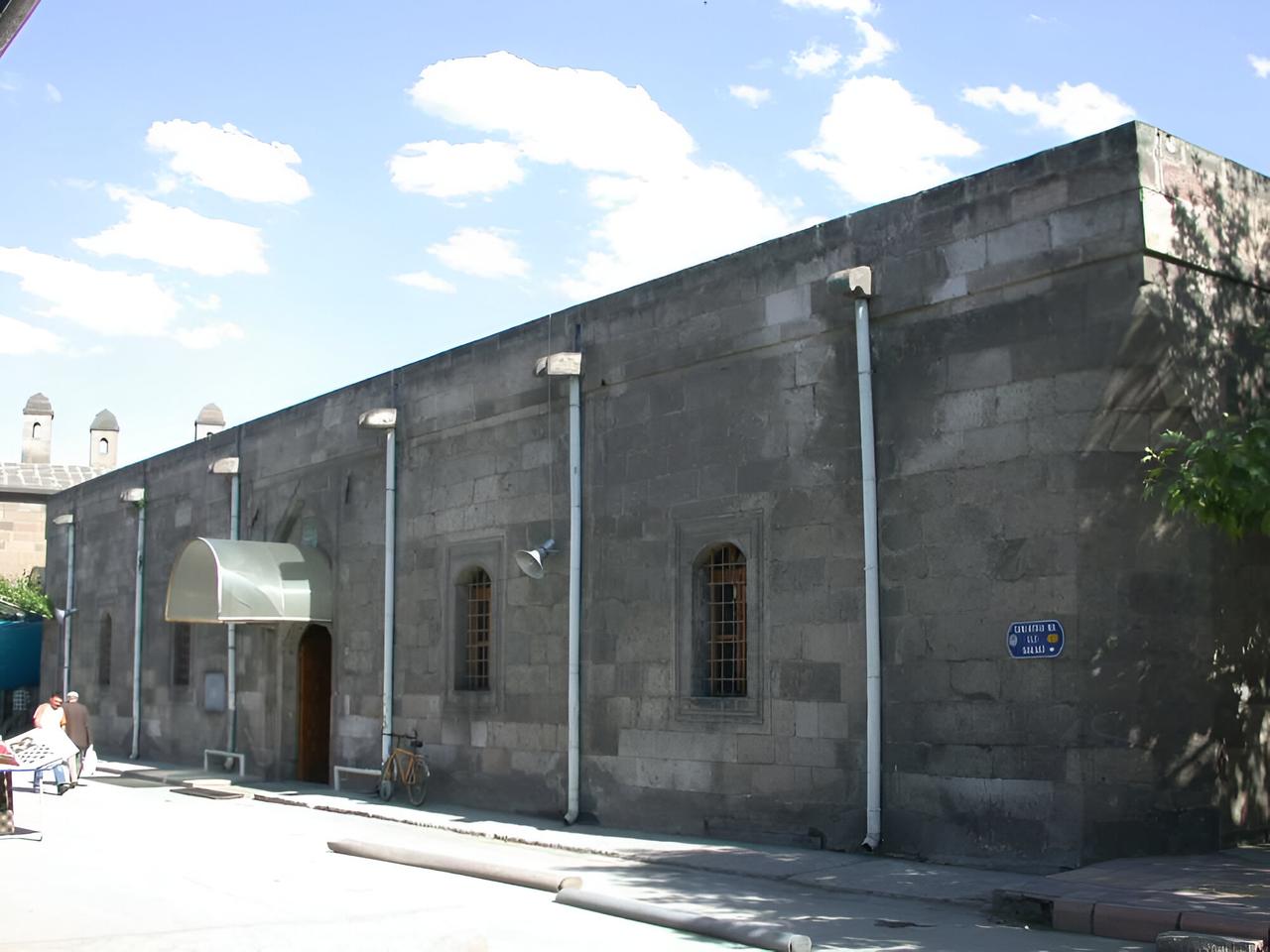
Cami Kebir(Kültür Portalı)
Ulu Cami stands on a base measuring approximately 30 m x 50 m and has a simple exterior design. However, the use of columns belonging to Roman and Byzantine architecture inside the interior has led some scholars to suggest that the mosque was converted from an earlier church or palace. Nevertheless, its pointed arches and architectural layout are considered an original work of Islamic architecture. The actual dimensions of the mosque are 47.5 meters in length and 27 meters in width.
The structure contains two domes: one in front of the mihrab and the other in the central section. It is believed that the dome in front of the mihrab was built together with the mosque, while the central dome is thought to have been added later. The typical Seljuk architectural plan, which leaves the central area open and well-lit, is also evident in Ulu Cami, though this open space was later covered by a dome.
Inside the mosque, piers and columns are connected by arches. Arches parallel to the short axis divide the prayer space, while arches connecting the southern retaining points run parallel to the long axis. The ceiling is supported by pine beams with a diameter of 30–50 cm, covered above with reed mats and originally with earth, and today with a concrete layer. The slope of the ceiling, achieved through varying thickness of the covering, allows rainwater to drain. Stone gutters placed along the outer walls facilitate water runoff.
The mosque’s minaret is considered a later addition due to its architectural differences. Although there is no definitive information about when it was built, it is regarded as the oldest minaret in Kayseri. Standing 47 meters high, it is constructed of brick on a stone base. Beneath the gallery, a verse written in Kufic script on tile remains undeciphered to this day. Access to the gallery is via a straight internal staircase, and from there to the balcony via a spiral staircase.
A popular legend surrounds the construction of Ulu Cami. According to this tale, Melik Mehmet Gazi ordered the builders not to accept help from anyone. However, an elderly widow, wishing to contribute to the mosque’s construction, requested that the seven bricks she had brought be incorporated into the structure. The master builder refused her request. Melik Mehmet Gazi was then warned in a dream and ordered that the woman’s bricks be added. The woman was found and brought forward, and the bricks were placed on the upper part of the eastern wall. Today, the seven bricks visible on this wall are considered remnants of this legend.
Kayseri Ulu Cami is an important example of Seljuk architecture, reflecting its simple yet functional characteristics. Its challenging history through earthquakes and its preserved structure and minaret through successive restorations make it one of the most striking historical buildings in the city. Additionally, a medrese added at a later period and the tomb of Melik Mehmet Gazi enhance the cultural value of the complex. Today, this mosque still stands as a monument bearing witness to Kayseri’s history.
Kayseri Büyükşehir Municipality. "Bünyan Ulu Cami." Accessed April 6, 2025.https://www.kayseri.bel.tr/kesfet-listeleme/bunyan-ulu-cami
Kayseri Büyükşehir Municipality. "Ulu Cami ve Çeşmesi." Accessed April 6, 2025.https://www.kayseri.bel.tr/kesfet-listeleme/ulu-cami-ve-cesmesi
Kayseri Valiliği. "Cami Kebir (Ulu Cami)." Accessed April 6, 2025.http://www.kayseri.gov.tr/cami-kebir-ulu-cami-.
Kültür Portalı. "Ulu Camii (Camii Kebir) | Kültür Portalı." Accessed April 6, 2025.https://www.kulturportali.gov.tr/turkiye/kayseri/gezilecekyer/ulu-camii-camii-kebir.

Great Mosque (Ulu Cami)
Location | Kayseri city center Beside the Kapalıçarşı | ||||||||
|---|---|---|---|---|---|---|---|---|---|
Other Name | Sultan Cami Ulu Cami | ||||||||
Construction Date | H.530 / M.1135 | ||||||||
Founder | Danişmendli ruler Melik Mehmet Gazi | ||||||||
Size | 47.5 m (length) x 27 m (width) | ||||||||
Base Area | Approximately 30 m x 50 m | ||||||||
Domes | 2 units (original mihrab area, central dome added later) | ||||||||
Minaret | 47 m high, brick with stone base; considered Kayseri's oldest minaret | ||||||||
Material | Pine beams with reed mat concrete covering (later addition) Roman and Byzantine columns | ||||||||
Architectural Style | Seljuk style, pointed arches, open central area (later closed) | ||||||||
No Discussion Added Yet
Start discussion for "Cami Kebir (Kayseri Ulu Cami)" article
History and Restorations
Architectural Features
Minaret
The Story of the Seven Bricks