This article was automatically translated from the original Turkish version.
Product / Product Group(s) | Helva / Chocolate confectionery and related products | ||||||||
|---|---|---|---|---|---|---|---|---|---|
Place of Production | Burdur Province and its districts | ||||||||
Geographical Indication Type(s) | Mahreç mark | ||||||||
Registration Date | 15.08.2023 | ||||||||
Registering Authority | Burdur Chamber of Commerce | ||||||||
Basic Components | Grape molasses, yellow poppy seeds, raw walnut kernels, wheat flour | ||||||||
Shape and Presentation | Cube, cylinder or baklava slice shape; optional sesame or roasted hemp seeds | ||||||||
Distinctive Characteristics | Production with yellow poppy, dominant molasses flavor, transition from traditional stone grinding to modern production | ||||||||
Control Authorities | Burdur Chamber of Commerce (coordinator), Burdur Municipality, Provincial Directorate of Agriculture and Forestry, Chamber of Tradesmen and Craftsmen, Provincial Directorate of Health | ||||||||
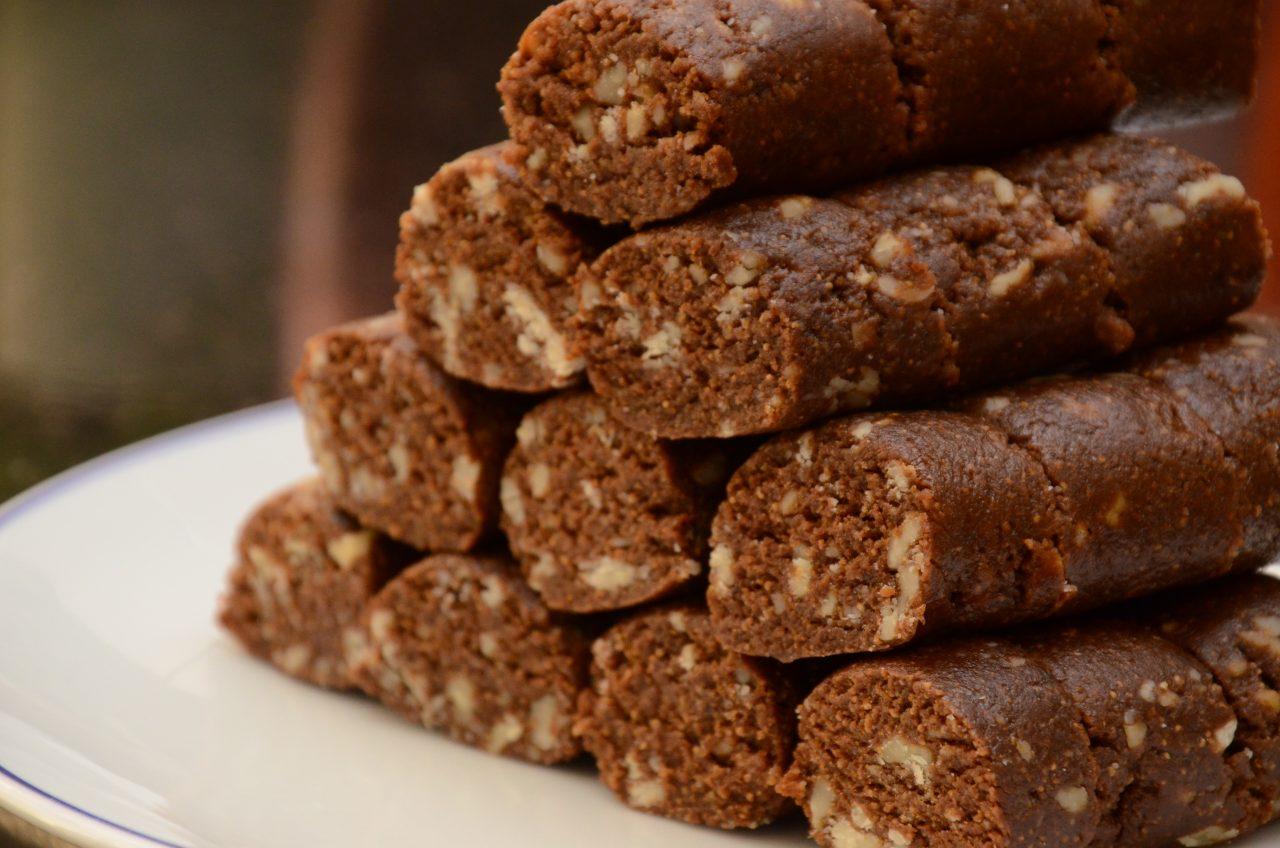
Burdur Poppy Halva; a traditional sweet specific to Burdur Province, prepared using fundamental ingredients such as grape molasses, yellow poppy seeds, raw walnut kernels, and wheat flour. It attracts attention with its soft yet dense texture, distinctive molasses aroma, and nutritious composition. The product is protected under Industrial Property Law No. 6769 as a geographical indication and was officially registered by the Turkish Patent and Trademark Office on 15 August 2023.
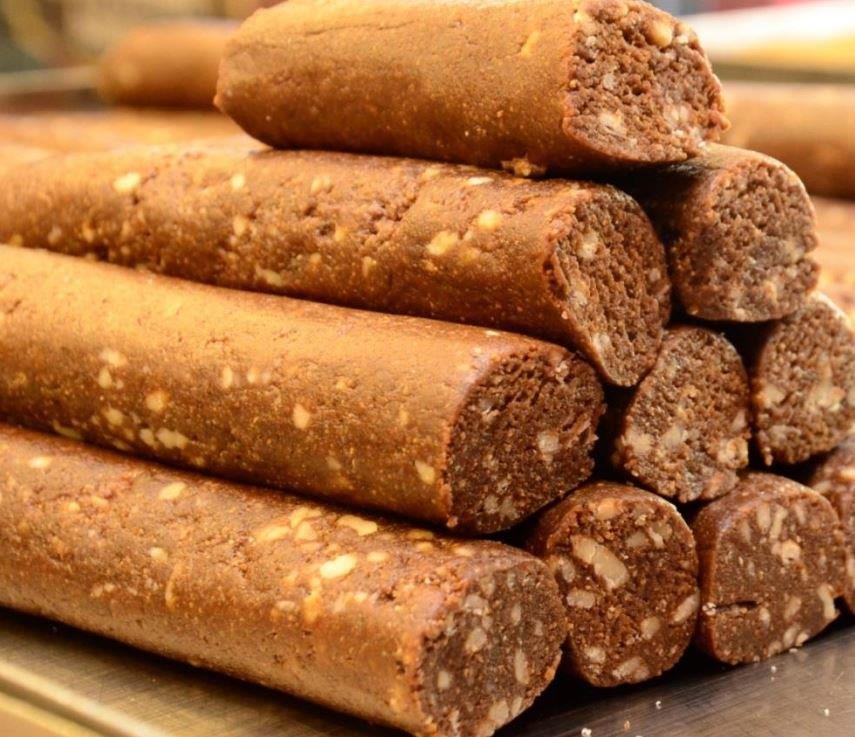
Burdur Poppy Halva (Turkish Patent and Trademark Office)
Burdur Poppy Halva is prepared with a thickness of 2–3 cm and is typically cut into cubes, cylinders, or baklava-style slices for serving. Only yellow poppy seeds are used in the halva, a preference driven by both flavor and color considerations. Optionally, the surface may be covered with sesame or roasted hemp seeds. In the past, poppy seeds were ground using stone mortars or grinding stones; over time, these traditional methods have been integrated with modern production techniques to achieve the current form of the product.
The main ingredients used in halva production are 530 ml of grape molasses, 250 grams of raw walnut kernels, 180 grams of yellow poppy seeds, and 35–40 grams of wheat flour. The yellow poppy seeds are roasted for approximately 40 minutes until they turn a deep yellow color. Meanwhile, the grape molasses is boiled over a wood fire for about 45 minutes until it reaches a thick consistency, after which the roasted poppy seeds are added. The mixture is boiled for an additional 20 minutes, then large pieces of raw walnut kernels are incorporated and the mixture is cooked further for one hour at a temperature of 180–200 °C. Subsequently, wheat flour is added and the mixture is stirred for another 10 minutes at approximately 100–120 °C. The mixture is then cooled to 30 °C and processed in a grinding machine to achieve the halva texture. During this process, the oils from the walnuts and poppy seeds blend into the molasses, forming the characteristic consistency of the halva. In the final stage, the halva is cut into various shapes and packaged.
Burdur Poppy Halva is highly nutritious. Its dry matter content ranges between 91.60% and 93.60%. The ash content varies from 1.54% to 1.84%. Among fatty acids, linoleic acid content ranges from 40.21% to 42.21%, while oleic acid content ranges from 38.53% to 40.53%. The mineral composition is also notable: calcium levels range from 1450 to 1650 µg/g, and iron levels range from 570 to 650 µg/g. Additionally, it contains trace amounts of selenium, at levels between 0.01 and 1 µg/g.
The production of Burdur Poppy Halva is restricted exclusively within the boundaries of Burdur Province. The use of locally sourced ingredients such as yellow poppy seeds and grape molasses imparts a distinct geographical character to the product. Both the local origin of the ingredients and the intergenerational transmission of production knowledge establish a strong “link of reputation” between the product and its geographical origin.
The product can be stored for up to two months at a temperature of +4 °C in food-safe, airtight packaging. The label “Burdur Poppy Halva” and the geographical indication emblem must appear on the packaging. In cases where packaging is not used, this information must be clearly displayed within the production facility.
Production monitoring is conducted by a specialized commission composed of representatives from the Burdur Chamber of Commerce and Industry, Burdur Municipality, Provincial Directorate of Agriculture and Forestry, Guilds and Artisans Association, and Provincial Directorate of Health. Inspections are carried out at least once annually; additional inspections may be conducted as needed or upon complaint. During inspections, compliance with ingredient specifications, adherence to the production process, and observance of labeling regulations are verified.
Burdur Ticaret of Commerce. "Burdur’s 14th Geographical Indication Registered Product Becomes Poppy Halva." Burdur Chamber of Commerce (blog), August 28, 2024. Accessed July 15, 2025. https://www.burdurtb.org.tr/tr/2024/08/28/burdurun-14uncu-cografi-isaret-tescilli-urunu-hashas-helvasi-oldu/.
Turk Patent and Trademark Office. "Burdur Haşhaş Helvası – Tescil Belgesi ve Teknik Şartname." Accessed July 15, 2025. https://ci.turkpatent.gov.tr/Files/GeographicalSigns/8300a9f2-2f04-4665-8b5d-1b2748bfaa69.pdf.
Turkish Patent and Trademark Office. "Burdur Haşhaş Helvası – Coğrafi İşaret Detayı." Accessed July 15, 2025. https://ci.turkpatent.gov.tr/cografi-isaretler/detay/4167.
Product / Product Group(s) | Helva / Chocolate confectionery and related products | ||||||||
|---|---|---|---|---|---|---|---|---|---|
Place of Production | Burdur Province and its districts | ||||||||
Geographical Indication Type(s) | Mahreç mark | ||||||||
Registration Date | 15.08.2023 | ||||||||
Registering Authority | Burdur Chamber of Commerce | ||||||||
Basic Components | Grape molasses, yellow poppy seeds, raw walnut kernels, wheat flour | ||||||||
Shape and Presentation | Cube, cylinder or baklava slice shape; optional sesame or roasted hemp seeds | ||||||||
Distinctive Characteristics | Production with yellow poppy, dominant molasses flavor, transition from traditional stone grinding to modern production | ||||||||
Control Authorities | Burdur Chamber of Commerce (coordinator), Burdur Municipality, Provincial Directorate of Agriculture and Forestry, Chamber of Tradesmen and Craftsmen, Provincial Directorate of Health | ||||||||
No Discussion Added Yet
Start discussion for "Burdur Poppy Seed Halva" article
Distinctive Characteristics
Production Process
Nutritional Properties
Geographical Origin and Production Area
Packaging and Storage
Monitoring and Protection