This article was automatically translated from the original Turkish version.
Bling technology is defined as rings with integrated blades that replace traditional turbine disks. These rings are manufactured using metal matrix composite (MMC) technology with the aim of enhancing engine performance and reducing weight. Blings are produced from advanced materials such as titanium silicon carbide (TiSiC) and offer weight savings of up to 60–70 percent compared to conventional titanium alloys. This technology is being tested for use in the F135 engine, developed under the partnership between Rolls-Royce and General Electric (GE), for the Lockheed Martin F-35.
One of the key advantages of Bling technology is the elimination of traditional turbine disks. Instead of the integrated disk-and-blade structure known as a blisk, a reinforced ring structure made with MMC is used. This allows the removal of the disk hub, resulting in weight reduction and improved aerodynamic efficiency.
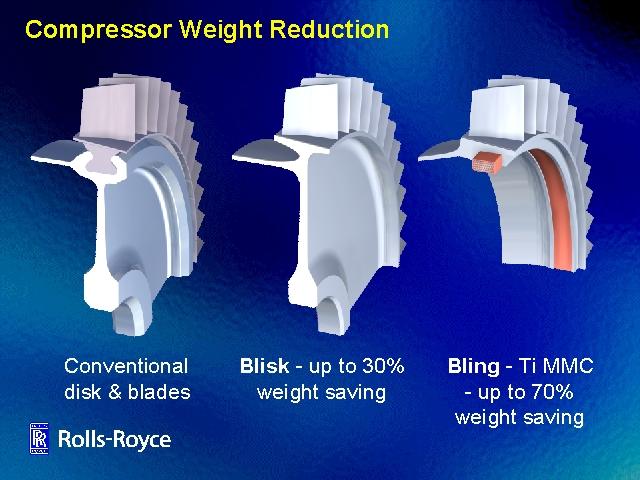
Bling (Rolls-Royce)
Bling technology is initially being tested in military aircraft engines, and if successful, it is planned to be integrated into civil aviation engines. The fan section of the F135 engine developed by Rolls-Royce and GE will feature rings manufactured using this technology.
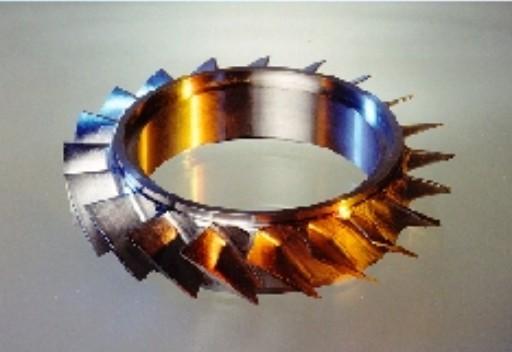
Bling (
In the aviation industry, every gram matters. Lighter engine components directly improve flight performance. Reduced weight enables aircraft to carry more payload and achieve longer ranges. Additionally, fuel savings lower operational costs and reduce carbon emissions.
The use of Bling technology in fifth-generation fighter aircraft demonstrates its critical importance as an innovation. Rolls-Royce’s advanced engineering solution is setting a new standard not only for today’s but also for future aviation engines.
Bling technology is a highly innovative solution for improving the efficiency of aircraft engines and achieving weight reduction. By replacing traditional disk structures, it simultaneously reduces costs and enhances performance. In the future, widespread adoption of this technology in civil aviation is anticipated.
Coppinger, Rob. "Rolls-Royce Tests Material to Give JSF Engine Some Bling." *Flight Global*, May 29, 2007. Accessed May 13, 2025.https://www.flightglobal.com/rolls-royce-tests-material-to-give-jsf-engine-some-bling-/73991.article
Ruffles, Philip C. "Aero Engines of the Future." *The Aeronautical Journal* 107, no. 1072 (2003): 307–321. Accessed May 13, 2025.https://doi.org/10.1017/S0001924000013610