


This article was automatically translated from the original Turkish version.
+2 More
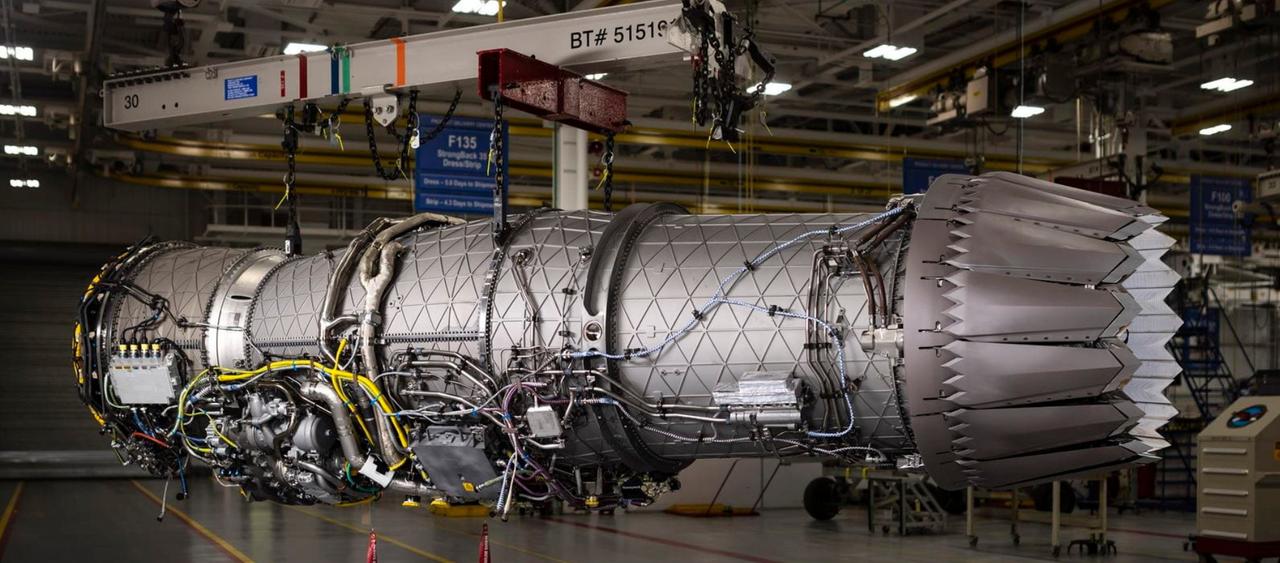
F135 Turbofan Engine
Engine Name | F135 | ||||||||
|---|---|---|---|---|---|---|---|---|---|
Manufacturer | Pratt & Whitney (Raytheon Technologies) | ||||||||
Aircraft Used | F-35 Lightning II (A, B, C variants) | ||||||||
Developed From | F119 | ||||||||
First Flight | 2006 (with F-35 prototype) | ||||||||
Engine Type | Single shaft low bypass ratio turbofan | ||||||||
Configurations | CTOL (F-35A), CV (F-35C), STOVL (F-35B) | ||||||||
Maximum Thrust (CTOL/CV) | 43,000 lbf (191.3 kN) | ||||||||
Maximum Thrust (STOVL) | ~40,740 lbf (181.2 kN) (including Lift Fan) | ||||||||
Bypass Ratio | 0.57 (CTOL/CV), 0.51 (STOVL) | ||||||||
Overall Pressure Ratio | 28 (CTOL/CV), 29 (STOVL) | ||||||||
Length | 220 in (5.59 m) – CTOL/CV 369 in (9.37 m) – STOVL | ||||||||
Fan Inlet Diameter | 43 in (1.09 m) | ||||||||
Weight | 500 kg (estimated) 4 may vary by variant | ||||||||
Key Feature | 3-stage fan 6-stage HPC 2-stage LPT Advanced Health Monitoring System (PHM) Lift Fan for STOVL | ||||||||
F135 is an advanced turbofan engine developed by US-based Pratt & Whitney for fifth-generation fighter aircraft. This engine powers all variants of the F-35 Lightning II joint strike fighter family and was developed as a derivative of the F119 engine. The F135 is available in different configurations to accommodate both conventional takeoff and landing (CTOL/CV) and short takeoff and vertical landing (STOVL) aircraft.
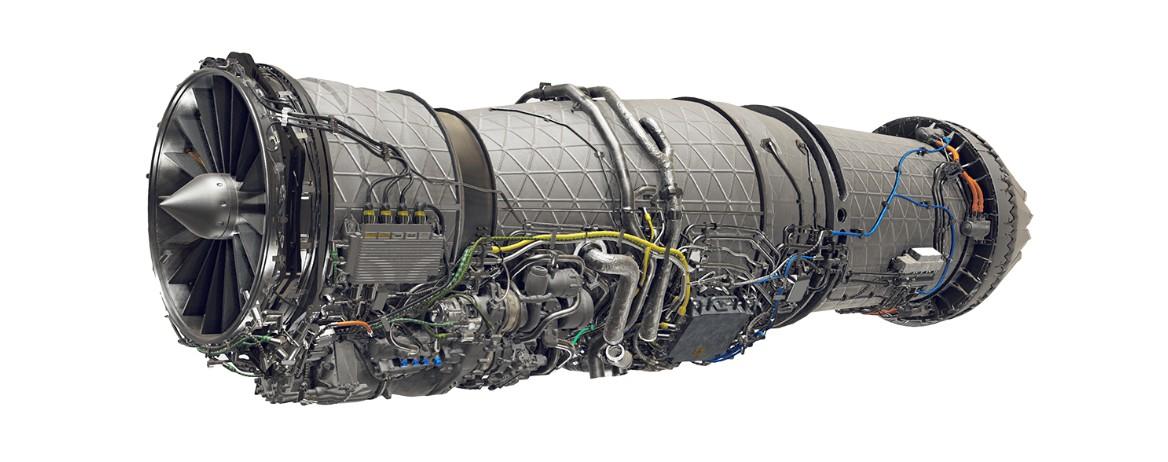
Pratt & Whitney F135 Turbofan Motoru (P&W)
The F135 engine was developed under the Joint Strike Fighter (JSF) program based on the F119 engine. The development process included a series of testing and validation phases spanning from conceptual design to operational capability. By 2008, more than 10,000 flight test hours had been completed and the engine was successfully deployed on F-35 test aircraft.
The F135 engine has two main configurations:
The F135 engine consists of a three-stage fan, a six-stage high-pressure compressor, a two-stage low-pressure turbine, and an exhaust system with variable geometry. The STOVL variant additionally includes a lift fan, a three-bearing swivel nozzle (3BSD), and roll post exhaust outlets.
Critical engine components are equipped with design features that prevent failures and facilitate maintenance. These include advanced prognostic health management (PHM) sensors, vibration analyzers, temperature and pressure sensors, and integrated life management algorithms.
The F135 is designed to operate in integration with the F-35’s Autonomic Logistics Information System (ALIS). Data from sensors on the engine are transmitted to ground stations for post-flight analysis. This architecture supports timely maintenance, fault prediction, and inventory management.
Current use of the F135 engine has revealed limitations in its cooling capacity. According to the 2023 GAO report, increased power and cooling demands under the Block 4 modernization program have forced the engine to operate beyond its design limits, reducing its service life and increasing maintenance costs. An additional $38 billion in engine maintenance costs is projected.
In response, modernization of the engine’s power and thermal management systems has become a priority. However, the GAO report notes that the requirements for this modernization have not yet been clearly defined and that the program has not adequately transparently reported the causes of its cost increases. This situation hinders Congress’s ability to effectively oversee the process.
Higgins, Jim. *F135 Program Overview for 2008 ADF Propulsion Systems Symposium, Victoria, Australia*. Pratt & Whitney, Military Engines, August 8, 2008. Approval #JSF08-269. Accessed May 14, 2025.https://www.navair.navy.mil/sites/g/files/jejdrs536/files/2022-04/F135_Program_Overview_for_2008_ADF_Propulsion_Symposium.pdf
Pratt & Whitney. *F135 Specs Charts*, September 2012. Accessed May 14, 2025.https://www.f135engine.com/assets/uploads/docs/F135_SpecsChart_Sept2012.pdf
Raytheon Technologies. “In Air Dominance, the Past and Future Converge.” RTX.com, January 18, 2024. Accessed May 14, 2025.https://www.rtx.com/news/2024/01/18/in-air-dominance-the-past-and-future-converge
United States Government Accountability Office (GAO). *F-35 Joint Strike Fighter: More Actions Needed to Explain Cost Growth and Support Engine Modernization Decision*. GAO-23-106047. Washington, DC: GAO, May 2023. Accessed May 14, 2025.https://www.gao.gov/products/GAO-23-106047

F135 Turbofan Engine
Engine Name | F135 | ||||||||
|---|---|---|---|---|---|---|---|---|---|
Manufacturer | Pratt & Whitney (Raytheon Technologies) | ||||||||
Aircraft Used | F-35 Lightning II (A, B, C variants) | ||||||||
Developed From | F119 | ||||||||
First Flight | 2006 (with F-35 prototype) | ||||||||
Engine Type | Single shaft low bypass ratio turbofan | ||||||||
Configurations | CTOL (F-35A), CV (F-35C), STOVL (F-35B) | ||||||||
Maximum Thrust (CTOL/CV) | 43,000 lbf (191.3 kN) | ||||||||
Maximum Thrust (STOVL) | ~40,740 lbf (181.2 kN) (including Lift Fan) | ||||||||
Bypass Ratio | 0.57 (CTOL/CV), 0.51 (STOVL) | ||||||||
Overall Pressure Ratio | 28 (CTOL/CV), 29 (STOVL) | ||||||||
Length | 220 in (5.59 m) – CTOL/CV 369 in (9.37 m) – STOVL | ||||||||
Fan Inlet Diameter | 43 in (1.09 m) | ||||||||
Weight | 500 kg (estimated) 4 may vary by variant | ||||||||
Key Feature | 3-stage fan 6-stage HPC 2-stage LPT Advanced Health Monitoring System (PHM) Lift Fan for STOVL | ||||||||
No Discussion Added Yet
Start discussion for "Pratt & Whitney F135" article
Historical Background and Development Process
Technical Specifications and Performance Parameters
CTOL/CV Configuration (Conventional and Carrier Variant)
STOVL Configuration (F-35B)
Structural Features and Components
Integration and Logistics Systems
Modernization and Current Status