


This article was automatically translated from the original Turkish version.
+1 More
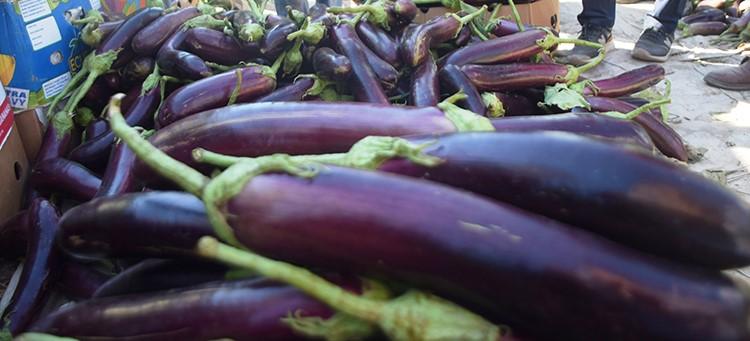
Birecik eggplant
Registration Date | 2017-06-19 | ||||||||
|---|---|---|---|---|---|---|---|---|---|
Protection Start Date | 2014-02-21 | ||||||||
Application Number | C2014/008 | ||||||||
Application Date | 2014-02-21 | ||||||||
Geographical Boundary | Birecik district of Şanlıurfa province (especially along the Euphrates River) | ||||||||
Product Name / Group | Eggplant / Unprocessed or processed fruits and vegetables | ||||||||
Birecik Eggplant is a variety of eggplant grown primarily in the agricultural lands along the Euphrates River in the Birecik district of Şanlıurfa, distinguished from other native eggplant varieties in Türkiye by its morphological and taste characteristics. It has whitish flesh, very few seeds, and soft pulp.
Birecik Eggplant belongs to the group of unprocessed or processed fruits and vegetables and mushrooms. It is intensively produced, especially in agricultural lands along the Euphrates River, beginning with Mezra Village, and constitutes an important source of income for the local population.
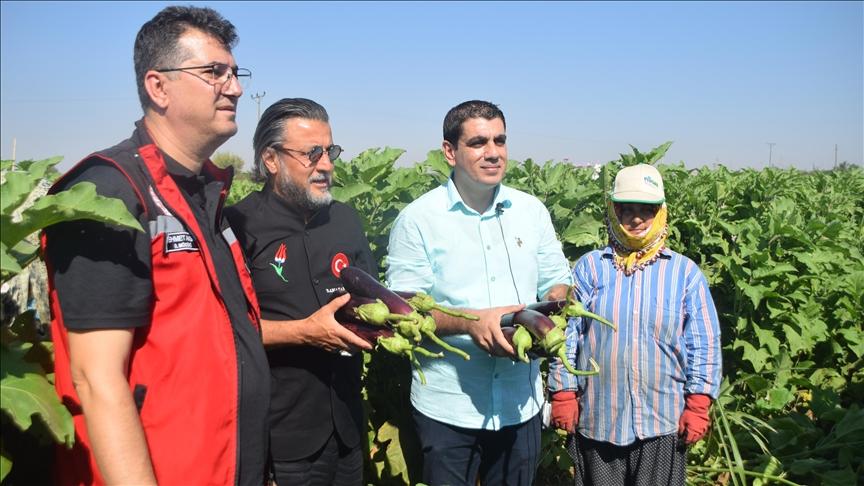
Harvest of Registered Birecik Eggplant (
Birecik Eggplant has become a homogeneous village variety. Due to its soft flesh, it is particularly preferred for eggplant kebab and other eggplant-based dishes.
Although the registration certificate for Birecik Eggplant does not list the applicant’s details, the application was submitted on 21 February 2014 under reference number C2014/008. The product was officially registered on 19 June 2017. Pursuant to Temporary Article 1 of Law No. 6769 on Industrial Property, it has been protected since 21 February 2014 under the former Decree-Law No. 555 on the Protection of Geographical Indications.
Monitoring activities are conducted by a supervisory board composed of one expert from the Birecik Directorate of Food, Agriculture and Livestock, one expert from the Faculty of Agriculture at Harran University, one expert from the District Health Group Presidency, one expert from the Birecik Chamber of Agriculture, one expert from the Birecik Market Commission, and two producers.
Anadolu Ajansı. "Tescilli Birecik Patlıcanı'nın Hasadı Başladı." Anadolu Ajansı, August 15, 2024. Accessed May 28, 2025.https://www.aa.com.tr/tr/ekonomi/tescilli-birecik-patlicaninin-hasadi-basladi/3304846
Turk Patent and Trademark Office. "Birecik Patlıcanı." *Geographical Indications Portal*. Registration No: 217, Registration Date: June 19, 2017. Accessed May 28, 2025.https://ci.turkpatent.gov.tr/cografi-isaretler/detay/38111
Turkish Patent and Trademark Office. "Birecik Patlıcanı." *Geographical Indications Portal*, Registration No: 217, Registration Date: June 19, 2017. Accessed May 28, 2025.https://ci.turkpatent.gov.tr/Files/GeographicalSigns/217.pdf

Birecik eggplant
Registration Date | 2017-06-19 | ||||||||
|---|---|---|---|---|---|---|---|---|---|
Protection Start Date | 2014-02-21 | ||||||||
Application Number | C2014/008 | ||||||||
Application Date | 2014-02-21 | ||||||||
Geographical Boundary | Birecik district of Şanlıurfa province (especially along the Euphrates River) | ||||||||
Product Name / Group | Eggplant / Unprocessed or processed fruits and vegetables | ||||||||
Product Profile and Geographical Indication Type
Product Definition and Distinctive Characteristics
Production Method
Registration Process and Details
Monitoring