This article was automatically translated from the original Turkish version.
Registration Number | 1568 | ||||||||
|---|---|---|---|---|---|---|---|---|---|
Registration Date | 15.04.2024 | ||||||||
Application Number | C2022/000461 | ||||||||
Application Date | 22.12.2022 | ||||||||
Name of the Geographical Indication | Beytüşşebap Jirki Kilimi | ||||||||
Product / Product Group | Rugs and Kilims | ||||||||
Type of Geographical Indication | Mahreç Mark | ||||||||
Applicant / Registered Owner | Beytüşşebap District Directorate of Agriculture and Forestry | ||||||||
Geographical Boundary | Beytüşşebap District Şırnak Province | ||||||||
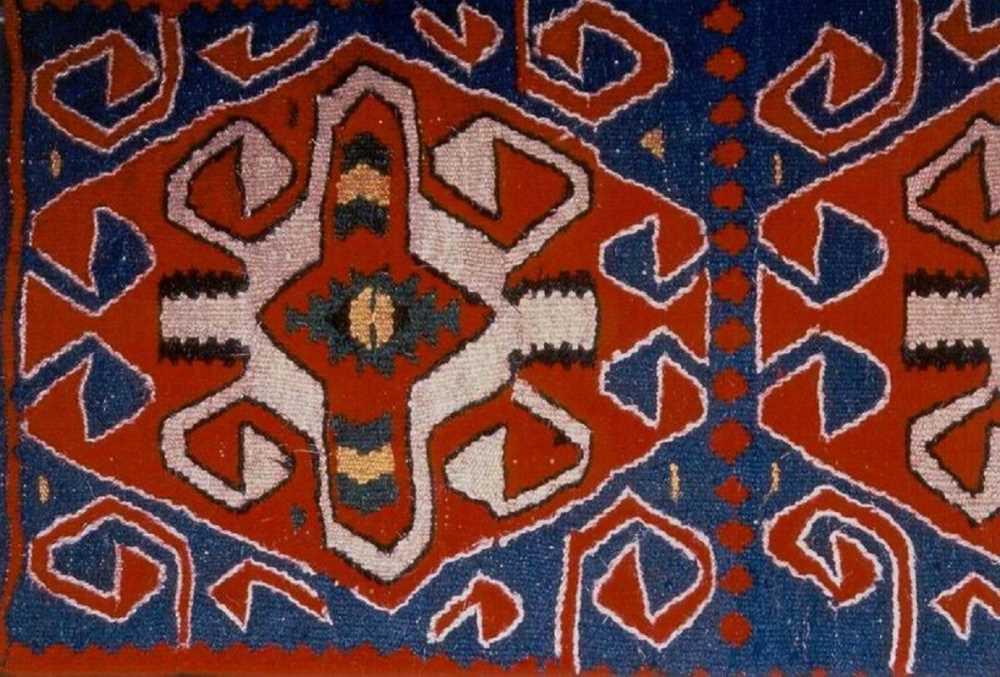
Beytüşşebap Jirki Kilim, Şırnak Province’s Beytüşşebap and surrounding areas, is a handcrafted textile woven with wool yarn. Kilim weaving is achieved by interlacing warp and weft threads in a specific pattern. The tradition of kilim weaving has been sustained for generations by the local population, and its motifs are closely linked to the region’s way of life and cultural values.
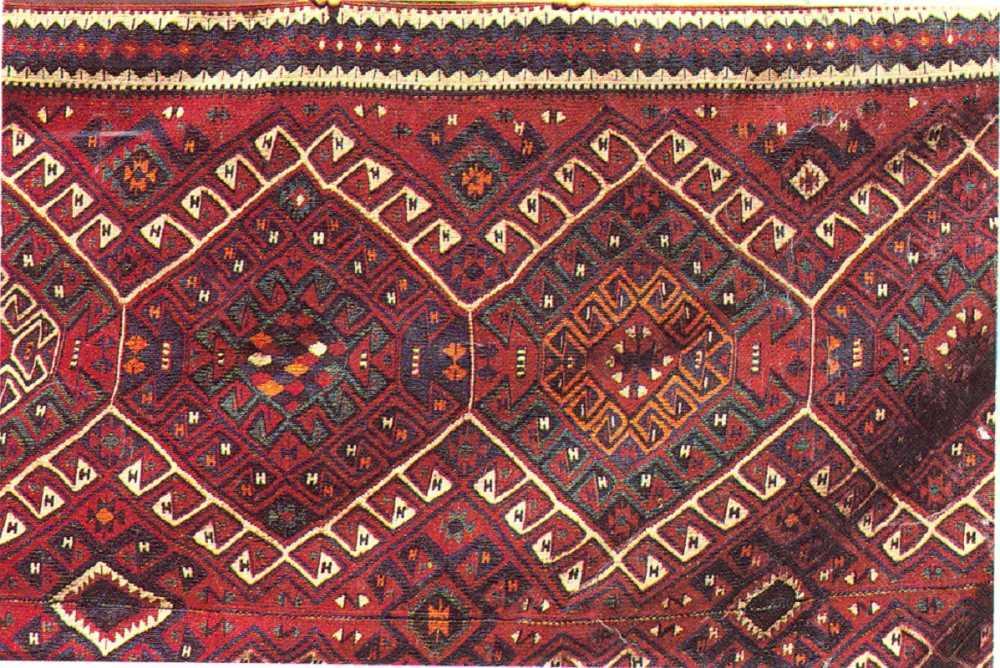
Beytüşşebap Jirki Kilim (Culture Portal)
The primary material used in the production of Beytüşşebap Jirki Kilim is pure wool yarn. Natural root dyes are employed to achieve the colors in the weaving. Brown tones are obtained from the “raye tırşık” plant, red tones from the “rın” root, black and brown tones from walnut shells, green tones from the “giyarenk” root, and yellow tones from sanman and onion skins.
In addition, yeast and auxiliary substances are used to develop the colors. For red, sumac is used; for other colors, “lep”; for black, ash; and for black and yellow tones, salt. Dyeing with root-based pigments ensures the yarns acquire durable and natural hues.
The materials and dyeing process are strictly defined to ensure the kilim is produced only within its geographical boundaries, and all colors and yarns are sourced from natural resources available locally. These methods preserve the kilim’s authentic and traditional character.
Beytüşşebap Jirki Kilim is woven on vertical looms. During the weaving process, warp threads are stretched in a specific arrangement, and weft threads are passed over and under them to create motifs. The main weaving techniques used in these kilims include plain weave, zilli, cicim, and sumak.
Plain weave produces fabrics with identical surfaces on both sides by completely covering the warp threads with weft threads. The zilli technique involves passing multiple types of threads alternately over and under the warp at regular intervals. In the cicim technique, pattern threads are passed over the warp threads, skipping a specific number, then compressed with the weft thread. The sumak technique enhances patterns by wrapping colored pattern threads around the warp threads.
The kilim is tightly woven to produce small and fine motifs, allowing for geometric, figurative, or abstract designs. Auxiliary tools used during weaving include the kirkit, scissors, warp board, varangelen, and tesi.
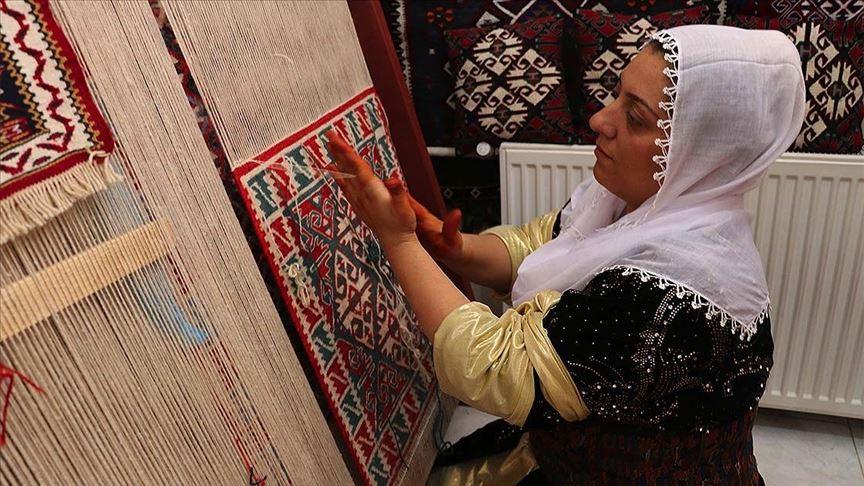
A Visual from the Weaving Stage (AA)
Beytüşşebap Jirki Kilim features motifs that reflect the region’s cultural life and natural environment. Animal, plant, and floral figures are combined with abstract geometric patterns. Each motif carries specific symbolism: for example, the “wolf’s foot” and “scorpion” motifs represent fear and jealousy, the “love bird” symbolizes love and conversation, and the “ram’s horn” stands for masculinity and bravery.
Plant and floral motifs are associated with fertility, productivity, and happiness. The “el belinde” motif is a symbol of fertility, while the “tree of life” represents immortality. Major motifs found on the kilim include Çılgül, Lüleper, Gülsariye, Gulhezar, Şamari, Kesneker, Lüle, Gula Gulharuk, Urisi, Jirkan, Şağbaran, Serhevştivik, Şimgubik, Canbezar, and Bekik.
Other motifs are diversified through various figurative and abstract designs: Sine (in the Fas style), Kupale Çıldar, Sıtayık, Yarıyuk, Pepke Guri, Sıtini Reş, Şımga Buké, Belitanık, Heçık, Kırıkçık, Sölik, Steyre, Şehık, Lakıp, Gamezık, and Kerbahar motifs form a regular composition on the kilim surface. These motifs preserve the kilim’s traditional texture and the unique identity of its geographical region.
Beytüşşebap Jirki Kilim is used for home decoration, floor coverings, and prayer rugs. The size and density of the weaving are designed to suit different spaces and purposes. Products are evaluated for individual use and display. Kilims are also used as gifts and traditional dowry items.
Beytüşşebap Jirki Kilim is woven on vertical looms, and the production area must be well-lit, ventilated, and have a flat floor. Kilims are tightly woven with fine, small motifs. Traditionally, their average dimensions are approximately 1.3 × 2 meters, with a weight of about 1.7 kilograms per square meter.
Kilims are rectangular in shape, with an average width of 150 cm, length of 350 cm, and fringe length of approximately 6 cm. Approximately seven knots are used per centimeter in the weaving. The color scheme employs deep red, navy blue, brown, black, and white as primary colors, and green, yellow, and blue as secondary colors. These dimensions and weaving characteristics ensure the preservation of the kilim’s traditional character.
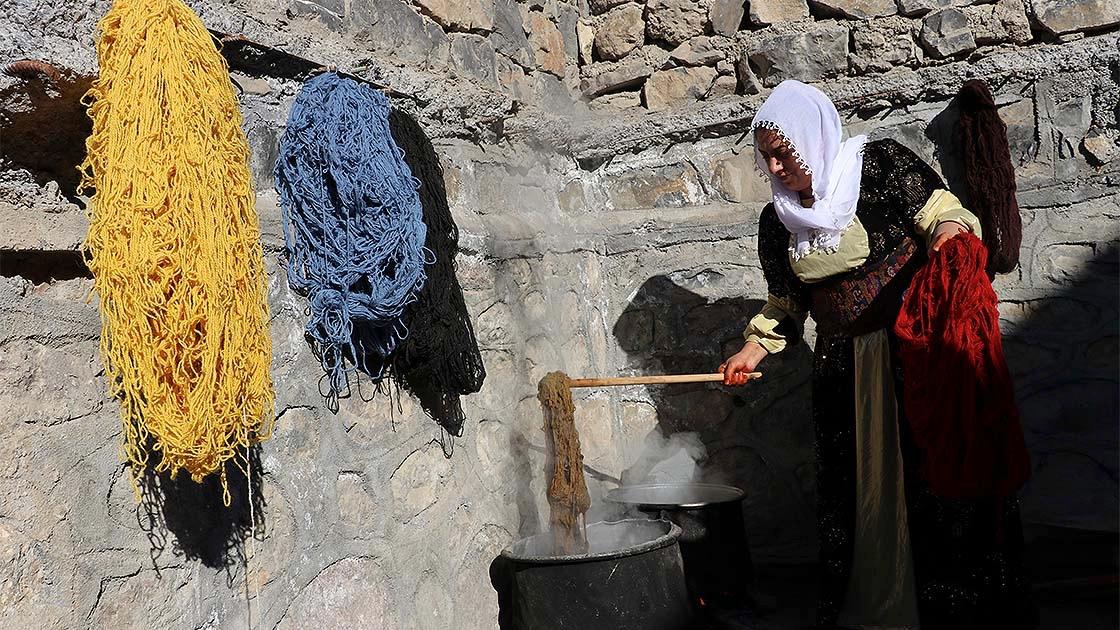
A Visual from the Production Stage (AA)
Beytüşşebap Jirki Kilim constitutes an important part of the region’s cultural heritage and ensures the continuation of local traditions. The motifs and patterns used in the kilims reflect the community’s religious beliefs, daily life, and relationship with nature. Kilim production contributes significantly to the income of local women through their manual labor.
Production, sales, and promotion processes impact the regional economy and social structure. Kilims are valued as dowry items and gifts during local social and cultural events. They are also sold in local and international markets.
Beytüşşebap Jirki Kilim is stored rolled up to preserve its colors and texture. It must be kept away from direct sunlight and protected from moisture and humidity. These methods ensure the longevity of the wool yarns dyed with natural root pigments and prevent deterioration of the woven patterns. During storage, flat and well-ventilated areas are preferred to maintain the kilim’s shape.
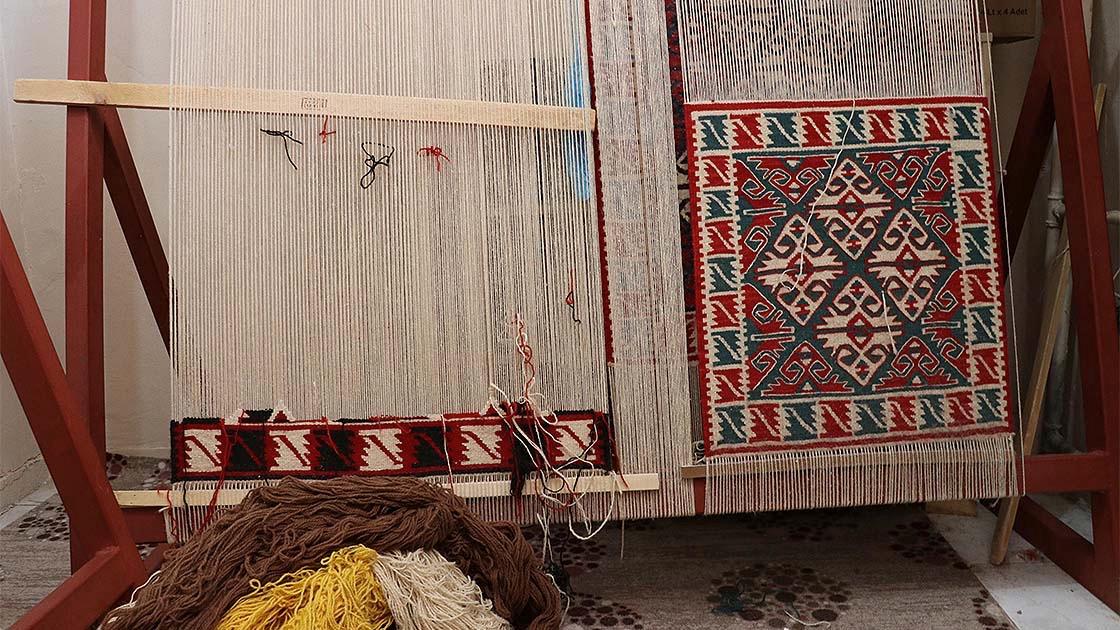
Beytüşşebap Jirki Kilim (AA)
The production of Beytüşşebap Jirki Kilim is monitored under the coordination of the Beytüşşebap District Governorship. The monitoring team consists of experts from the District Governorship, District National Education Directorate, Public Education Directorate, and District Agriculture and Forestry Directorate. Inspections are conducted at least once a year regularly, and additional checks may be carried out as needed or in response to complaints.
During inspections, the appropriateness of materials, compliance with production methods, and correct use of the geographical indication emblem are verified. The monitoring authority may obtain expert support or procure services from public or private institutions when necessary. This mechanism ensures the kilim’s production standards and its connection to its geographical origin are maintained.
The tradition of Beytüşşebap Jirki Kilim is sustained by women in the region. Production is carried out through training and course programs offered at the Beytüşşebap Multi-Purpose Community Center (ÇATOM), affiliated with the GAP Regional Development Administration. Kilim weaving courses teach local motifs and the use of root dyes.
Woven kilims are distributed domestically and internationally through local sales points and social media. This process contributes to the regional economy and supports the continuation of the geographical region’s cultural values.
Anadolu Ajansı. "Jirki Kilimi Geleneği Şırnaklı Kadınların Elinde Yaşatılıyor." Accessed September 3, 2025.https://www.aa.com.tr/tr/yasam/jirki-kilimi-gelenegi-sirnakli-kadinlarin-elinde-yasatiliyor-/2005754.
Kültür Portalı. "KİLİM - Şırnak." Kültür Portalı. Accessed September 3, 2025.https://www.kulturportali.gov.tr/turkiye/sirnak/nealinir/klm.
Turk Patent and Trademark Office. "Beytüşşebap Jirki Kilimi." Accessed September 3, 2025.https://ci.turkpatent.gov.tr/cografi-isaretler/detay/8284.
Turk Patent and Trademark Office. "Beytüşşebap Jirki Kilimi."

Registration Number | 1568 | ||||||||
|---|---|---|---|---|---|---|---|---|---|
Registration Date | 15.04.2024 | ||||||||
Application Number | C2022/000461 | ||||||||
Application Date | 22.12.2022 | ||||||||
Name of the Geographical Indication | Beytüşşebap Jirki Kilimi | ||||||||
Product / Product Group | Rugs and Kilims | ||||||||
Type of Geographical Indication | Mahreç Mark | ||||||||
Applicant / Registered Owner | Beytüşşebap District Directorate of Agriculture and Forestry | ||||||||
Geographical Boundary | Beytüşşebap District Şırnak Province | ||||||||
No Discussion Added Yet
Start discussion for "Beytüşşebap Jirki Kilim" article
Materials and Dyeing Methods
Weaving Techniques
Motifs and Their Meanings
Uses
Production Method and Measurements
Cultural and Economic Significance
Preservation and Storage Methods
Monitoring and Control Mechanism
Current Production and Preservation Efforts