This article was automatically translated from the original Turkish version.
+1 More
Location | Berlenga Grande Island Off the coast of Peniche Atlantic Ocean Portugal | ||||||||
|---|---|---|---|---|---|---|---|---|---|
Function | Coastal Lighthouse (Active) | ||||||||
Construction Order | 1 February 1758 (Pombaline Decree) | ||||||||
Focal Height | 121 meters above sea level | ||||||||
Management | Portuguese Navy - Lighthouse Directorate | ||||||||
Tower Height | 29 meters | ||||||||
The Berlenga Lighthouse, officially known as the Duke of Bragança Lighthouse, is a historic structure located at the summit of Berlenga Grande Island in the Atlantic Ocean, Portugal. The island, a granite mass anchored several miles off the coast northwest of Peniche, hosts the lighthouse at its highest point, at coordinates 39º 24',99 N latitude and 09º 30',47 W longitude. The lighthouse is operated by the Portuguese Navy Directorate of Lighthouses (Direção de Faróis) and remains an active coastal aid to navigation.
The construction of the lighthouse was first ordered by the Pombaline Decree of 1 February 1758, establishing its historical origins in the 18th century. However, after a prolonged delay following this initial decree, the actual construction process gained momentum with the Ministry of Finance Decree of 12 December 1836. Under the supervision of engineer Gaudêncio Fontana, the tower was completed in 1841 and officially commissioned in 1842. The structure was built as a navigational reference point to guide ships approaching ports such as Lisbon and Porto and to enhance maritime safety in the hazardous waters of the Atlantic. The attached residential buildings were completed in the years following the tower’s construction, between 1851 and 1860.
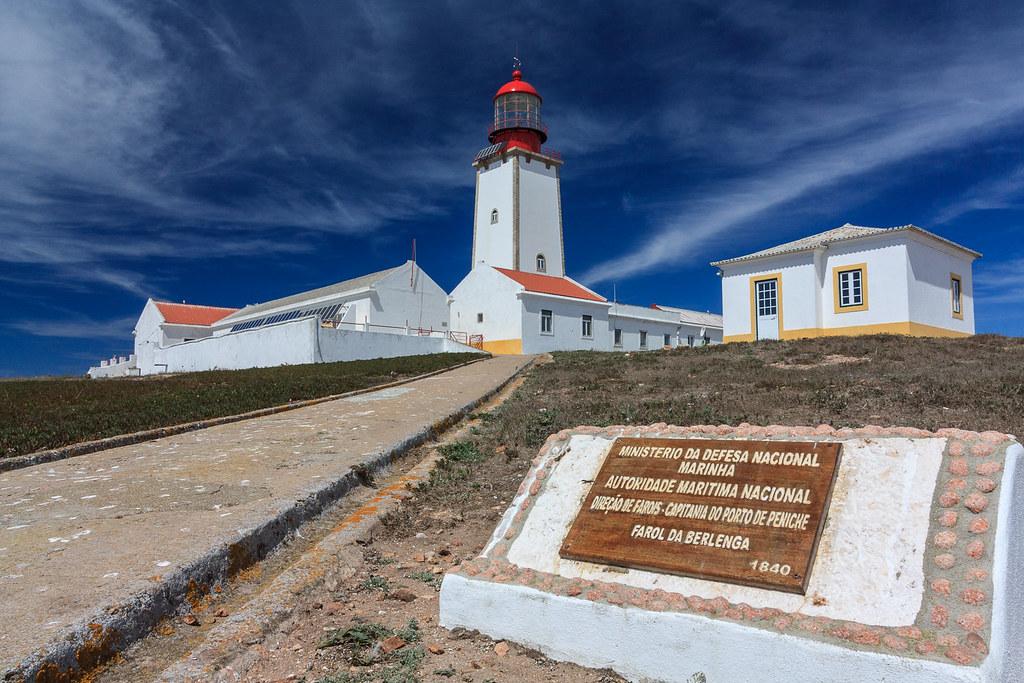
Berlenga Lighthouse (Flickr)
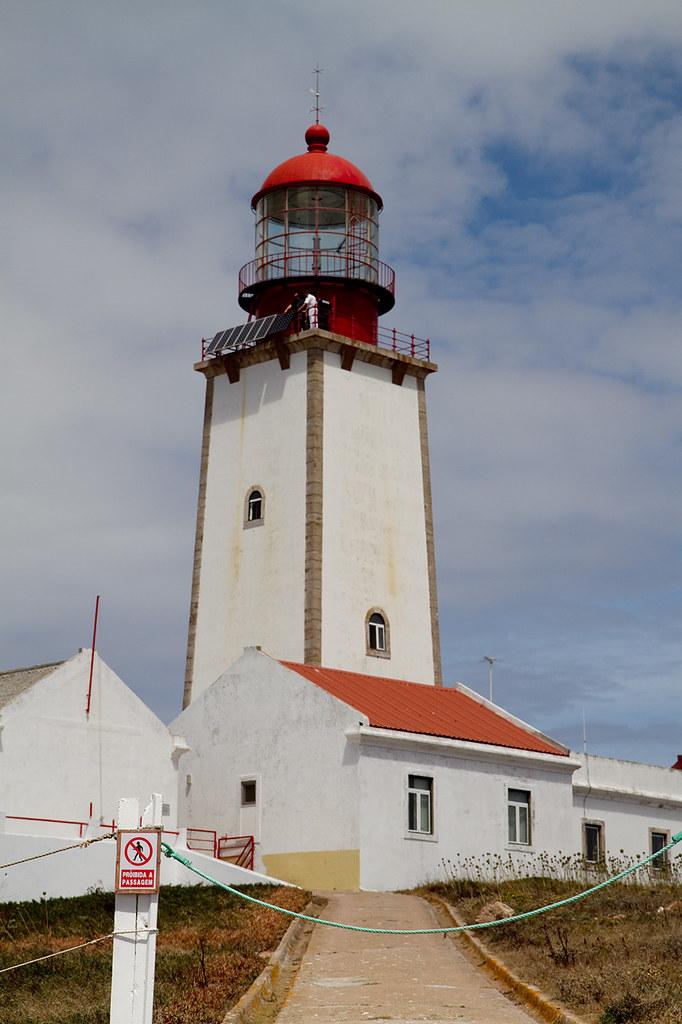
The Berlenga Lighthouse is a square prismatic tower constructed of masonry and ashlar stone corners, featuring a balcony at its summit. The white-walled tower stands 29 metres high, with a red lantern room and balconies. The light source is positioned 121 metres above sea level.
Since its commissioning, the lighthouse has undergone several technological upgrades:
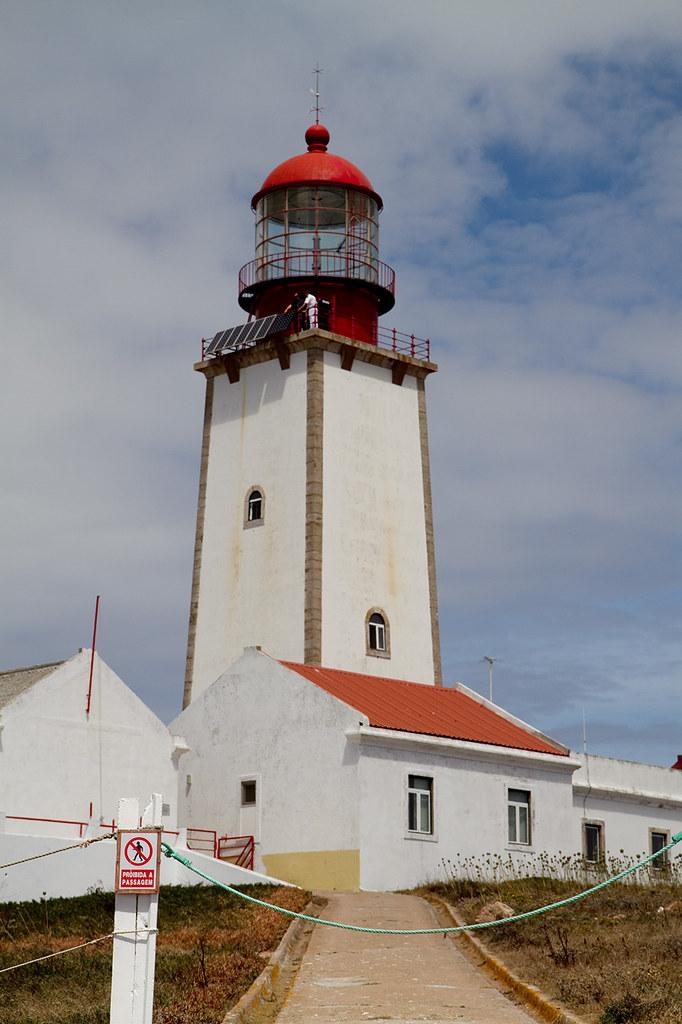
Berlenga Lighthouse Architecture (Flickr)
Since 1985, the lighthouse has been operated entirely automatically. There are no permanent lighthouse keepers stationed at the tower. Monitoring and maintenance are carried out remotely by the Portuguese Navy Directorate of Lighthouses from the mainland.
The lighthouse is directly protected and managed by the Portuguese Maritime Authority (Autoridade Marítima Nacional) and the Navy Directorate of Lighthouses. Its historical significance, combined with the island’s status as a UNESCO Biosphere Reserve, ensures its preservation as both a cultural and environmental heritage site.
Although the lighthouse is a symbol of the island and a popular tourist attraction, it is currently closed to visitors indefinitely due to operational issues. Visitors may observe the lighthouse from a distance and enjoy nearby diving sites within this UNESCO-protected natural area.
Autoridade Marítima Nacional. “Farol da Berlenga.” Accessed October 5, 2025.https://www.amn.pt/DF/Paginas/FaroldaBerlenga.aspx
Autoridade Marítima Nacional. “Visitas a Faróis.” AMN. Accessed October 5, 2025.https://www.amn.pt/DF/Paginas/visitas.aspx
ICNF — Instituto da Conservação da Natureza e das Florestas. “Reserva Natural das Berlengas.” ICNF. Accessed October 5, 2025.https://www.icnf.pt/conservacao/rnapareasprotegidas/reservasnaturais/rnberlengas
Paulo. “Farol da Berlanga JPG.” Flickr. Accessed October 5, 2025.https://www.flickr.com/photos/warl0rd/7974430341/
Portal Digital. "Farol da Berlenga." *Turismo PortalDigital.pt*. Accessed October 5, 2025.https://turismo.portaldigital.pt/visite/peniche/farol_da_berlenga?p=96f54307-2c7f-49c4-995c-ba72d59b068c&c=a1c0d8a7-167e-4b8c-a4d6-ab39f2825151
Tirkkonen, Tomi. “Berlengas.” Flickr. Accessed October 5, 2025.https://www.flickr.com/photos/pnuk/4860970417/

Location | Berlenga Grande Island Off the coast of Peniche Atlantic Ocean Portugal | ||||||||
|---|---|---|---|---|---|---|---|---|---|
Function | Coastal Lighthouse (Active) | ||||||||
Construction Order | 1 February 1758 (Pombaline Decree) | ||||||||
Focal Height | 121 meters above sea level | ||||||||
Management | Portuguese Navy - Lighthouse Directorate | ||||||||
Tower Height | 29 meters | ||||||||
No Discussion Added Yet
Start discussion for "Berlenga Lighthouse" article
History and Construction
Architectural and Technical Evolution
Current Use and Protection