


This article was automatically translated from the original Turkish version.
(Image generated by artificial intelligence.)
Barbie
Brand | Barbie | ||||||||
|---|---|---|---|---|---|---|---|---|---|
Production Years | 2001–2023 | ||||||||
Production Type | Animated films (mostly) and live action (2023) | ||||||||
Target Audience | Children and family audience | ||||||||
Thematic Content | Fairy tale adaptations, original stories, musical narratives, fantasy and adventure themes | ||||||||
Producer | Mattel | ||||||||
Language | English | ||||||||
Barbie is a globally recognized toy doll brand designed by American businesswoman Ruth Handler and launched in 1959 through the Mattel company. By shifting away from the traditional notion of dolls as representations of infants, Barbie centered an adult female figure and has exerted a defining influence on fashion popular culture and social gender roles since its debut.
The brand has transcended its identity as merely a children’s toy to become one of the most significant cultural icons of the twentieth and twenty-first centuries while simultaneously serving as a focal point for intense academic and societal debates regarding beauty standards consumer habits and representations of womanhood.【1】
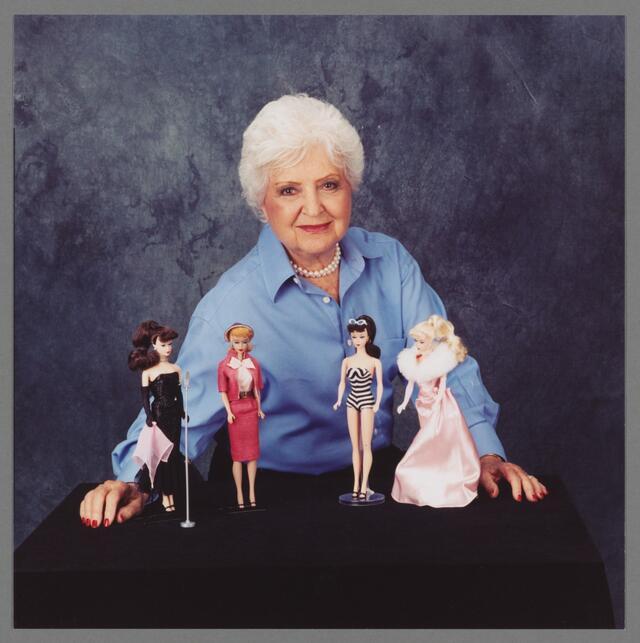
Ruth Mosko Handler (Jewish Woman's Archive)
The origin of Barbie began when Ruth Handler one of the founders of Mattel observed her daughter Barbara playing with paper dolls and assigning them adult roles. At the time the vast majority of dolls on the market were designed as infants or children which inspired Handler to conceive a doll with adult body proportions. The concrete model for this idea was a doll named “Bild Lilli” which Handler encountered during a trip to Germany and which was inspired by a comic strip character and marketed to adults.
Mattel purchased the rights to Lilli and revised its design introducing the first Barbie doll on March 9 1959 at the New York Toy Fair dressed in a black-and-white striped swimsuit. This launch is widely regarded as the beginning of a new era in the toy industry.【2】
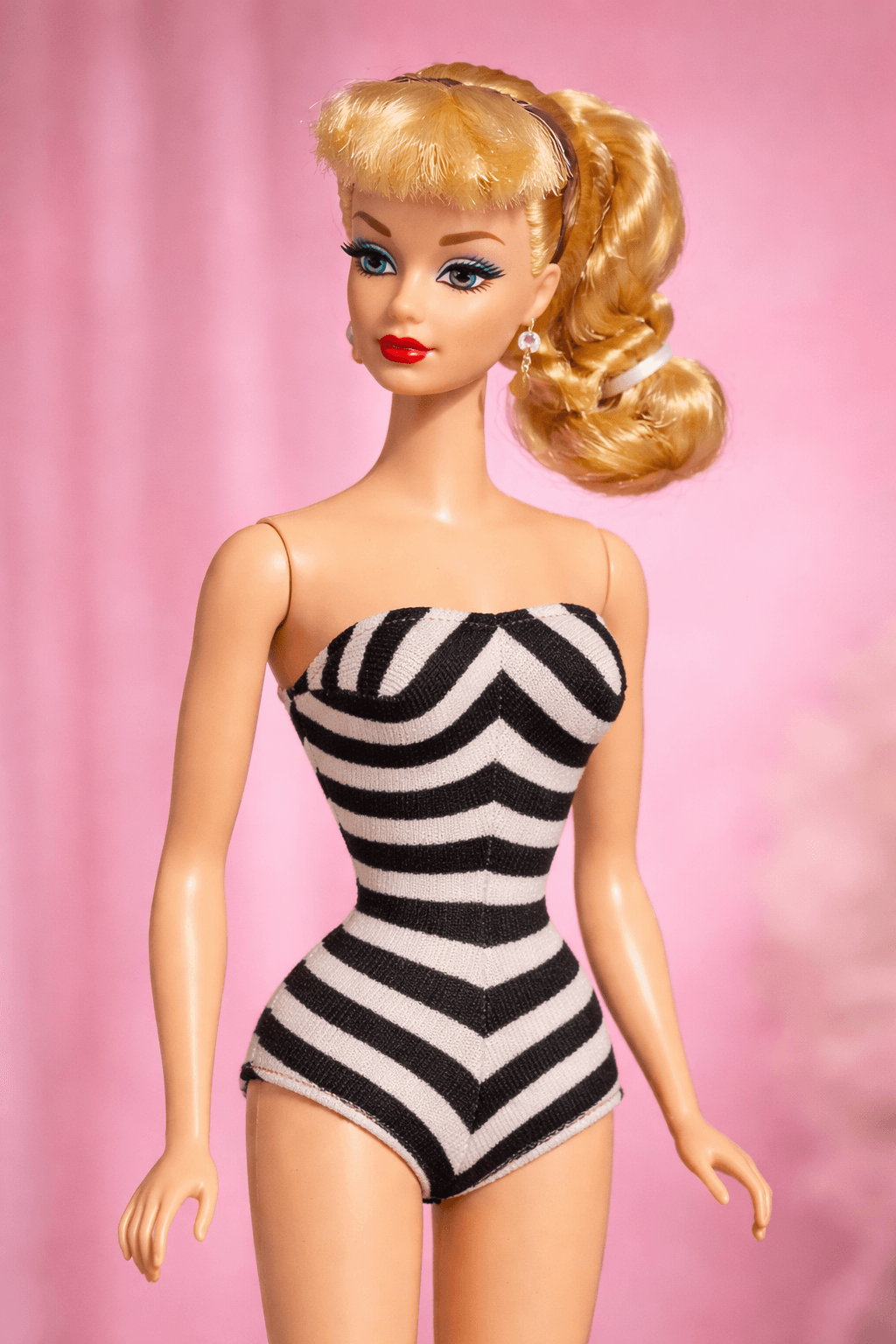
First Marketed Barbie Doll (Generated by Artificial Intelligence)
Ruth Mosko Handler daughter of a Polish Jewish immigrant family co-founded Mattel with her husband Elliot Handler and business partner Harold Matson taking revolutionary steps in the toy world.
Initially focused on picture frame production Mattel shifted toward the toy industry guided by Handler’s market analyses and insights into consumer behavior a strategic transformation that proved critical to the company’s growth. Handler’s 1959 launch of Barbie transformed Mattel into a globally recognized toy manufacturer and helped establish the concept of a doll representing an adult identity within the toy industry. Barbie’s various versions associated with different professions and social roles reflected Handler’s vision that children could aspire to become whoever they wished to be and this approach played a key role in Mattel’s evolution into a multinational corporation.【3】
Since its introduction Barbie has been regarded not merely as a toy figure but as a cultural representation that generates meaning within consumer culture and influences social perception. Barbie’s physical appearance body measurements and aesthetic features have made a specific ideal of beauty visible contributing to its internalization from an early age. In this regard Barbie has become a symbolic instrument in the processes of standardization and commodification of beauty in modern consumer society.【4】
The representation of womanhood through the Barbie figure has often been linked to physical attractiveness fashion and consumption practices with beauty positioned as a value connected to social acceptance and success. This has led beauty to transcend its purely aesthetic dimension and acquire cultural and ideological significance. Barbie’s portrayal of lifestyle body image and consumption habits has significantly shaped individuals’ perceptions of social norms especially during childhood.【5】
Over time the Barbie brand has expanded its representation by introducing figures with diverse body types ethnic identities and professional roles in response to criticism. Yet Barbie’s cultural influence has not been limited to diversifying representations; it has continued to exist within the ideological structure of consumer culture linked to processes of beauty identity and value production. In this context Barbie is regarded as a multifaceted cultural symbol that both reproduces dominant beauty norms and opens them to critical discussion within popular culture.【6】
Barbie’s design process and the female image it presents have played a significant role in the construction of social gender roles. Particularly in analyses of contemporary toy design Barbie functions as a mirror reflecting women’s position in society and prevailing aesthetic norms. Beginning in the 2010s Mattel adopted an “inclusivity” strategy producing dolls with diverse body types skin tones and disabilities in response to criticism.
Since its market debut Barbie has maintained an inseparable connection with the fashion world transforming the toy industry into a miniature reflection of the textile sector. The adoption of Barbie as a model by designers and fashion houses has elevated her from a mere play object to a recognized figure within high fashion and a style icon.
Christian Dior Oscar de la Renta Givenchy and Versace among other major fashion houses created special designs for Barbie enhancing the brand’s prestige and elevating it to the status of a collectible object. These collaborations reinforced Barbie’s image as a “fashion icon” while simultaneously providing luxury consumer brands with a unique channel to reach younger audiences.
In the 2020s the aesthetic movement known as “Barbiecore” characterized by its dominant pink palette found widespread resonance from high fashion runways to street style.
Aqua - Barbie Girl (Official Music Video) (Aqua)
The Barbie brand has created an extensive media ecosystem to support toy sales. Beginning with television commercials in the 1980s this process evolved into a vast universe encompassing animated films and digital content. Particularly the animated films of the early 2000s solidified the brand’s place in the children’s world through fairy-tale narratives.
Since 2001 the Barbie brand has been the subject of numerous feature-length films particularly in the animated genre. These productions have been shaped around classic fairy tale adaptations fantastical narratives and contemporary themes incorporating musical elements and diverse professional roles to deliver educational messages aimed at children. Below is a chronological list of the most widely known Turkish titles and production years of Barbie films:
In addition to animated films the Barbie character made her first live-action appearance on the big screen in the film Barbie (2023) which rekindled public interest in Barbie’s historical development and social representation.
The 2023 film Barbie directed by Greta Gerwig marks a turning point in the brand’s cultural journey.
The film deconstructed the traditional Barbie image to develop a feminist narrative yet this also sparked debates about the commodification of feminist values through popular culture. As a cinematic success the film demonstrated that Barbie is not merely a toy but a platform for discussing gender politics.【8】
"Barbie Movies." IMDb. Accessed January 25, 2026.https://www.imdb.com/list/ls033255925/
Altman, Julie. "Ruth Mosko Handler." *Shalvi/Hyman Encyclopedia of Jewish Women.* March 20, 2009. Jewish Women's Archive. Accessed January 25, 2026.https://jwa.org/encyclopedia/article/handler-ruth-mosko
Aqua. "Barbie Girl (Official Music Video)." YouTube video, 3:22. August 20, 2010. Accessed January 25, 2026.https://youtu.be/ZyhrYis509A.
Bellis, Mary. "Barbie Bebeklerinin Mucidi Ruth Handler'ın Biyografisi." *ThoughtCo*, August 2, 2024. Accessed January 25, 2026.https://www.thoughtco.com/history-of-barbie-dolls-1991344
Filiz, Hacer. "Barbie Oyuncakları Ekseninde Tüketim Kültürü ve Toplumsal Algılar." *Akademik Hassasiyetler* 12, no. 27 (2025): 347–368. Accessed January 25, 2026.https://dergipark.org.tr/tr/download/article-file/4336296
Gümüş, Beyza. *Tüketim Kültürü Bağlamında Güzelliğin Sunumu: Barbie Örneği.* Master's thesis, İstanbul Medipol Üniversitesi, 2024. pp. 30–95. Accessed January 25, 2026. YÖK Tez Merkezi.https://tez.yok.gov.tr/UlusalTezMerkezi/TezGoster?key=LY6e5xGA7WWUpEdrBmEPLlQ_hiAdz9nrTTxtVsHI1SyFrUI8r_vvYNllHDTYVdeE
Hatay, Peri. *Yirminci Yüzyıl İkonu Barbie Bebeğin Moda Tüketimine Etkisi.* Master's thesis, Başkent Üniversitesi, 2023. pp. 15–85. Accessed January 25, 2026. YÖK Tez Merkezi.https://tez.yok.gov.tr/UlusalTezMerkezi/TezGoster?key=a0OMTmEd_3mfOBxT8SiBTBUmOjJwU4a3xCkuqllz_ODuwA0rNMLkxJFoZX4_3Fe-
Korkmaz, Şeyma. *Feminist Söylemin Metalaşması ve Barbie Filminde Kadınlığın Yeniden İnşası.* Master's thesis, Aydın Adnan Menderes Üniversitesi, 2025. pp. 60–135. Accessed January 25, 2026. YÖK Tez Merkezi.https://tez.yok.gov.tr/UlusalTezMerkezi/TezGoster?key=CtwiQkYvArAb95Ufpfs_viwYkhk4duZUeBf5K44d-fJpL0aMF0UqUrWuD3mJ916m
Lasky, Jack. “Mattel, Inc.” Research Starters. EBSCO Research, 2023. Accessed January 25, 2026.https://www.ebsco.com/research-starters/history/mattel-inc
Montgomery, Bruce P. “Mattel, Inc.” *International Directory of Company Histories.* Encyclopedia.com. Accessed January 25, 2026.https://www.encyclopedia.com/social-sciences-and-law/economics-business-and-labor/businesses-and-occupations/mattel-inc
Tüzünoğlu, Melida. “İkonik Bebeğin Öyküsü Barbie Sergisinde.” *Vogue Türkiye*, 14 September 2024. Accessed January 25, 2026.https://vogue.com.tr/sanat/ikonik-bebegin-oykusu-barbie-sergisinde
İçke, Seçil. *Representation of Gender in Contemporary Toy Design: An Analysis of Barbie Doll.* Master's thesis, İzmir Ekonomi Üniversitesi, 2013. pp. 40–110. Accessed January 25, 2026. YÖK Tez Merkezi.https://tez.yok.gov.tr/UlusalTezMerkezi/TezGoster?key=iTkOhwevEenJZ3onUvs52upWEEYu1t-p_Di3Zzj-KVLe4wndicl_mzXSnzK-db5P
[1]
Filiz, Hacer. "Barbie Oyuncakları Ekseninde Tüketim Kültürü ve Toplumsal Algılar." Akademik Hassasiyetler 12, sy. 27 (2025): 347–368. Erişim tarihi: 25 Ocak 2026. https://dergipark.org.tr/tr/download/article-file/4336296.
[2]
Bellis, Mary. "Barbie Bebeklerinin Mucidi Ruth Handler'ın Biyografisi." ThoughtCo, 2 Ağustos 2024. Erişim tarihi: 25 Ocak 2026. https://www.thoughtco.com/history-of-barbie-dolls-1991344
[3]
Montgomery, Bruce P. “Mattel, Inc.” International Directory of Company Histories. Encyclopedia.com. Erişim tarihi: 25 Ocak 2026. https://www.encyclopedia.com/social-sciences-and-law/economics-business-and-labor/businesses-and-occupations/mattel-inc
[4]
Gümüş, Beyza. "Tüketim Kültürü Bağlamında Güzelliğin Sunumu: Barbie Örneği." Yüksek Lisans Tezi, İstanbul Medipol Üniversitesi, 2024. Sayfa: 30-45. Erişim tarihi: 25 Ocak 2026. YÖK Tez Merkezi. https://tez.yok.gov.tr/UlusalTezMerkezi/TezGoster?key=LY6e5xGA7WWUpEdrBmEPLlQ_hiAdz9nrTTxtVsHI1SyFrUI8r_vvYNllHDTYVdeE
[5]
Gümüş, Beyza. "Tüketim Kültürü Bağlamında Güzelliğin Sunumu: Barbie Örneği." Yüksek Lisans Tezi, İstanbul Medipol Üniversitesi, 2024. Sayfa: 46-70. Erişim tarihi: 25 Ocak 2026. YÖK Tez Merkezi. https://tez.yok.gov.tr/UlusalTezMerkezi/TezGoster?key=LY6e5xGA7WWUpEdrBmEPLlQ_hiAdz9nrTTxtVsHI1SyFrUI8r_vvYNllHDTYVdeE
[6]
Gümüş, Beyza. "Tüketim Kültürü Bağlamında Güzelliğin Sunumu: Barbie Örneği." Yüksek Lisans Tezi, İstanbul Medipol Üniversitesi, 2024. Sayfa: 71-95. Erişim tarihi: 25 Ocak 2026. YÖK Tez Merkezi. https://tez.yok.gov.tr/UlusalTezMerkezi/TezGoster?key=LY6e5xGA7WWUpEdrBmEPLlQ_hiAdz9nrTTxtVsHI1SyFrUI8r_vvYNllHDTYVdeE
[7]
“Barbie Filmography,” IMDb, Erişim tarihi: 25 Ocak 2026. https://www.imdb.com/list/ls033255925/
[8]
Korkmaz, Şeyma. "Feminist Söylemin Metalaşması ve Barbie Filminde Kadınlığın Yeniden İnşası." Yüksek Lisans Tezi, Aydın Adnan Menderes Üniversitesi, 2025. Sayfa: 60-135. Erişim tarihi: 25 Ocak 2026. YÖK Tez Merkezi. https://tez.yok.gov.tr/UlusalTezMerkezi/TezGoster?key=CtwiQkYvArAb95Ufpfs_viwYkhk4duZUeBf5K44d-fJpL0aMF0UqUrWuD3mJ916m

(Image generated by artificial intelligence.)
Barbie
Brand | Barbie | ||||||||
|---|---|---|---|---|---|---|---|---|---|
Production Years | 2001–2023 | ||||||||
Production Type | Animated films (mostly) and live action (2023) | ||||||||
Target Audience | Children and family audience | ||||||||
Thematic Content | Fairy tale adaptations, original stories, musical narratives, fantasy and adventure themes | ||||||||
Producer | Mattel | ||||||||
Language | English | ||||||||
Historical Development and Founding Process
The Role of Ruth Handler and Mattel
Cultural Impact and Social Perception
Representation and Social Gender
Barbie as a Fashion Industry Icon
Strategic Collaborations with the Fashion Industry
Media and Cinema
Barbie Films【7】
The 2023 Barbie Film and Modern Debates