This article was automatically translated from the original Turkish version.
Periods | Urartian Period (7th century BCE) | ||||||||
|---|---|---|---|---|---|---|---|---|---|
Prominent Features | The last great fortress of the Urartians, founded by King Rusa II on the shores of Lake Van | ||||||||
Location | Van/Türkiye | ||||||||
Rakım | 1.866 metres | ||||||||
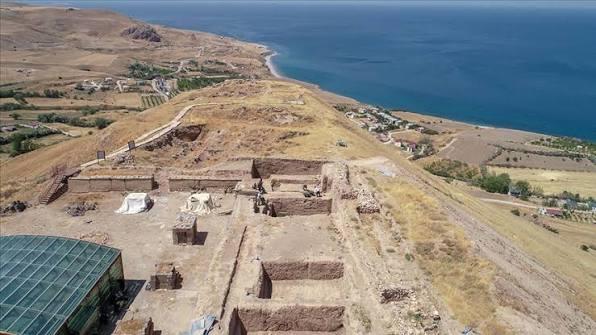
Ayanis Kalesi is located within the boundaries of Ayanis village in the Tuşba district of Van Province. This archaeological site is situated on the eastern shore of Lake Van, approximately 35 kilometers from the city center of Van. The hill upon which the structure is built extends in an east-west direction, measuring 150 meters in width and 400 meters in length. The hilltop lies 250 meters above the level of Lake Van.
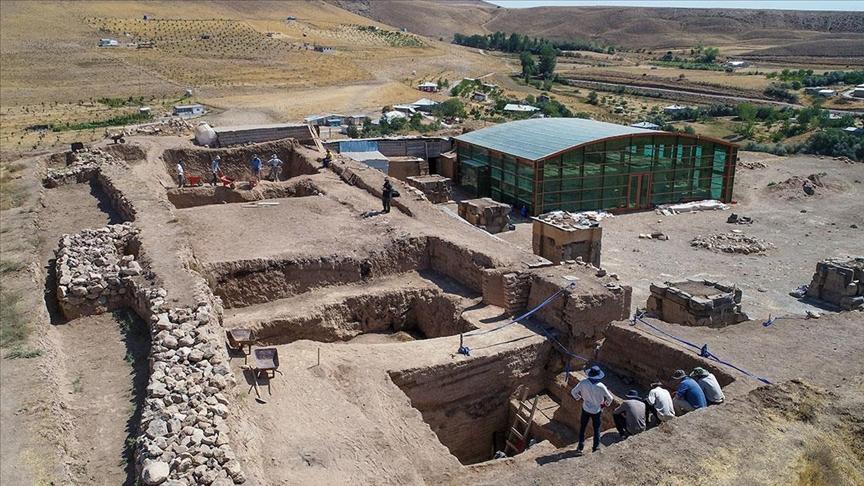
Ayanis Kalesi (Anadolu Ajansı)
The settlement, established as the final royal city of the Urartian Kingdom which ruled the Eastern Anatolia region for approximately 250 years, was constructed around 2700 years ago. According to cuneiform inscriptions, the fortress was built by King Rusa, son of King Argishti, between 645 and 643 BCE. The structure holds significant archaeological importance for understanding the final phases of Urartian history.
The urban plan of the settlement consists of two main sections: the citadel and the lower town.
The citadel section contains monumental defensive walls, entrance gates, temples, sacred spaces, and storage buildings serving royal and religious functions. The fortress is surrounded by a two-tiered wall system with its main entrance located on the southern side. Andesite stone was used in the construction of the entrance walls, while limestone was employed in other structural elements. In the upper part of the inner citadel, there is a pillared hall and a temple with a projecting facade facing west. Additionally, numerous storage buildings consisting of interconnected cubic structures have been identified in the southwest section of the fortress.
The lower town section encompasses residential areas for the civilian population, secondary state storage facilities, workshops, and stables.
Systematic archaeological excavations at Ayanis Kalesi began in 1989 and have been conducted continuously since then. The initial phase of the excavations was led by a team under the direction of Professor Dr. Altan Çilingiroğlu; the directorship was later assumed by Professor Dr. Mehmet Işıklı of the Department of Archaeology at Atatürk University Faculty of Letters.
As a result of these excavations, tens of thousands of movable and immovable cultural artifacts have been documented and added to the scholarly record. The findings and excavation archives have been presented to the scientific community and the public through the exhibition “Changing Times, Unchanging Grandeur: Ayanis” and the publication “An Urartian City in the Shadow of the God Eiduru,” both hosted by the Van Museum.
Anadolu Ajansı. "Ayanis Kalesi'nde 36 yıldır yürütülen kazılar, Urartular dönemine ışık tutuyor." Accessed June 9, 2026. https://www.aa.com.tr/tr/kultur/ayanis-kalesinde-36-yildir-yurutulen-kazilar-urartular-donemine-isik-tutuyor/2964944
Anadolu Ajansı. "Van'da Urartulara ait mimari kaplama levhası bütün halde bulundu." Accessed June 9, 2026. https://www.aa.com.tr/tr/kultur/vanda-urartulara-ait-mimari-kaplama-levhasi-butun-halde-bulundu/2679767
EBA Okul Learning Environments. "Ayanis Kalesi." Accessed June 9, 2026. https://okuldisiogrenme.eba.gov.tr/place-detail/ayanis-kalesi-2197
Türkiye Kültür Portalı. "Ayanis Kalesi." Accessed June 9, 2026. https://www.kulturportali.gov.tr/turkiye/van/gezilecekyer/ayanis-kales
Van Valiliği. "Van Müzesinde Ayanis Kalesi Tanıtımı." Accessed June 9, 2026. https://www.van.gov.tr/van-muzesinde-ayanis-kalesi-tanitimi

Periods | Urartian Period (7th century BCE) | ||||||||
|---|---|---|---|---|---|---|---|---|---|
Prominent Features | The last great fortress of the Urartians, founded by King Rusa II on the shores of Lake Van | ||||||||
Location | Van/Türkiye | ||||||||
Rakım | 1.866 metres | ||||||||
Historical Background and Chronology
Urban Layout and Architectural Features
Archaeological Excavations and Scientific Outputs