This article was automatically translated from the original Turkish version.
+2 More
Meaning | Baba Cemetery | ||||||||
|---|---|---|---|---|---|---|---|---|---|
Historical Event | Mass grave where 138 Kyrgyz intellectuals executed on Stalin's orders in 1938 are buried | ||||||||
Parts | Graves of the Martyrs of the April 2010 Revolution 1916 Urkun Monument Graves of the 1938 Victims | ||||||||
Location | Chon-Tash village Kyrgyzstan Chuy Region | ||||||||
Date of Discovery | 1991 | ||||||||
Date of Construction as a Monumental Tomb | 2000 | ||||||||
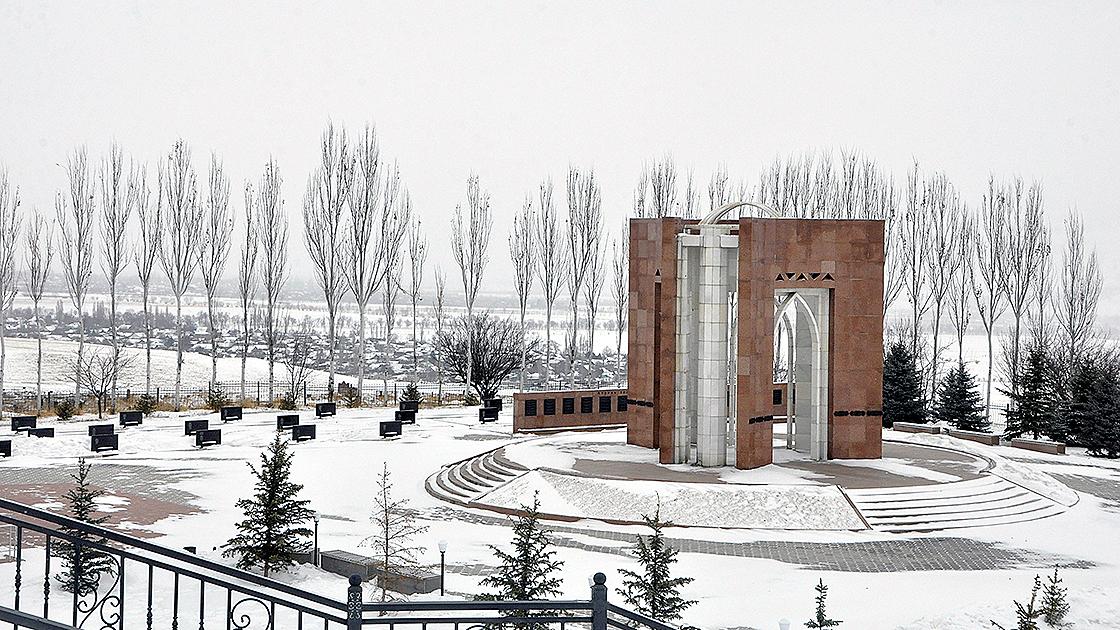
Ata Beyit is a monumental cemetery and national memory site located approximately 30 kilometers from the capital of Kyrgyzstan, Bishkek, near the village of Chon-Tash. The term Ata Beyit means “Father’s Grave” in Kyrgyz Turkish. This site was secretly used to bury Kyrgyz intellectuals, politicians and artists who were victims of political massacres carried out during Stalin’s regime in 1938. Today, it serves both as a national site of mourning and a place of collective memory.
class=\
After the establishment of the Soviet Union, the Communist Party administration in Kyrgyzstan began implementing policies aimed at suppressing nationalism, religion and ideas of independence. During this period, Stalin’s repressive regime specifically targeted Kyrgyz intellectuals identified as nationalist or pro-independence.
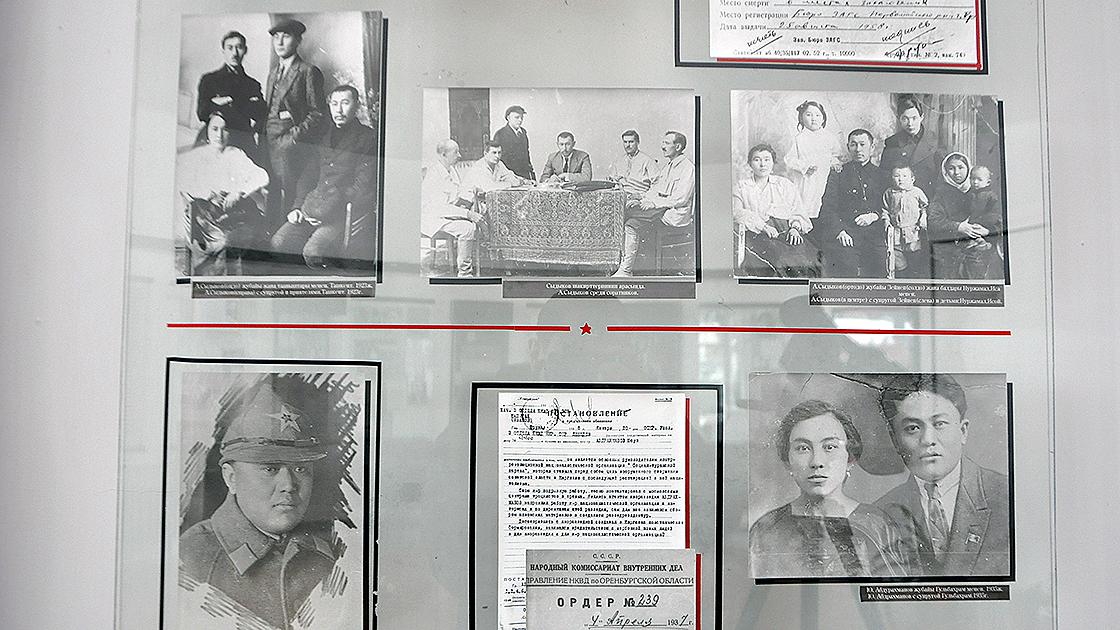
The regime’s “Great Purge (Repression)” campaign conducted in 1938 left deep scars in Kyrgyzstan. Kyrgyz intellectuals including Cusup Abdrahmanov, Abdıkerim Sıdıkov, Kasım Tınıstanov, Bayalı İsakeev and Törekul Aytmatov were arrested on charges of being enemies of the people or nationalists and executed by firing squad near Bishkek.
These executions were kept secret for many years until the 1990 testimony of Abıkan Kıdıralıyev’s daughter, Bübüyra Kıdıraliyeva, led to the discovery of the mass grave in Chon-Tash village.
class=\
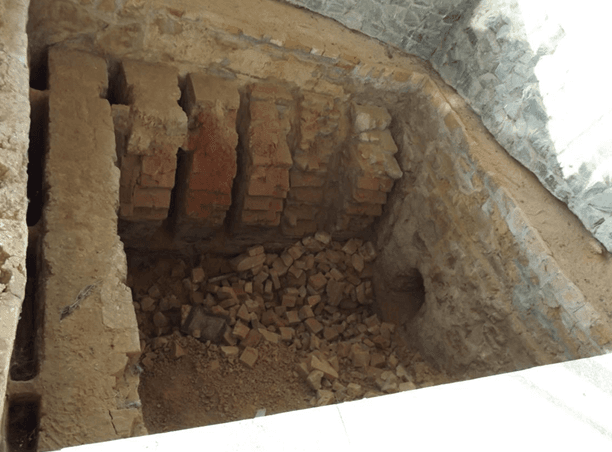
Chon-Tash village was a region where high-ranking Soviet officials had summer residences in the 1930s. During the Great Purge, a deep pit near a nearby adobe factory was used as a mass grave for the executed intellectuals. Kyrgyz intelligence officer Bolot Abdrahmanov, guided by Kıdıraliyeva, initiated excavations in 1991 and uncovered the remains of 138 individuals who had been shot in the back of the head with their hands tied behind their backs.
Identification efforts confirmed that the remains belonged to intellectuals of that era. On 30 August 1991, one day before Kyrgyzstan’s declaration of independence, a ceremony was held to bury the bodies. At the suggestion of writer Cengiz Aytmatov, the site was named Ata Beyit.
class=\
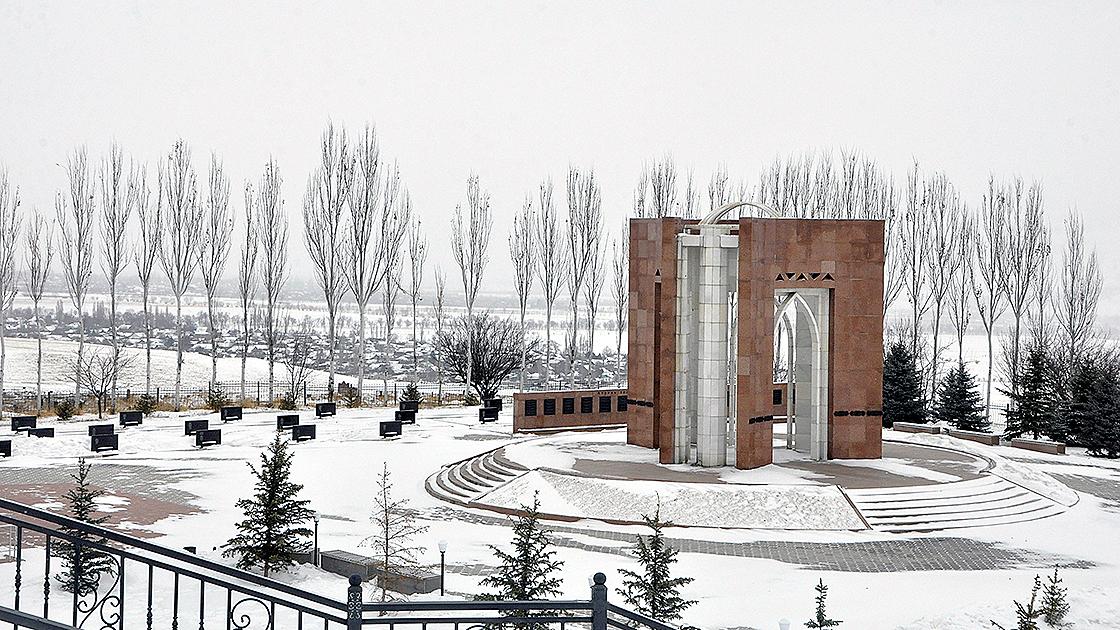
After Kyrgyzstan gained independence, the site was organized as a national memorial cemetery under the name Ata Beyit (Father’s Grave). The completed Ata Beyit Memorial Complex, finalized in the 2000s, is dedicated to the victims of the Soviet era, particularly those murdered in 1938. In recent years, those who lost their lives during the 2010 uprisings have also been buried here.
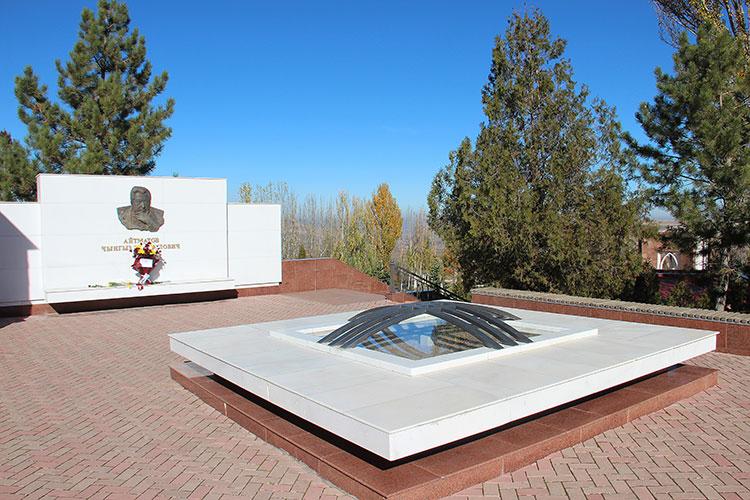
The complex features a monumental tombstone over the mass grave, with the names and graves of the victims inscribed on an memorial wall. The museum within the complex is a small memory space housing documents and personal items related to the 1938 executions. Exhibits include coins, shoes, identification documents, newspaper clippings, photographs and biographies of the victims. These materials reveal the repressive violence of Stalin’s regime against Kyrgyz intellectuals.
The grave of Törekul Aytmatov, father of Cengiz Aytmatov, is also located here. Cengiz Aytmatov died in 2008 and, in accordance with his will, was buried at Ata Beyit. Thus, father and son were reunited in this symbolic site of Kyrgyz history.
class=\
Ata Beyit is not merely a cemetery; it is a symbolic site representing three critical historical turning points in Kyrgyz collective memory:
Ata Beyit serves as a national memory space for Kyrgyzstan. It represents the grief and resistance of the Kyrgyz people against oppression during the Tsarist and Soviet eras and stands as a crucial reference point in literary and political discourse on the reconstruction of collective memory.
class=\
Today, Ata Beyit has become a spiritual center visited by students, local and foreign tourists and official delegations. During the annual Day of Remembrance of History and Ancestors, held between 7 and 8 November, state officials and the public lay flowers at the monuments, offer prayers and honor the heroism of those who gave their lives for Kyrgyzstan’s independence.
Altımışova, Zuhra. “Kırgızistan’da Sovyet Repressiya Siyaseti (1917-1953).” In *XVIII. Türk Tarih Kongresi, Kongreye Sunulan Bildiriler X. Cilt*, 891–903. Ankara, Türk Tarih Kurumu, 2018.https://www.ttk.gov.tr/wp-content/uploads/2022/04/53-ZuhraAltimisova.pdf
Anadolu Ajansı. "Ata-Beyit Kırgızların en acı tarihini yaşatıyor." Accessed November 6, 2025.
Anadolu Ajansı. "Kırgızistan'da bağımsızlık uğruna hayatını kaybedenler anılıyor." Accessed November 6, 2025.https://www.aa.com.tr/tr/dunya/kirgizistanda-bagimsizlik-ugruna-hayatini-kaybedenler-aniliyor/3046233
Derviş, Leyla, and Symbat Esenkan Kyzy. “Kırgızistan’da Siyasi Katliam (1937–1938).” *Kafkas Üniversitesi Sosyal Bilimler Enstitüsü Dergisi*, 23 (Spring 2019): 169–185.https://www.kafkas.edu.tr/dosyalar/sobedergi/file/23_%20SAYI/11.pdf
Dıykanbayeva, Mayramgül. “Hatıralar Işığında Cengiz Aytmatov ve Eserleri.” *Uluslararası Türkçe Edebiyat Kültür Eğitim Dergisi* 4, no. 1 (2015): 169–188.https://dergipark.org.tr/en/download/article-file/136994
Ergeshkyzy, Aziza. “Stalin’s Pressure on the Kyrgyz Intellectuals.” *Osh State University Faculty of Theology Scientific Journal*, 29 (2020): 111–125.https://isamveri.org/pdfdrg/G00017/2020_29/2020_29_ARGESHKYZYA.pdf
Kojobekova, Aijarkyn. “The Discourses of Romanticism and Heroism in the Post-Soviet Kyrgyzstan.” *International Journal of Social Science and Humanity*, 4, no. 5 (September 2014): 397–404.https://www.ijssh.net/papers/386-C10014.pdf
TRT Avaz Youtube Kanalı. "Ata Beyit Şehitleri - Stalin Döneminde Neler Yaşandı? - Dünya Gündemi - TRT Avaz." Accessed November 6, 2025.

Meaning | Baba Cemetery | ||||||||
|---|---|---|---|---|---|---|---|---|---|
Historical Event | Mass grave where 138 Kyrgyz intellectuals executed on Stalin's orders in 1938 are buried | ||||||||
Parts | Graves of the Martyrs of the April 2010 Revolution 1916 Urkun Monument Graves of the 1938 Victims | ||||||||
Location | Chon-Tash village Kyrgyzstan Chuy Region | ||||||||
Date of Discovery | 1991 | ||||||||
Date of Construction as a Monumental Tomb | 2000 | ||||||||
Historical Background
The Soviet Union’s Great Purge (Repression) Policy
Discovery of the Mass Grave and Establishment of the Memorial
Ata Beyit Memorial Complex
Symbolic Significance