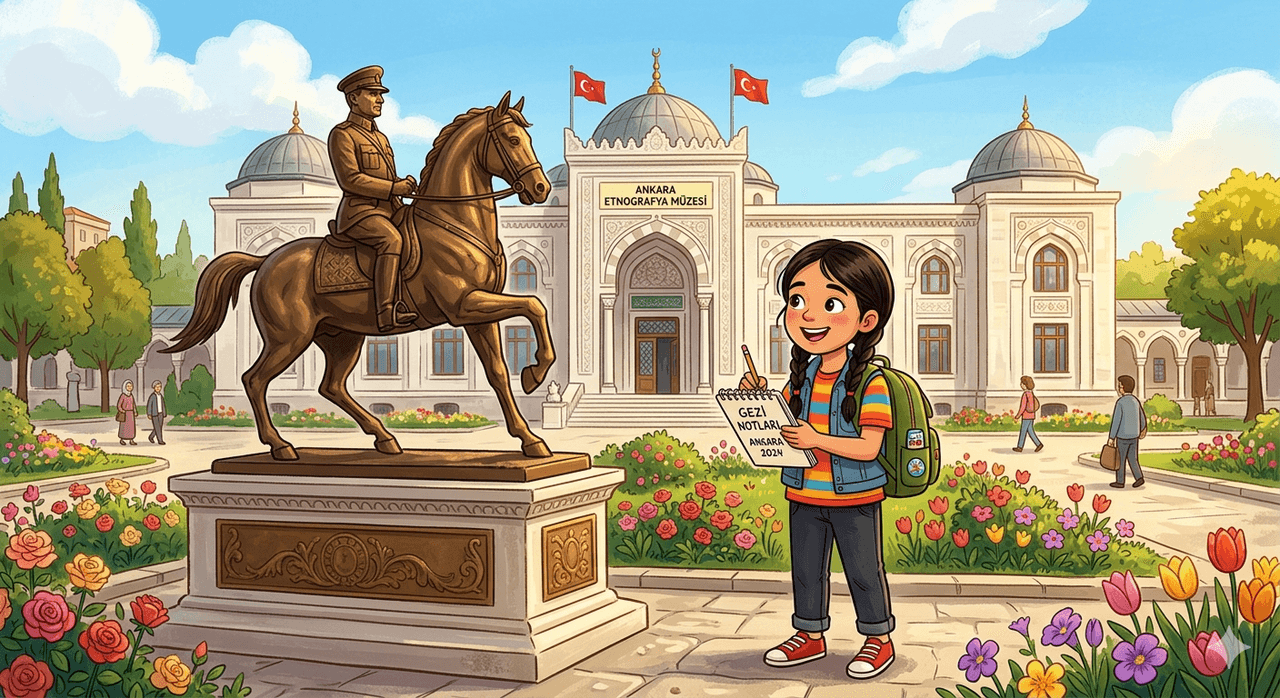


Ankara Ethnography Museum
Museums are not merely places where old objects are displayed; they are vast books that tell the stories of the past. The Ankara Ethnography Museum is a particularly special gateway into the colorful and rich world of Turkish culture, built during the Republican era. If you are curious about how our ancestors dressed, what objects they used, and how they lived in their homes, this museum is perfect for you!
How Was This Museum Established?
Located on a high hill in the center of Ankara, formerly known as Namazgâh, this building is the first structure in the Republic of Türkiye designed specifically as a museum. Its architect was Arif Hikmet Koyunoğlu, one of the most distinguished artists of that era.
The museum opened its doors to visitors on July 18, 1930, with valuable items collected from the public. The exterior of the building is clad in Ankara’s famous küfeki stone and features marble carvings. Upon entering, you are greeted by a grand staircase of exactly 28 steps.
What Can You See Inside?
Inside the museum, there are ten distinct halls, each housing a unique treasure. Here you can see colorful folk costumes, embroidered jewelry, and traditional footwear from all corners of Anatolia. Particularly valuable are the wooden crafts from the Seljuk and Ottoman periods, including intricately carved doors and chests.
The museum also features a room called the “Ankara House,” where you can examine ceiling decorations from a 17th-century Ankara mansion and objects once used in homes, such as candlesticks and vases, taking you on a brief journey into the past.
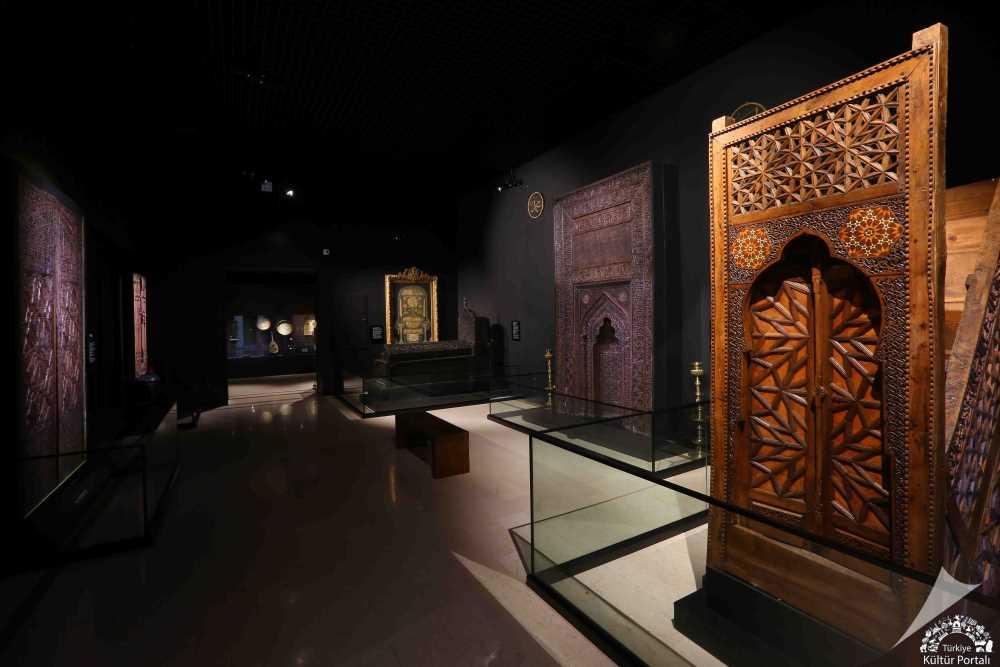
Wooden Artifacts Hall (Kültür Portalı)
A Journey Through Time
After the death of our Republic’s founder, Mustafa Kemal Atatürk, in 1938, his body remained in the inner courtyard of this museum for 15 years until the completion of Anıtkabir. For this reason, until 1953, the museum served as a deeply sacred site where the public came to pay respects to Atatürk.
The Mysterious Statue in the Museum’s Garden
Directly in front of the museum, you will see a bronze statue of Atatürk on horseback. This statue was created in 1927 by the Italian artist Pietro Canonica. When combined with the majestic white building of the museum, it forms a remarkable panorama.
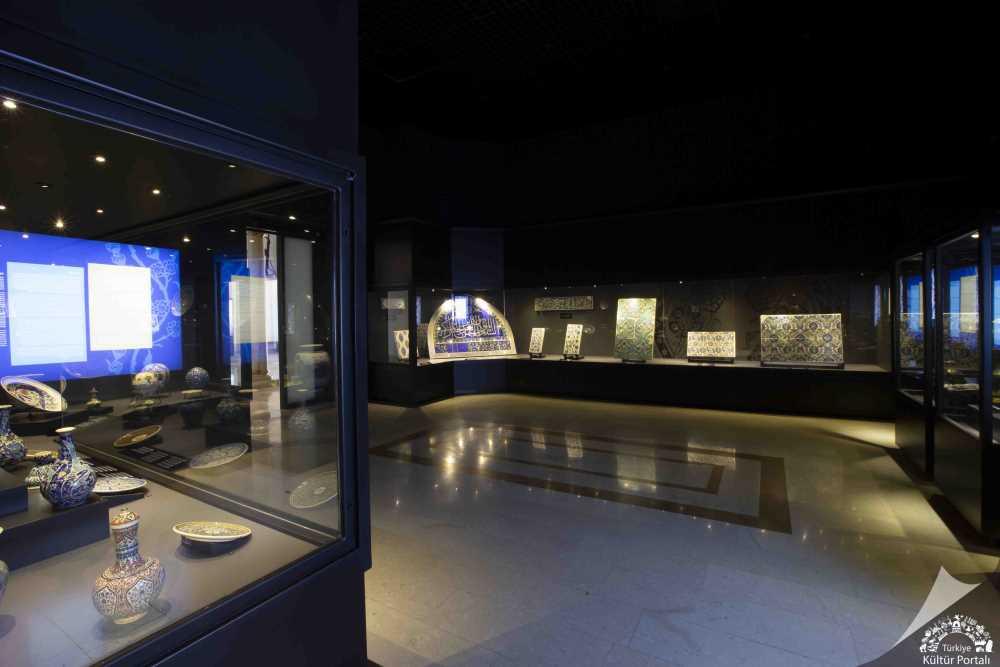
Ceramic and Porcelain Artifacts Hall (Kültür Portalı)