


This article was automatically translated from the original Turkish version.
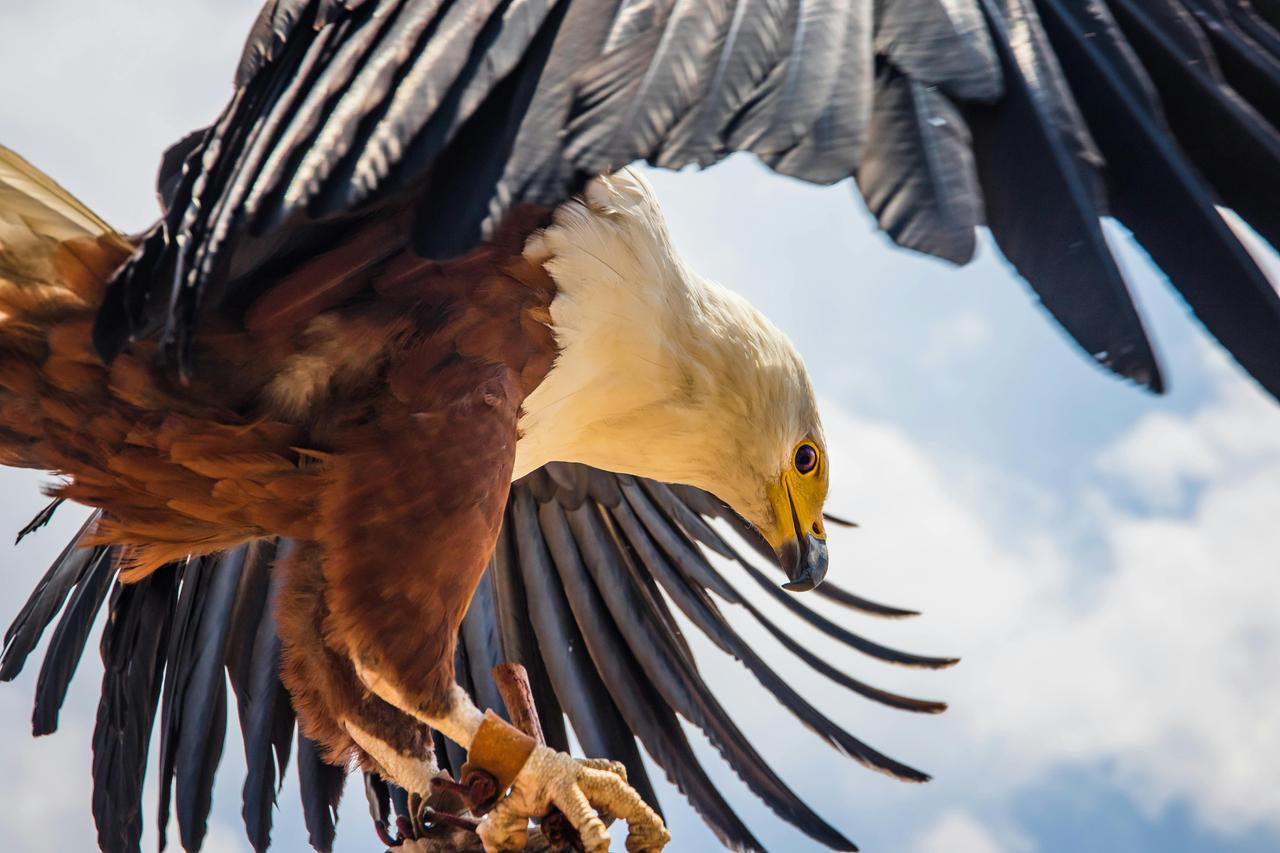
African Hawk-Eagle (Aquila spilogaster)
Taxonomy | Type: Aquila spilogaster Family: Accipitridae Genus: Aquila | ||||||||
|---|---|---|---|---|---|---|---|---|---|
Distribution Area | Sub-Saharan Africa: South Africa, Zimbabwe, Zambia, Tanzania, Kenya, Botswana, Angola, etc. | ||||||||
Habitat | Savannas Mountainous regions Thickets Open forests | ||||||||
Physical Characteristics | Wingspan: 140–160 cm Tail: Dark banded Plumage: Upper parts dark brown, under parts whitish with dark spotting Females: Slightly larger than males Length: 60–70 cm | ||||||||
African Hawk-Eagle (Aquila spilogaster) is a medium-sized eagle species native to the African continent. Its name derives from its body pattern resembling that of a sparrowhawk and its membership in the eagle family. This species is recognized as a predatory bird that efficiently hunts small and medium-sized prey using its powerful talons and sharp beak. Inhabiting the wooded savannas of tropical Africa, the African Hawk-Eagle plays the role of a top predator, helping to maintain balance in prey populations.
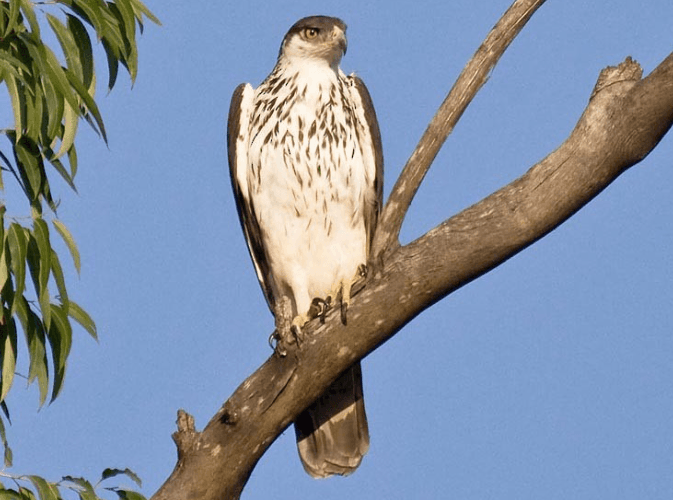
African Hawk-Eagle (Source: e-Bird)
The African Hawk-Eagle is a member of the Accipitridae (Hawk-Eagle) family and belongs to the Aquilinae subfamily, distinguished by feathers covering the legs down to the tarsi. Members of this subfamily, also known as “booted eagles,” are all raptors with fully feathered tarsi. At the genus level, the African Hawk-Eagle was originally classified under Hieraaetus, but genetic studies led to its reclassification into the Aquila genus in 2014. Its closest relatives include the Bonelli’s Eagle (Aquila fasciata) and the Cassin’s Hawk-Eagle (Aquila africana). Indeed, Bonelli’s Eagle was once considered the same species as the African Hawk-Eagle, but is now classified as a separate species due to morphological, ecological, and geographic differences. Genetic analyses have shown that the African Hawk-Eagle and Bonelli’s Eagle are sister species and share a close evolutionary lineage with the Golden Eagle (Aquila chrysaetos) species complex. Systematically, this eagle is positioned as a relatively small-sized member within the order Accipitriformes.
The scientific name Aquila spilogaster translates from Latin as “spotted-bellied eagle,” referring to the bird’s spotted underparts. The Turkish name “Afrika Atmaca Kartalı” also highlights its sparrowhawk-like hunting behavior and appearance. Taxonomically, this species is a member of the large eagles (Aquila), closely related to species such as Bonelli’s Eagle in terms of morphology and behavior, yet it possesses an independent evolutionary lineage unique to the African continent.
The African Hawk-Eagle is a medium-sized eagle with a total body length of approximately 55–62 cm and a wingspan of 132–150 cm. Adult females are generally larger than males; males weigh approximately 1.2–1.4 kg while females weigh 1.4–1.7 kg. The body is robust and muscular, with large blackish talons adapted for capturing prey. The legs are densely feathered down to the tarsi, a feature that classifies it among the “booted eagles.”
Adult plumage is characterized by a striking black-and-white contrast: the back and upper wings are dark blackish with white spotting creating a pied appearance, while the underparts are white with small black droplet-shaped spots. During flight, prominent dark bands are visible on the tail and underwings; the adult tail has a gray base with fine black bands and white edges. Although males and females have similar coloration, females exhibit denser spotting on the underparts, allowing experienced observers to determine sex based solely on this trait. Juvenile birds, however, differ markedly from adults: their underparts are pale brownish or reddish with no prominent black markings, and their upperparts are duller brown and more heavily spotted. Juveniles lack the sharp black-and-white contrast of adults and may appear “uniformly colored” from a distance. As they mature between 2 and 3 years of age, their plumage gradually transitions to the adult pattern, reaching full adult plumage at 4–5 years.
The African Hawk-Eagle’s head structure is relatively small and rounded, but its long neck gives it a forward-tilted appearance. The beak is prominent and powerful for its size. The iris color in adults is bright yellow, while juveniles have darker brownish hues; the cere and legs remain yellow regardless of age. The wings are broad and rounded, and the tail is long and straight relative to the body. This morphology enables agile maneuvering in dense woodland environments while also facilitating soaring patrols at high altitudes. Structurally, the African Hawk-Eagle represents an intermediate form between large eagles and forest hawks (sparrowhawks): it has evolved to be both powerful and agile.
Morphological Features Summary Table: Below is a summary of the African Hawk-Eagle’s key dimensions and partial characteristics:
These physical traits are well adapted to its hunting and lifestyle. For instance, its broad wings and long tail enable rapid maneuvers and tight turns in wooded areas, while its strong talons and sharp beak allow it to swiftly kill and dismember prey. Overall, the African Hawk-Eagle is relatively slender compared to large eagles (e.g., the Verreaux’s Eagle) and larger than hawks, with a graceful build.
The African Hawk-Eagle is distributed across a broad swath of tropical Africa. It occurs south of the Sahara Desert, extending from west to east along the savanna and open woodland belt. Its overall distribution forms a wide green corridor stretching from southern West Africa through Central and East Africa to northern South Africa. The species is rarely found in dense rainforest areas (e.g., intact forests of Central Africa); instead, it thrives in open or sparsely wooded habitats. Common habitats include extensive savanna plains, gallery forests (riverine woodlands), and forest-savanna mosaics. It rarely inhabits true closed tropical forests, an ecological niche occupied by relatives such as the Cassin’s Hawk-Eagle. The African Hawk-Eagle can adapt from dry thornbush savannas (thornveld) to relatively moister miombo and mopane woodlands, but it most prefers moderately dry wooded areas. Regions with very high rainfall (e.g., tropical rainforests or permanently moist highland forests) are unsuitable, as are arid desert or semi-desert zones with minimal annual precipitation. Studies on habitat preference indicate that this eagle is most commonly found in areas receiving moderate rainfall (approximately 500–1000 mm annually) with deciduous trees during the dry season. This reflects its preference for ecotones between desert and dense forest.
Geographic distribution varies regionally. In West Africa (e.g., Senegal, Guinea, Côte d’Ivoire), the African Hawk-Eagle is rare and irregularly recorded due to limited suitable habitat patches and agricultural pressure. In Central Africa (southern Chad, southern Sudan, savanna regions of the Democratic Republic of the Congo) and East Africa (Kenya, Tanzania, southern Ethiopia), it shows a more continuous distribution and forms resident breeding populations where suitable habitat is available. Northern South Africa (e.g., Zambia, Zimbabwe, northern Botswana, Limpopo Province of South Africa) marks its southern limit, where it is locally common. However, in southernmost regions such as South Africa’s Cape Province, historical records exist but no resident populations remain today. Overall, the species’ distribution closely mirrors that of the African wooded savanna ecosystems.
The African Hawk-Eagle most prefers dry tropical wooded areas, meaning wooded savannas, sparse forests, and forest edges. Commonly occupied habitats include:
The African Hawk-Eagle requires large trees for nesting. It typically builds its nest in the main trunk forks or thick lateral branches of trees 10–30 meters high. A study in Zimbabwe revealed that these eagles prefer the largest and most robust tree species available in their region: in basalt areas, they favor flat-topped thorny acacias; in sandy areas, they select round-topped, thick-barked trees. Thus, they use whichever large tree species dominates the local ecosystem. This flexibility allows them to nest in mopane forests on mopane trees, miombo forests on Brachystegia species, or riverine figs (Ficus). Important factors are sufficient open space around the tree for takeoff and landing, and strong, sturdy branches to support the nest.
In summary, the African Hawk-Eagle is a species with specific habitat requirements: moderately dry, wooded areas are ideal. Where these conditions exist, the species can spread widely. However, when habitat is destroyed or replaced by intensive agriculture and settlement, local populations decline or disappear. Thus, its continental presence can be viewed as a fragmented mosaic, confined to pockets of suitable habitat and absent from intervening unsuitable areas.
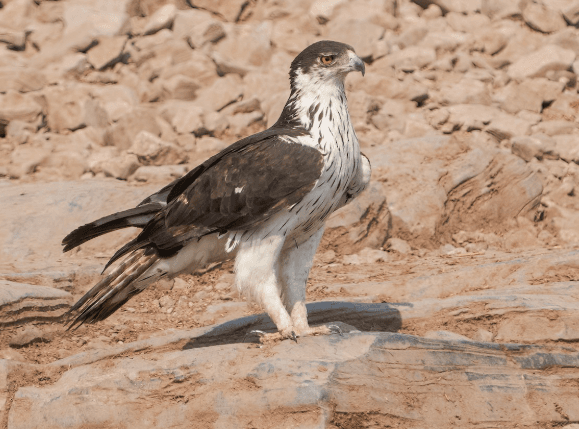
African Hawk-Eagle (Source: Birds of the World)
The African Hawk-Eagle is an agile predator that employs both high-soaring and sudden stooping tactics to capture prey. Using its broad wings, it can ascend on thermal updrafts, circling to survey the terrain below. Upon spotting prey, especially in open areas, it folds its wings and dives rapidly (a pike) to strike. Additionally, its hunting style is adapted to forested environments: ambush and pursuit. It frequently hides in tree shadows or among branches, waiting for the right moment to launch a short, swift attack.
In terms of flight physiology, despite its broad wings, the African Hawk-Eagle is a slower but more agile flyer than soaring raptors. GPS tracking studies have recorded a maximum hunting flight speed of approximately 63 km/h. This is lower than the speeds of falcons (e.g., Peregrine Falcon or Lanner Falcon, >100 km/h), but sufficient for its hunting strategy. The study found that raptors with broad wings (e.g., Hawk-Eagles and buzzards) have significantly lower hunting speeds than long-winged falcons. This confirms that the African Hawk-Eagle is not a pursuit predator but an ambush attacker. In forested environments, maneuverability is more important than speed; this eagle can disable prey with sudden bursts of acceleration and directional changes at relatively low speeds.
An interesting observation is that African Hawk-Eagles can exhibit cooperative hunting in pairs. Observations show that pairs divide roles: one bird flies openly to flush prey (e.g., a flock of birds), while the other, hidden nearby, attacks the fleeing target. This cooperative hunting strategy demonstrates advanced coordination and communication. Documented observations report that such cooperation leads to more successful captures, particularly from bird flocks. In this regard, the African Hawk-Eagle and its close relatives (e.g., Ayres’s Hawk-Eagle) are among the few raptor species known to use teamwork in capturing prey.
The African Hawk-Eagle is generally diurnal, hunting during daylight hours. Early morning and late afternoon are its most active periods, especially during feeding seasons. During midday, it soars for extended periods on rising thermals, patrolling its territory and searching for prey. It is typically silent in flight; when prey is spotted, it dives swiftly, captures it with its talons, and lands on a suitable perch to feed. If the prey is heavy (e.g., a rock hyrax), it may dismember it on the ground and carry lighter portions back to the nest or a feeding perch.
Studies on acceleration and maneuverability show that the Hawk-Eagle can reach 40 km/h from a standstill in approximately 2 seconds, indicating rapid acceleration over short distances—ideal for ambush hunting in forests. However, it is not as impressive in long, high-speed dives as falcons, as its wing structure is optimized for maneuverability rather than speed. In summary, the African Hawk-Eagle has adopted a “balance strategy” in flight dynamics: it is neither a high-speed aerial hunter nor a sluggish one, but maintains an average performance that allows it to accelerate sufficiently to capture prey and glide between trees as needed.
Its hunting strategies are also habitat-dependent. In open savannas, it may pursue a hare with a longer flight and dive; in woodlands, it may strike a francolin from a branch with a short, explosive launch. This species is primarily described as an ambush hunter: in dense woodlands, it perches motionless on a branch, listening and watching; when it detects a ground-foraging bird or rodent, it glides silently and strikes at the last moment. If the prey escapes on the first attempt, it may pursue briefly, but rarely engages in long chases—either capturing prey within seconds or abandoning the pursuit. This is energetically efficient, as prolonged high-speed chases are physiologically taxing for this species.
In summary, the African Hawk-Eagle’s flight and hunting behavior are based on agility and opportunism. It flies at moderate speeds, waits for the right moment, and strikes with explosive force. Cooperative hunting by pairs enhances hunting success. The combination of these traits makes it a highly successful predator in African savannas. These flight dynamics have attracted academic interest not only in ecology but also in aerodynamics, where they have been used in modeling.
The African Hawk-Eagle is a carnivorous species with a diet encompassing various small and medium-sized vertebrates. Its primary prey includes birds and small mammals living on the ground or in low vegetation. Key prey groups are:
After capturing prey, the African Hawk-Eagle typically seeks a safe perch or ground spot. If the prey is small (e.g., a bird), it carries the entire prey to the nest or feeding perch. For larger prey (>1 kg), it dismembers it: first removing the head (which causes rapid death through blood loss), then extracting internal organs and leaving them behind, and finally carrying the meaty portions in pieces. When bringing prey to nestlings, the parent dismembers it into small pieces. When chicks are small, the female tears meat and feeds them; as they grow, the parents bring prey nearly whole, allowing the young to learn to dismember it themselves.
Diet analysis studies show that the African Hawk-Eagle is a flexible and opportunistic predator. It is not entirely dependent on any single prey species but targets appropriately sized animals that are abundant and easy to catch in its environment. For example, where pigeons are abundant, the diet is dominated by birds; where rabbit populations are dense, mammals dominate. This flexibility allows the species to survive in diverse ecosystems. Overall, birds and mammals share nearly equal proportions in the diet. A review study on African raptors estimated the African Hawk-Eagle’s diet as approximately 50% birds, 45% mammals, and 5% others (reptiles, insects). These proportions vary locally.
Regarding prey size, this eagle can capture prey weighing close to its own body weight. It typically targets prey between 0.5–2 kg but can also bring down and dismember prey up to 3–4 kg. For example, one record documents the killing of a ~4.3 kg male domestic cat. Similarly, a young antelope has been observed being brought to the ground. However, this represents an extreme upper limit; smaller prey is preferred. Pursuing large prey may depend on local competition (e.g., if larger eagles are absent, the Hawk-Eagle may exploit larger prey). When sharing habitat with larger eagles such as the African Crowned Eagle (Stephanoaetus coronatus) or Verreaux’s Eagle (Aquila verreauxii), the African Hawk-Eagle tends to rely on smaller prey; in areas where these larger eagles are absent, it may expand its diet to include larger prey.
Finally, the African Hawk-Eagle captures prey almost exclusively during the day and does not hunt at night. It spends the night resting or digesting on a perch. Thus, its diet consists entirely of diurnal animals. Nocturnal small mammals (e.g., mice, hedgehogs) are virtually absent from its diet because it does not hunt them during their active hours. Instead, diurnal birds and mammals are its primary targets.
Diet Composition Table Suggestion: A table could be presented showing prey groups identified in different studies or regions. For example: Kenya (Tsavo) study: 60% mammals, 35% birds, 5% others; South Africa (Kruger) study: 40% birds, 50% mammals, 10% reptiles (hypothetical example); Average: 50% birds, 45% mammals, 5% reptiles/other. Such a table would clearly demonstrate the species’ dietary flexibility and regional variation.
The African Hawk-Eagle has a monogamous breeding strategy, with pairs often remaining together for many years, sometimes for life. As the breeding season approaches, pairs exhibit prominent courtship behavior. This includes soaring together in circles, taking turns in dives (males often perform dive displays toward females), and vocal calls. The male performs acrobatic maneuvers in the air to impress the female, who often responds by flapping her wings or displaying her talons. These displays strengthen the pair bond and coordinate breeding preparation. It is common for the male to offer the female a captured prey item as a “gift” during courtship, providing her with food and demonstrating his hunting prowess. Courtship culminates in mating, typically occurring on a high tree branch or near the nest.
The African Hawk-Eagle’s nest is a large platform constructed from sticks, placed high in large trees. After selecting a suitable tree, the pair collects branches to build a nest approximately 1 meter in diameter. Nests are typically built in the thick forks near the main trunk of the tree, at heights of 8–30 meters above ground (average ~15–20 m). The inner cup is lined with leaves, fresh green twigs, and sometimes animal feathers. Pairs often reuse the same nest for multiple years, repairing and adding material each season. A long-used nest can become a massive pile. However, if the nest tree is felled or disturbed, the pair may build a new nest nearby. A study in Zimbabwe found that nests on basalt plateaus were typically in flat-topped acacias, while those in sandy areas were in rough-barked Kalahari trees—indicating the use of the most abundant large tree species. Distance between neighboring nests is considerable, typically 5–9 km, indicating that each pair maintains a large breeding territory.
The female African Hawk-Eagle typically lays one or two eggs. Although pairs have the potential to lay two eggs, in stressful or resource-poor years, they may lay only one. A long-term study (1973–1984, Zimbabwe) found that two-egg clutches were more common in productive areas (basalt regions), while single-egg clutches were more frequent in less productive sandy areas. Eggs have a whitish base with brown spotting. Each egg weighs approximately 75–100 grams (average ~87 g). If two eggs are laid, they are laid approximately 3–4 days apart. This asynchronous laying results in an age (and thus size) difference between the first-hatched and second-hatched chicks.
Incubation period lasts approximately 42–44 days. Incubation begins as soon as the first egg is laid, so the first egg spends more time under the parent and typically hatches first. The female performs the majority of incubation duties; the male provides food and defends the territory during this time. The female leaves the nest only briefly each day (to feed or defecate); during these short absences, the male may briefly sit on the eggs, but the female is the primary incubator. As hatching approaches, the female becomes extremely attentive and remains almost constantly on the nest.
Chicks hatch with a full covering of white down and closed eyes (altricial development). For the first days, they are entirely dependent on the mother. Sibling rivalry, common among raptors, is a significant factor in the African Hawk-Eagle. If two chicks are present, the first-hatched (larger) chick typically dominates, pushes, and outcompetes the second for food. This often results in siblicide: the weaker second chick may die of starvation or, rarely, be directly killed by its sibling. This seemingly cruel natural phenomenon serves as a “insurance policy” strategy in many large raptors: if food is abundant, both chicks survive; if food is scarce, at least one survives. Indeed, in the African Hawk-Eagle, single chicks are the norm; successful fledging of two chicks is rare and occurs only during exceptional periods of abundant prey. For example, one study found that in years with high rainfall and abundant prey, the rate of raising two chicks increased significantly, while in dry years, almost all pairs raised only one chick.
The nestling period (time until fledging) lasts approximately 60–65 days. In the first weeks, chicks are entirely fed and protected by the mother. The female remains nearly constantly in the nest for the first two weeks after hatching, feeding the chicks, shading them from the sun, and warming them at night. The male delivers prey at regular intervals. Chicks grow rapidly: a 2-day-old chick weighs ~80 g, a 1-week-old ~200 g, a 3-week-old ~740 g, a 4-week-old ~950 g, and a 5-week-old ~1.13 kg. Thus, within a month and a half, they approach adult mass. Feathering is gradual: brown juvenile feathers begin to appear at 4–5 weeks, and flight feathers develop by 8–9 weeks. Around 8–9 weeks (60–65 days), chicks begin attempting flight and leave the nest. “Fledging” does not always mean permanent departure; young eagles may return to the nest after their first flight, practicing short flights nearby and sleeping in the nest for several weeks. However, permanent departure from the nest typically occurs around the 10th week.
After fledging, the young eagle remains in the parental territory and continues to beg for food from its parents. While developing flight skills, the parents continue to feed it for an estimated 1–2 months. The young Hawk-Eagle remains in the area until just before the next breeding season, when it is either driven away by the parents or leaves on its own. This initiates the dispersal phase: the young eagle migrates until it finds an unoccupied area. It is believed that young African Hawk-Eagles do not travel extremely far from their natal area if habitat is suitable, but may move several hundred kilometers. During this period, survival rates are low; young eagles may enter territories of larger eagles, starve, or encounter human-related threats.
Parents remain faithful to their territory after the young leave and prepare for the next breeding season. They typically breed every year or every two years depending on food availability. If a breeding attempt fails (eggs do not hatch or chicks die early), they do not lay again in the same season but wait for the next breeding cycle.
The African Hawk-Eagle’s breeding season varies by geography but generally coincides with the end of the rainy season and the beginning of the dry season. In southern Africa (Zimbabwe, Botswana), egg-laying typically occurs in May–June, when rains end and prey (especially young mammals and bird chicks) are abundant. Incubation and chick-rearing occur during the dry season, and fledglings leave the nest before the next rains. In East Africa (e.g., Kenya, Tanzania), breeding typically coincides with the middle of the dry season (around July–August), with fledging occurring in September–October. In West Africa, where rainfall patterns differ, pairs have been recorded laying eggs in January–February. The general rule is that egg-laying timing is synchronized with prey abundance: when chicks are most vulnerable, prey should be most abundant. Thus, timing is flexible according to local climate and ecology.
Breeding success varies year to year. Climatic conditions and prey availability are the main factors influencing success. A long-term study (Hustler and Howells, 1988) showed that in years with high rainfall, more chicks successfully fledged, while in dry years, success rates declined. For example, between 1973–1976 (mean annual rainfall 783 mm), about 70 out of 100 pairs raised at least one chick; in the drier period of 1979–1984 (mean annual rainfall 601 mm), this dropped to about 50. Rainfall affects primary productivity (plant growth) and thus prey populations; in wet years, eagles find food more easily and can raise two chicks. In dry years, the second chick often dies, and some pairs do not attempt breeding at all.
In summary, the African Hawk-Eagle’s reproductive biology reflects a strategy typical of long-lived raptors: maintaining a large territory, low reproductive rate (one chick per year), intensive parental care, and optimizing chick survival based on environmental conditions. This species can successfully breed for years in suitable conditions, but breeding success declines sharply if habitat is degraded or prey becomes scarce. From a conservation perspective, protecting breeding areas (large trees) and ensuring continuous prey availability are critical for the species’ population health.
Like many large raptors, the African Hawk-Eagle exhibits diurnal activity and is a resident bird that spends most of its life with its mate. It displays territorial behavior: each pair establishes a hunting and breeding territory and defends it against other adult Hawk-Eagles. Territory size varies with prey density but typically spans several dozen square kilometers. The 5–9 km distance between neighboring nests implies that each pair effectively uses an area with a radius of approximately 2–4 km. Territory defense usually involves vocal warnings and display flights; physical fights are rare. When a foreign Hawk-Eagle enters the territory, the pair circles high above and emits sharp, repeated calls (similar to “klü-klü-klü”) to warn the intruder. If necessary, especially among same-sex rivals, they may chase each other and engage in aerial talon displays.
Vocalization: The African Hawk-Eagle is generally considered a quiet species. It does not call frequently in daily life; vocalizations occur mostly during breeding or when disturbed. Its most recognizable call is a rapid series of sharp “klü-klü-klü” notes. This call is used for territory declaration or pair communication. Chicks beg for food with a high-pitched “ii-yik, ii-yik” series. Parents may emit soft murmurs when approaching the nest. However, its vocal repertoire is limited, and it is not continuously communicative like songbirds.
Social behavior: Hawk-Eagles are typically seen in pairs. Pairs remain together year-round and are often seen perched or flying together. They may even sit side by side on the same branch, observing their surroundings. These strong pair bonds are critical for successful breeding. Outside of pairs, they do not exhibit group behavior; they do not form flocks. As they do not migrate, there are no collective movements. After leaving the natal area, juveniles wander semi-independently; rare reports exist of juveniles forming loose groups, but no permanent social structures form. The species is solitary/pair-living.
Daily activity cycle: Early morning (around sunrise) is when Hawk-Eagles become active. They leave their perches, make short morning flights, or immediately begin hunting. In the cool morning, prey animals (hares, birds) are active, providing a hunting window. As thermals strengthen around midday, the Hawk-Eagle rises to perform soaring flights, sometimes circling for long periods without flapping. This behavior serves both for hunting and territory display. During the hot midday hours, if not hunting, it may rest in the shade of a tree. In the late afternoon, hunting activity increases again as rodents and birds make their final movements before sunset.
Shortly before sunset, the pair, even if separated during the day, reunites and perches together for the night. This perch is typically a protected, thick branch near the nest. They remain silent and motionless throughout the night. In areas without human presence, it has been observed that Hawk-Eagles sometimes spend the night on the ground beside a large prey item (especially if they captured it late and left it for the next day), but this is rare because on the ground they are vulnerable to other predators such as jackals.
Interactions with other species: The African Hawk-Eagle may compete or conflict with raptors of similar size. It may compete for prey or territory with species such as the Black Kite (Milvus migrans) or Accipiter hawks (Accipiter spp.). It may also be dominated by larger eagles (e.g., Crowned Eagle). These eagles can be quite aggressive toward larger raptors; for example, when a Rock Eagle approaches, they may alarm-call and mob it collectively. They are courageous in defending their territories and have been recorded attacking raptors twice their size. This behavior stems from strong territorial instincts.
In parental behavior, Hawk-Eagle pairs divide responsibilities, but the female assumes greater responsibility (incubation and chick feeding). The male acts as provider and guardian. Even after fledging, chicks continue to beg for food from their parents, who continue to deliver food at intervals, gradually encouraging independence (e.g., bringing live prey to allow the young to learn to kill). Eventually, when the young is driven away or leaves on its own, the pair remains together until the next cycle.
Although the lifespan of the African Hawk-Eagle in the wild is not precisely known, similar species in captivity live up to 15–20 years. In the wild, high juvenile mortality (due to siblicide, etc.) means few individuals reach adulthood, but those that do participate in breeding cycles for many years. Each individual’s behavior is largely dependent on its mate and territory; because the territory is fixed and mate changes are rare, behaviors remain consistent throughout life.
In summary, the African Hawk-Eagle is a strongly bonded, territorial, diurnal, and opportunistic predator. It leads a quiet, secretive life and generally avoids humans. However, its aggression and courage when defending territory or capturing prey reveal how well adapted it is as a predator.
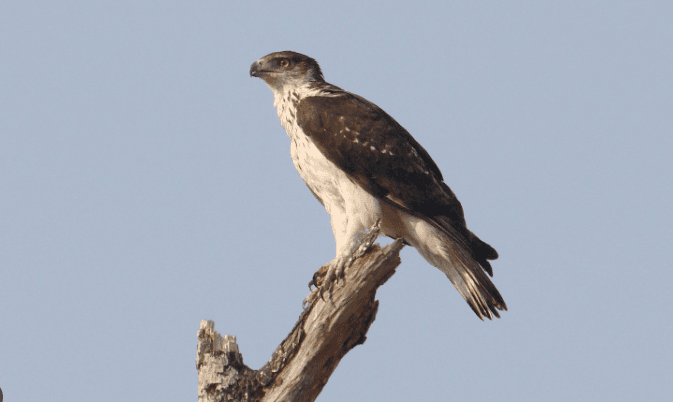
African Hawk-Eagle (Source: Birdingplaces)
Globally, the African Hawk-Eagle is classified as Least Concern on the IUCN Red List, indicating a low risk of extinction in the near future. This is due to its wide distribution across sub-Saharan Africa and its relatively healthy overall population. Although it does not exist in vast numbers, no significant global population decline has been detected. However, this does not mean the species faces no threats. On the contrary, several regional threats and risks exist:
Regionally, populations have declined in some areas outside West and South Africa (e.g., densely populated Nigeria, Kenya’s agricultural zones). In contrast, in countries with vast, remote savannas (Botswana, Tanzania), the species is considered more stable. Overall, many African raptors have shown significant declines in recent decades, a phenomenon termed the “silent biodiversity crisis.” The Hawk-Eagle may be part of this trend; although comprehensive surveys are limited, it is not incorrect to say that populations outside protected areas are under pressure.
Conservation Status: Currently, no specific conservation program targets this species; however, its protection is directly linked to habitat conservation. In many African countries, it is legally protected (killing or capturing is prohibited). Populations within protected areas (national parks, reserves) are secure. For example, regular breeding pairs have been recorded in large parks such as Kruger, Serengeti, and Etosha. These areas serve as refuges for the species. Outside protected areas, environmental education and highlighting the benefits of raptors are important. If farmers understand that this eagle primarily preys on agricultural pests such as rodents and grasshoppers, they may be encouraged to protect rather than kill it.
In rapidly urbanizing areas, although the species has limited adaptation to urban environments, large city parks or suburban green areas may serve as potential microhabitats. In South Africa, the closely related Ayres’s Hawk-Eagle has been observed in urban areas, likely due to abundant pigeon populations and nearby wooded areas. Similarly, the African Hawk-Eagle is occasionally observed in the suburbs of major cities (on undeforested hills, in valley green corridors). Data from the “South African Bird Atlas Project” show that this species has been recorded, albeit at low frequency, in some of the 11 major cities. Nevertheless, the priority for urban conservation should remain the protection of habitats outside cities.
In conclusion, while the African Hawk-Eagle is not currently considered at serious risk of extinction, it may be experiencing hidden declines. Studies on Africa’s raptor crisis have revealed that many species are declining unnoticed. Therefore, monitoring Hawk-Eagle population trends, protecting its habitats, and raising public awareness to promote coexistence are essential.
By nature, the African Hawk-Eagle prefers to avoid human settlements. It thrives in vast, undisturbed areas but struggles to survive in densely urbanized zones. However, some raptors have adapted to cities (e.g., some falcons, owls, and even the African Crowned Eagle now breed in city parks). The African Hawk-Eagle is considered poorly suited to such urban adaptation. A study examining raptor presence in South African cities recorded 66 raptor species at least once, but only 30 were seen frequently enough to be considered regular. Although the African Hawk-Eagle was among the 66 species recorded, its reporting frequency did not exceed 10%, indicating it is a rare and irregular visitor to urban areas.
The main barriers to urban presence for the Hawk-Eagle are lack of suitable nesting sites and prey scarcity. As large trees diminish in cities, finding safe nesting locations becomes difficult. Prey in cities—such as sparrows, pigeons, or roof rats—are often below the minimum prey size preferred by this eagle; while it may occasionally hunt them, they may not fully satisfy its nutritional needs. On the other hand, prey such as pigeons and hares, common in urban fringes, offer potential opportunities. For example, in the Johannesburg urban area, Ayres’s Hawk-Eagle was regularly observed near green spaces close to the city center, likely due to abundant pigeon populations. Ayres’s Hawk-Eagle, being smaller and more agile, may adapt more easily to urban environments. Although anecdotal observations exist of African Hawk-Eagles hunting in urban fringes (e.g., a case of a Hawk-Eagle caught in a chicken trap near Pretoria), no systematic urban population exists.
However, indirect effects of urbanization are important for the Hawk-Eagle. As cities grow, green corridors and suburban areas may serve as refuges. Rare breeding pairs have been recorded in large city parks or campus-like wooded areas. Given that the African Crowned Eagle has been documented breeding in parks in cities like Durban, feeding on pigeons, cats, and dogs, the African Hawk-Eagle may occasionally appear in urban fringes, albeit rarely. The South African Bird Atlas Project included the African Crowned Eagle among the four most studied raptors in cities, but not the African Hawk-Eagle, highlighting a research gap.
Another point regarding urban interaction is the impact of light and noise pollution on raptor behavior. Since the African Hawk-Eagle is not nocturnal, artificial light has limited direct impact, but increased light may reduce nocturnal prey activity (e.g., rodents emerge less under light), creating indirect effects. Noise may cause stress in nesting areas. Even near city edges, nests near highways or construction noise are known to be abandoned more frequently in other raptors; the Hawk-Eagle may show similar sensitivity.
Positively, near urban areas, the eagle may control rodent and pest populations, providing ecosystem services. Therefore, urban planning that preserves large trees and green spaces will allow such raptors to persist and continue providing ecological benefits.
In conclusion, the African Hawk-Eagle is not a urban species, but as urbanization expands, it increasingly encounters human landscapes. Occasional sightings near cities like Johannesburg and Pretoria may signal potential future adaptation. Nevertheless, its conservation depends primarily on protecting natural areas outside cities. Urban planning that preserves forest patches near cities will provide habitat not only for the Hawk-Eagle but for many raptors and prey species.
The literature on the African Hawk-Eagle is limited compared to other large raptors, but accumulated field observations and scientific studies have provided significant insights into its biology.
Today, with technological advances, satellite tracking (telemetry) studies on the African Hawk-Eagle have begun. This will allow clearer mapping of juvenile dispersal routes, daily movements of adults, and habitat use patterns. Additionally, field studies are planned to understand how the species adapts behaviorally in areas with high human impact (farmlands, semi-urban zones). For example, a team in South Africa is preparing a project to locate Hawk-Eagle nests in rural areas and compare land-use types and nest success nearby (personal communication, manuscript in preparation).
In summary, research from the past to the present has accumulated considerable knowledge on the African Hawk-Eagle, but research gaps remain. Particularly, its status in urban fringes, detailed prey preferences, and population dynamics (mortality-birth rates) require further study. Current findings tell us: this eagle is sensitive to rainfall and prey availability, has flexible feeding habits, employs a pronounced sibling-killing strategy, and is negatively affected by human impacts.
The African Hawk-Eagle (Aquila spilogaster) is one of the hidden masters of Africa’s savanna ecosystems. Despite its medium size, it is an extremely powerful, agile, and adaptable predator, playing a critical role as a raptor at the interface of forest and open areas. Scientific research and long-term observations have revealed many details of its life cycle: its monogamous lifestyle, large-tree nests, low annual chick production, and rainfall- and prey-sensitive breeding success are fundamental to its ecology.
Overall, while the African Hawk-Eagle’s population appears secure due to its wide distribution, it has a fragmented range and faces regional threats. Healthy populations exist where habitat remains intact and human activity is low, but populations decline or disappear where human pressure is intense. This sends a clear message: Habitat conservation is the key factor for its sustainability. Where large trees are preserved, forest-mosaic areas are protected, and prey populations (e.g., francolins, hares) are not overexploited, the African Hawk-Eagle will persist.
Scientific findings also show that climatic fluctuations and rainfall patterns can directly affect this species. In this sense, the African Hawk-Eagle is not only a predator but also a potential indicator species of ecosystem change. For example, if breeding success declines in consecutive dry years, it may indicate reduced prey populations in that ecosystem. Thus, monitoring this eagle can contribute to monitoring broader ecosystem health.
Conservation priorities include first, awareness-raising. While many people find eagles charismatic and admirable, misconceptions in farming communities can make them targets. It must be emphasized that the African Hawk-Eagle primarily feeds on agricultural pests (rats, grasshoppers, etc.) and benefits natural balance. Second, creating habitat corridors is important. Connecting large protected areas with forest corridors will allow young Hawk-Eagles to disperse safely and maintain genetic diversity. Third, research gaps (e.g., urban fringe populations, pesticide effects) should be encouraged. Universities and conservation organizations can develop projects focused on this species.
The future of the African Hawk-Eagle depends largely on the future of Africa’s natural savannas. Under pressures of urbanization, agriculture, and climate change, the presence of apex predators like this eagle will provide clues about ecosystem resilience. If a region still supports breeding Hawk-Eagles, it remains relatively natural. Conversely, its absence may indicate disruptions in lower trophic levels.
In conclusion, as the African Hawk-Eagle continues to be studied scientifically, it will not only reveal its own secrets but also provide valuable insights into the overall functioning of African savanna ecosystems.
Bijlsma, R.G., J. van der Kamp, and L. Zwarts. "Distribution and Relative Density of Raptors in the Sub-Sahara during the Dry Season." Ardea 111, no. 1 (2023): 103–117.
Brown, L.H., Urban, E.K., and Newman, K. The Birds of Africa. Vol. 1. London: Academic Press, 1982.
Da Cruz, Paul. "Observations and Analysis of the Occurrence and Behaviour of Ayres’s Hawk-Eagle (Hieraaetus ayresii) over the Linksfield Ridge, Johannesburg." Biodiversity Observations 13 (2023): 117–130.
Ferguson-Lees, James, and David A. Christie. Raptors of the World. London: Christopher Helm, 2001.
Hart, L.A., E.P. Wreford, M. Brown, and C.T. Downs. "Hunting Flight Speeds of Five Southern African Raptors." Ostrich 89, no. 3 (2018): 251–258.
Hustler, K., and W.W. Howells. "The Effect of Primary Production on Breeding Success and Habitat Selection in the African Hawk-Eagle." The Condor 90, no. 3 (1988): 583–587.
Kemp, A., and M. Kemp. Sasol Birds of Prey of Africa and Its Islands. Cape Town: Struik Publishers, 2006.
Malan, G., and S. Shultz. "Nest-Site Selection of the Crowned Hawk-Eagle in the Forests of KwaZulu-Natal, South Africa, and Taï, Ivory Coast." Journal of Raptor Research 36, no. 4 (2002): 300–308.
McPherson, S.C., P. Sumasgutner, and C.T. Downs. "South African Raptors in Urban Landscapes: A Review." Ostrich 92, no. 1 (2021): 41–57.
Steyn, Peter. "Observations on the African Hawk-Eagle." Ostrich 46, no. 1 (1975): 87–105.

African Hawk-Eagle (Aquila spilogaster)
Taxonomy | Type: Aquila spilogaster Family: Accipitridae Genus: Aquila | ||||||||
|---|---|---|---|---|---|---|---|---|---|
Distribution Area | Sub-Saharan Africa: South Africa, Zimbabwe, Zambia, Tanzania, Kenya, Botswana, Angola, etc. | ||||||||
Habitat | Savannas Mountainous regions Thickets Open forests | ||||||||
Physical Characteristics | Wingspan: 140–160 cm Tail: Dark banded Plumage: Upper parts dark brown, under parts whitish with dark spotting Females: Slightly larger than males Length: 60–70 cm | ||||||||
No Discussion Added Yet
Start discussion for "African Hawk-Eagle (Aquila spilogaster)" article
Taxonomy and Systematic Position
Morphological Characteristics
Distribution and Habitat Preferences
Flight Dynamics and Hunting Strategies
Feeding Ecology
Reproductive Biology
Behavioral Characteristics
Threats and Conservation Status
Interaction with Urbanization
Research Findings and Recent Studies