


This article was automatically translated from the original Turkish version.
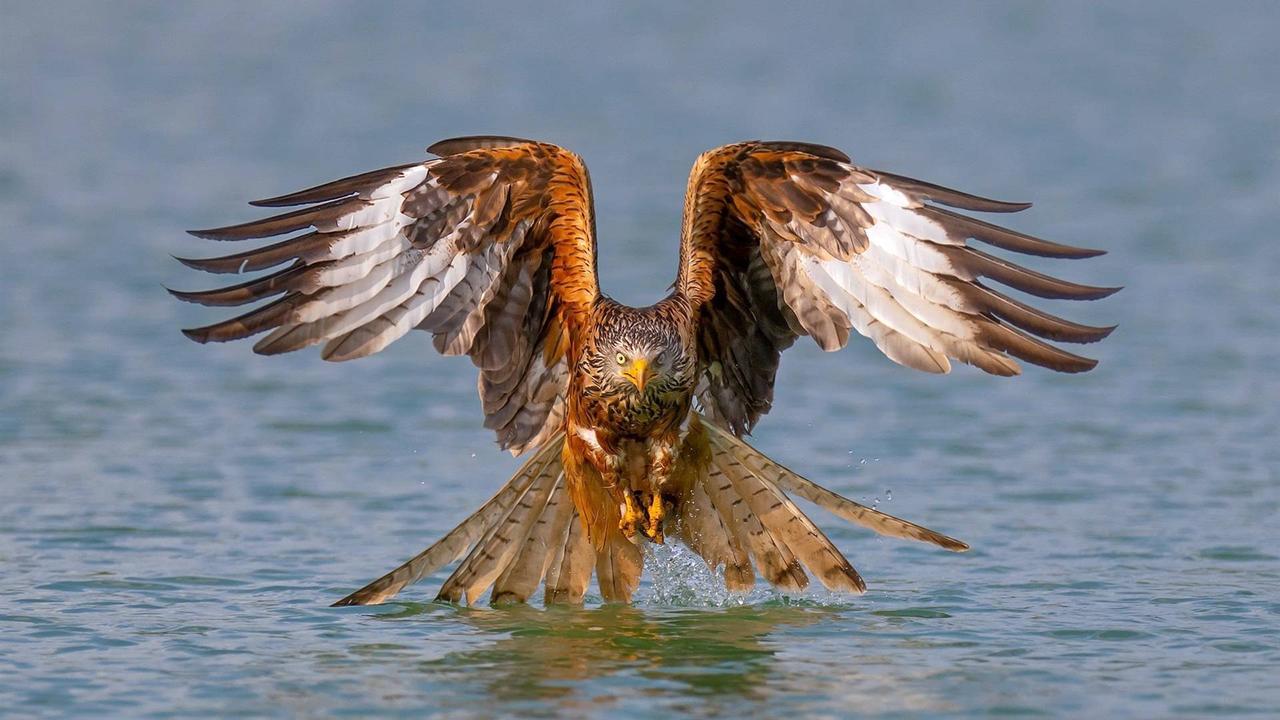
(PxHere)
Golden Eagle (Aquila chrysaetos)
Description | A bird of prey from the family Accipitridae, native to the Northern Hemisphere, known for its large wingspan and speed. | ||||||||
|---|---|---|---|---|---|---|---|---|---|
World | Animalia | ||||||||
Branch | Chordata | ||||||||
Class | Aves | ||||||||
Team | Accipitriformes | ||||||||
Family | Accipitridae | ||||||||
Genus | Aquila | ||||||||
Species | Aquila chrysaetos | ||||||||
Conservation Status | Least Concern (IUCN) | ||||||||
Golden Eagle (Aquila chrysaetos), is one of the most widely distributed raptor species in the Northern Hemisphere, belonging to the order Accipitriformes and the family Accipitridae. Locally known by this name, the species holds an important place in zoological studies due to its role as an apex predator in ecosystems and its broad tolerance of habitat types.
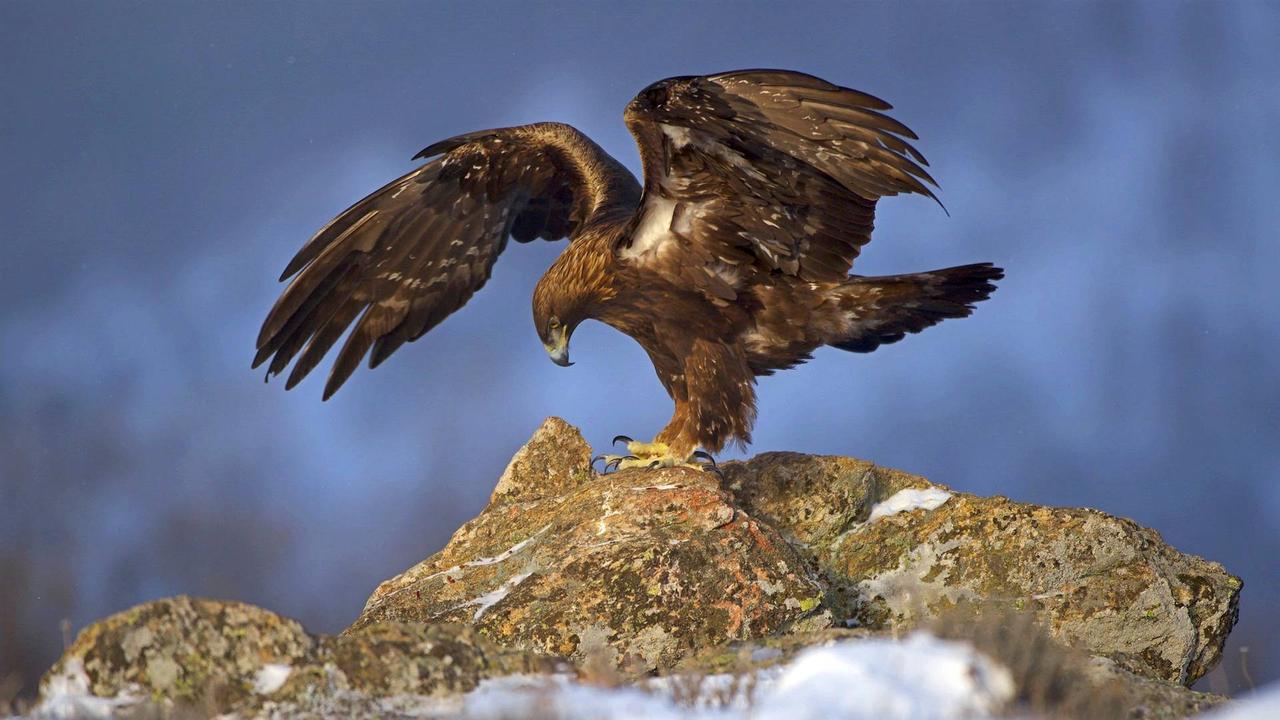
Golden Eagle (PxHere)
The physical structure of the golden eagle is generally composed of dark brown plumage; the back of the head and nape feature golden-yellow or russet feathers that give the species its distinctive appearance. The species exhibits reverse sexual dimorphism typical of raptors, with females possessing a larger morphology than males. Females average 6.3 kilograms in weight, while males typically weigh less than 4.5 kilograms. Unlike many other raptors, this species has legs fully covered with feathers down to the toes, and its wingspan can reach up to 2.1 meters.
The species is widely distributed across much of the Northern Hemisphere, particularly ranging from Alaska to Mexico in North America. Population density in the United States is higher in western states. It prefers vast, open habitats such as tundra, grasslands, open forests, shrublands, and deserts. For nesting and perching, it typically uses steep cliffs, ravines, or the largest trees in the region, and tends to avoid urban areas and dense forested zones.
The golden eagle is an apex predator at the top of the food chain. During hunting, it employs both soaring from high altitudes and visual tracking from perches. Its dive speed toward prey can reach up to 320 kilometers per hour. The species’ natural lifespan in the wild is approximately 30 years.
Its primary food sources are small to medium-sized mammals such as rabbits, ground squirrels, prairie dogs, and marmots. It has also been recorded hunting birds such as crows, reptiles, young deer, and domestic animals, as well as scavenging carrion.
This species typically mates for life and performs various courtship displays during the breeding season. Nests are constructed from branches and soft materials and grow larger over years of use. Some nests reach heights of 6 meters and widths of 2.5 meters. Females usually lay one to four eggs, with an incubation period ranging from 41 to 45 days. Incubation begins with the first egg, resulting in asynchronous hatching. This asynchronous incubation often leads to the survival of the stronger, larger chick during periods of food scarcity, while the smaller siblings typically perish.
Globally classified as “Least Concern” by the International Union for Conservation of Nature (IUCN), the species faces various human-induced threats at local levels. In the United States, it is protected under numerous federal laws, including the Bald and Golden Eagle Protection Act. Major threats include habitat loss, collisions with power lines, electrocution, and illegal hunting. Historically, it has been less affected by pesticides such as dichlorodiphenyltrichloroethane (DDT) than other raptors, due to its diet being predominantly mammal-based.
In the 1990s, a significant ecological shift occurred on the Channel Islands off the coast of California. The extinction of native bald eagles and the presence of invasive species such as feral pigs led to the colonization of the islands by golden eagles. This resulted in golden eagles preying upon the island fox, an endemic species, pushing its population to the brink of extinction. As part of conservation efforts, 44 golden eagles were live-captured and relocated to the mainland, enabling the recovery of the island fox population.
Cornell Lab of Ornithology. "Golden Eagle Overview." allaboutbirds.org. Accessed June 11, 2026. https://www.allaboutbirds.org/guide/Golden_Eagle/overview
National Park Service. "Golden Eagle." Channel Islands National Park. Accessed June 11, 2026. https://www.nps.gov/chis/learn/nature/golden-eagle.htm
Teddy58. "Kaya Kartalı." PxHere. Accessed June 11, 2026. https://pxhere.com/tr/photo/1599479?utm_content=shareClip&utm_medium=referral&utm_source=pxhere
Teddy58. "Kaya Kartalı." PxHere. Accessed June 11, 2026. https://pxhere.com/tr/photo/1599481?utm_content=shareClip&utm_medium=referral&utm_source=pxhere
U.S. Fish & Wildlife Service. "Golden Eagle (Aquila chrysaetos)." fws.gov. Accessed May 1, 2026. https://www.fws.gov/species/golden-eagle-aquila-chrysaetos

(PxHere)
Golden Eagle (Aquila chrysaetos)
Description | A bird of prey from the family Accipitridae, native to the Northern Hemisphere, known for its large wingspan and speed. | ||||||||
|---|---|---|---|---|---|---|---|---|---|
World | Animalia | ||||||||
Branch | Chordata | ||||||||
Class | Aves | ||||||||
Team | Accipitriformes | ||||||||
Family | Accipitridae | ||||||||
Genus | Aquila | ||||||||
Species | Aquila chrysaetos | ||||||||
Conservation Status | Least Concern (IUCN) | ||||||||
No Discussion Added Yet
Start discussion for "Golden Eagle (Aquila chrysaetos)" article
Morphological Characteristics
Distribution and Habitat
Behavior and Ecology
Diet
Reproduction
Conservation Status
Channel Islands Ecosystem