

`turkish-folk-poetry` Related Article Results
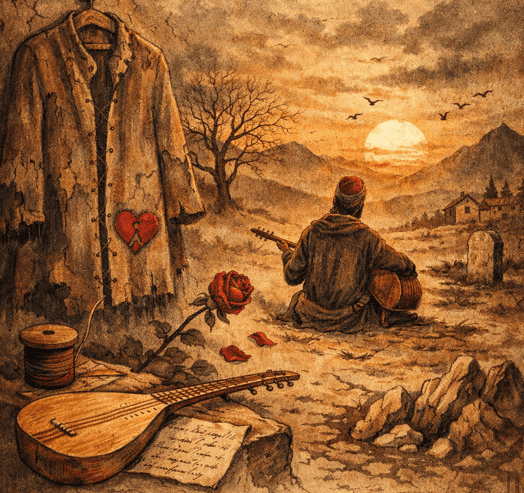
Like Old Clothes (Poem)
“Eski Libas” (or commonly pronounced “Like Eski Libas”) is a text attributed to Develili Âşık Seyranî, who is believed to have lived in the nineteenth century. Over time it also circulated in the form of a türkü. The central motif of the poem revolves around the damaging effects of love: the “gönül” is concretized as an old garment (libas); everyday expressions such as being taken off, unable to be sewn again, unable to be bent, and unable to have seeds sown on it are used to convey the irrevoca
EN
İremsu Ümit
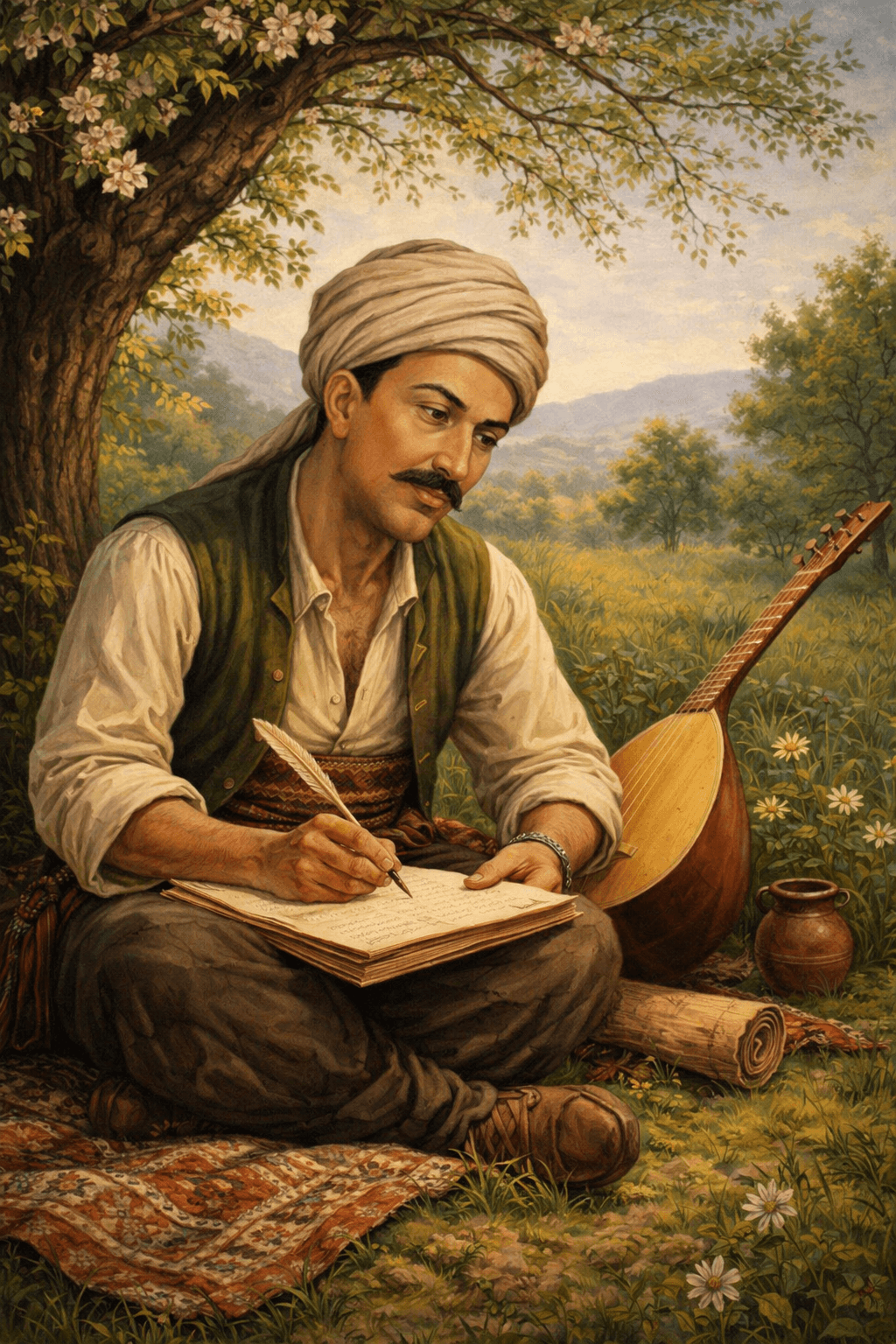
When Spring Turns to Summer Months (Poem)
When Spring and Summer Months Begin is a lyrical poem attributed to Karacaoğlan, one of the prominent representatives of Turkish folk literature. The poem addresses the transformations in nature brought about by the arrival of spring. Shaped within the tradition of âşık literature, it draws attention through its nature-based narrative, simple language, and lyrical structure. The relationship between nature and human emotion, a recurring theme in Karacaoğlan’s poetry, is prominently featured here
EN
Hayrunnisa Kızılırmak
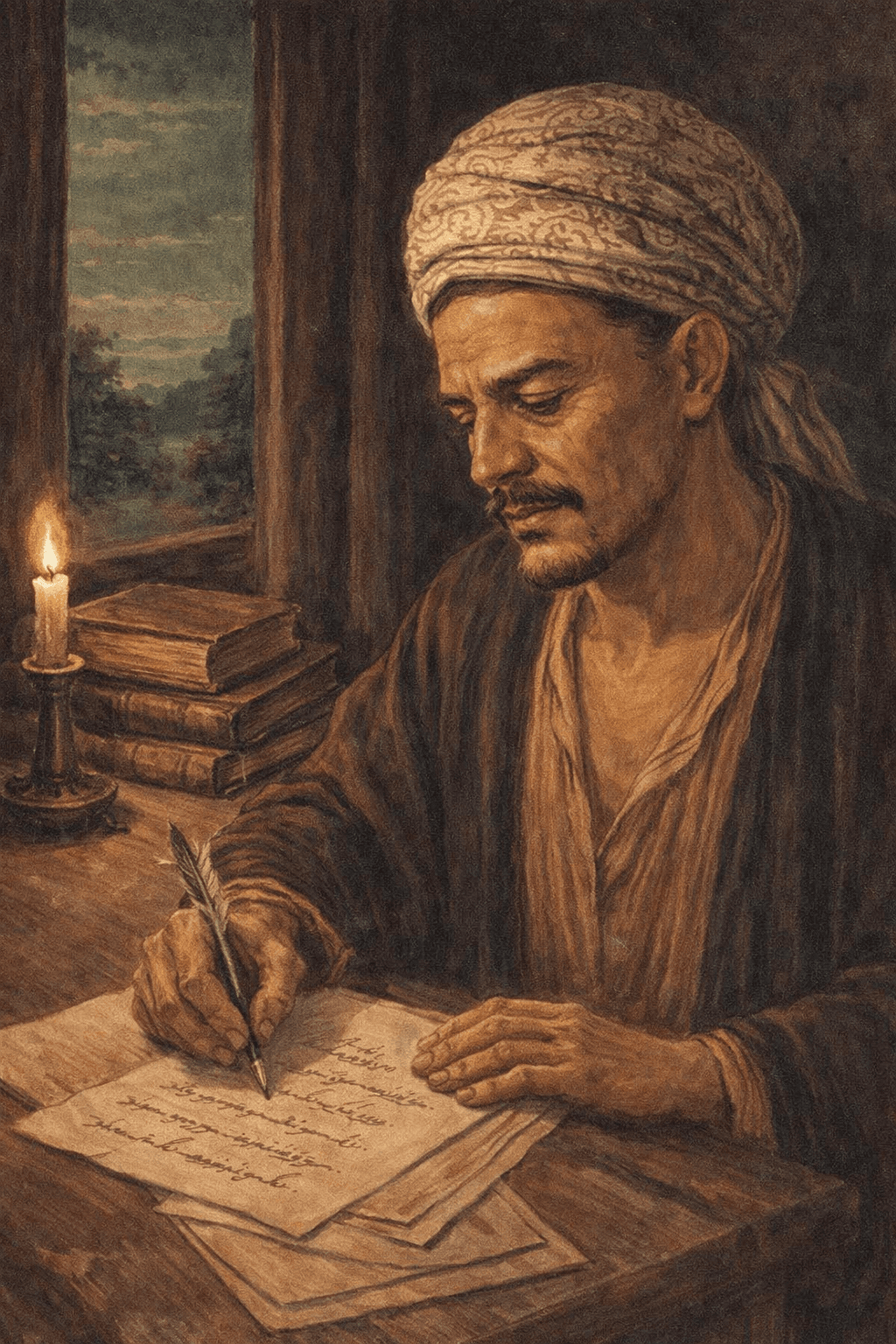
A Dem Income (Poem)
Bir Dem Gelir, Anadolu’s leading figure in Sufi literature, Yunus Emre, is credited with this poetic work that explores the changing spiritual states of human beings. The poem is among the ilahis attributed to Yunus Emre, in which he expressed his Sufi thought in the vernacular language. It originated in an oral cultural context and was later transcribed in subsequent centuries. In the poem, the various inner states that emerge in a person over time are conveyed through successive examples and c
ENHayrunnisa Kızılırmak
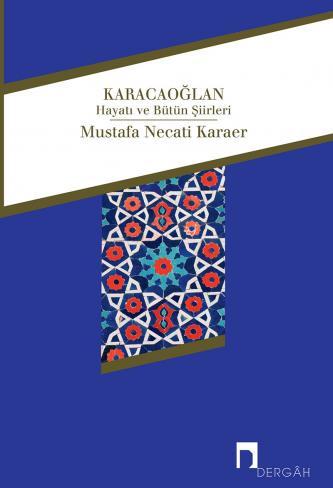
Karacaoğlan: His Life and Complete Poems (Book)
Karacaoğlan: His Life and Complete Poems (Karacaoğlan Hayatı ve Bütün Şiirleri) is a work that compiles the poems of the 17th-century Turkish folk poet Karacaoğlan and offers a comprehensive analysis of his life. Edited by M. Necati Karaer and published by Dergâh Publications as part of its Turkish Classics series, the book features an extensive introductory essay with literary, historical, and cultural evaluations of Karacaoğlan’s poetic language, themes, and the period in which he lived. This
EN
Muhammed Samed Acar
I Gave My Foot That Had Traveled from My Homeland (Poem)
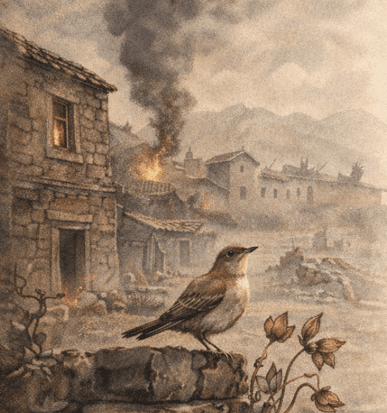
I came and found my homeland abandoned, its feet fled, a poem by the nineteenth-century poet Bayburtlu Zihnî. The work preserves the formal characteristics of folk poetry tradition and possesses the qualities of a city elegy in content. Centered on the destruction Bayburt suffered after war and occupation, this poem conveys a social catastrophe through an individual narrative and thus belongs to the body of folk literature texts that unite aesthetic expression with historical testimony. Historic
ENİremsu Ümit