


This article was automatically translated from the original Turkish version.
+1 More
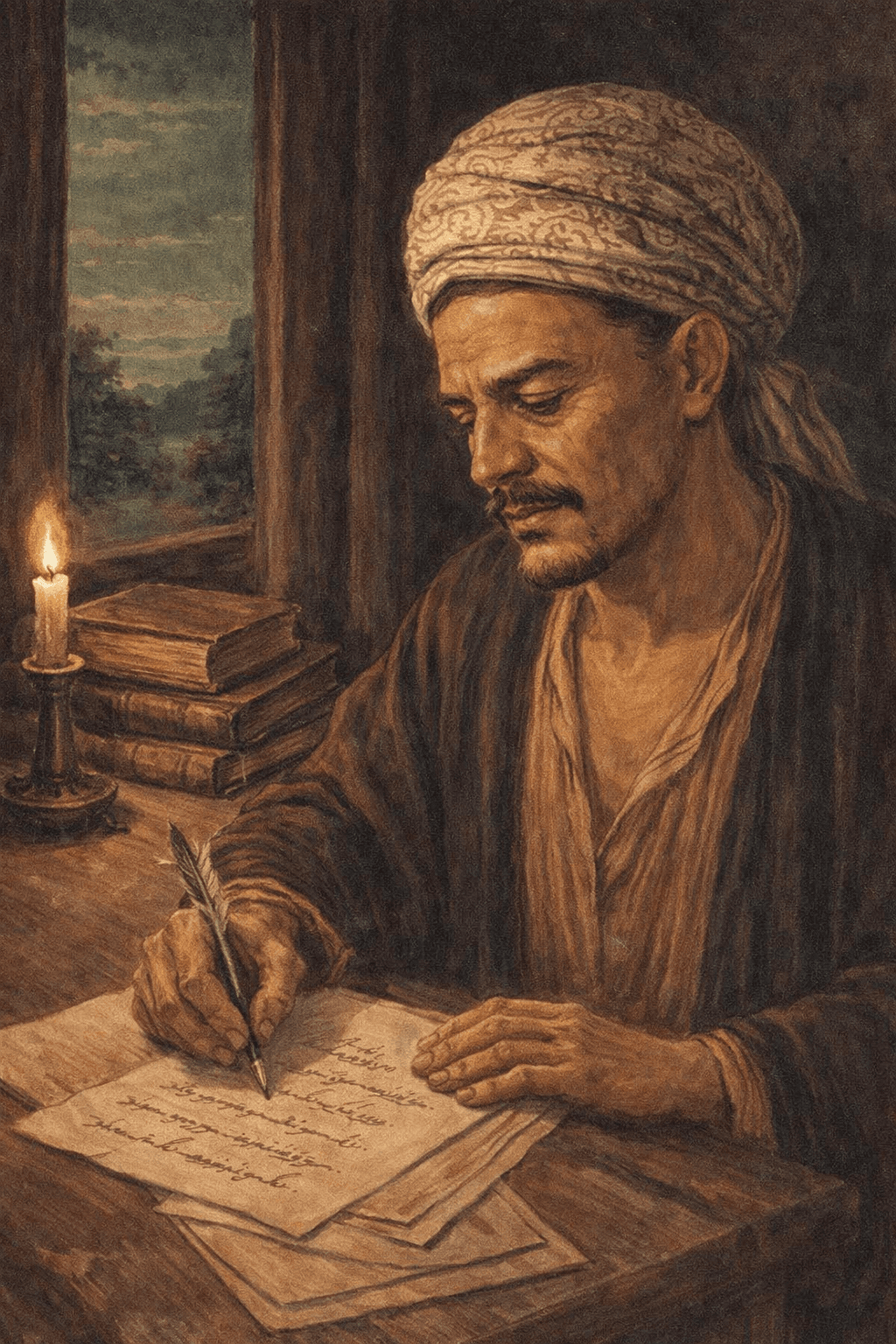
Generated with the support of artificial intelligence by the author.
A Dem Income (Poem)
Author(s) | Yunus Emre (circa 1240 – circa 1320) | ||||||||
|---|---|---|---|---|---|---|---|---|---|
Genre | Folk Poetry / Hymn / Sufi Poetry | ||||||||
Publication Venues | Yunus Emre Divans Sufi literature collections Folk poetry collections Academic studies and research | ||||||||
Region of Compilation / Knowledge | Anatolia around Eskişehir Sivas Karaman | ||||||||
Period of Writing | 13th–14th centuries | ||||||||
Bir Dem Gelir, Anadolu’s leading figure in Sufi literature, Yunus Emre, is credited with this poetic work that explores the changing spiritual states of human beings. The poem is among the ilahis attributed to Yunus Emre, in which he expressed his Sufi thought in the vernacular language. It originated in an oral cultural context and was later transcribed in subsequent centuries. In the poem, the various inner states that emerge in a person over time are conveyed through successive examples and contrasts.
Folk Poetry / Sufi Poetry / Ilahi
“Bir Dem Gelir” is a folk poem with Sufi content. It is classified among the ilahis attributed to Yunus Emre and possesses an instructional and explanatory character. Its structure based on syllabic meter and its form composed of quatrains place it firmly within the tradition of Anadolu folk poetry.
The poem “Bir Dem Gelir” conveys that human spiritual states are not constant but can change over time. The phrase “bir dem” symbolizes the transience of life and human helplessness before divine will. Through this variability, Yunus Emre encourages self-examination.
Hak gave me a heart, ha! without saying it I am amazed
One moment it becomes joyful, the next it turns sorrowful
One moment it seems like winter, as if frozen in deep cold
One moment it is born from glad tidings, becoming a garden of delight
One moment it cannot speak, cannot explain a single word
One moment it pours forth pearls from its tongue, becoming medicine for the afflicted
One moment it becomes a demon or jinn, the earth turns desolate
One moment it flies with Belkıs, becoming sovereign of humanity and soul
One moment it reaches mosques, prostrating itself on the ground
One moment it enters monasteries, reads the Gospel and becomes a monk
One moment it comes like Jesus, reviving the dead
One moment it enters the house of pride, becoming Pharaoh and Haman
One moment it turns to Gabriel, scattering mercy in every gathering
One moment it becomes lost, poor Yunus is amazed
The exact date of composition of the poem is unknown. It is generally accepted to have emerged between the second half of the 13th century and the early 14th century, during the period when Yunus Emre is believed to have lived, within the context of Sufi thought in Anadolu. The poem was initially transmitted orally and later written down in subsequent centuries through collections of Yunus Emre’s divans and Sufi literature.
The poem “Bir Dem Gelir” was transmitted orally across various regions of Anadolu. The areas associated with Yunus Emre’s life—particularly around Eskişehir, Sivas, and Karaman—are considered the main centers where the poem was known and collected. Due to its oral transmission, regional variations of the poem are known to exist.
Yunus Emre is regarded as one of the most important figures in Turkish Sufi literature, having lived in Anadolu during the second half of the 13th century and the early 14th century. Information about his life is limited, and his biography has been largely constructed from his poems and later sources. Although his exact birth and death dates are unknown, the prevailing view holds that he was born around 1240 and died around 1320.
Yunus Emre’s life is associated with various regions of Anadolu, with Eskişehir, Karaman, and Sivas frequently cited as central locations related to his life and the dissemination of his poetry. It is accepted that he lived during a historical period marked by the decline of the Anatolian Seljuk State and the impact of Mongol invasions. These social and political conditions are considered to have influenced the development of the human-centered, moral, and spiritual discourse found in Yunus Emre’s poetry.
Yunus Emre is known for expressing Sufi thought in simple Turkish. Although his poems contain Arabic and Persian elements, he generally used a language accessible to the common people. In this way, he played a crucial role in making Sufi ideas accessible to broad audiences. His works emphasize key Sufi concepts such as love for humanity, divine love, the transience of worldly life, and the discipline of the ego.
The poems attributed to Yunus Emre were initially disseminated through oral culture and later compiled and written down in subsequent centuries. This process led to the survival of multiple variants of his poems. Yunus Emre’s poetry has been collected under the title Yunus Emre Divanı and has been extensively studied in academic works on Sufi literature, folk literature, and the Turkish language.
The poem “Bir Dem Gelir” is one of Yunus Emre’s works that reflect his Sufi perspective centered on the inner world of the human being. The poem illustrates how individuals can shift through various spiritual states over time—moving between joy and sorrow, awareness and neglect. In this way, the poem presents foundational Sufi concepts within an explanatory narrative framework.
There is no specific historical event or written account detailing the origin of the poem “Bir Dem Gelir.” It is generally accepted that the poem emerged within the context of the widespread Sufi thought and oral tradition of Yunus Emre’s era in Anadolu. Rather than being tied to a particular historical incident, the poem is regarded as a literary expression aimed at conveying spiritual states and Sufi experience, placing it among Yunus Emre’s works intended to communicate his Sufi teachings to the general public.
Accessed January 14, 2026.
Accessed January 14, 2026.
Accessed January 14, 2026.
Accessed January 14, 2026.
Atatürk Kitaplığı Yayınları. A’dan Z’ye Yunus Emre.
Dijital Diyanet. Yunus Emre Divanı.
Iğdır Üniversitesi, Türk Dili ve Edebiyatı Bölümü. "Yunus Emre Kimdir?"
Yunusemre.net. "Bir Dem Gelir."

Generated with the support of artificial intelligence by the author.
A Dem Income (Poem)
Author(s) | Yunus Emre (circa 1240 – circa 1320) | ||||||||
|---|---|---|---|---|---|---|---|---|---|
Genre | Folk Poetry / Hymn / Sufi Poetry | ||||||||
Publication Venues | Yunus Emre Divans Sufi literature collections Folk poetry collections Academic studies and research | ||||||||
Region of Compilation / Knowledge | Anatolia around Eskişehir Sivas Karaman | ||||||||
Period of Writing | 13th–14th centuries | ||||||||
No Discussion Added Yet
Start discussion for "A Dem Income (Poem)" article
Genre of the Poem
The Poem “Bir Dem Gelir”
Historical Information
Region of Compilation and Dissemination
The Poet
Contextual Information
Origin Story