

`spaceeconomy` Related Article Results
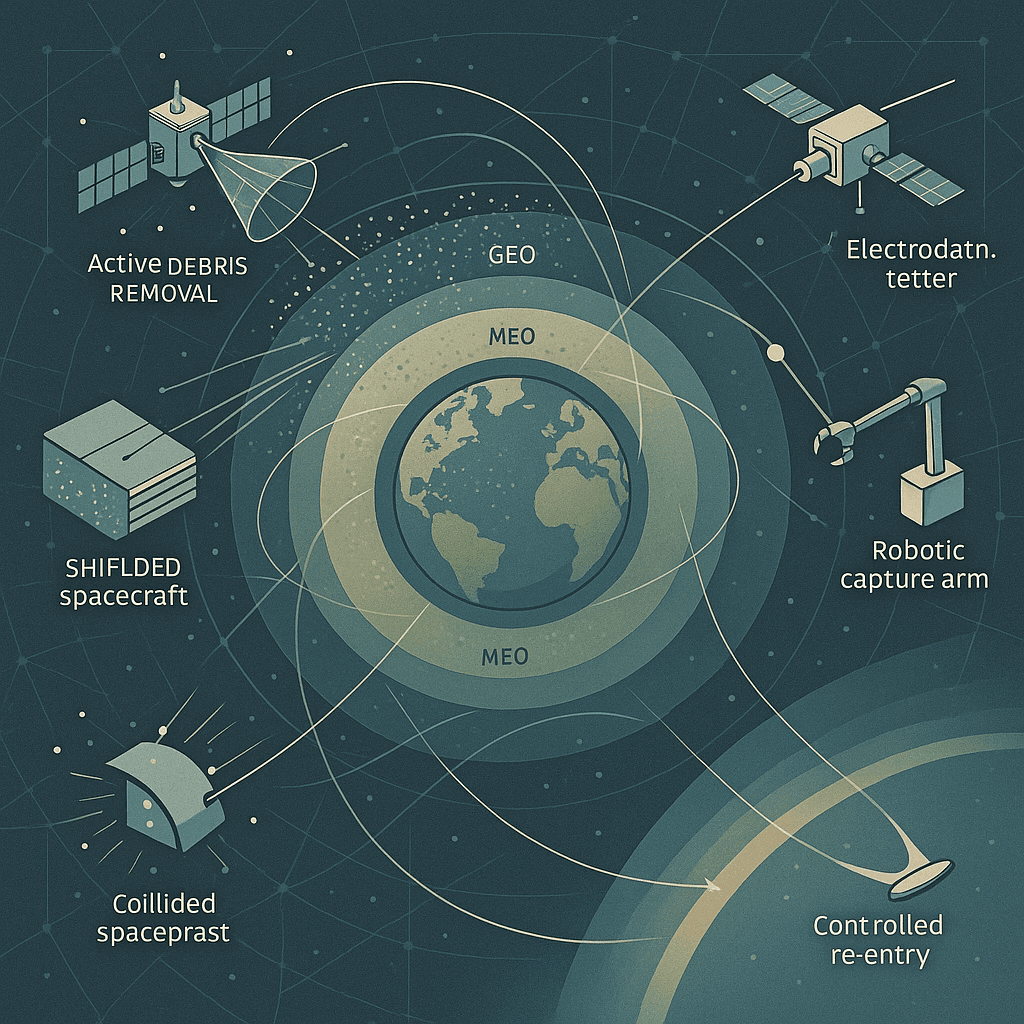
Space Debris
Space debris is a long-lasting accumulation of objects consisting of defunct satellites, rocket bodies, fragmentation fragments, and components discarded during operational processes. Due to their high velocities, even small fragments can cause serious damage, and as density increases, collisions may trigger a self-sustaining cascade of fragmentation known in the literature as the Kessler syndrome. Space debris forms the core of a sustainability issue with technical, economic, and governance dim
EN
Ömer Said Aydın

Kessler Syndrome
Kessler Syndrome is a space environmental issue describing how the increasing density of artificial objects in Earth orbit can trigger a self-sustaining cascade of collisions and fragmentation. This concept is based on the possibility that once the density of objects in low Earth orbit reaches a critical threshold, collisions will generate new debris in a chain reaction, rendering the orbit unusable for extended periods. Historical Context The model proposed by Donald J. Kessler and Burton Cour-
ENÖmer Said Aydın

Interplanetary Societies
Interplanetary societies refer to a large-scale civilizational model in which humanity establishes permanent settlements on multiple celestial bodies and develops interconnected social, economic, and cultural systems. This concept encompasses not only physical presence in space but also the redefinition of social institutions communication networks and identity forms at an interplanetary scale. Such a social structure requires new forms of organization not only through technological advancement
ENÖmer Said Aydın