


This article was automatically translated from the original Turkish version.
Digital Hoarding is defined as a condition in which individuals continuously acquire digital content such as emails, digital images, videos, electronic documents, and software, experience significant difficulty in deleting or organizing these contents, and suffer stress or psychological distress due to the accumulation of data creating an unmanageable disorder. This phenomenon, also referred to in the literature as "e-hoarding," "data hoarding," or "cyber hoarding," is regarded as the digital manifestation of physical hoarding disorder (disposophobia) in the context of technological advancements.
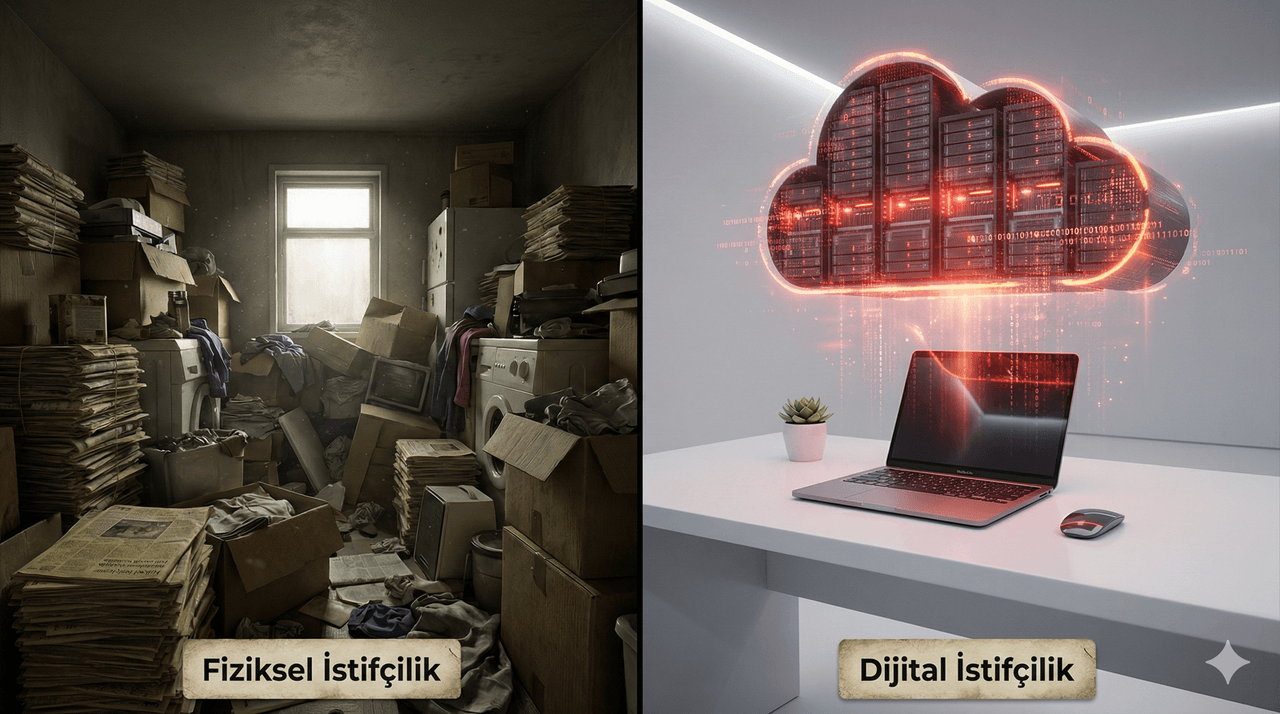
Comparative Visual of Physical Stacking and Digital Stacking (Generated by Artificial Intelligence)
Digital hoarding exhibits parallels with the "hoarding disorder" diagnostic criteria outlined by the American Psychiatric Association's DSM-5 in terms of its psychological and behavioral foundations. The theoretical underpinning of the concept draws on Freud's "anal triad" linking orderliness, frugality, and obstinacy, as well as modern cognitive-behavioral models. One of the key theories used to explain digital hoarding is attachment theory, which posits that individuals form intense emotional bonds with digital content such as photographs and messages, treating these items as security objects, so that their deletion evokes grief-like emotional responses.
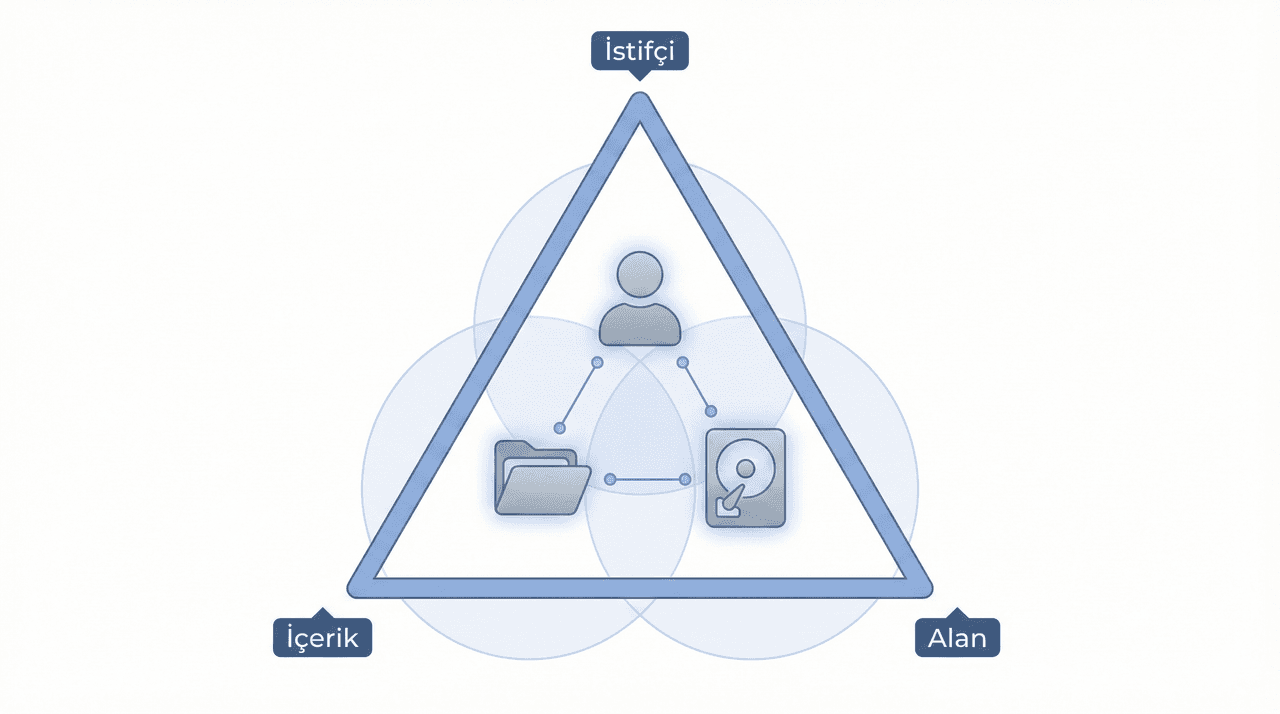
Theoretical Framework Diagram Showing the Relationship Between Agent, Content, and Domain (Generated by Artificial Intelligence)
To explain the dynamics between traditional hoarding and digital hoarding, the "Hoarder-Content-Space" framework has been developed. According to this framework, the fundamental differences between digital hoarding and physical hoarding are as follows:
Digital hoarding consists of three main sub-dimensions:
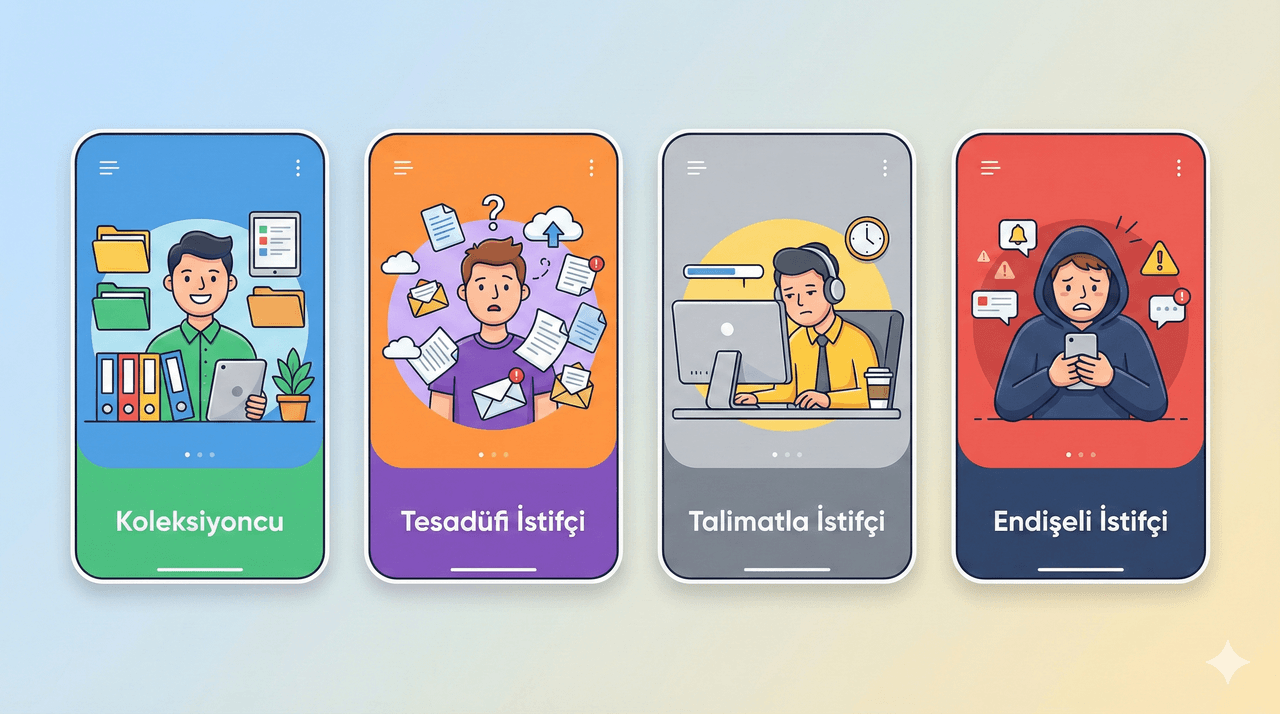
Character Cards Representing Four Distinct Digital Stacker Types Defined in the Literature (Generated by Artificial Intelligence)
Researchers have categorized digital hoarders into four main types based on behavioral patterns:
Factors driving individuals toward digital hoarding are classified as technological, psychological, and instrumental.
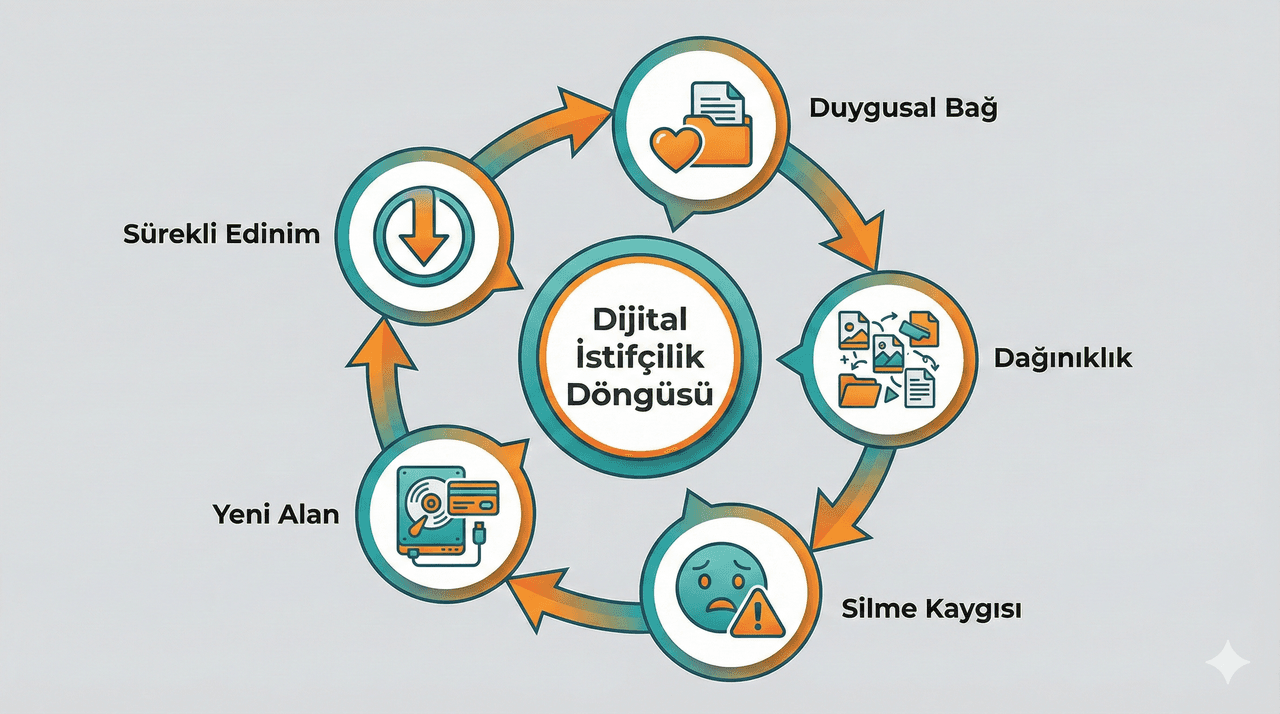
Cyclic Flow Diagram of Digital Hoarding Behavior and Psychological Processes (Generated by Artificial Intelligence)
The near-zero cost of data storage (hard drives, cloud subscriptions) and the perception of "nearly unlimited" storage capacity have eliminated the necessity for individuals to be selective in their data retention.
The belief that data may hold potential future value, leading to its retention out of a "better safe than sorry" mindset, is one of the most common motivations.
Photographs and messages are perceived as extensions of individuals' pasts and identities. Deleting these data is experienced as losing a part of one's history or having one's life taken away.
Sorting and organizing accumulated data—for example, deleting thousands of emails—requires substantial time and cognitive effort, leading individuals to avoid the task and prefer retaining the data instead.
Research conducted among young people aged 18 to 21 in Türkiye has revealed that digital hoarding is particularly prevalent among the younger generation, referred to as "digital natives", and exhibits certain cultural-specific characteristics. Digital natives may experience difficulties in accumulating, storing, and managing digital data.
In a study by Çiğdem Berber Çelik and Feridun Kaya (2023), the "Digital Hoarding Scale" was adapted to Turkish culture. With a sample of 544 participants, the scale's two-dimensional structure—"discarding difficulty" and "accumulation"—was confirmed in the Turkish population. The findings demonstrated significant positive relationships between digital hoarding and obsessive-compulsive symptoms and persistent anxiety.【2】
Digital hoarding leads to various negative outcomes at both individual and organizational levels:
In organizational contexts, digital hoarding increases cybersecurity risks. Storing unnecessary data expands the volume of sensitive information vulnerable to breaches and creates legal compliance issues (e.g., KVKK/GDPR). Furthermore, the storage of trillions of redundant files on cloud servers increases energy consumption in data centers, generating a significant carbon footprint and contributing to environmental harm.
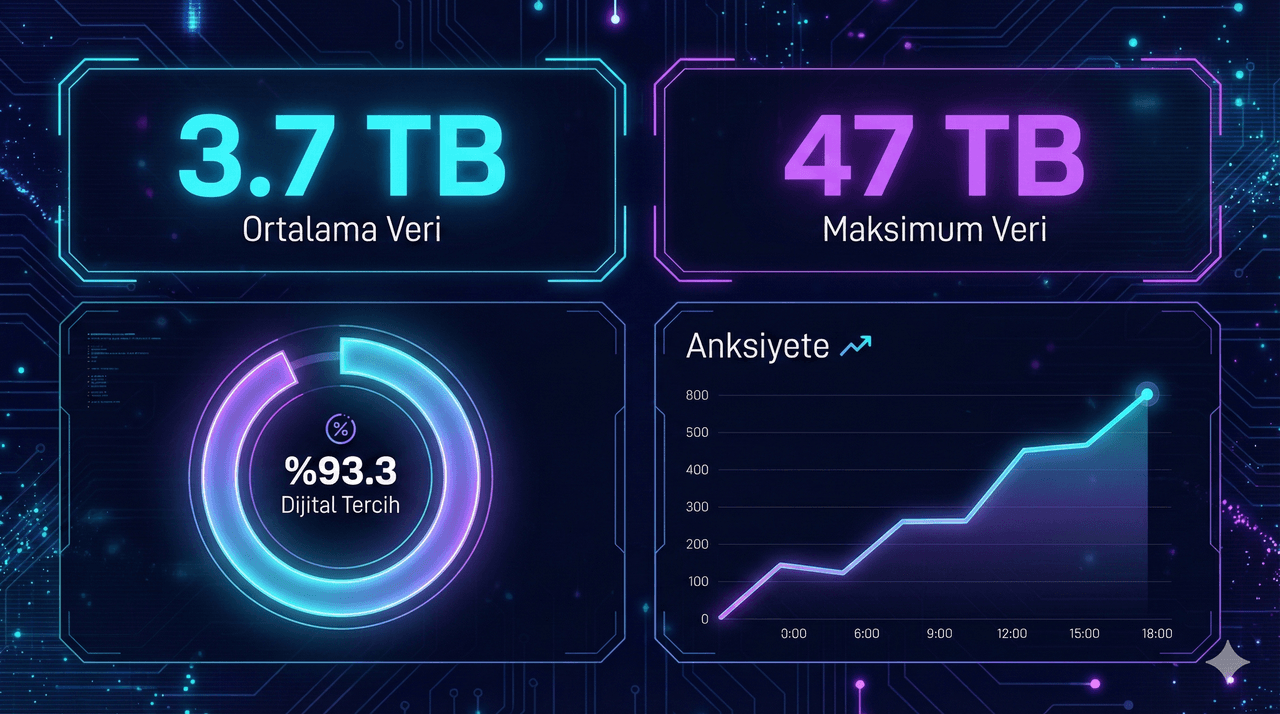
Comprehensive Statistical Dashboard Showing Individual Data Storage Quantities, Digital Preference Rates, and Their Relationship to Anxiety (Generated by Artificial Intelligence)
Research on the subject reports that the average data storage per individual is 3.7 TB, with maximum storage reaching up to 47 TB. The fact that over 300 million photos are shared daily on social media platforms such as Facebook, and that 1.7 MB of data is generated every second, illustrates the scale of the data flow fueling hoarding behaviors.【6】
Demirtaş, Mine and Nur Emine Koç. "Bilgi Çağının Yeni Trendi: Dijital İstifçilik Üzerine Bir Araştırma."
RumeliDE Dil ve Edebiyat Araştırmaları Dergisi 28 (2022): 290–308. Accessed December 7, 2025.https://dergipark.org.tr/en/pub/rumelide/issue/70436/1132565
Sedera, Darshana, Sachithra Lokuge, and Varun Grover. “Modern-Day Hoarding: A Model for Understanding and Measuring Digital Hoarding.” *Information & Management* 59, no. 8 (2022): 103700. Accessed November 26, 2025.https://www.sciencedirect.com/science/article/pii/S0378720622001094
Çelik, Çiğdem Berber, and Feridun Kaya. "Dijital İstifçilik Ölçeği Türkçe Formu’nun Psikometrik Özellikleri." *Edebiyat ve Beşeri Bilimler Dergisi* 71 (2023): 71-109. Accessed December 7, 2025.https://dergipark.org.tr/en/pub/literatureandhumanities/article/1414814
İşliyen, Mustafa. "Dijital Çağın Yeni Hastalığı: Dijital İstifçilik." Akdeniz Üniversitesi İletişim Fakültesi Dergisi 31 (2019): 404–420. Accessed December 7, 2025.
[2]
Çiğdem Berber Çelik and Feridun Kaya, “Dijital İstifçilik Ölçeği Türkçe Formu’nun Psikometrik Özellikleri,” *Edebiyat ve Beşeri Bilimler Dergisi* 71: 109, Accessed December 7, 2025,https://dergipark.org.tr/en/pub/literatureandhumanities/article/1414814
[3]
İşliyen, “Dijital İstifçilik,” 411–417.
[4]
Mine Demirtaş and Nur Emine Koç, “Bilgi Çağının Yeni Trendi: Dijital İstifçilik Üzerine Bir Araştırma,” *RumeliDE Dil ve Edebiyat Araştırmaları Dergisi* 28 (2022): 300, Accessed December 7, 2025,https://dergipark.org.tr/en/pub/rumelide/issue/70436/1132565
[5]
Darshana Sedera, Sachithra Lokuge, and Varun Grover, “Modern-Day Hoarding: A Model for Understanding and Measuring Digital Hoarding,” *Information & Management* 59, no. 8 (2022): 7, Accessed December 7, 2025,https://www.sciencedirect.com/science/article/pii/S0378720622001094
[6]
Sedera, Lokuge, and Grover, “Modern-Day Hoarding,” 1.

Theoretical Foundations and Conceptual Framework
Dimensions and Types of Digital Hoarding
Causes and Motivations
Low Storage Costs
"It Might Be Useful Later" Mentality
Emotional Attachment and Memory Accumulation
Laziness and Time Constraints
Research and Findings in Türkiye
Scale Adaptation and Psychometric Studies
Qualitative Research and Focus Group Findings
Consequences and Impacts
Organizational and Environmental Impacts
Statistical Data