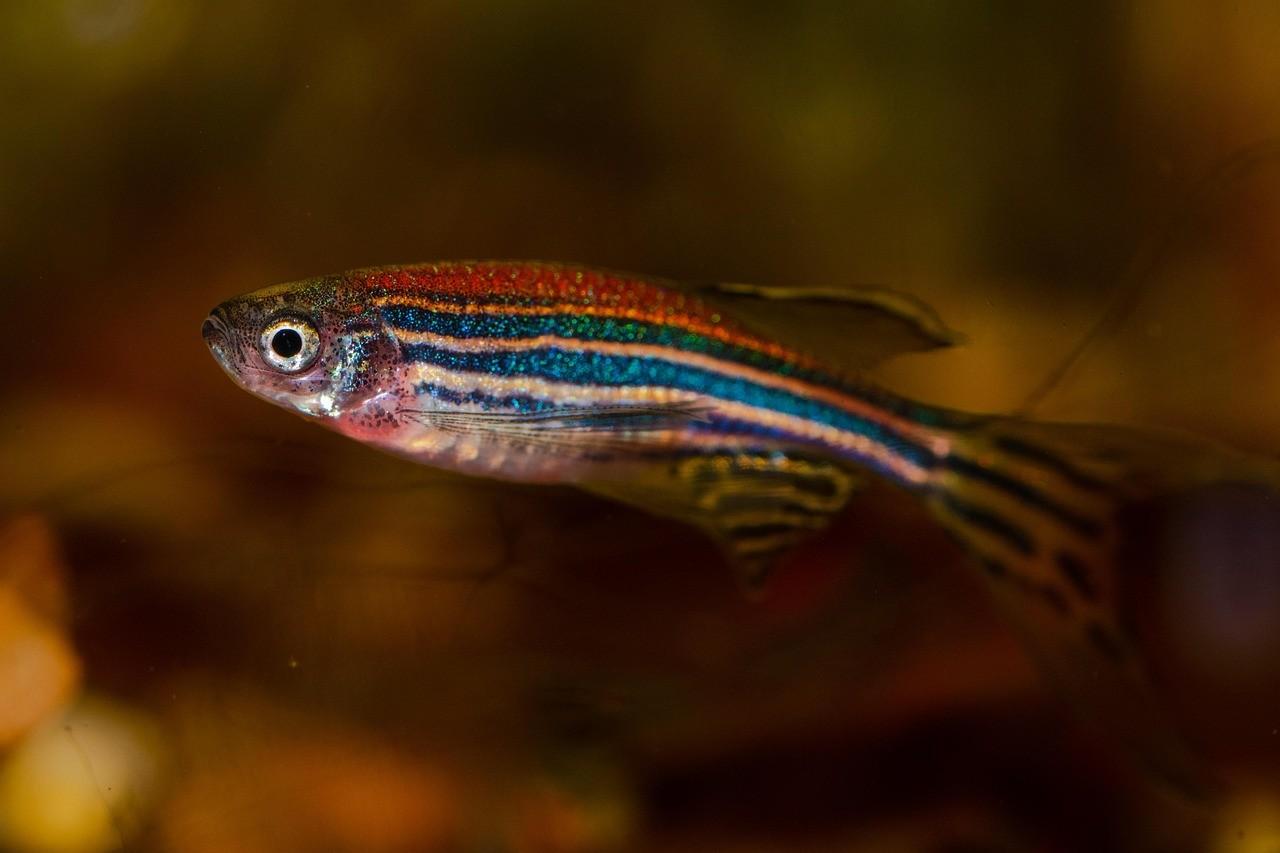
This article was automatically translated from the original Turkish version.
+2 More
Family | Danionidae | ||||||||
|---|---|---|---|---|---|---|---|---|---|
Team | Cypriniformes | ||||||||
Class | Actinopteri | ||||||||
Genus | Danio | ||||||||
Species | Danio rerio | ||||||||
Natural Habitat | South Asia (India - Nepal - Bangladesh), slow-moving waters, rice paddies and irrigation channels | ||||||||
Model Features | Transparent embryos, rapid development cycle, high genetic similarity to humans, low maintenance cost | ||||||||
Application Area | modeling of cardiovascular and infectious diseases Developmental biology neural Pharmacology Toxicology Genetics | ||||||||
Ideal Water Temperature | 24–29 °C | ||||||||
Dietary Regimen | Combination of dry feed and live food (Artemia - Rotifer - Paramecium) that supports natural foraging behavior | ||||||||
Behavior | A social species, exhibits a tendency to live in schools | ||||||||
Base Database | ZFIN (The Zebrafish Information Network) | ||||||||
Zebrafish (Danio rerio) is a freshwater fish belonging to the class fishes (Actinopterygii) within the order Cypriniformes. Due to its transparent embryos rapid developmental cycle genetic similarity to humans low maintenance cost and ease of genetic manipulation the zebrafish has become a widely used model organism in scientific research.
Studies are conducted using zebrafish to investigate various diseases including neurological disorders cancer infectious diseases cardiovascular diseases kidney diseases diabetes blindness deafness digestive disorders hematopoiesis and muscular disorders. 【1】 It is particularly employed in fundamental biological research and to assess the effects of environmental chemicals in fields such as developmental biology genetics toxicology and neuroscience.
As a social species that tends to live in schools zebrafish offer advantages for behavioral studies in laboratory settings. Additionally because its intestine and immune system show functional similarities to those of mammals it is valued as a model in pharmacological and toxicological research. 【2】 【3】
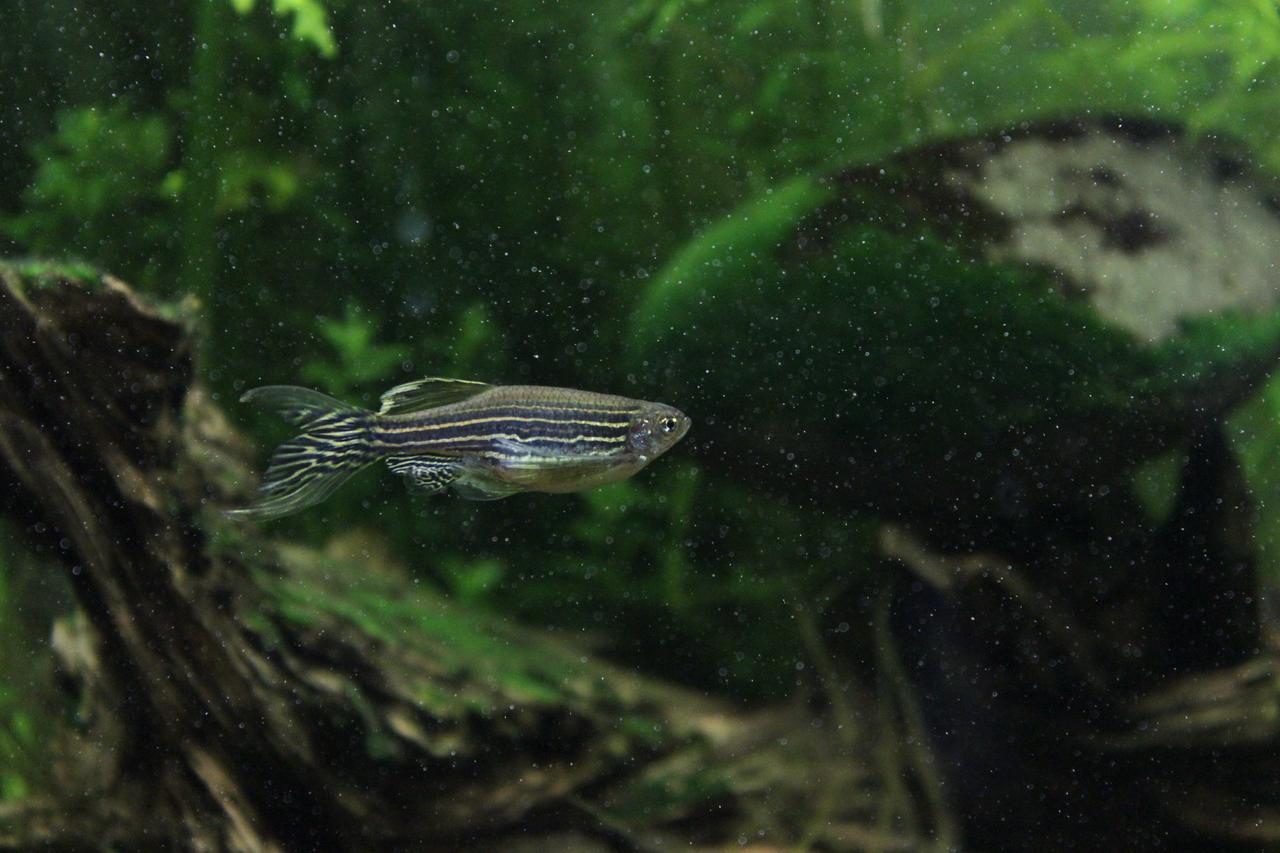
Zebra Balığı (flickr)
The zebrafish consists of three main parts: head body and tail. The mouth nasal openings and urogenital opening are the primary external features. Since fish lack a diaphragm all internal organs reside within a single body cavity enclosed by a dark abdominal membrane. The nasal openings responsible for olfaction sensory barbels aiding taste and smell the lateral line system detecting water movements and inner ear structures maintaining balance constitute the main sensory organs.
The skin serves as a protective layer and contributes to osmotic balance; it is covered with thin flexible round scales and coated with a secretory layer that defends against microbes. Fins consist of paired fins located on the pectoral and abdominal regions and single fins on the dorsal anal and caudal regions and are used for movement and directional control.
Sexual dimorphism is visible externally: males are slimmer with brighter coloration while females have rounder fuller abdomens and duller colors.
The species was first scientifically described in 1822 by the Scottish physician Francis Hamilton. Phylogenetically the zebrafish belongs to the group of jawed vertebrates (Gnathostomata) and the lineage of bony vertebrates (Osteichthyes). Evolutionarily the ray-finned fishes including the zebrafish and the lobe-finned fishes (Sarcopterygii) which also include terrestrial vertebrates diverged from a common bony vertebrate ancestor approximately 400–450 million years ago. This indicates that the genetic and developmental similarities shared between the zebrafish and humans have deep evolutionary origins.
The zebrafish is a member of Teleostei a large group of fish comprising approximately half of all extant vertebrate species. The Teleost Genome Duplication (TGD) event during teleost evolution significantly shaped the zebrafish genome resulting in the preservation of two copies of many genes. This has led to the presence of multiple paralogs for some human genes in the zebrafish thereby enriching and complicating interspecies genetic comparisons.
The natural habitat of the zebrafish extends across a broad region of South Asia including India Bangladesh and Nepal encompassing the foothills of the Himalayas the Indo-Gangetic plain and the Indian subcontinent. Although the species occurs in diverse environments ranging from mountainous streams to fertile floodplains and river systems its distribution is uneven; it is most commonly found in slow-moving shallow waters rich in vegetation such as river tributaries streams floodplains and rice paddies.
Human activities particularly agricultural practices flooding of rice paddies and interconnection of water channels can facilitate the spread of zebrafish into new areas. 【4】
Zebrafish embryogenesis begins with fertilization and proceeds rapidly within the first 24 hours. Cells undergo rapid division to form the basic embryonic cell populations which then differentiate into three groups: the outer layer enveloping the embryo the yolk-associated cell network and the deep cells that give rise to the embryo itself. Within the first day the foundational structures of different tissues and organs begin to form: the nervous system and skin muscles and blood vessels the gut liver and pancreas precursors.
Embryonic cells spread around the yolk sac and the body axis is established. Cells then reorganize to form the head trunk and tail regions. Structures such as muscles and the spine develop in segments called somites while the nervous system eyes and other head structures begin to take shape.
For healthy growth rapid development and high reproductive performance zebrafish should be fed a combination of live and formulated dry feeds. Dry feeds are nutritionally complete while live feeds (Paramecium Tetrahymena rotifer Artemia) support natural foraging behavior and provide environmental enrichment. Early-stage larvae can consume small live feeds; larvae at 120 hours are typically fed Paramecium and rotifers.
Due to rapid growth larvae should be fed two to three times daily at least one of which must consist of live feed. Automated feeding systems can be used but must be carefully calibrated according to the number of animals in the tank. Since zebrafish lack a stomach frequent feeding is essential. After one month daily single feedings of dry food have been shown to have no negative impact on growth or reproduction in adult fish.
Zebrafish are notable for their high fecundity; a single female can lay hundreds of eggs in a single spawning event. A minimum one-week rest period between spawning events is recommended to ensure healthy ovarian cycles in females. Adults not used for breeding should be maintained in mixed-sex groups to support natural mating behavior and prevent health issues associated with egg accumulation.
Maintaining genetic diversity is essential in colony management. Due to limited tank space lines are maintained in small groups so crossbreeding with unrelated individuals in each new generation prevents inbreeding depression. Eggs are reared in sterile conditions using embryo medium containing methylene blue; non-developing eggs are regularly removed. Larvae become independently feeding at approximately 120 hours and are transferred to aquaria once they reach an appropriate size. Sexual maturity is reached between two and four months depending on environmental conditions.
To successfully rear zebrafish environmental factors such as water quality temperature light cycle stocking density and quarantine must be carefully managed. During transfer water quality temperature and oxygen levels must be maintained and newly introduced fish should be quarantined to reduce disease risk.
Zebrafish systems typically include integrated filtration UVC sterilization and temperature-light control. pH hardness ammonia nitrite and nitrate levels are regularly monitored and water changes are performed. Optimal temperature ranges from 24 to 29 °C and sudden fluctuations must be avoided. 【5】 The light-dark cycle is typically 10:14 or 12:12.
A stocking density of approximately 4 to 10 fish per liter is recommended for adults. While there is no consensus on environmental enrichment materials must be selected carefully due to hygiene and toxicity risks. Regular monitoring and reproductive success are key indicators of animal welfare.
In zebrafish research the health of the fish is critical. Diseases can lead to mortality reproductive failure and invalid experimental results. Laboratories therefore regularly monitor and document the health status of fish colonies. In particular diseases can spread rapidly in recirculating systems; this risk can be mitigated by appropriate filtration and UV disinfection. Daily observation behavioral monitoring and water quality checks enable early detection of disease.
Health monitoring is conducted across fish of different ages and conditions. Sentinel fish are specifically used to monitor system health. Diseases can be diagnosed using histopathology culture and molecular tests such as PCR. Regular testing for common pathogens is essential.
One of the most important bioinformatics resources for zebrafish research is ZFIN (Zebrafish Information Network) a database that integrates genetic genomic and developmental data on the zebrafish. ZFIN provides comprehensive curation of data on gene expression mutant lines genetic markers and morpholino studies thereby supporting standardization and scientific accuracy in zebrafish research. This centralized platform is one of the key tools that have established the zebrafish as a powerful model organism in modern biology genetics and disease modeling.
Aleström, Peter, Livia D’Angelo, Paul J. Midtlyng, Daniel F. Schorderet, Stefan Schulte-Merker, Frederic Sohm, and Susan Warner. “Zebrafish: Housing and Husbandry Recommendations.” *Laboratory Animals* 54, no. 3 (2020): 213–224. Accessed November 26, 2025.https://doi.org/10.1177/0023677219869037
Arlandis, Bernat. “Danio rerio (Danio zebra/Zebra danio) JPG.” Flickr. Accessed December 16, 2025.https://flic.kr/p/ezWwDT
Bedell, Victoria M., Priya Dubey, Han B. Lee, Dondra S. Bailey, Jennifer L. Anderson, Allison Jamieson-Lucy, Rui Xiao, Elvin V. Leonard, Marni J. Falk, Michael A. Pack, Mary Mullins, Steven A. Farber, Roderic G. Eckenhoff, and Stephen C. Ekker. “Zebrafishology, Study Design Guidelines for Rigorous and Reproducible Data Using Zebrafish.” *Communications Biology* 8, no. 739 (2025): 1–14. Accessed November 26, 2025.https://doi.org/10.1038/s42003-025-07496-z
Cartner, Samuel C., Judith S. Eisen, Susan C. Farmer, Karen J. Guillemin, Michael L. Kent, and George E. Sanders, eds. The Zebrafish in Biomedical Research: Biology, Husbandry, Diseases, and Research Applications. London; San Diego; Cambridge; Kidlington: Academic Press, 2020.
Detrich III, H.W. “Chapter 1 Overview of the Zebrafish System.” In *The Zebrafish: A Laboratory Model for Development and Disease*, edited by Monte Westerfield. Academic Press, 1998.https://www.sciencedirect.com/science/chapter/bookseries/abs/pii/S0091679X08618166?via=ihub
Harper, Claudia, and Christian Lawrence. *The Laboratory Zebrafish*. CRC Press, 2016.
Lee, Carole J., Charles R. Tyler, and Gregory C. Paull. "Geographic Range and Natural Distribution." In *The Zebrafish in Biomedical Research: Biology, Husbandry, Diseases, and Research Applications*, edited by Samuel C. Cartner, Judith S. Eisen, Susan C. Farmer, Karen J. Guillemin, Michael L. Kent, and George E. Sanders, 41–56. London: Academic Press, 2020.https://www.sciencedirect.com/science/chapter/edited-volume/abs/pii/B978012812431400004X#:~:text=The%20terms%20geographic%20range%20and,the%20Western%20Ghats%20of%20India.
Nüsslein-Volhard, Christiane, and Ralf Dahm, eds. Zebrafish: A Practical Approach. OUP Oxford, 2002.
Pixabay. "Danio rerio, Doğa, Zebra balığı-рерио görseli JPG." Accessed December 16, 2025.https://pixabay.com/tr/photos/danio-rerio-zebra-bal%c4%b1%c4%9f%c4%b1-%d1%80%d0%b5%d1%80%d0%b8%d0%be-bal%c4%b1k-4996610/
Sprague, Judy, Leyla Bayraktaroglu, Dave Clements, Tom Conlin, David Fashena, Ken Frazer, Melissa Haendel, Douglas G. Howe, Prita Mani, Sridhar Ramachandran, Kevin Schaper, Erik Segerdell, Peiran Song, Brock Sprunger, Sierra Taylor, Ceri E. Van Slyke, and Monte Westerfield. “The Zebrafish Information Network: The Zebrafish Model Organism Database.” *Nucleic Acids Research* 34, (2006): D581–D585. Accessed November 26, 2025.https://doi.org/10.1093/nar/gkj086
Yipel, Mustafa, and Aysun İlhan. “Zebra balığı (Danio rerio): toksikolojik çalışmalar için uygun bir model organizma.” *Veteriner Farmakoloji ve Toksikoloji Derneği Bülteni* 12, no. 3 (2021): 161–167. Accessed November 26, 2025.https://doi.org/10.38137/vftd.1007548
[1]
Samuel C. Cartner ve diğerleri., eds., The Zebrafish in Biomedical Research: Biology, Husbandry, Diseases, and Research Applications (London; San Diego; Cambridge; Kidlington: Academic Press, 2020), syf 179.
[2]
Claudia Harper, ve Christian Lawrence, The Laboratory Zebrafish, CRC Press, 2016.
[3]
Mustafa Yipel, ve Aysun İlhan, “Zebra balığı (Danio rerio): toksikolojik çalışmalar için uygun bir model organizma,” Veteriner Farmakoloji ve Toksikoloji Derneği Bülteni 12, no. 3 (2021): syf 162, https://doi.org/10.38137/vftd.1007548
[4]
Lee, Carole J., Charles R. Tyler ve Gregory C. Paull, "Geographic Range and Natural Distribution," The Zebrafish in Biomedical Research: Biology, Husbandry, Diseases, ve Research Applications içinde, editörler Samuel C. Cartner, Judith S. Eisen, Susan C. Farmer, Karen J. Guillemin, Michael L. Kent ve George E. Sanders, 41–56. London: Academic Press, 2020.
[5]
Aleström, Peter, Livia D’Angelo, Paul J. Midtlyng, Daniel F. Schorderet, Stefan Schulte-Merker, Frederic Sohm, ve Susan Warner. “Zebrafish: Housing and Husbandry Recommendations.” Laboratory Animals 54, no. 3 (June 2020): syf 214, https://doi.org/10.1177/0023677219869037

Family | Danionidae | ||||||||
|---|---|---|---|---|---|---|---|---|---|
Team | Cypriniformes | ||||||||
Class | Actinopteri | ||||||||
Genus | Danio | ||||||||
Species | Danio rerio | ||||||||
Natural Habitat | South Asia (India - Nepal - Bangladesh), slow-moving waters, rice paddies and irrigation channels | ||||||||
Model Features | Transparent embryos, rapid development cycle, high genetic similarity to humans, low maintenance cost | ||||||||
Application Area | modeling of cardiovascular and infectious diseases Developmental biology neural Pharmacology Toxicology Genetics | ||||||||
Ideal Water Temperature | 24–29 °C | ||||||||
Dietary Regimen | Combination of dry feed and live food (Artemia - Rotifer - Paramecium) that supports natural foraging behavior | ||||||||
Behavior | A social species, exhibits a tendency to live in schools | ||||||||
Base Database | ZFIN (The Zebrafish Information Network) | ||||||||
No Discussion Added Yet
Start discussion for "Zebra Fish (Danio rerio)" article
Morphological Features
Taxonomy and Phylogenetic Position
Habitat and Distribution
Embryonic Development
Feeding of Zebrafish
Reproduction and Colony Management
Laboratory Conditions and Basic Care Principles
Zebrafish Health and Colony Monitoring
ZFIN (Zebrafish Information Network)