


This article was automatically translated from the original Turkish version.
+1 More
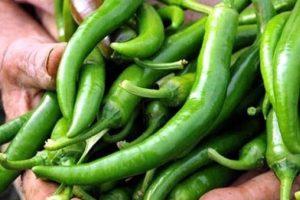
Yenişehir Pepper
Registration Number | 1263 | ||||||||
|---|---|---|---|---|---|---|---|---|---|
Registration Date | 24.11.2022 | ||||||||
Application Number | C2021/000540 | ||||||||
Application Date | 28.12.2021 | ||||||||
Name of the Geographical Indication | Yenişehir Pepper | ||||||||
Product / Product Group | Pepper / Processed and Unprocessed Fruits, Vegetables and Mushrooms | ||||||||
Type of Geographical Indication | Certification Mark | ||||||||
Applicant / Registrant | 1- Yenişehir Municipality 2- Bursa Province Livestock Development Union | ||||||||
Address of the Registrant | 1- Hıdırbali Neighborhood, Cumhuriyet Street No:14 Yenişehir BURSA, 2- Orhanbey Neighborhood, 6. Uçak Street No:3 Osmangazi BURSA | ||||||||
Geographical Boundary | Yenişehir District, Bursa Province | ||||||||
Bursa Yenişehir Pepper is a variety of pepper with the Latin variety name Capsicum annuum var. longum, cultivated in the Yenişehir district of Bursa. It has a thin skin, dark green color, glossy appearance, and a pointed tip. The length of the pepper ranges from 10–25 cm, while its diameter, measured at its thickest point—the stem end—ranges from 2–5 cm. Generally, the Yenişehir pepper has a sweet taste, although some varieties exhibit mild pungency. Botanically, it is a plant that grows up to approximately 1 metre tall, with 4–5 main branches emerging from the soil, each producing numerous lateral branches. It exhibits an upright and robust growth habit. Peppers on the plant typically hang downward. During flowering, pollination and fertilization result in abundant seed formation; when these seeds germinate, they develop a taproot and a highly fibrous root system.
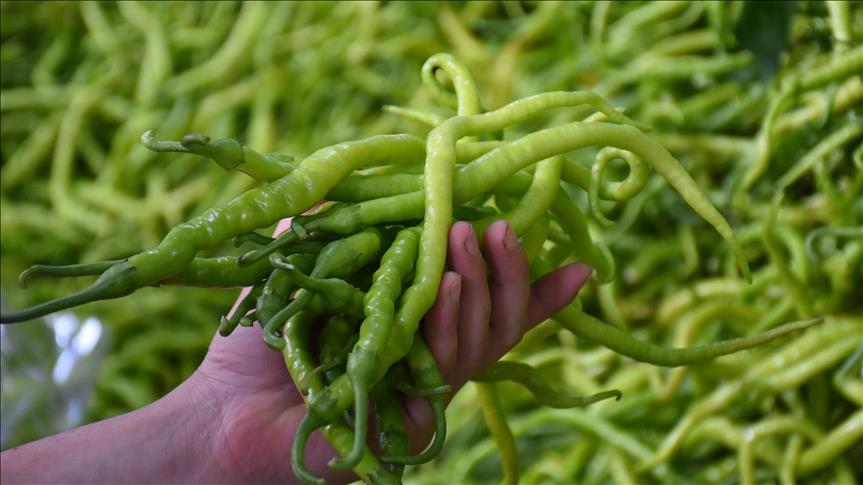
Bursa Yenişehir Biberi (AA)
The Yenişehir pepper is suitable for fresh consumption and exhibits a crisp and brittle texture when eaten fresh. The fruit has a triangular or round cross-section, and the stem attachment to the fruit is straight, C-shaped, or envelope-shaped. It is classified among long and medium-pointed pepper varieties.
Production of the Yenişehir pepper within its geographical boundary has been carried out since the 1980s and has become the subject of regional organizations such as festivals and fairs. The product has a direct link between its geographical origin and its reputation; particularly, the high day-night temperature differences, sandy or sandy-loamy soil structure, temperate climatic conditions, and abundant sunshine in the Yenişehir district are key factors determining its distinctive characteristics.
Bursa Yenişehir Pepper is an agricultural crop that prefers warm and temperate seasonal conditions. Low temperatures, particularly those below -3°C, have adverse effects on the plant. Therefore, seedlings grown under suitable conditions are transplanted to their final growing area only after the risk of frost has passed and air and soil temperatures have reached appropriate levels.
For optimal cultivation, sandy or sandy-loamy soils with sufficient depth, good permeability, high water retention capacity, and rich in organic matter and nutrients are preferred to support healthy root development.
Yenişehir pepper can be cultivated both in greenhouses and in open fields. Seeds are germinated under suitable conditions in trays or materials such as pots or bags to produce seedlings. The planting area is fertilized in autumn with well-rotted farm or manure compost, followed by deep plowing. Near the time of planting, the soil is re-plowed to aerate it, basal fertilizer is applied, and the soil is finely worked and leveled using appropriate agricultural machinery.
Planting is generally carried out during the first half of May. Furrows are opened on the field with a narrow row spacing of 30–35 cm and a wide row spacing of 70–75 cm. Water is applied to the furrows, and open-rooted seedlings approximately 25–30 cm in length are planted at average intervals of 10 cm, inserted into the soil by their root base before the water is fully absorbed. It is recommended to pull muddy soil from the furrow ridge over the base of the stem to ensure upright growth and protect the root zone. After planting, a thorough watering known as “can suyu” is applied.
After planting, irrigation is withheld for 7–10 days depending on climatic conditions to support root establishment in the soil. Subsequently, the first weeding and soil hilling are performed after 10–15 days, followed by the initiation of sprinkler irrigation. In clayey soils and during periods of heavy rainfall, intermediate plowing is recommended to improve soil aeration. Throughout the production period, drip irrigation is predominantly used, with frequency and duration adjusted according to plant development and climatic conditions. Care must be taken to ensure that water does not reach the furrow ridges or the root collar.
In autumn, well-rotted farm or manure compost is applied to the planting areas. Surface soil treatment is carried out in March. Before transplanting seedlings, a suitable composite basal fertilizer is applied according to soil analysis results and evenly mixed into the soil using agricultural machinery or a harrow.
Weeding and intermediate plowing are performed to control weeds. For managing plant diseases, pests, and soil-borne insects, plant protection products compliant with relevant legal regulations are used. It is essential to select seeds or seedlings from disease-free and healthy plants. Seedbeds must be established in clean, disease-free areas, avoiding excessive irrigation and ensuring adequate ventilation. Seedlings should be planted on the furrow ridge, and ideally each furrow should be irrigated separately. Imbalanced applications such as excessive nitrogen fertilization must be avoided.
The first harvest typically begins in early July and continues until the onset of cold weather or frost, depending on cultivation conditions and climate. Harvesting is done manually by picking the peppers at the stem. The harvested produce is placed in bags, baskets, or crates suitable for food contact. Damaged, spotted, or rotten fruits are sorted out during harvesting, thus completing the initial grading in the field. The harvested produce is transported to processing and packaging storage facilities. During transportation, damage such as bruising or crushing may affect quality, so a secondary sorting is conducted. The final grading is performed according to desired color, size, and shape characteristics.
Products must be stored in dry, cool, clean, and odor-free environments. However, the primary objective is to deliver the produce to consumers as soon as possible after harvest. For long-term storage, cold chain storage facilities and transport vehicles capable of controlling temperature and humidity must be used, ensuring products are not stacked on top of each other.
Yenişehir pepper is marketed in bulk or in food-safe packaging, accompanied by labeling information compliant with relevant food regulations.
Yenişehir pepper was registered on 24 November 2022 under number 1263 as a geographical indication of the certification mark type. The registration application was submitted on 28 December 2021 (Application No: C2021/000540). The applicants are the Yenişehir Municipality and the Bursa Provincial Livestock Development Union.
Use of the geographical indication is marked on the product or its packaging with the term “Yenişehir Pepper” and the certification mark emblem. When this is not feasible, the term and emblem must be displayed in a clearly visible location within the facility.
Monitoring is conducted by a monitoring body of at least three members, coordinated by the Yenişehir Municipality and the Bursa Provincial Livestock Development Union, with participation from the Bursa Provincial Directorate of Agriculture and Forestry and the Yenişehir Chamber of Agriculture. Monitoring is carried out at least once per year; additional inspections may be conducted as needed or upon complaint. Monitoring reports are submitted annually to the Turkish Patent and Trademark Office. The monitoring body may obtain support or services from public or private institutions or experts as necessary.
The geographical boundary for the cultivation of Yenişehir pepper is limited to the Yenişehir district of Bursa. All production, processing, and related operations must be conducted entirely within this boundary.
Monitoring of Yenişehir pepper is coordinated by the Yenişehir Municipality and the Bursa Provincial Livestock Development Union. In this process, a monitoring board of at least three members, representing the Yenişehir Municipality, the Bursa Provincial Livestock Development Union, the Bursa Provincial Directorate of Agriculture and Forestry, and the Yenişehir Chamber of Agriculture, is responsible for oversight.
Monitoring is conducted at least once per year, and additional inspections may be carried out as needed or in response to complaints. Monitoring activities are reported under Law No. 6769 on Industrial Property, and these reports are regularly submitted annually by either the Yenişehir Municipality or the Bursa Provincial Livestock Development Union to the Turkish Patent and Trademark Office.
The responsibilities of the monitoring board include verifying the correct use of the geographical indication, ensuring that production complies with the methods outlined in the “Production Method” section, and confirming that harvesting, storage, and preservation conditions meet the required standards. Any deficiencies identified during monitoring and the necessary corrective measures are communicated to the relevant individual, institution, or organization.
Additionally, the monitoring board may obtain support or procure services from public or private institutions or experts working within them. The entity that registered the product is responsible for initiating legal actions to protect its rights.
Balcıkoca, Sinan. “Yeşil biber deposu ovada ikinci hasat.” Anadolu Ajansı. Accessed May 26, 2025.https://www.aa.com.tr/tr/ekonomi/yesil-biber-deposu-ovada-ikinci-hasat-/1262374
Turk Patent and Trademark Office. "Bursa Yenişehir Biberi Coğrafi İşareti Detayı." Accessed May 26, 2025.https://ci.turkpatent.gov.tr/cografi-isaretler/detay/5782
Turk Patent and Trademark Office. "Bursa Yenişehir Biberi Coğrafi İşareti Tescil Belgesi (PDF)." Accessed May 26, 2025.https://ci.turkpatent.gov.tr/Files/GeographicalSigns/729e2dd7-3c8c-4166-85cc-d5b3d7259c6d.pdf

Yenişehir Pepper
Registration Number | 1263 | ||||||||
|---|---|---|---|---|---|---|---|---|---|
Registration Date | 24.11.2022 | ||||||||
Application Number | C2021/000540 | ||||||||
Application Date | 28.12.2021 | ||||||||
Name of the Geographical Indication | Yenişehir Pepper | ||||||||
Product / Product Group | Pepper / Processed and Unprocessed Fruits, Vegetables and Mushrooms | ||||||||
Type of Geographical Indication | Certification Mark | ||||||||
Applicant / Registrant | 1- Yenişehir Municipality 2- Bursa Province Livestock Development Union | ||||||||
Address of the Registrant | 1- Hıdırbali Neighborhood, Cumhuriyet Street No:14 Yenişehir BURSA, 2- Orhanbey Neighborhood, 6. Uçak Street No:3 Osmangazi BURSA | ||||||||
Geographical Boundary | Yenişehir District, Bursa Province | ||||||||
Distinctive Characteristics
Production Method: Cultivation and Stages
Climate Requirements
Soil Characteristics
Cultivation Methods
Irrigation Practices
Fertilization
Crop Protection
Harvesting Operations
Storage and Preservation Conditions
Market Placement
Geographical Indication Registration and Monitoring
Geographical Boundary
Monitoring Process