


This article was automatically translated from the original Turkish version.
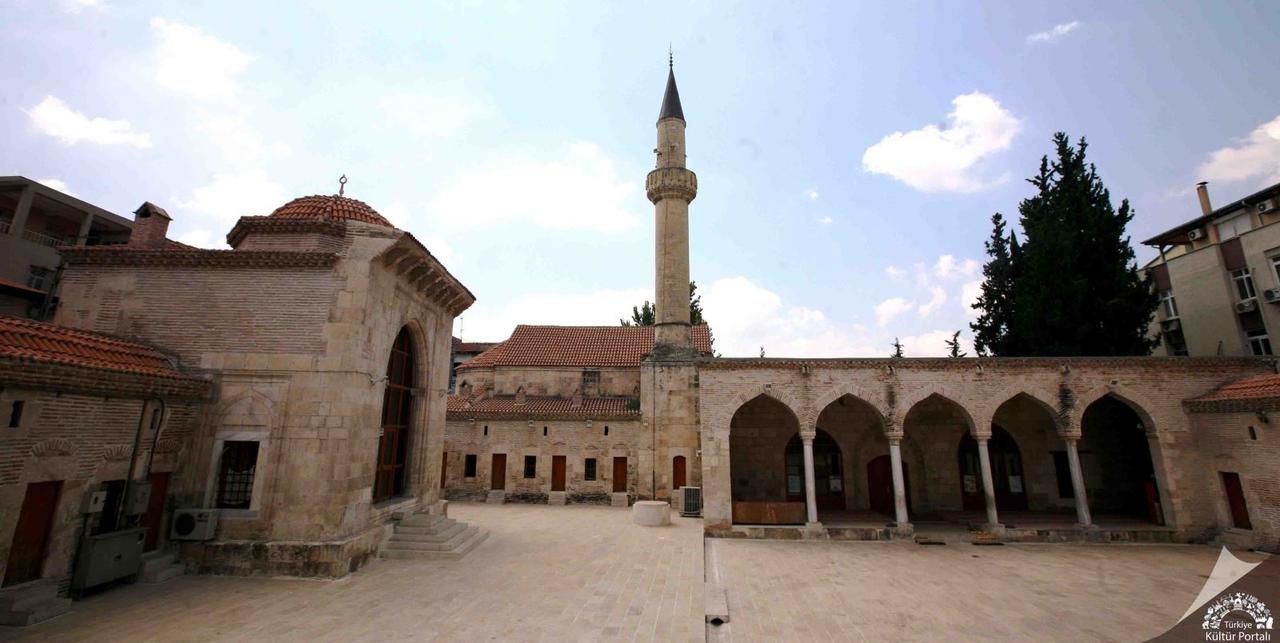
Yağ Mosque - Adana
Location | Adana Province Ali Münif Yeğenağa Street Alidede Neighborhood Seyhan District | ||||||||
|---|---|---|---|---|---|---|---|---|---|
Construction Date(s) | H. 906 / M. 1501 (conversion from church to mosque) H. 960 / M. 1552-1553 (additions and madrasa completion) | ||||||||
Founder(s) | Ramazanoğlu Halil Bey (1501) Piri Paşa (1552 additions) | ||||||||
Other Name(s) | Cam-i Atik Cami-i Köhne | ||||||||
History | In 1501, Ramazanoğlu Halil Bey converted the Armenian Saint Jacques Church into a mosque. Due to the oil market established in front of its entrance, it was known as the Yağ Camii. The minaret was completed in 1525, and in 1552 Piri Paşa added a madrasa, transforming it into a külliye. | ||||||||
Plan | An east-west oriented rectangular prayer space with a barrel vault ceiling. | ||||||||
Columns | Columns less than one meter in height, connected by pointed arches, reflect the Seljuk Ulu Camii character. | ||||||||
Minaret | A classical Ottoman balconied minaret on the northeast, built of cut stone. | ||||||||
Courtyard | The northern end is surrounded by the final prayer area and the Piri Paşa Madrasa (Yağ Camii Madrasa). | ||||||||
Yağ Camii is a historical place of worship located on Ali Münif Yeğenağa Street in the Alidede neighborhood of Seyhan District, Adana Province, Türkiye. Originally named Eski Cami, this building was converted from the Saint Jacques Church into a mosque in 906 AH / 1501 CE by order of Ramazanoğlu Halil Bey. Due to the oil market established in front of the mosque’s entrance, it began to be known as “Yağ Camii” during people and this name has persisted to the present day. Foundation documents also refer to it as Atik-i Atik and Cami-i Köhne such as. The minaret was completed in 1525.
Yağ Camii was constructed during the Ramazanoğlu Beylik period. When converting the church into a mosque, the original structure’s western wall was demolished while the eastern block was preserved and a mosque was added. The church’s east-west orientation for worship was redirected southward, resulting in an architectural form reflecting characteristics of Seljuk-era Ulu Camii structures. Later, in 960 AH / 1552–1553 CE, additions were made to the mosque by Piri Pasha, son of Ramazanoğlu Halil Bey, transforming it into a külliye together with the adjacent madrasa. The inscription on the Crown door reads: “The son of the greatly fortunate Sultan Selim Inn, Sultan Süleyman Shah Han, may his victory be eternal, commissioned this medrese and maintained this mosque, as ordered by the leading figures of the state—Piri, son of Ramazanoğlu Halil.”
Although converted from a church, Yağ Camii incorporates both Ottoman and Seljuk architectural elements. The prayer hall is situated on the southern side of the courtyard and occupies a transverse rectangle plan oriented east-west. The space is covered by barrel vaults, and low columns, each less than one meter in height, are connected by pointed arches. These columns create a dim atmosphere that narrows the prayer area. The harem entrance is accessed from the northern façade. To the north of the mosque are the final resting place and courtyard; on the northwestern and eastern sides of the courtyard are the medrese rooms known as Piri Paşa Medresesi (Medrese-i Cedîd or Yağ Camii Medresesi).
The monumental portal on the southeast side of the mosque features distinctive characteristics. The entrance, with its low arch supported by a kavsaray and constructed of two stone blocks, is enriched with rosettes reflecting Seljuk decorative sensibilities. The minaret is located in the northeast and built of precisely cut stone. The minaret’s gallery reflects Ottoman style.
The minbar of Yağ Camii is located to the right of the mihrab and occupies an area measuring 2.70 meters in width and 5.07 meters in length. The minbar consists of three parts: the entrance (door), the body (railing, side panels, and footrest), and the pavilion. It is constructed from finely cut kufeki stone and accessed via a single step. The entrance is framed by a low arch whose lintel is decorated in ajur technique with a spiral arrangement of palmette and rumi motifs. The main body draws attention with geometric ornamentation based on the principle of infinity. The side panels feature equilateral triangle forms, star-shaped cutouts, and polygonal patterns. The railings are arranged symmetrically with rumi and palmette motifs; the footrest is left plain, carved from a single stone block. The canopy is completed by a fluted dome rising on columns with muqarnas capitals, adorned with geometric star patterns carved using the relief technique. The dome’s perimeter is animated by palmette motifs.
Yağ Camii continues to exist as a külliye alongside its medrese in Adana’s Büyük Çarşı Quarter, presenting a synthesis of Seljuk and Ottoman art through the architectural features it acquired during its transformation from church to mosque. As a structure of historical and cultural significance, Yağ Camii stands out for its simple stonework and original ornamentation.
Academia. "Adana Yağ Camii, Ulu Camii ve Hasanağa Camii Minberlerinde Üslup Özellikleri." Accessed April 6, 2025. https://www.academia.edu/104790929/Adana_Ya%C4%9F_Camii_Ulu_Camii_ve_Hasana%C4%9Fa_Camii_Minberlerinde_%C3%9Cslup_%C3%96zellikleri
Kültür Portalı. "YAĞ CAMİ | Kültür Portalı." Accessed April 6, 2025. https://www.kulturportali.gov.tr/turkiye/adana/gezilecekyer/yag-cami.
Türkiye Turizm Ansiklopedisi. "Yağ Camii." Accessed April 6, 2025. https://turkiyeturizmansiklopedisi.com/yag-camii.

Yağ Mosque - Adana
Location | Adana Province Ali Münif Yeğenağa Street Alidede Neighborhood Seyhan District | ||||||||
|---|---|---|---|---|---|---|---|---|---|
Construction Date(s) | H. 906 / M. 1501 (conversion from church to mosque) H. 960 / M. 1552-1553 (additions and madrasa completion) | ||||||||
Founder(s) | Ramazanoğlu Halil Bey (1501) Piri Paşa (1552 additions) | ||||||||
Other Name(s) | Cam-i Atik Cami-i Köhne | ||||||||
History | In 1501, Ramazanoğlu Halil Bey converted the Armenian Saint Jacques Church into a mosque. Due to the oil market established in front of its entrance, it was known as the Yağ Camii. The minaret was completed in 1525, and in 1552 Piri Paşa added a madrasa, transforming it into a külliye. | ||||||||
Plan | An east-west oriented rectangular prayer space with a barrel vault ceiling. | ||||||||
Columns | Columns less than one meter in height, connected by pointed arches, reflect the Seljuk Ulu Camii character. | ||||||||
Minaret | A classical Ottoman balconied minaret on the northeast, built of cut stone. | ||||||||
Courtyard | The northern end is surrounded by the final prayer area and the Piri Paşa Madrasa (Yağ Camii Madrasa). | ||||||||
History and Construction Process
Architectural Features
Minbar