This article was automatically translated from the original Turkish version.
Lightning takes on different forms in the sky depending on its point of origin and the direction of electric charge movement. Lightning between clouds and the ground is typically vertical, while intracloud and intercloud lightning spreads horizontally or in a network-like pattern. This variation arises from the distribution of electric charges within and around the clouds.
Lightning is a highly orderly process resulting from the restoration of electrical balance in the atmosphere. These phenomena once again remind us that everything in nature exists with its own precise measure and balance.
Electrical discharge events in the atmosphere are striking both visually and in terms of their physical consequences. According to satellite data, approximately 1.2 billion lightning strikes occur worldwide each year, equivalent to an average of 40 events per second. These events are generally associated with storm systems and can be classified by the distinct patterns they create in the sky.【1】
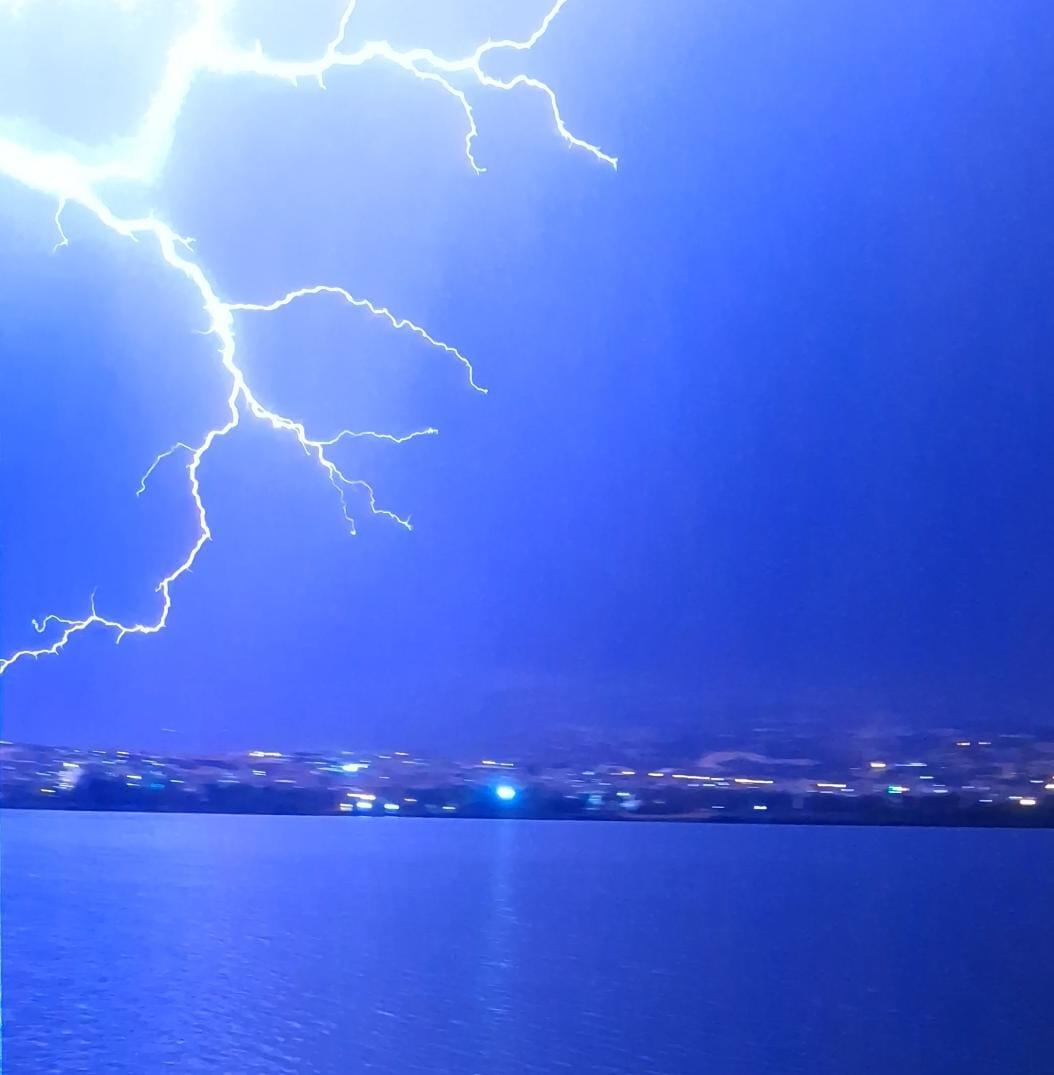
Lightning (Photo: Mehmet Bağcı)
Every natural phenomenon embodies immense order and balance. Lightning is one such phenomenon. The sudden flash of light in the sky is in fact the result of a far deeper and more complex process.
The fundamental cause of lightning is the separation of positive and negative electric charges within storm clouds. Although the precise mechanism of this charge separation has not yet been fully explained, the generally accepted view is that collisions between frozen raindrops and vertical turbulent air movements within the cloud create the conditions for this separation. During this process, positive charges accumulate in the upper regions of the cloud while negative charges gather in the lower regions. On the ground, positive charges concentrate near the surface, especially on tall structures.
The formation of lightning is not merely a product of charge movement in the sky but also a sign of nature’s delicate balance. Each lightning strike once again reminds us of this balance and the wisdom inherent in creation.
The type of lightning that occurs from cloud to ground is called a thunderbolt. During this event, a stepped path of discharge develops incrementally to allow negative charges to reach the Earth’s surface. This path consists of segments approximately 50–100 meters in length and can extend in various directions. Meanwhile, concentrated positive charges on the ground move upward along tall objects. When these two charge channels meet at a height of 30–100 meters above the Earth’s surface, an electrical discharge occurs, producing a thunderbolt. The movement of charge is bidirectional: first from cloud to ground, then from ground back to cloud.【2】
Lightning (pixabay)
About half of all lightning events occur without reaching the ground, taking place either within a single cloud or between two clouds. Intracloud lightning results from discharges between oppositely charged regions within the same cloud. These events produce horizontal flashes of light across the sky. Intercloud lightning creates expansive horizontal patterns resembling spider webs. Although these types of lightning often have no direct effect on the ground, they vividly demonstrate the intensity and diversity of electrical activity in the atmosphere.
Some thunderbolts originate from the movement of positive charges accumulated in the upper regions of clouds. These thunderbolts can travel horizontally for several kilometers before striking the ground. Although less common, they tend to carry higher energy levels.
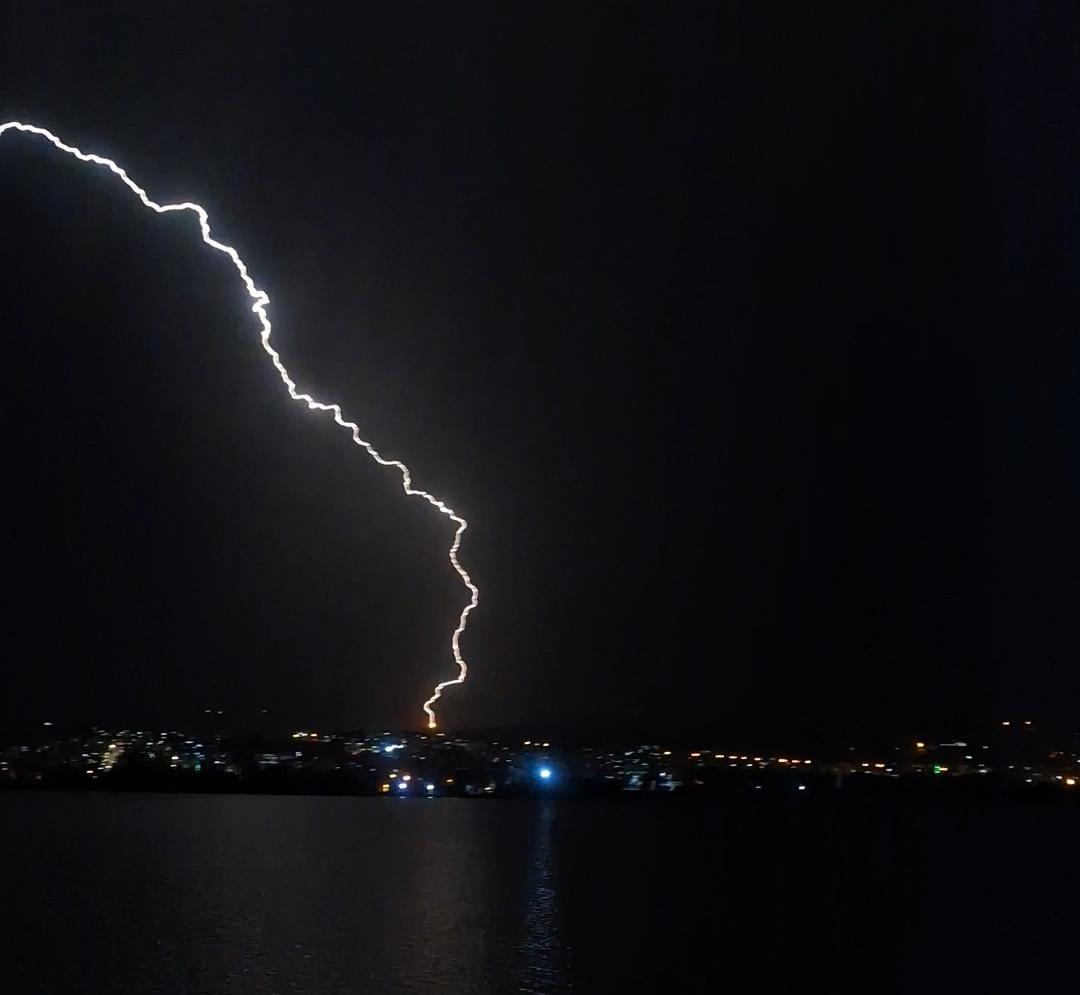
Lightning (Photo: Mehmet Bağcı)
Lightning and thunderbolt phenomena, notable both for their visual impact and scientific mystery, have long captured human interest.
Lightning and thunderbolt events are the result of complex electrical processes in the atmosphere. Charge separation, air movements, and cloud structures are decisive factors in their formation. The varied forms in which lightning is observed reveal that these processes can vary under different physical conditions.
As seen, lightning and thunderbolts are more than mere natural phenomena—they are the outcome of delicate and powerful processes occurring deep within the atmosphere. Understanding these events enhances not only scientific knowledge but also our awe for the workings of nature. Therefore, we should reflect deeply.
Pixabay. "Yıldırım, Işık, Gök gürültüsü videosu." Accessed July 31, 2025. https://pixabay.com/tr/videos/y%C4%B1ld%C4%B1r%C4%B1m-%C4%B1%C5%9F%C4%B1k-g%C3%B6k-g%C3%BCr%C3%BClt%C3%BCs%C3%BC-f%C4%B1rt%C4%B1na-88491/
Sarıgül, Tuba. “Şimşekler Gökyüzünde Neden Farklı Şekiller Oluşturur?” TÜBİTAK Bilim Genç, January 14, 2015. Accessed July 23, 2025. https://bilimgenc.tubitak.gov.tr/makale/simsekler-gokyuzunde-neden-farkli-sekiller-olusturur.
[1]
[2]
Formation Processes of Lightning and Thunderbolt Events in the Atmosphere
Electric Charge Distribution and the Mechanism of Lightning Formation
Formation of Thunderbolts
Intracloud and Intercloud Lightning
Positive Charge Thunderbolts