


What Is the Tulumba Fountain?
Today, when we turn on a tap, water flows easily—but in the past, access to water was by no means this simple. People relied on public fountains in the streets to carry water to their homes. One such fountain was the tulumba çeşmesi.
The tulumba çeşmesi is a special type of fountain that draws water from underground and delivers it to people. Water was lifted upward using a lever. By moving the lever up and down, water was made to flow.
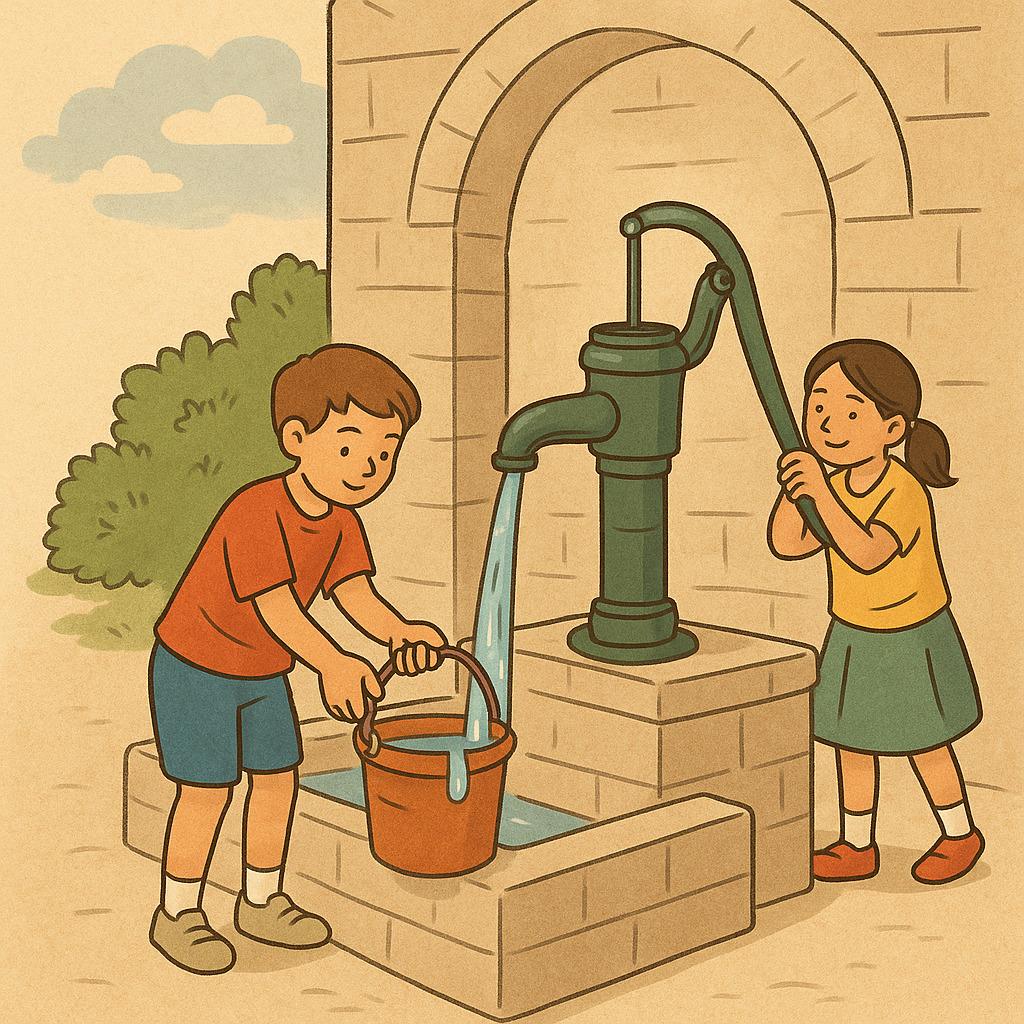
Image of a tulumba. (Generated by artificial intelligence.)
How Does It Work?
Inside the tulumba çeşmesi is a mechanism that lifts water upward. This mechanism uses air pressure. As the lever is moved, air enters the system and pushes the underground water upward, causing it to flow from the spout.
Thanks to this mechanism, people could access water without having to lower a bucket into a well. It was both practical and greatly simplified the task of carrying water.
Where Can It Be Found?
Tulumba çeşmesi were especially common in the past in cities such as Istanbul, Edirne and Konya. Today, you can still find some of them in working condition in certain villages. Additionally, some of these old fountains have been preserved and are recognized as historical artifacts.
You may encounter examples of these fountains in parks or open-air museums. Even when they are placed there merely as decorative elements, they still carry traces of the past.