This article was automatically translated from the original Turkish version.
The Moon, when observed with the naked eye, is a celestial body with distinct color variations on its surface. These differences have been interpreted in various ways throughout history. In particular, the dark gray regions were once thought to be seas, while the lighter gray areas were believed to be continents. However, modern observations have revealed that this perception does not reflect the actual surface topography and geological structure.
The reason some regions on the Moon appear darker is due to differences in the chemical composition of the rocks in those areas. The dark regions consist of plains filled with lava, rich in minerals containing iron and manganese, whereas the lighter-colored areas are higher, more rugged terrains with a high concentration of aluminum-rich minerals.
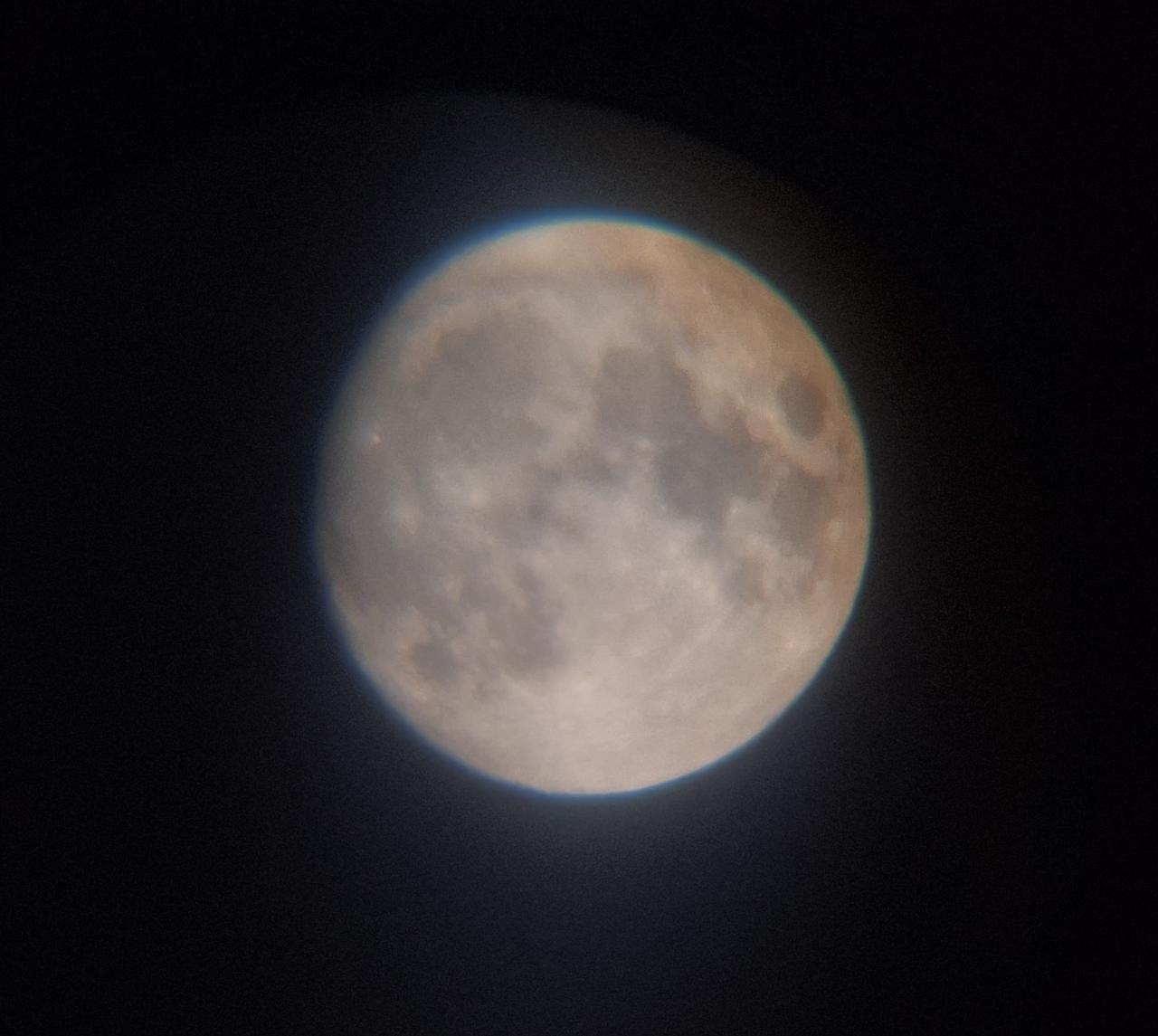
Full Moon (Photo: Mehmet Bağcı)
When observing the Moon’s surface, two primary structural regions stand out: the light-colored, elevated and rugged areas, and the dark-colored, flat and low-lying plains. These two distinct surface types provide crucial data for understanding the Moon’s geological evolution. The light-toned regions are the Moon’s higher-altitude areas densely covered with craters. They represent the Moon’s older surface layers and are highly rugged due to prolonged exposure to meteorite impacts. This dense cratering pattern serves as an indicator of surface changes accumulated over time.
In contrast, the dark-colored regions have a smoother and lower topography. These areas, with relatively fewer craters, constitute the Moon’s younger surfaces. Known in Latin as maria, meaning “seas,” these regions cover only about 17 percent of the lunar surface, yet they are among the most prominent features visible from Earth. Their lower crater density suggests that these plains were resurfaced by lava flows at a later stage in geological history, making them significantly younger than other regions.
The Moon’s surface features reveal both the intense impacts of the early Solar System and the gradual decline in geological activity over time. Studying this natural satellite provides numerous clues not only about the Moon itself but also about the past of other planets, including Earth.
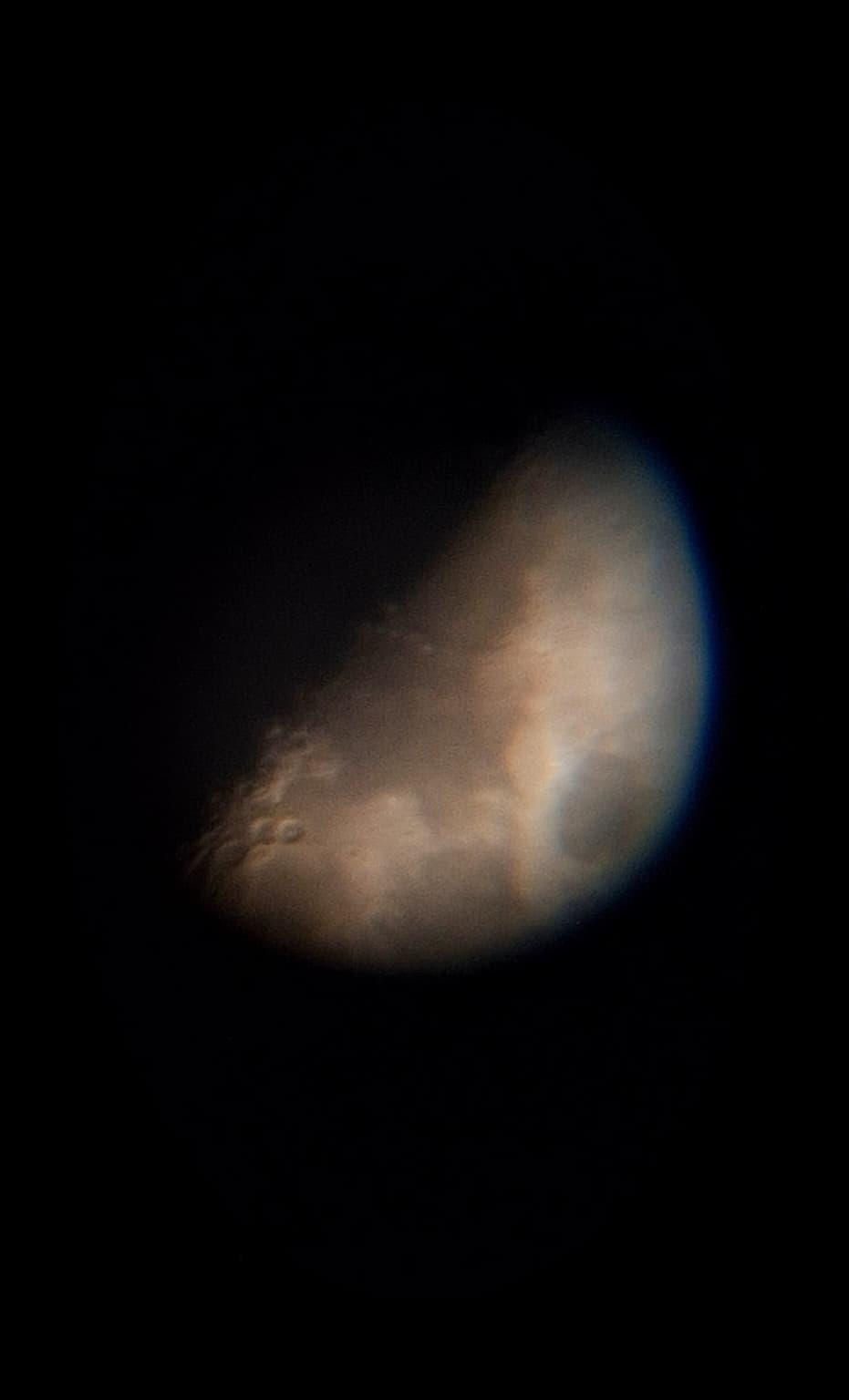
The Moon’s Surface (Photo: Mehmet Bağcı)
Assessments regarding the formation of the dark regions indicate that they resulted from past volcanic activity. It is believed that large impact craters on the lunar surface were later filled by lava flows. The source of these lava flows may have been internal volcanic activity as well as fractures in the lunar crust caused by impact events. This process resulted in the smoother, less cratered structure characteristic of the maria regions.
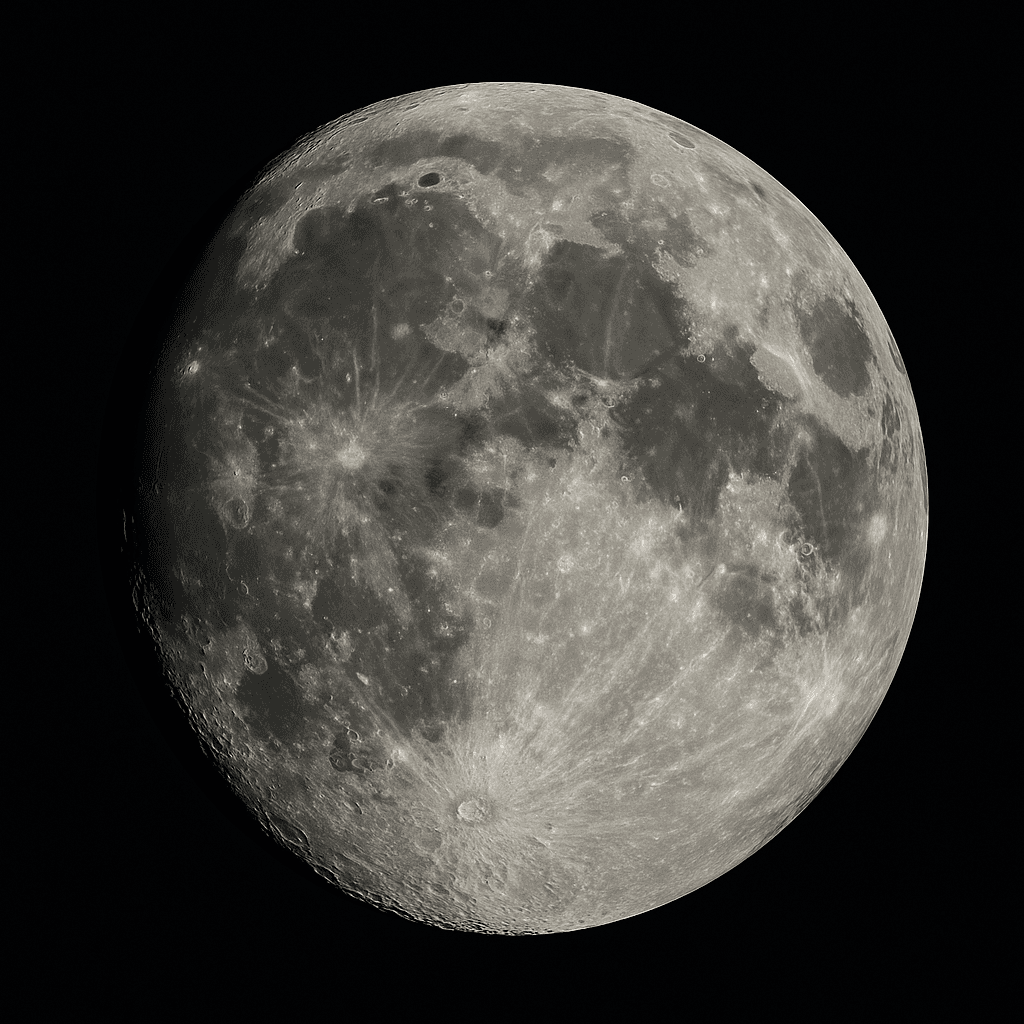
Close-up Image of the Moon’s Surface (Generated by Artificial Intelligence)
When viewing the Moon’s surface, the clear distribution of light and dark regions is immediately noticeable. The underlying cause of this visual contrast lies in variations in the chemical composition of minerals found in different areas. The dark regions are areas rich in minerals containing heavy elements such as iron and manganese. Minerals such as olivine, ilmenite, and pyroxene are particularly prominent in these regions. These components influence not only the color of the surface but also directly affect the physical properties of the area.
The situation is different in the light-colored regions. These areas are characterized by minerals with high aluminum content, especially plagioclase. This difference in mineralogy results in significant variations not only in color but also in physical properties such as surface temperature, reflectivity (albedo), and hardness. Laboratory analysis of samples collected during lunar missions has scientifically confirmed this chemical diversity. As a result, it has become clear that the color differences on the surface are not merely optical illusions but are directly linked to geological and mineralogical structures.
The causes of the dark and light regions observed on the Moon’s surface have been clarified through modern observation and analytical techniques. The color variations are not merely an optical illusion but are directly related to the Moon’s geological history, impact record, volcanic activity, and mineralogical composition. In this regard, the Moon is a vital celestial body for understanding past formation processes and acquiring knowledge about the Solar System.
Sarıgül, Tuba. “Ay’ın Yüzeyindeki Bazı Bölgelerin Daha Karanlık Görünmesinin Sebebi Nedir?” *TÜBİTAK Bilim Genç*, October 25, 2017. Accessed August 4, 2025. https://bilimgenc.tubitak.gov.tr/makale/ayin-yuzeyindeki-bazi-bolgelerin-daha-karanlik-gorunmesinin-sebebi-nedir.
Topal, Selçuk. “Güneş Sistemini Tanıyalım: Ay.” *TÜBİTAK Bilim Genç*, November 27, 2023. Accessed August 4, 2025. https://bilimgenc.tubitak.gov.tr/makale/gunes-sistemini-taniyalim-ay.
A Look at the Moon’s Surface: Topography and Geological Traces
Geological Formation Process
Chemical Composition and Color Variations