


This article was automatically translated from the original Turkish version.
Ottoman civilization emerged as a society that placed great importance on water and the construction of water structures. The architectural layout of cities was shaped in accordance with the social life and charitable outlook of the Ottoman people, and fountains, sebils, and water systems became not merely infrastructure elements but also cultural features at the heart of social life.
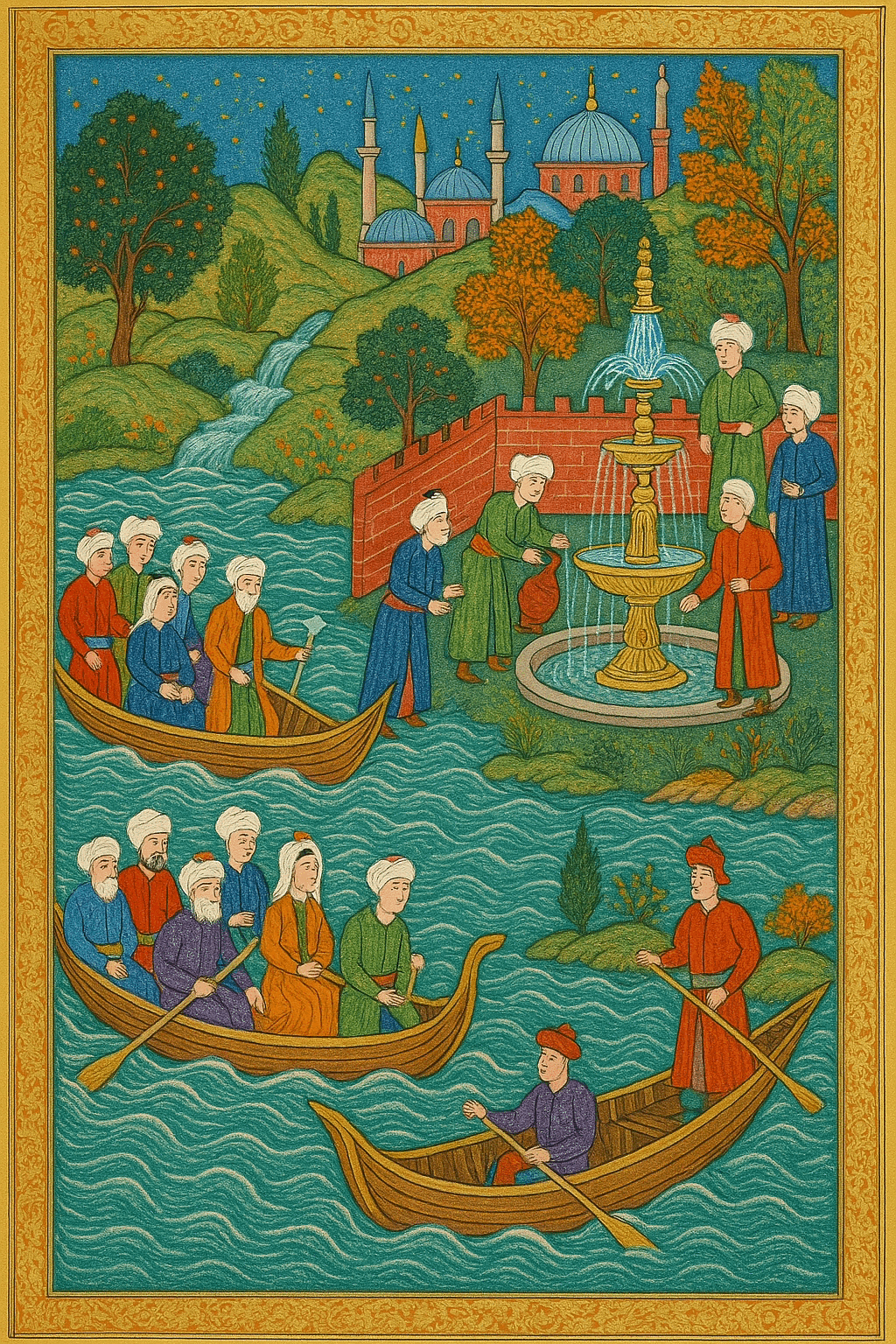
Water and Çeşme Culture in the Ottoman Era. (Generated by Artificial Intelligence.)
Cities are complex structures that reflect the shared values of societies, and Ottoman cities took shape as an expression of Islamic civilization. In Ottoman cities, water structures possessed both aesthetic and functional qualities. The water culture inherited from the Roman Empire was advanced to a higher level, with elements such as aqueducts, cisterns, and water channels becoming inseparable parts of this tradition.
In large cities like Istanbul, where water supply was challenging, the Ottoman State developed water architecture with great care. Water from the Istranca Mountains was transported via arches and canals, stored in underground cisterns, and distributed to the public through fountains. Water structures built during the Ottoman period continue to exist today as important works that met Istanbul’s water needs.
The word “çeşme” originates from Persian and derives from the word “çeşm” (چشم), meaning “eye.” In this context, “çeşme” was used as a metaphor for the emergence of water from the ground or a spring. During the Ottoman period, this word was widely adopted to emphasize the abundance and flow of water.
In Arabic texts, the word “ayn” (عين), meaning “eye,” was used to refer to fountains. The term “ayn” can also be found in Ottoman inscriptions. In addition, particularly in 13th and 14th century inscriptions, the word “sikaye” (سقاية) was also used to denote a fountain.
Since fountains were not merely water distribution points but also symbols of charity, architectural aesthetics, and social gathering, the meaning of the word “çeşme” enriched over time. When examining the role of fountains in Ottoman society, it can be said that the word “çeşme” also carried the connotation of “charitable endowment.”
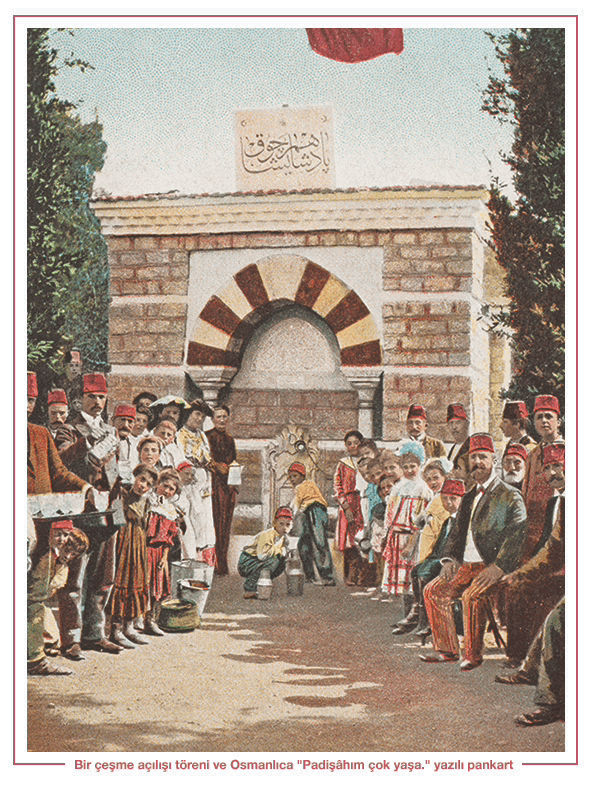
Opening Ceremony of a Fountain in the Ottoman Era. (Z Dergisi)
In the Ottoman period, neighborhood fountains became one of the key elements highlighting water’s unifying social function. Rather than connecting homes directly to a water network, water was distributed to the public through centralized fountains. This practice ensured that water carried both material and spiritual value. Neighborhood fountains were among the fundamental components shaping the urban fabric while also facilitating social interaction among residents.
In the Ottoman period, water provision was not merely an infrastructure issue but also regarded as a religious and social duty. Neighborhood fountains were constructed not only to meet the public’s water needs but also as acts of charity. In Islamic belief, providing water was considered a great act of merit, and building fountains and sebils was regarded as an important form of sadaqa. It is reported that the Prophet Muhammad (peace be upon him) answered the question “Which sadaqa is most virtuous?” with “Giving water.” This belief led to the widespread practice of water charity in the Ottoman period, with benefactors competing to build fountains and sebils.【1】
The majority of those who built fountains on Ottoman lands were state officials, pashas, and the wealthy, but female sultans also made significant contributions to water architecture. Particularly Mihrimah Sultan, wife of Sultan III. Mustafa and mother of Sultan III. Selim, was the female sultan who commissioned the most fountains in Ottoman history, having built a total of thirteen. Moreover, some neighborhoods in Ottoman Istanbul derived their names from these fountains. For example, neighborhood names such as Ayrılık Çeşmesi, Horhor, and Valideçeşme originate from the fountains located there.
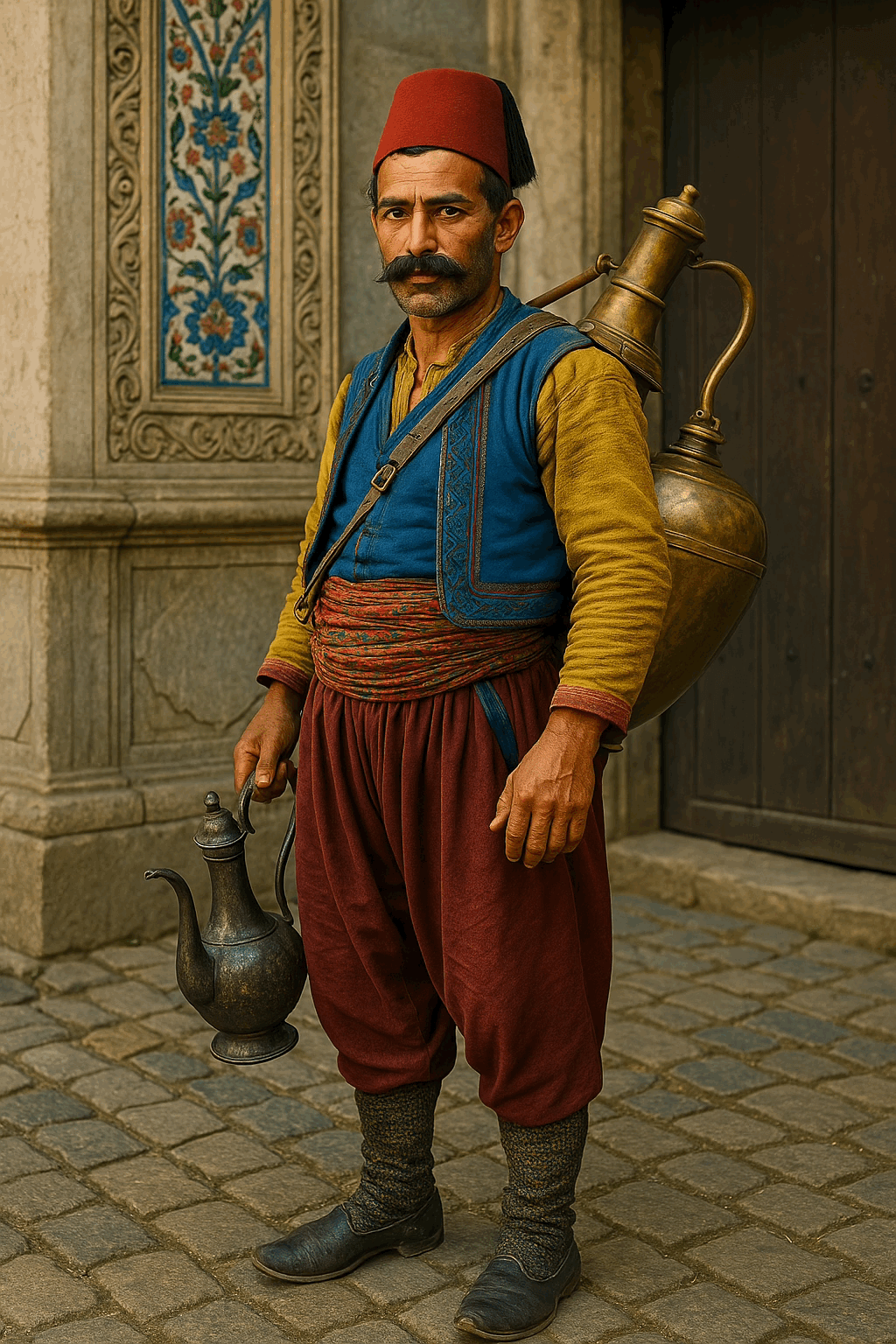
An Ottoman Saka. (Generated by Artificial Intelligence.)
Although fountains were one of the primary elements of water supply in the Ottoman period, water was primarily transported from neighborhood fountains to homes rather than delivered directly. To meet this need, the saka tradesmen organization emerged. Sakas were a vital professional group responsible for water transportation and distribution in Ottoman cities. Typically carrying water in leather sacks, they ensured public access to water while operating within a structured system.
In large cities like Istanbul, the saka tradesmen operated under the guild system. Sakas worked according to specific rules and were supervised through guilds. Water transportation was especially critical in neighborhoods distant from fountains, making sakas an indispensable part of daily life. The advanced water culture of the Ottoman period shaped urban infrastructure and social order, ensuring that water distribution followed a waqf tradition.
Although the saka organization no longer exists today, fountains as part of Ottoman water architecture continue to exist in many cities inheriting the Ottoman heritage, especially in Istanbul.
Ottoman fountains were classified into different architectural categories according to their location and function. These include wall fountains, corner fountains, square fountains, fountains designed alongside sebils, namazgâh fountains, and room fountains. Their plans were also designed in various geometric shapes such as square, rectangular, circular, semicircular, elliptical, and polygonal.
Ottoman fountains between the 15th and 17th centuries stood out as simple structures consisting only of a single arch, a mirror stone, an inscription, a basin, and a water reservoir. In the 18th century, under the influence of the Baroque style, they became more ornate. Decorative elements such as flowers in vases and fruits on plates appeared in fountains built during this period.
Inscriptions on Ottoman fountains held significant importance. They typically included the basmala, verses related to water, the kalima-i tawhid, the name of the founder, the poet of the inscription, and the construction date. Starting from Sultan I. Abdülhamid, imperial tughra seals began to be engraved on fountains, and during the reign of Sultan III. Ahmed, fountains became aesthetic symbols of Istanbul.
Natural materials abundant in the region, such as stone and marble, were used in the construction of fountains. Additionally, the taps of fountains were made of brass casting due to their antibacterial properties and durability. This practice draws attention today as an early solution for hygiene in shared-use areas, especially when considering health crises such as pandemics. The Ottoman period appears to have addressed similar issues not only in fountains but also in other shared-use areas such as door handles and knockers by employing similar alloys.
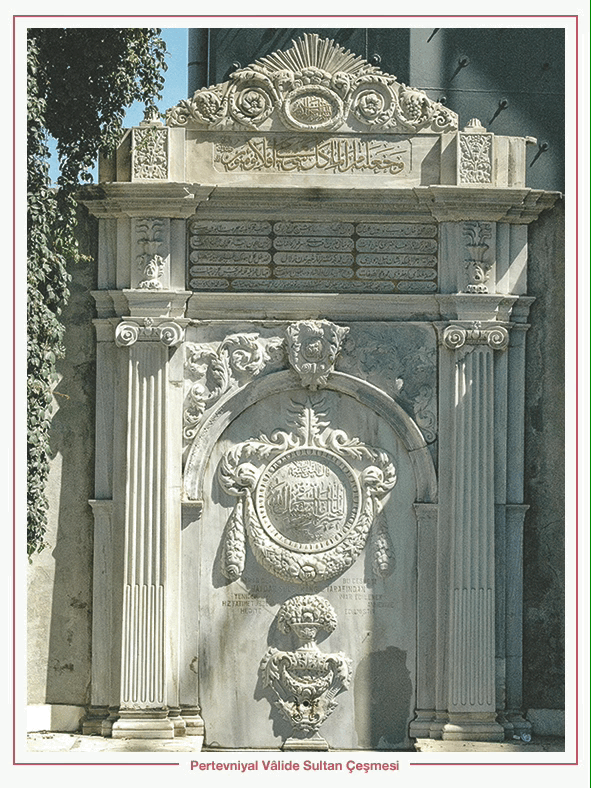
A Fountain Built in the Baroque Style. (Z Dergisi)
The Ottoman State placed great importance on water architecture and developed an extensive infrastructure to utilize water resources most efficiently. Ottoman water structures represent a continuation of the water culture inherited from the Roman and Byzantine periods. The aqueducts, cisterns, and water channels built by the Roman Empire in Istanbul were expanded during the Ottoman period, forming a more comprehensive system to meet the city’s water needs.
The fundamental elements of water culture—fountains, sebils, baths, şadırvans, cisterns, maksems, wells, fire ponds, kerhizs, ayazmalar, water scales, water channels, and aqueducts—are the most important components of Ottoman water architecture. These structures, built to meet Istanbul’s water needs, have survived to the present day as works possessing both functional and artistic value.
The oldest water structures in Istanbul date back to the Roman period. Structures such as the Valens (Bozdoğan) Aqueduct, the Yerebatan Sarnıcı, and the Binbirdirek Sarnıcı were used by the Ottomans and later expanded or restored. Water brought from the Istranca Mountains and other sources outside Istanbul was transported via aqueducts, stored in underground cisterns, and distributed to the public through fountains located at various points in the city.
Especially during the reign of Fatih Sultan Mehmet, efforts were made to strengthen Istanbul’s water infrastructure, and fountains were constructed around the city even before the conquest. In 1452, before the conquest of Istanbul, fountains built around Rumeli Hisarı serve as an early indication of the Ottoman emphasis on water architecture. From the 15th century onward, fountain construction gained momentum and by the 18th and 19th centuries had become an inseparable part of the urban fabric of Ottoman cities.
A portion of the water structures built during the Ottoman period have survived to the present day. Many historical fountains across the Ottoman geographical region, especially in Istanbul, still stand, with some remaining in active use. However, due to urbanization, neglect, and natural factors, many fountains have lost their functionality.
Today, some fountains are being repaired and preserved under restoration projects. However, incorrect restoration practices during these efforts have occasionally drawn criticism. Moreover, due to the replacement of Ottoman fountains by modern infrastructure systems for water supply, many of them are no longer actively used and now primarily serve as historical monuments.
Various foundations, municipalities, and cultural heritage organizations are conducting inventory work and restoration projects to preserve Ottoman water architecture and transmit it to future generations.
Demirci, Mustafa. “İslam’da Şehir ve Şehrin Sosyal Dinamikleri.” *İSTEM* 2 (December 2003): 129–146.https://dergipark.org.tr/tr/pub/istem/issue/26528/279237#article_cite.
Dursun, Haluk. Haluk’un Defteri: Gençlerle Hayat Bilgisi. İstanbul: Gençlik Spor Yayınları, 2021.
Haydar, Gülzar. Şehirlerin Ruhu. Çev. Gürkan Sekmen. İstanbul: İnsan Yayınları, 1991.
Sarıdikmen, Gül. “Mîmârî, Süsleme ve Kitâbelerine Göre İstanbul Çeşmelerinin Dönemsel Özellikleri.” Z Dergisi. Accessed April 1, 2025.https://www.zdergisi.istanbul/makale/mimari-susleme-ve-kitabelerine-gore-istanbul-cesmelerinin-donemsel-ozellikleri-105.
Topçu, Ercan. “Çeşmebaşı Kültürü.” Z Dergisi. Accessed April 1, 2025.https://www.zdergisi.istanbul/makale/cesmebasi-kulturu-111.
Yüzer, Erdoğan. “Su Kültürü ve İstanbul’un İçmesuyu Havzaları.” Türkiye Sağlıklı Kentler Birliği. Accessed April 1, 2025.https://www.skb.gov.tr/su-kulturu-istanbulun-icmesuyu-havzalari/.
Özkafa, Fatih. “Türk Su Mimarisi Kitâbelerinde Hat Estetiği.” İSTEM 15 (December 2010): 193–219.https://dergipark.org.tr/tr/pub/istem/issue/26542/279490#article_cite.
[1]
Sünen-i Ebi Davud, Kitabü’z-Zekat, 41

No Discussion Added Yet
Start discussion for "Water and Fountain Culture in the Ottoman Empire" article
Ottoman Urban Water Architecture
Etymology of the Word “Çeşme”
The Role of Fountains in Ottoman Society
Water Culture in the Context of Charity and Worship in the Ottoman Era
Sakas and the Ottoman Water Distribution System
Architectural Features of Ottoman Fountains
Ottoman Water Architecture and the Roman Legacy
The Current Status of Ottoman Fountains