This article was automatically translated from the original Turkish version.
Geographical Indication Type | Mahreç Sign | ||||||||
|---|---|---|---|---|---|---|---|---|---|
Application Date | 25.06.2018 | ||||||||
Registration Number | 477 | ||||||||
Registration Date | 23.12.2019 | ||||||||
Product / Product Group | Rugs and kilims | ||||||||
Province | Samsun | ||||||||
Applicant / Registrant | Vezirköprü Municipality | ||||||||
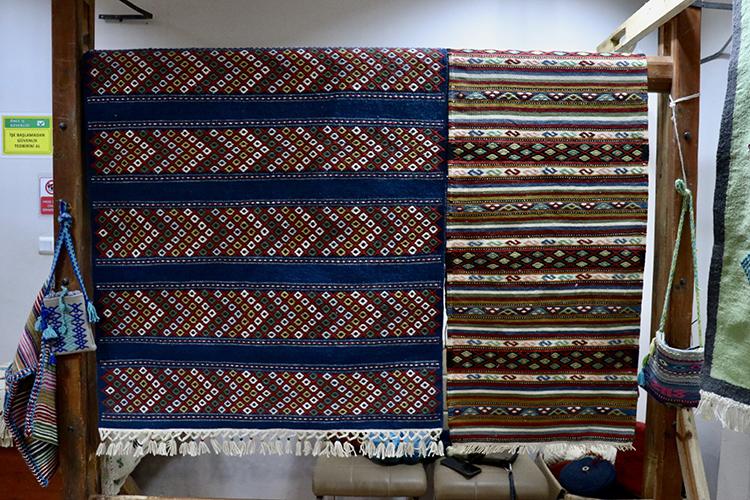
Vezirköprü Tahtaköprü Kilim is a traditional craft produced in the Tahtaköprü region of the Vezirköprü district in Samsun province, Türkiye. Shaped by the region’s cultural heritage, these kilims have been officially registered as a geographical indication. Woven with wool yarn, they attract attention through their aesthetic and functional qualities and reflect the historical and cultural legacy of the local community.
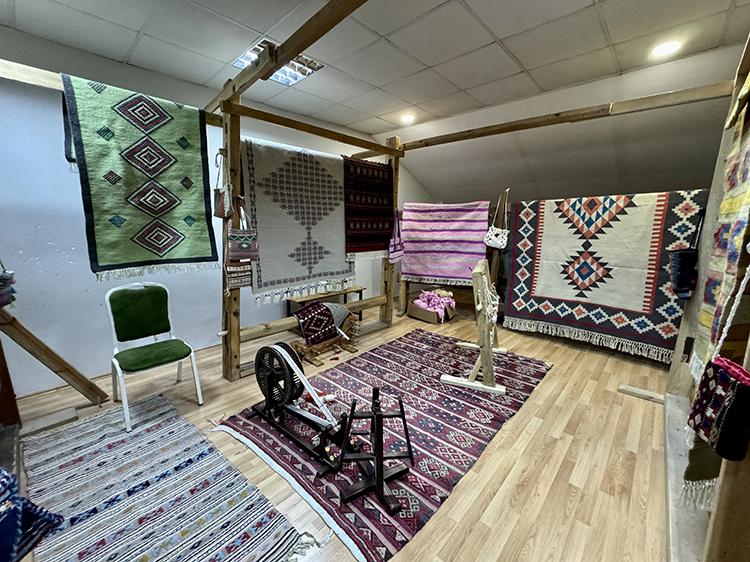
Vezirköprü Tahtaköprü Kilims (AA)
Vezirköprü is a region where weaving is among the oldest known crafts. Surface surveys, particularly at the Tepecik Settlement Site in Adatepe Village, have uncovered artifacts dating to the Bronze Age (3000–1200 BCE), indicating that the local population was deeply engaged in weaving and likely engaged in external trade. This long tradition forms the foundation of the regional identity embodied in the Vezirköprü Tahtaköprü Kilim. 【1】
Vezirköprü Tahtaköprü Kilims are primarily woven using yarn spun from sheep’s wool; goat hair is also used in some cases. Traditionally, the yarn was hand-spun and dyed with root dyes, but today, commercially prepared wool yarn and synthetic dyes are also commonly used. The weaving process is carried out using traditional tools such as the loom, warp, weft, and beater. The loom consists of local components known as mazı, kücü, vargel, and kol. The warp threads are mounted on the loom, the vargel is used to separate the threads, and the mönük—a ball of wool yarn wound by hand—is passed between the warp threads and compacted with the beater. This technique ensures the durability of the kilims and the clarity of their patterns.
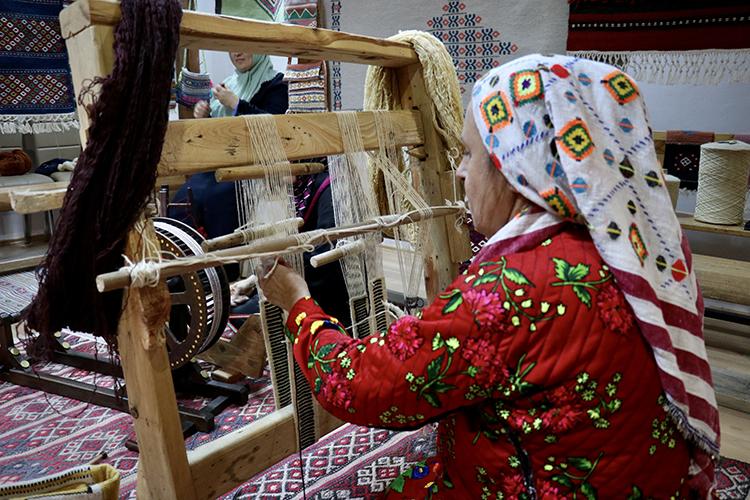
A Woman Weaving a Kilim (AA)
One distinguishing feature of these kilims is their coloring using root dyes derived from plants native to the region, in addition to the use of wool for its thermal insulation properties. Traditionally, red tones dominate, complemented by madder blue, orange, black, and small amounts of green. Additionally, a local variant known as “çöpür kilim” is woven exclusively with goat hair without dye, featuring white patterns on a black background.
Vezirköprü Tahtaköprü Kilims are based on two primary motif styles:
The motifs on the kilims are typically named after elements from nature and local objects. For example, patterns such as “topalca,” “garabel,” “sandık,” “çoban iliği,” “etlik,” “koram,” “sazı,” “kençe,” “kudret nakışı,” “göbek nakışı,” and “arpa dikişi” derive from local flora or daily life. The “kençe” motif, named after a local plant, is associated with an orange-yellow hue. The color palette generally consists of four main colors: kençe color (orange-yellow), gök (navy blue), sarı (light red), and white.
Notable decorative elements include “dört el motifi” (four-hand motif), intricate braided cord embellishments woven with fingers along the edges of sacks and pouches. These motifs enhance both the aesthetic and functional value of the kilims.
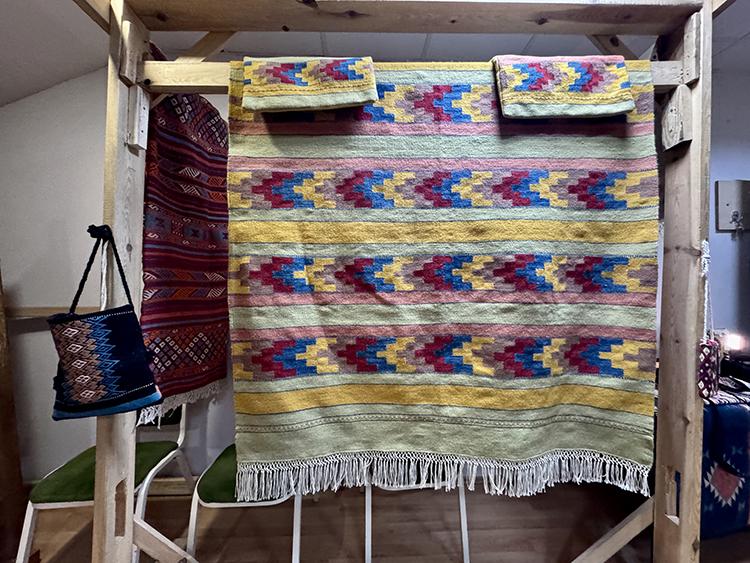
Vezirköprü Tahtaköprü Kilims (AA)
Vezirköprü Tahtaköprü Kilims hold an important place in regional culture due to their versatile applications. They have been used as floor coverings in homes, as part of bridal trousseaux, as decorative elements in guest rooms, as carrying bags (öynük) for transporting food or children to the fields, and as handbags (heybe).
The Vezirköprü Tahtaköprü Kilim was registered as a geographical indication on 25 June 2018 under Law No. 6799 on Industrial Property by the Vezirköprü Municipality. Monitoring is conducted by a control center established under the coordination of the Vezirköprü District Governorate, the Vezirköprü Chamber of Tradesmen and Craftsmen, and community representatives. Annual inspections are carried out, with additional checks performed in cases of suspicion. Inspections verify that the yarn used is wool, that the kilims conform to the two main pattern styles (Classical Vezirköprü and Turkmen), and that the colors and motifs adhere to traditional specifications.
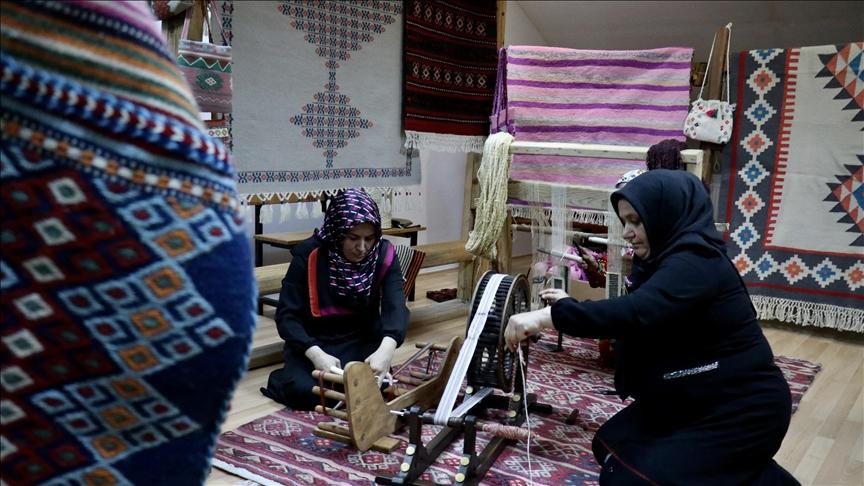
Women Weaving Kilims (AA)
The tradition of producing Vezirköprü Tahtaköprü Kilims is sustained through community education courses. These courses help preserve the continuity of local weaving practices and contribute to the protection of the kilims’ cultural and historical characteristics. While the use of modern materials has simplified production, efforts continue to maintain the original character of the kilims.
Anadolu Ajansı. “Coğrafi işaretli ‘Vezirköprü Tahtaköprü kilimi’ni yaşatmak için çaba gösteriyor.” Accessed July 15, 2025.https://www.aa.com.tr/tr/kultur/cografi-isaretli-vezirkopru-tahtakopru-kilimini-yasatmak-icin-caba-gosteriyor/3398603.
Samsun İl Kültür ve Turizm Müdürlüğü. "Vezirköprü Tahtaköprü Kilimi." Accessed July 15, 2025.https://samsun.ktb.gov.tr/TR-216903/tahtakopru-kilimi.html
Turk Patent and Trademark Office. "Vezirköprü Tahtaköprü Kilimi." *Coğrafi İşaretler Portalı.* Accessed July 15, 2025.https://ci.turkpatent.gov.tr/cografi-isaretler/detay/38588.
[1]
Samsun İl Kültür ve Turizm Müdürlüğü, “Vezirköprü Tahtaköprü Kilimi,” Erişim tarihi 15 Temmuz 2025, https://samsun.ktb.gov.tr/TR-216903/tahtakopru-kilimi.html.

Geographical Indication Type | Mahreç Sign | ||||||||
|---|---|---|---|---|---|---|---|---|---|
Application Date | 25.06.2018 | ||||||||
Registration Number | 477 | ||||||||
Registration Date | 23.12.2019 | ||||||||
Product / Product Group | Rugs and kilims | ||||||||
Province | Samsun | ||||||||
Applicant / Registrant | Vezirköprü Municipality | ||||||||
No Discussion Added Yet
Start discussion for "Vezirköprü Tahtaköprü Carpet" article
History and Cultural Origins
Materials and Production Method
Patterns and Motifs
Uses
Monitoring and Registration
Weaving Today