


This article was automatically translated from the original Turkish version.
+2 More
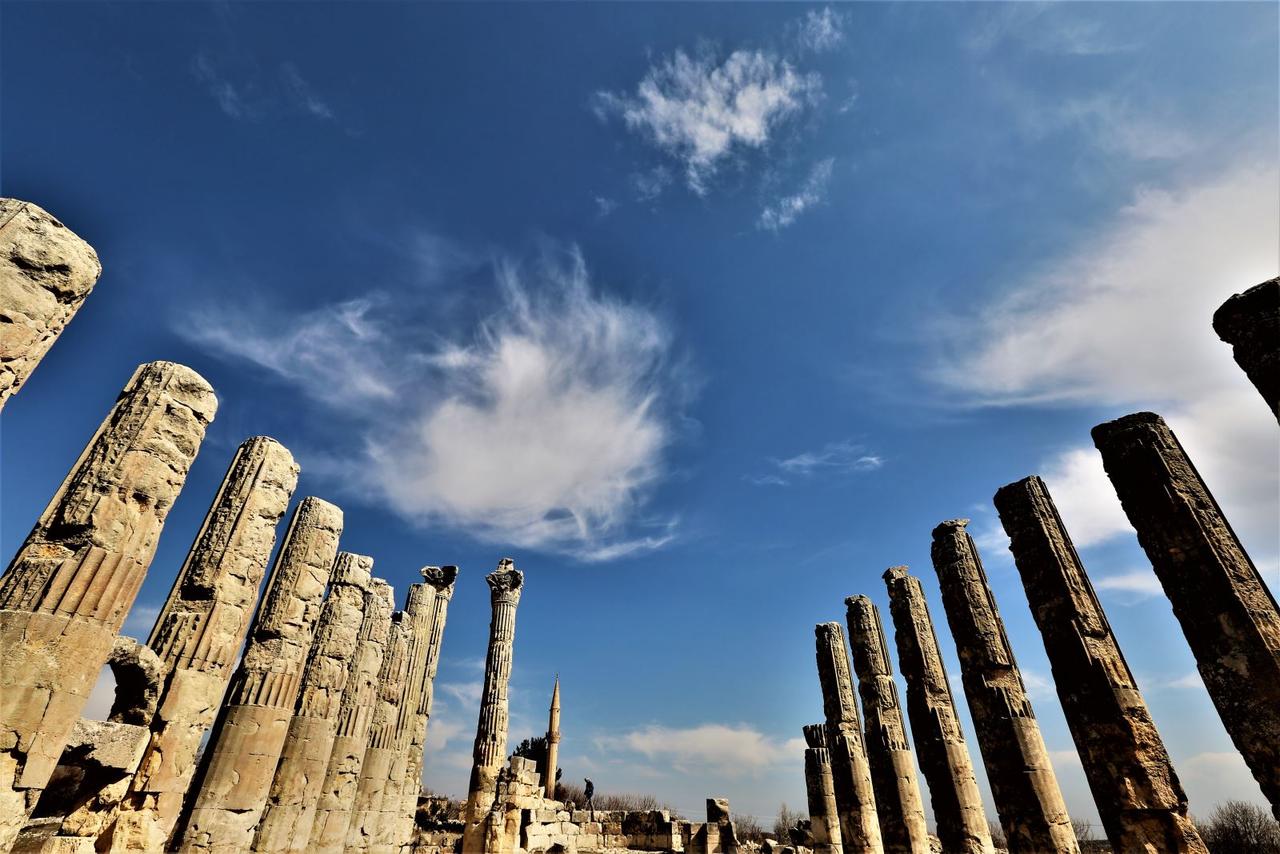
Uzuncaburç (Diokaesareia) Ancient City
Location | Türkiye Silifke Mersin | ||||||||
|---|---|---|---|---|---|---|---|---|---|
Foundation | 3rd century BC (Hellenistic Period) | ||||||||
Roman Period Name | Diokaesareia | ||||||||
Status | right to mint coins Autonomous city | ||||||||
Earliest Structure | Temple of Zeus Olbios | ||||||||
Prominent Structure | Hellenistic Monumental Tomb Necropolis Area Roman Road Hellenistic Tower Ancient Theatre Victory Gate Ceremonial Gate Temple of Tyche Temple of Zeus | ||||||||
Chief Architect/Builder | Tarkyares (Tower) | ||||||||
Touristic Feature | Open for visit year-round, with a trekking trail available | ||||||||
Protection Status | Archaeological Site Area | ||||||||
Uzuncaburç Ancient City is an ancient settlement noted for its structures dating from the Hellenistic period to the present day, located 30 kilometers north of the Silifke district in Mersin Province. During the Hellenistic period, Uzuncaburç functioned as a place of worship subordinate to the Olba Territorium, centered four kilometers to the east. Under the Roman Emperor Vespasian (72 CE), it gained independence and attained the status of an autonomous city under the name Diokaesareia, beginning to mint coins in its own name. After the Byzantine period and the settlement of Turkic peoples in the region, the site acquired its current name, Uzuncaburç, in reference to the prominent tower that served as its symbol.
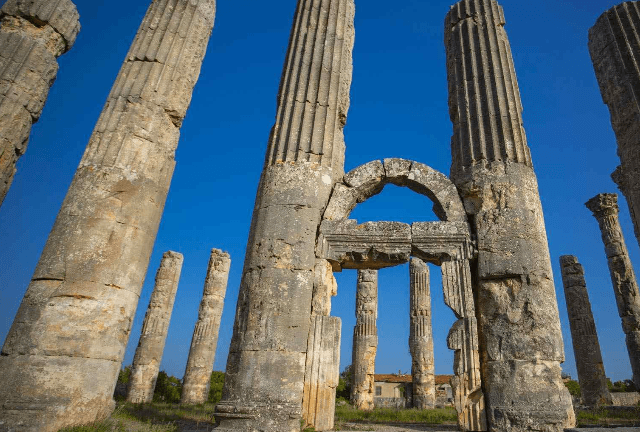
Uzuncaburç Antik Kenti (Turkish Museums)
Uzuncaburç Ancient City was laid out around two main colonnaded streets intersecting at right angles: one oriented east-west and the other north-south. Along these streets were arranged temples, monumental gateways, and other public buildings.
The Ceremonial Gate, located at the eastern end of the east-west street, dates to the 1st century CE. Five of its columns have survived; each column is seven meters high with a diameter of one meter and features a Corinthian capital. It is believed that statues once stood on consoles projecting from the column shafts.
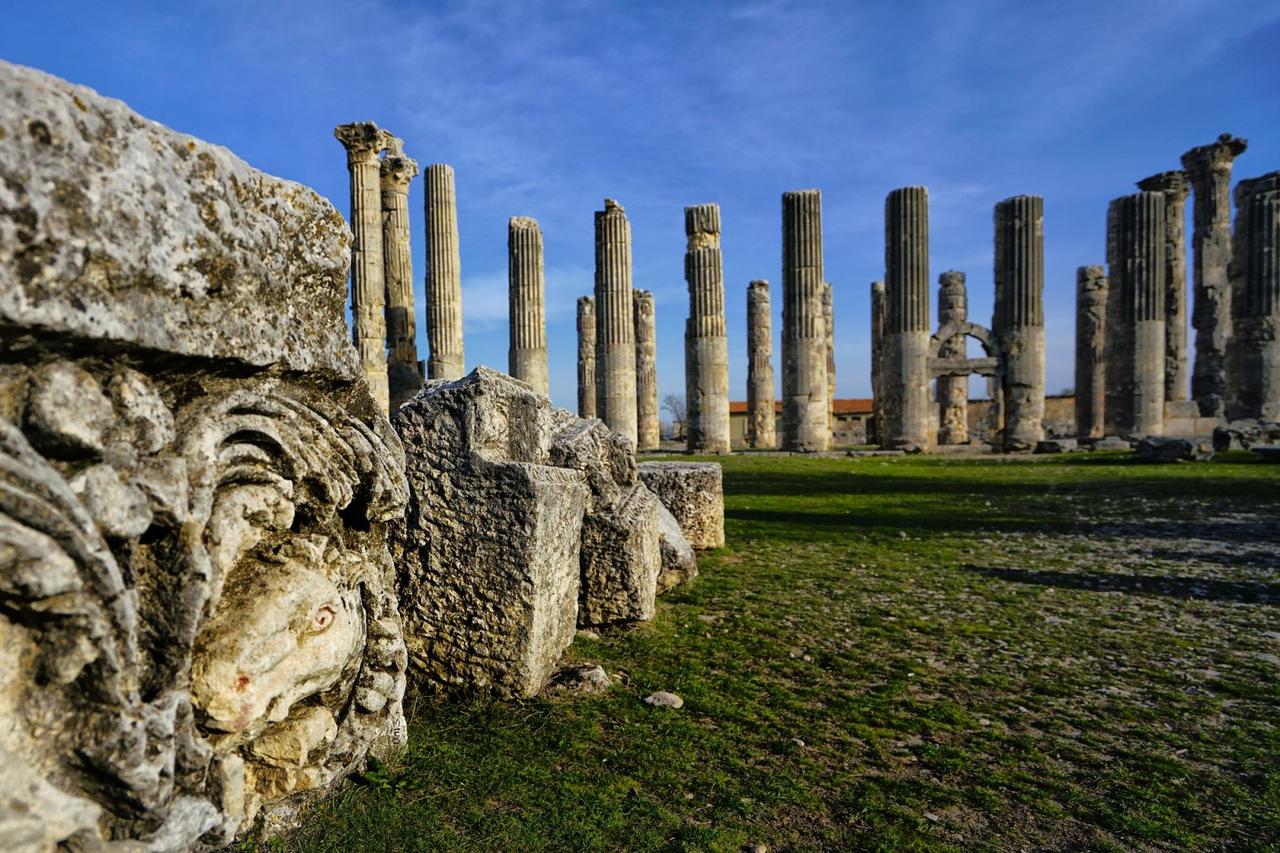
Uzuncaburç Antik Kenti (Kültür Portalı)
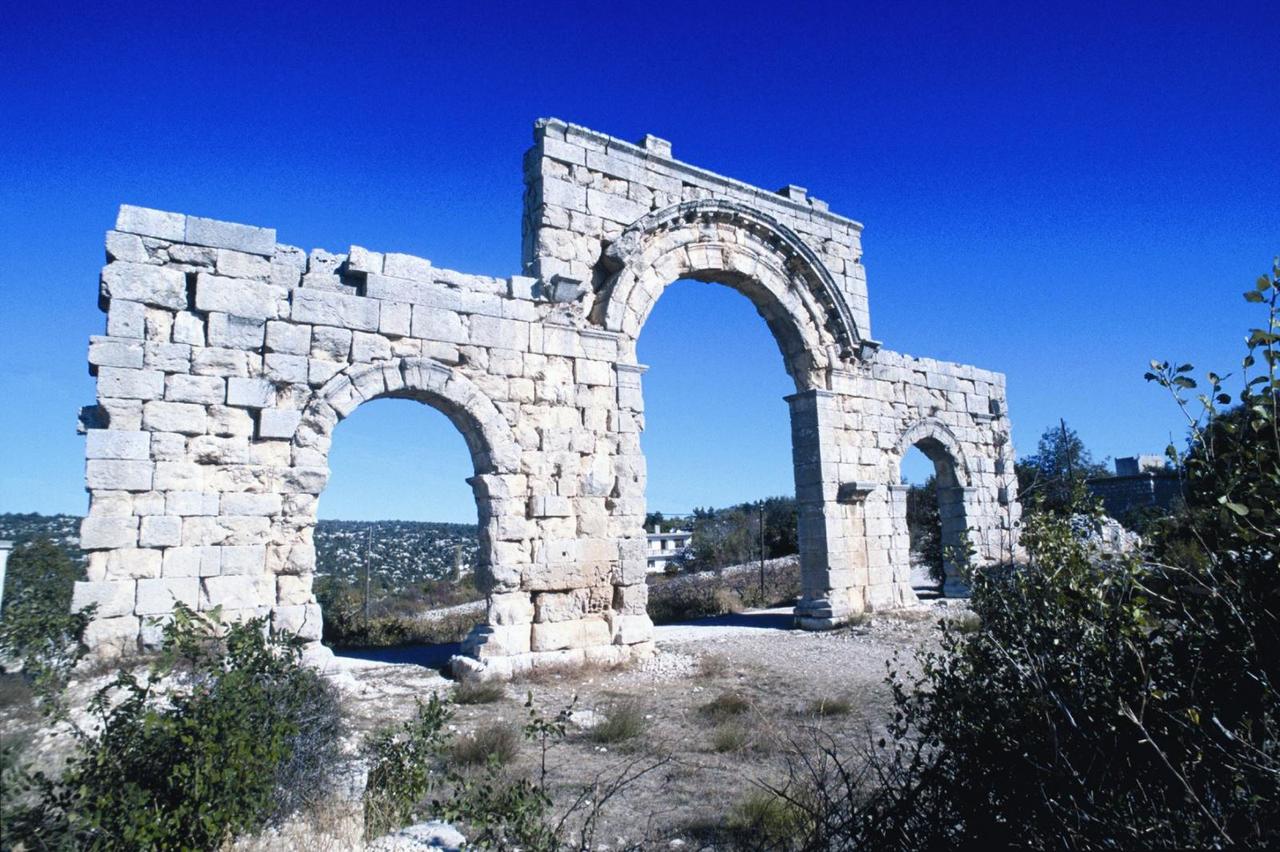
The Triumphal Gate, situated along the north-south street, is a monumental structure featuring a large central arch flanked by two smaller side arches. An inscription on the gate indicates that it was repaired during the reigns of the Roman Emperors Arcadius (395–408 CE) and Honorius (395–423 CE) following an earthquake.
One of the earliest structures in the city, the Temple of Zeus Olbios was likely constructed in the 3rd century BCE by King Seleucus I Nicator of the Seleucid dynasty. The peripteral temple is surrounded by 36 Corinthian columns on all four sides. During the Hellenistic period, it served as the region’s religious center and was converted into a Christian church in the 5th century CE under the influence of Christianity. The cella was demolished, the intercolumnar spaces were walled up, doors were added, and an apse was constructed on the eastern side.
An inscription on the city walls mentioning the name of Seleucus Nicator in connection with the repair of the temple’s roof confirms its status as a sacred site during the Hellenistic period.
Located at the end of the Colonnaded Street, the Temple of Tyche was built in the second half of the 1st century CE. An inscription on the structure reveals that it was commissioned and donated to the public by Oppius and his wife Kyria, prominent citizens of the city. The building, with six standing columns, was dedicated to Tyche, the goddess of fortune.
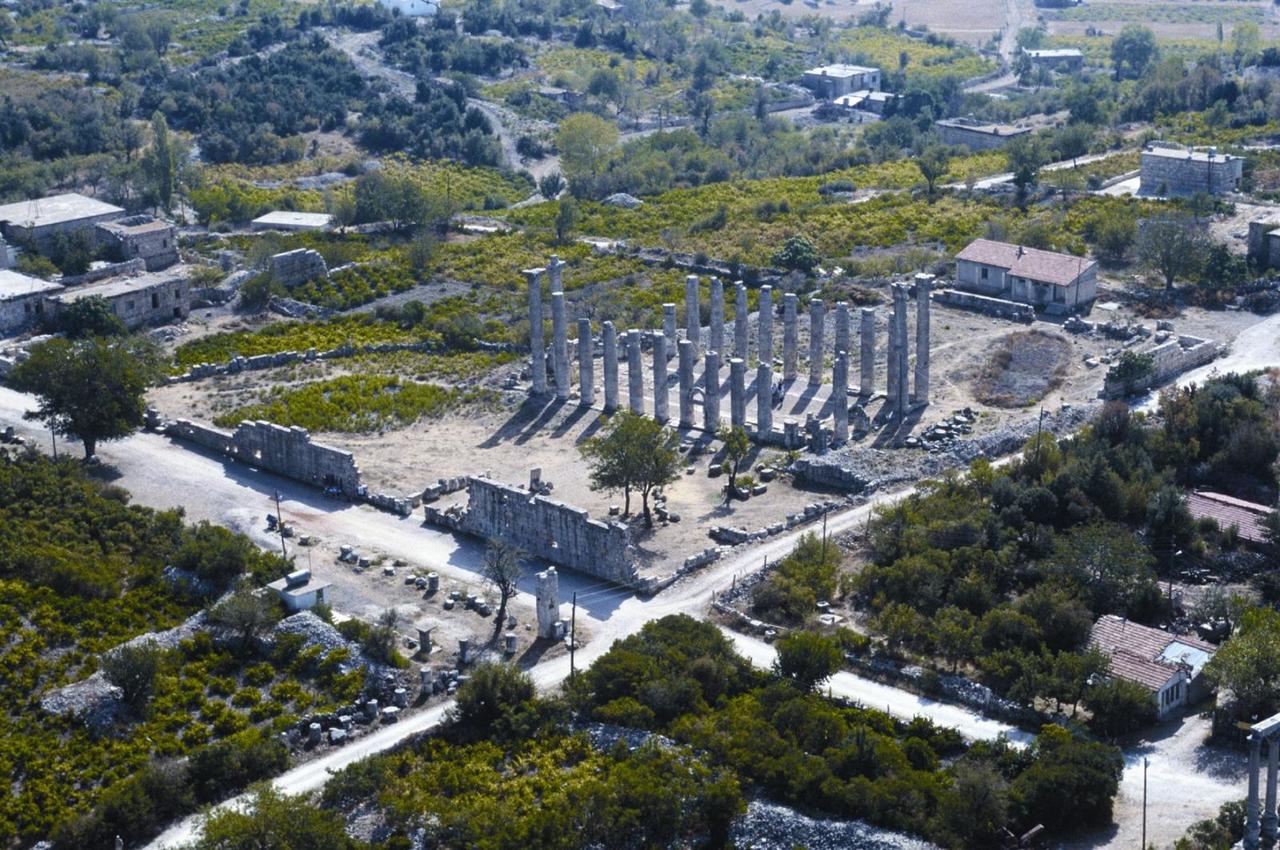
Uzuncaburç Antik Kenti (Kültür Portalı)
The ancient theatre in the city was constructed in the second half of the 2nd century CE during the reigns of the Roman Emperors Marcus Aurelius (161–180 CE) and Lucius Verus (161–169 CE). The structure, with a capacity of 3,000 spectators, is well preserved. The stage building is two stories high, but its upper portion was destroyed by an earthquake. The theatre was restored between 2021 and 2023 under a project supported by the Turkish Ministry of Culture and Tourism.
Uzuncaburç Antik Kenti (Kültür Portalı)
Situated on a high hill south of the ancient settlement, the Hellenistic Monumental Tomb is a square-plan structure measuring 5.5 x 5.5 meters and standing 15 meters tall with a pyramidal roof. Built in the Doric order, it is believed to have been constructed for a member of the Seleucid dynasty or a ruler of the Kingdom of Olba.
Located in the northeastern section of the city walls, the Hellenistic Tower has a base measuring 16 x 13 meters and rises 23 meters in height across five stories. Each story is internally subdivided into compartments. The tower served not only as a residence for officials but also as a refuge for the population during emergencies and as a secure location for the city’s treasury. An inscription above the entrance indicates that it was built in the second half of the 3rd century BCE by Tarkyares. After suffering damage from fire, it was repaired at the end of the 3rd century CE by the governor Petronius Faustinus. This tall structure is the origin of the city’s modern name, Uzuncaburç.
An ancient fountain structure stands along the street leading to the Temple of Zeus. Archaeological investigations in the city have uncovered a Roman road approximately one kilometer in length, shedding light on the region’s ancient transportation network.
The city’s necropolis extends along both slopes of a valley to the north. The area was continuously used during the Hellenistic, Roman, and Byzantine periods. Among the burial types found here are rock-cut tombs and various forms of burial structures.
As of 2021, restoration and survey projects led by Associate Professor Dr. Ümit Aydınoğlu of the Archaeology Department of Mersin University, and supported by the Turkish Ministry of Culture and Tourism, have been initiated. Projects have been developed for the ancient theatre, the Hellenistic Tower, and the Temenos Wall, with restoration work beginning at the theatre and subsequently completed. Eleven houses in the area have been expropriated and will be repurposed for tourism, including as boutique hotels, exhibition spaces, and cafés.
Uzuncaburç Ancient City is a cultural heritage site visited year-round by both domestic and international tourists. The planned destination project will offer visitors opportunities to explore the ancient city, stay in bungalow accommodations, walk along the Roman road (trekking), and visit nearby sites such as Narlıkuyu. Environmental and infrastructure improvements are ongoing to enhance the site’s tourism appeal.
Anadolu Ajansı. "Mersin'deki Uzuncaburç Antik Kentinin 2 Bin 300 Yıllık Tarihi Özel Restorasyonla Yansıtılacak." Accessed May 1, 2025.https://www.aa.com.tr/tr/kultur-sanat/mersindeki-uzuncaburc-antik-kentinin-2-bin-300-yillik-tarihi-ozel-restorasyonla-yansitilacak/2146430
T.C. Kültür ve Turizm Bakanlığı. “Diokaesareia (Uzuncaburç).” Kültür Portalı. Accessed May 1, 2025.https://www.kulturportali.gov.tr/turkiye/mersin/gezilecekyer/diokaesareia-uzuncaburc
Turkish Museums. "Mersin Uzuncaburç Örenyeri." T.C. Kültür ve Turizm Bakanlığı. Accessed May 1, 2025.https://turkishmuseums.kprod.kultur.gov.tr/museum/detail/2167-mersin-uzuncaburc-orenyeri/2167/1

Uzuncaburç (Diokaesareia) Ancient City
Location | Türkiye Silifke Mersin | ||||||||
|---|---|---|---|---|---|---|---|---|---|
Foundation | 3rd century BC (Hellenistic Period) | ||||||||
Roman Period Name | Diokaesareia | ||||||||
Status | right to mint coins Autonomous city | ||||||||
Earliest Structure | Temple of Zeus Olbios | ||||||||
Prominent Structure | Hellenistic Monumental Tomb Necropolis Area Roman Road Hellenistic Tower Ancient Theatre Victory Gate Ceremonial Gate Temple of Tyche Temple of Zeus | ||||||||
Chief Architect/Builder | Tarkyares (Tower) | ||||||||
Touristic Feature | Open for visit year-round, with a trekking trail available | ||||||||
Protection Status | Archaeological Site Area | ||||||||
No Discussion Added Yet
Start discussion for "Uzuncaburç (Diokaesareia) Ancient City" article
Urban Planning and Street System
Ceremonial Gate
Triumphal Gate
Religious Structures
Temple of Zeus (Olbios)
Temple of Tyche
Theatre
Hellenistic Monumental Tomb
Hellenistic Tower
Monumental Fountain and Roman Road
Necropolis Area
Restoration and Conservation Efforts
Tourism and Environmental Planning