This article was automatically translated from the original Turkish version.
Type of Geographical Indication | Mahreç Sign | ||||||||
|---|---|---|---|---|---|---|---|---|---|
Registration Number | 1188 | ||||||||
Registration Date | 04.08.2022 | ||||||||
Product / Product Group(s) | Other Products | ||||||||
Province(s) | Uşak | ||||||||
Applicant/Registrant(s) | Uşak Chamber of Commerce and Industry | ||||||||
Poppy seed paste (Papaver somniferum) is a product obtained by harvesting, cleaning, roasting, cooling, and grinding poppy seeds in stone mills. Two different types of poppy seeds are used in production: yellow and blue (referred to as “black” within the geographical boundary). This product holds an important place in the culinary culture and economy of Uşak province and is strongly associated with the region; as a result, it was registered as a geographical indication on 04.08.2022. One of its distinguishing features is that no additives, fillers, or preservatives other than poppy seeds are used in its production.
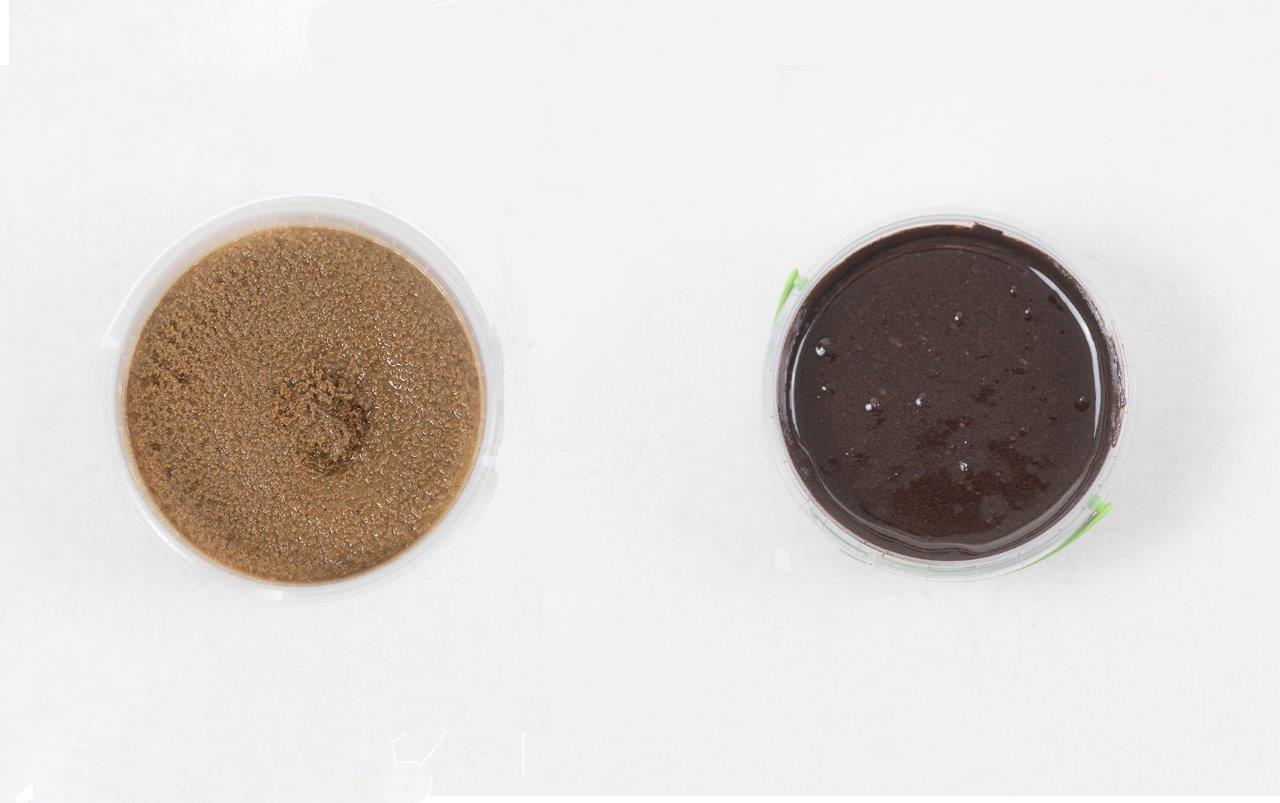
Uşak poppy seed paste is produced in two different forms depending on the type of poppy seed used. The paste made from yellow poppy seeds has an oil content of approximately 35–40%, causing it to form a paste-like consistency during milling. This type of paste has a slightly rough surface and a brown color. It is typically used as a flavoring agent in flour-based products such as pastries andböreks at a ratio of 1–5%.
The paste produced from blue (black) poppy seeds has a higher oil content, exceeding 40% by weight. It is less fluid than the yellow variety. Due to its very dark color, it is known locally as black poppy. This type of paste is generally preferred for breakfast and is consumed mixed with honey or grape molasses.
In the production of Uşak poppy seed paste, poppy seeds grown within the designated geographical boundary are preferably used. The production process consists of the following stages:
The geographical boundary for Uşak poppy seed paste is Uşak province. Due to the product’s long-standing historical roots and its significance in the regional culinary culture and economy, all stages of production must take place within this defined geographical area.
The monitoring of Uşak poppy seed paste is carried out by a three-member oversight body established under the coordination of the Uşak Chamber of Commerce and Industry. The oversight body includes one expert each from Uşak University’s Department of Food Engineering, the Uşak Provincial Directorate of Agriculture and Forestry, and the Uşak Chamber of Commerce and Industry.
Inspections are conducted regularly once a year, and additionally whenever necessary or in response to complaints. The following aspects are inspected:
The oversight body may utilize experts from public or private institutions or hire services from individuals or legal entities affiliated with such institutions. The registering institution is responsible for ensuring the protection of legal rights.
Turk Patent and Trademark Office. "Uşak Haşhaş Ezmesi Sicil Belgesi." Accessed October 25, 2025. https://ci.turkpatent.gov.tr/Files/GeographicalSigns/a56d53f2-164c-4937-abdc-c178e3a15520.pdf
Türk Patent ve Marka Kurumu. "Uşak Haşhaş Ezmesi." Coğrafi İşaretler Portalı. Accessed October 25, 2025. https://ci.turkpatent.gov.tr/cografi-isaretler/detay/3326

Type of Geographical Indication | Mahreç Sign | ||||||||
|---|---|---|---|---|---|---|---|---|---|
Registration Number | 1188 | ||||||||
Registration Date | 04.08.2022 | ||||||||
Product / Product Group(s) | Other Products | ||||||||
Province(s) | Uşak | ||||||||
Applicant/Registrant(s) | Uşak Chamber of Commerce and Industry | ||||||||
Product Characteristics
Production Method
Geographical Boundary
Monitoring