


This article was automatically translated from the original Turkish version.
Unsupervised learning is a branch of machine learning that aims to enable models to learn patterns in data without the use of labeled data. In this approach, the model uses only input data to cluster, group, or structure the information. Unsupervised learning is particularly useful when working with large unlabeled datasets and is commonly employed to uncover hidden structures and relationships within data. The most common unsupervised learning techniques include clustering and dimensionality reduction.
In unsupervised learning, the model does not require information about whether data is correctly or incorrectly labeled. This method typically adopts an exploratory approach to discover patterns and relationships within the data. For example, a clustering algorithm groups data points into different categories based on similar characteristics.
Unsupervised learning is commonly used in the following areas:
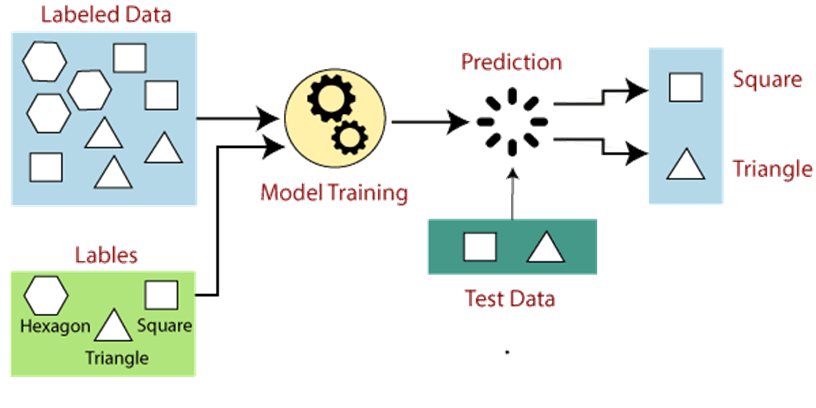
Denetimsiz Öğrenme
【1】
Unsupervised learning is a powerful branch of machine learning with broad applications for uncovering hidden structures in data. Techniques such as clustering, dimensionality reduction and anomaly detection like are of great research and industrial importance. The flexibility offered by working with unlabeled data makes this field indispensable to the machine learning community.
Alpaydin, Ethem. Introduction to Machine Learning. 3rd ed. Cambridge: MIT Press, 2014.
Bishop, Christopher M. Pattern Recognition and Machine Learning. New York: Springer, 2006.
Hastie, Trevor, Robert Tibshirani, and Jerome Friedman. The Elements of Statistical Learning: Data Mining, Inference, and Prediction. New York: Springer, 2009.
[1]
Accessed November 26, 2025.

No Discussion Added Yet
Start discussion for "Unsupervised Learning" article
Core Concepts
Applications
Common Unsupervised Learning Methods
Advantages and Challenges