

`dimensionality-reduction` Related Article Results
 Un
UnUnsupervised Learning
Unsupervised learning is a branch of machine learning that aims to enable models to learn patterns in data without the use of labeled data. In this approach, the model uses only input data to cluster, group, or structure the information. Unsupervised learning is particularly useful when working with large unlabeled datasets and is commonly employed to uncover hidden structures and relationships within data. The most common unsupervised learning techniques include clustering and dimensionality re
EN
Ahsen Güneş
Autoencoder
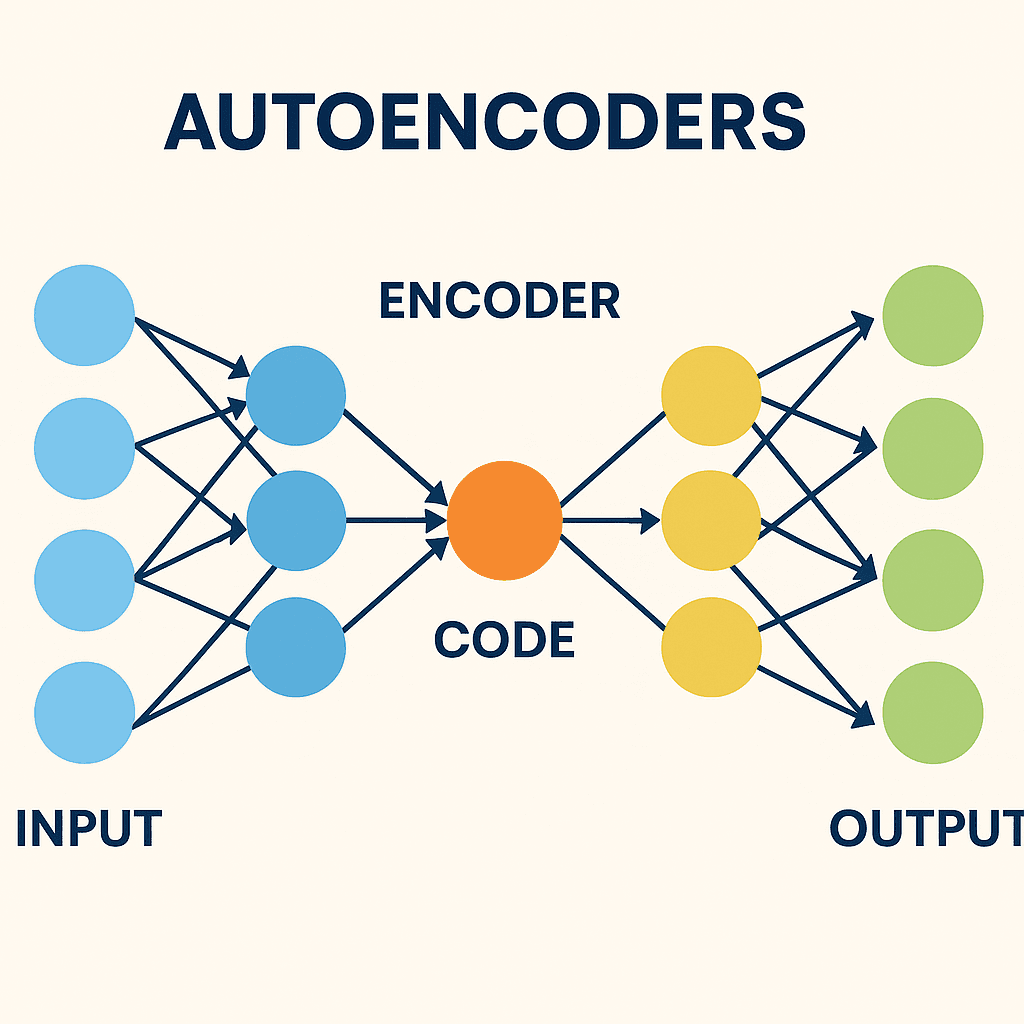
Autoencoders are a type of artificial neural network based machine learning method that learns by compressing input data into a lower-dimensional meaningful representation and reconstructing the input from this representation. First introduced in the 1980s, autoencoders operate within the framework of unsupervised learning and aim to learn important features within the data to construct a low-dimensional representation. In this architecture where input and output data are identical, the training
EN
Gülçin Özer
UnUnsupervised Learning
Unsupervised learning is a branch of machine learning that aims to enable models to learn patterns in data without labeled examples. In this approach, the model uses only input data to classify, group, or structure information. Unsupervised learning is particularly useful when working with large datasets that lack labels. It is employed to uncover hidden structures and relationships within data sets. The most common unsupervised learning techniques include clustering and dimensionality reduction
EN
Ahsen Güneş
PrPrincipal Component Analysis
Principal Component Analysis (PCA) is a transformation technique that reduces the dimensions of datasets containing many interrelated variables while preserving as much of the variation within the data as possible. These studies were first initiated by Karl Pearson in 1901 and later developed by Hotelling in 1933. The goal is to find the optimal transformation that allows the data to be represented using fewer variables. The variables obtained after transformation are called principal components
EN
Sertaç Arısoy
Autoencoder
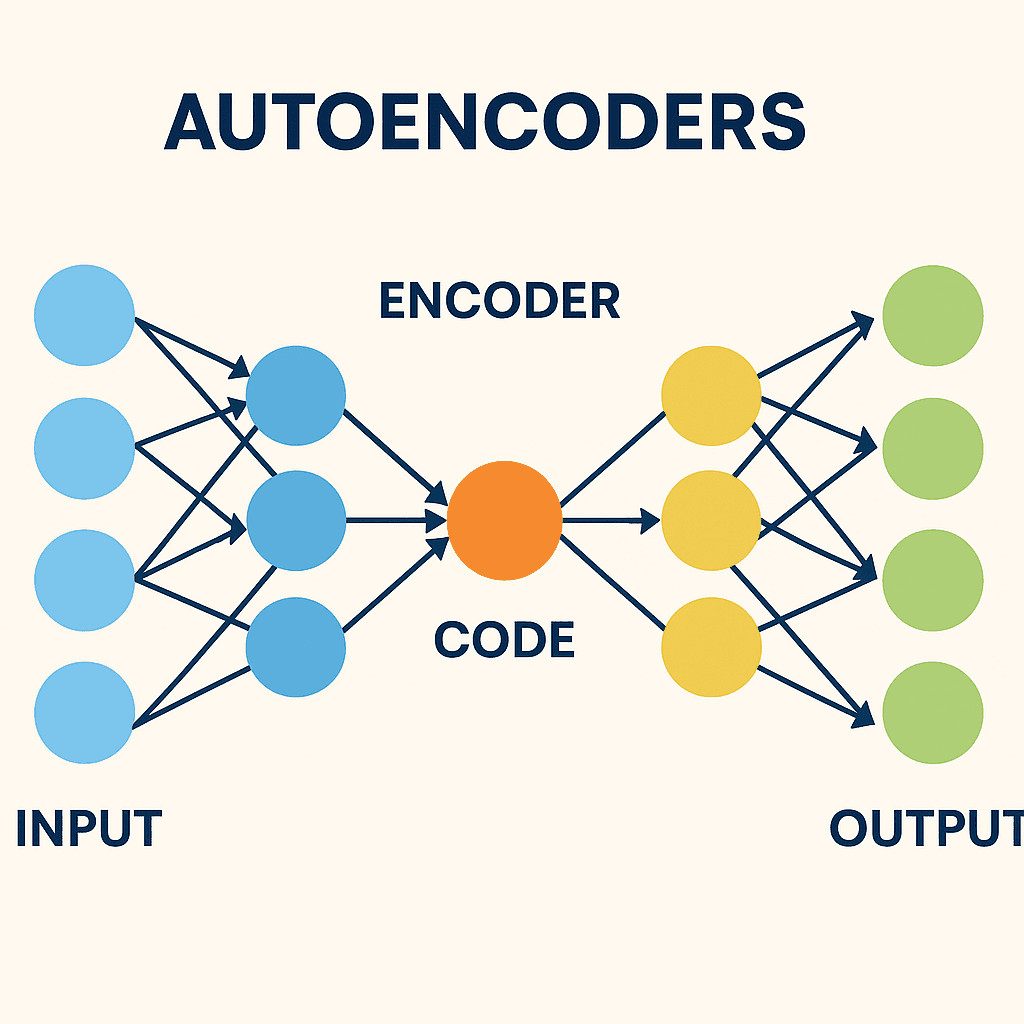
Autoencoders are a machine learning method based on artificial neural networks that learn by compressing input data into a lower-dimensional, meaningful representation and reconstructing the input from this representation. First introduced in the 1980s, autoencoders operate within the framework of unsupervised learning, with the primary goal of learning important features within the data to construct a low-dimensional representation. In this architecture, where input and output data are identica
EN
Gülçin Özer