


This article was automatically translated from the original Turkish version.
+1 More
Sea Lettuce, known scientifically as Ulva lactuca, a species belonging to the phylum Chlorophyta, is an edible macroalga commonly found along the coasts of the Mediterranean Sea.
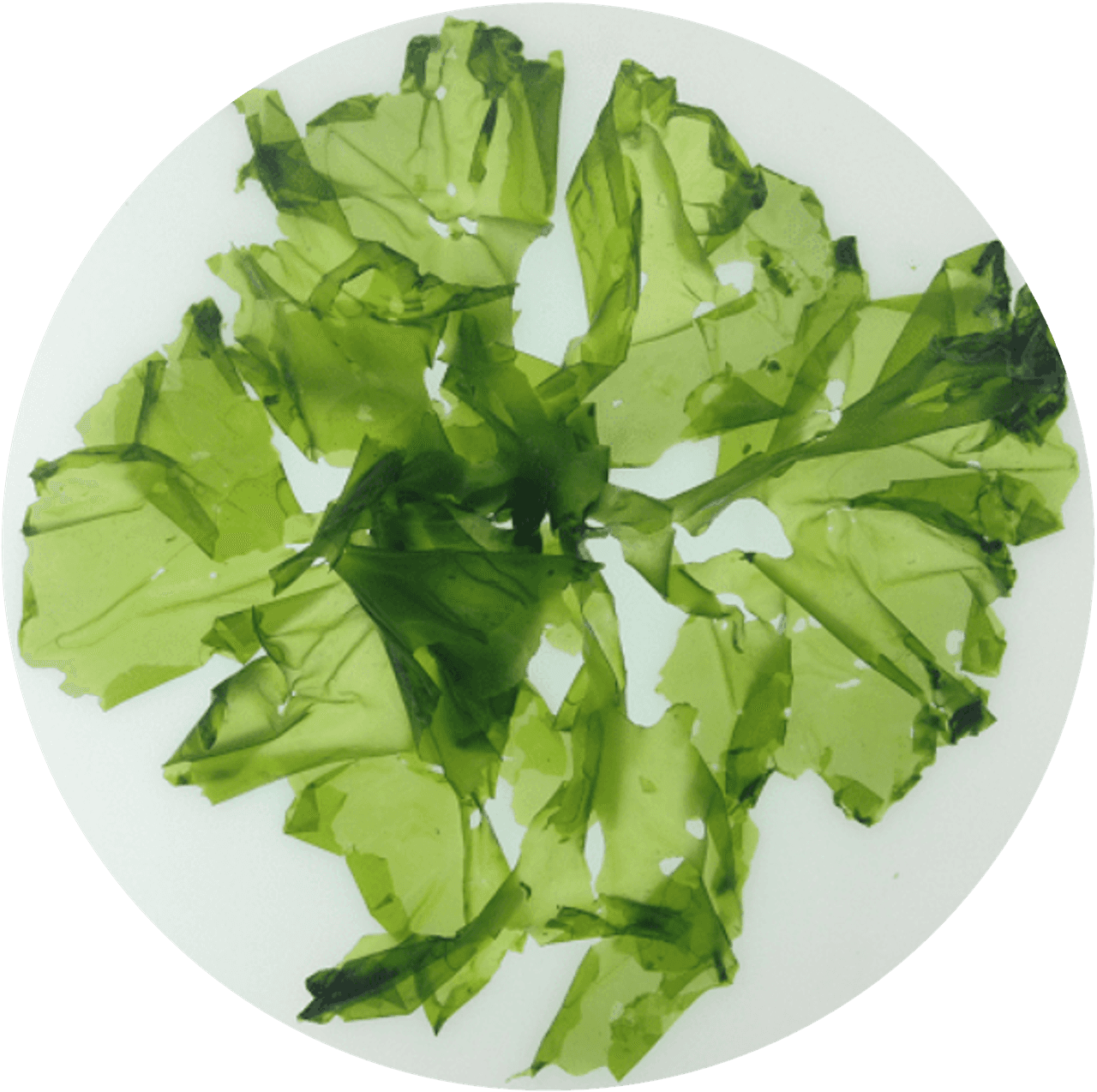
A section of Ulva lactuca. (Source: Liu, J. "Species identification of epizoans from Ulva Lactic in Zhoushan sea area by using the DNA barcode technology". Marine Environmental Sciences, Vol:39, No:6. 2020.)
Ulva lactuca has the capacity to reproduce through two distinct methods: sexual reproduction and thallus fragmentation, a rare trait among macroalgae. However, this characteristic negatively impacts the biological diversity of Ulva lactuca and causes it to rapidly cover the sea surface.
Ulva lactuca is reported to contain high levels of carbohydrates (up to 60%) and protein (10–47%). It is also known to contain lipids in the range of 1–3% and minerals in the form of ash between 7–38%.
The growing interest in macroalgae for human nutrition stems from their high concentrations of minerals such as calcium, magnesium and potassium, as well as their content of glutamic acid, which makes them useful as flavor enhancers. In addition, algae are considered a largely unexplored source of bioactive compounds for pharmaceutical products. Algal polysaccharides, pigments, proteins, amino acids and phenolic compounds have been reported to function as bioactive molecules that support health and prevent disease, and they show increasing potential for use in the pharmaceutical industry.
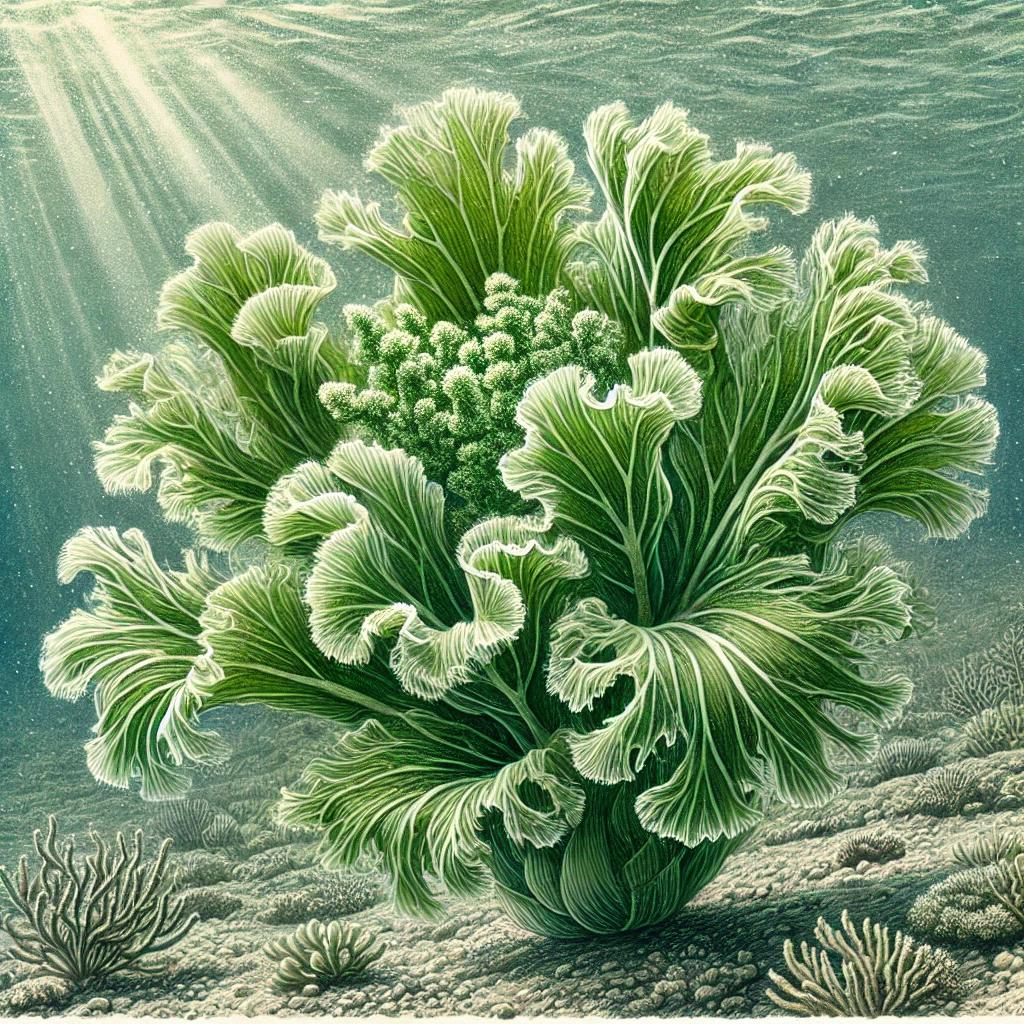
An AI-generated image of Ulva lactuca.
Ulvan is a sulfated polysaccharide found within the cell walls of Ulva, constituting approximately 9–36% of its dry weight. Its main components include sulfated rhamnose, uronic acids and xylose, distinguishing it from other polysaccharides due to its rhamnose and iduronic acid content. Ulvan’s repeating disaccharide structures have the ability to modulate processes carried out by mammalian polysaccharides, giving it applications in biomaterial science (wound dressings, tissue engineering), nutraceuticals (antiviral, antioxidant, anticancer), functional foods and various agricultural uses.
In conclusion, Ulva lactuca is a macroalgal species of significant ecological and economic importance. Furthermore, its potential in biotechnological and industrial applications has made it an important resource for developing sustainable solutions. Therefore, increasing scientific research on Ulva lactuca will enhance the understanding of its environmental and commercial benefits.
Dominguez, H., and E. P. Loret. "Ulva lactuca, a Source of Troubles and Potential Riches." Marine Drugs 17 (2019): 357.
Kharkwal, H. "Algae: Future Drugs." Asian Journal of Pharmaceutical and Clinical Research 5, no. 4 (2012).
Kidgell, J. T., and M. Magnusson. "Ulvan: A Systematic Review of Extraction, Composition and Function." Algal Research 39 (2019): 101422.
Kraan, S. "Pigments and Minor Compounds in Algae." In Functional Ingredients from Algae for Foods and Nutraceuticals, 205–251. 2013.
Madany, M. A., and M. S. Kareem. "The Biopolymer Ulvan from Ulva fasciata: Extraction Towards Nanofibers Fabrication." International Journal of Biological Macromolecules 177 (2021): 401–402.
Mo'o, F. R. C., G. Wilar, H. P. Devkota, and N. Wathoni. "Ulvan, a Polysaccharide from Macroalga Ulva sp.: A Review of Chemistry, Biological Activities and Potential for Food and Biomedical Applications." Applied Sciences 10, no. 16 (2020): 5488.

General Information
Structure
Ulvan Extraction from Ulva lactuca