


This article was automatically translated from the original Turkish version.
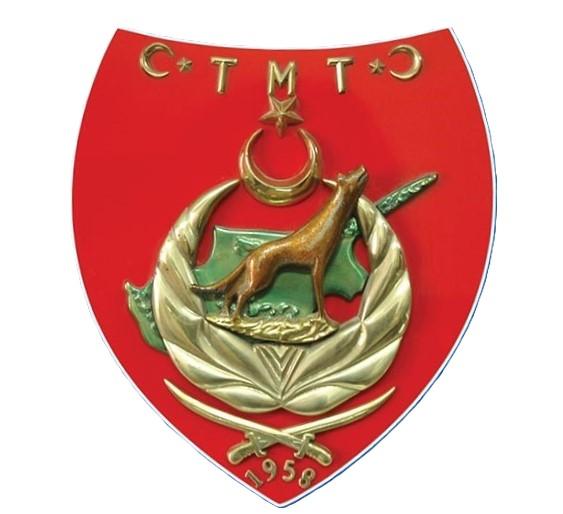
Türk Mukavemet Teşkilatı Arması
Turkish Resistance Organization Emblem
Establishment | 1957-11-15 | ||||||||
|---|---|---|---|---|---|---|---|---|---|
Place of Establishment | Lefkoşa, Cyprus | ||||||||
Founders | Rauf Denktaş Kemal Tanrısevdi Dr. Burhan Nalbantoğlu | ||||||||
Purpose of Establishment | To defend and preserve the Cypriot Turkish people against EOKA terrorism | ||||||||
Organizational Structure | Cellular structure (five-member system), district-based military organization | ||||||||
Date of Abolishment | 1976-06-01 | ||||||||
Successor Institution | Command of Security Forces (GKK) | ||||||||
Turkish Resistance Organization (TMT) is an underground resistance and security organization established between 1957 and 1976 to defend the Turkish Cypriot community against EOKA terrorism and Greek-sponsored Enosis aspirations. Its structure and function hold historical significance both as a defensive mechanism and as a vehicle for fostering national consciousness within the political and military context of the era.
Cyprus’s geopolitical position has for centuries made it one of the most strategic points in the Eastern Mediterranean. Since the Ottoman Empire’s conquest of the island in 1571, the Turkish population became permanent and lived alongside Greek Orthodox Christians under the millet system. Following the 1878 Treaty of Berlin, the island was placed under British administration and unilaterally annexed by Britain in 1914.
During this period, the Greek Cypriot demand for Enosis (union with Greece), aligned with the Megali Idea, gained increasing strength. The 1931 Greek Cypriot uprising marked the first time this aspiration became mass-based. With support from the Church of Cyprus and parties such as AKEL, Enosis propaganda became systematic; in the 1950 referendum, 96 percent of the Greek Cypriot community voted in favor of Enosis. However, Turkish Cypriots did not participate in this vote, and the results effectively transformed the Greek Cypriot desire for Enosis into a factual pressure campaign.
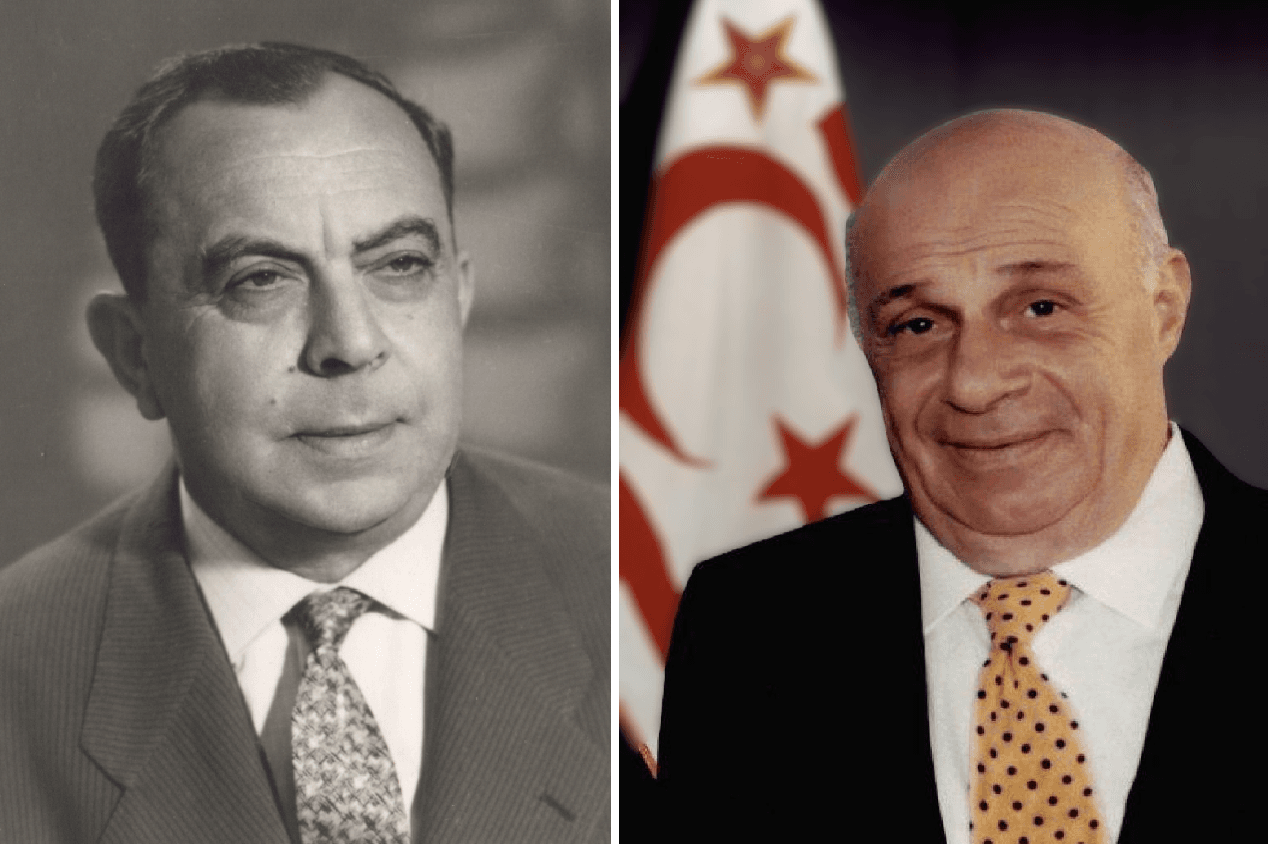
Dr. Fazıl Küçük and Rauf Denktaş (Dr. Fazıl Küçük Foundation - TCRM Presidency)
The developments in Cyprus during the 1950s led to the politicization and organization of Turkish Cypriots as well as Greek Cypriots. Dr. Fazıl Küçük’s newspaper “Halkın Sesi” and the “Cyprus is Turkish Party” represented the first political defense responses of the Turkish community. However, these initiatives were effective only at the political and cultural levels; there was no armed force to protect the population’s security.
In 1955, EOKA, founded in Athens under the leadership of Colonel Georgios Grivas, launched armed attacks against British rule on 1 April 1955. Although initially targeting British military presence, EOKA quickly shifted its focus to Turkish Cypriots and those opposing Enosis. Turkish villages were raided, bridges and shops were sabotaged. EOKA declared anyone resisting Enosis an enemy, thereby escalating ethnic conflict on the island.
During this period, Turkish Cypriots established numerous local resistance groups to protect themselves:
However, these groups were ineffective against EOKA due to logistical deficiencies, fragmentation, and lack of professional command. Moreover, the British administration occasionally applied pressure against these organizations.
In response to these developments, a secret meeting was held in Nicosia in November 1957. Attended by Dr. Burhan Nalbantoğlu, Rauf Denktaş, Kemal Tanrısevdi, and several retired officers, the meeting resolved to establish a professional, centralized, and disciplined resistance organization capable of defending the Turkish Cypriot community. Thus, the “Turkish Resistance Organization” was formally established.
During its founding phase, the following core principles were established:
The most important characteristic of the founding cadre was their strong connections to Türkiye and their deep familiarity with the island’s social structure. The organization, initially beginning with a limited number of volunteers, rapidly expanded beyond Nicosia.
Türkiye did not directly participate in the founding of the TMT, but from 1958 onward it became an active participant in the process. In the summer of 1958, officers from the Mobilization Research Board (MRB) secretly crossed into Cyprus, restructured the existing organization, and transformed it into an irregular military operation. Turkish officers were placed in the upper echelons of command, and logistical support—including weapons, training, and communications—was provided.
Alongside this centralized structure, the following were established:
From its founding until 1976, the organization evolved through distinct phases, simultaneously pursuing military and political objectives. The TMT’s structure can be examined in three main periods: the indigenous organization phase (1957–1958), the reorganization under direct Turkish assistance (1958–1963), and the transition to a military structure and territorial organization after 1964.
The founding philosophy of the TMT was based on maximum secrecy and security. To this end, a cell-based structure was adopted. Each cell consisted of five members who knew only one another. Each cell communicated exclusively with a single superior unit. This ensured internal security: if one cell was compromised, the rest of the organization remained unaffected. This system became known as the five-member cell system.

A Female Fighter Training (Mavi Vatan)
In the initial organizational phase, mythological Turkish concepts were employed: leaders were called “bozkurt,” cell members “arı,” cell leaders “oğul beyi,” central hubs “kovan,” and cells “petek.” This conceptual framework provided moral reinforcement to members and enhanced militaristic motivation through secrecy.
Following Türkiye’s reorganization of the TMT from 1958 onward, the organization was restructured according to irregular warfare principles and organized into a military framework covering the entire island. During this period, the TMT divided the island into six major regions (sancağı):
Each sancağı was structured as a regional military unit under the command of a “Sancaktar” (sancağı commander). Beneath these sancağıs, a hierarchical structure extended down to the district, village, and neighborhood levels. The sancağı organization comprised the following subordinate units:
The highest level of TMT leadership was the Central Headquarters, which from 1958 onward was managed by a Turkish officer sent from Türkiye. This commander was given the codename “Bozkurt,” and his identity was kept under absolute secrecy. The Bozkurt reported directly to the Mobilization Research Board (MRB) in Ankara.
The Central Headquarters oversaw all sancağıs and consisted of the following departments:
The distinguishing feature of the TMT compared to other armed underground organizations was that its command structure operated in full alignment with the regular army system. The headquarters not only issued orders but also assumed responsibilities for coordination, training oversight, and political strategy development.
Before joining the TMT, members took an oath of secrecy and loyalty. Each member’s identity was protected by a code name; only the upper command knew their real identity. Personnel serving in sancağıs were required to carry a “character certificate” and a “secrecy certificate.” Internal disciplinary measures could be applied to those violating regulations. This ensured both organizational security and public trustworthiness.
The TMT was not merely a military resistance organization; it also constituted the core of the civil administrative structure. Especially after 1963, when Greek Cypriot attacks forced Turkish Cypriots into ghettos, the TMT assumed a leading role in managing civil life:
In this regard, the TMT was not only a fighting force but also the foundational administrative infrastructure of a state.
The intelligence structure played a special role in the TMT’s military success. Each sancağı established an “intelligence unit” and developed a network of informants. Additionally, encrypted radio systems (HF-VHF) were used for direct communication with Türkiye. The “Bayrak Radio,” established in 1964, served both to inform the domestic public and to conduct propaganda activities.
The Turkish Resistance Organization (TMT) was established to ensure the physical safety of the Turkish Cypriot community and to resist Enosis. However, it quickly evolved into a semi-clandestine paramilitary structure receiving strategic support from the Republic of Türkiye. This process, beginning with the initial organization in 1957, continued until the 1974 Cyprus Peace Operation. Türkiye’s influence on the TMT extended beyond logistical support to include direct direction, command, and training. This period was critical for both the development of the TMT’s military capacity and the shaping of the political destiny of the Turkish Cypriot community.
The relationship between Türkiye and the TMT during this period can be summarized under the following headings:
The initial founding of the TMT was driven by local Turkish Cypriot leaders. However, the sustainability of this initiative quickly made Türkiye’s support indispensable. Initially, Türkiye did not intervene directly but closely monitored developments. By late 1957, Turkish Cypriot leaders had approached Ankara through various channels requesting assistance. As a result, the TMT was formally structured under the authority of the Mobilization Research Board (MRB).
In the summer of 1958, special military officers sent secretly from Türkiye began efforts to consolidate existing local resistance groups under a single umbrella. During this process, the TMT’s central command was restructured, and leadership was transferred to Turkish officers. Thus, the TMT effectively came under Türkiye’s direct control.
From 1958 onward, Türkiye structured the TMT as a “shadow army,” shaping its military discipline, organizational model, and training standards entirely according to the Turkish Armed Forces (TAF):
During this period, the TMT functioned as a “asymmetric intervention tool” in Türkiye’s foreign policy, ensuring the continuation of the Turkish presence in Cyprus without direct Turkish military intervention.
The Greek Cypriot attacks beginning on 21 December 1963, known in history as the “Bloody Christmas”, led to the de facto collapse of the Republic of Cyprus. Turkish Cypriots were forced into ghettos, and the TMT openly assumed responsibility for armed resistance.
During this period, the TMT:
In addition, Türkiye provided diplomatic support to Turkish Cypriot leaders, bringing Greek Cypriot violations to the agenda of UN and London negotiations.
Turkish Resistance Organization (TRT News)
In 1964, Greek Cypriot attacks continued unabated. One of the most critical conflict points during this period was Erenköy. Erenköy was a geographically isolated Turkish settlement under siege by Greek-Cypriot forces. The heroic resistance of Turkish fighters in the region, combined with Türkiye’s limited air intervention, contributed to halting the Greek Cypriot aggression. However, this brought only temporary calm. The Erenköy Resistance became a symbol for the Turkish Cypriot people and was remembered as the first example of organized defense.
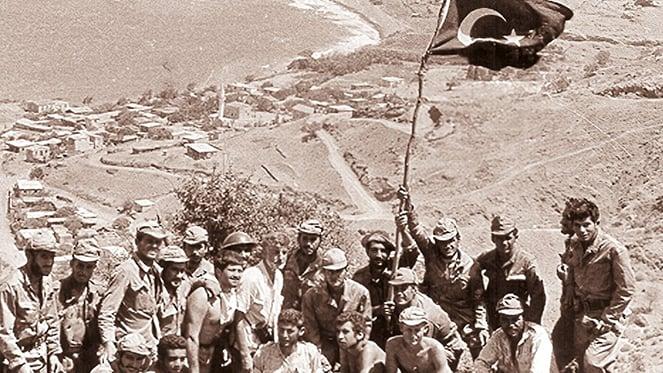
Erenköy Fighters (QHA)
The 1967 attack by the Greek Cypriot National Guard on the villages of Geçitkale and Boğaziçi marked a turning point. The TMT offered fierce resistance in these areas but paid a heavy price in casualties and destruction of settlements. In response, Türkiye issued a stern note to Greece and came close to direct military intervention in Cyprus. The crisis was defused only after the United States intervened.
As a result of these developments:
By 1974, the extremist right-wing coup by EOKA-B in the Greek Cypriot camp, which overthrew Makarios and installed Nikos Sampson as president, initiated the process of declaring Enosis. This situation granted Türkiye the right to intervene, and on 20 July 1974, the Cyprus Peace Operation was launched.
During this process, the TMT:
Following the successful conclusion of the Peace Operation, Turkish control was established in northern Cyprus, and the TMT’s primary mission was completed.
The Turkish Resistance Organization (TMT) in the Cyprus Peace Operation, as a semi-clandestine resistance organization established since 1957 to ensure the security of the Turkish Cypriot community, fulfilled its most active and decisive role in 1974. On 15 July 1974, the Greek-backed EOKA-B launched a coup against Makarios and installed Nikos Sampson as president, initiating preparations to declare Enosis. This development posed a major threat to Turkish Cypriots. Immediately thereafter, Türkiye invoked its guarantee rights and launched the Cyprus Peace Operation on 20 July 1974. From this point, the TMT transformed its years of preparation into active combat.
Prior to the operation, the TMT, based on intelligence gathered, shifted to a defensive posture in its sancağı regions (Nicosia, Famagusta, Paphos, Limassol, Larnaca, Lefke, Erenköy). Each regional “sancağı commander” activated local war plans and initiated positional warfare against Greek Cypriot attacks. In areas where Turkish Cypriots were under siege, TMT units organized the population and strengthened military positions to slow the Greek Cypriot advance. These actions facilitated the Turkish Armed Forces’ landing and laid the groundwork for the rapid Turkish advance along the Kyrenia-Nicosia axis.
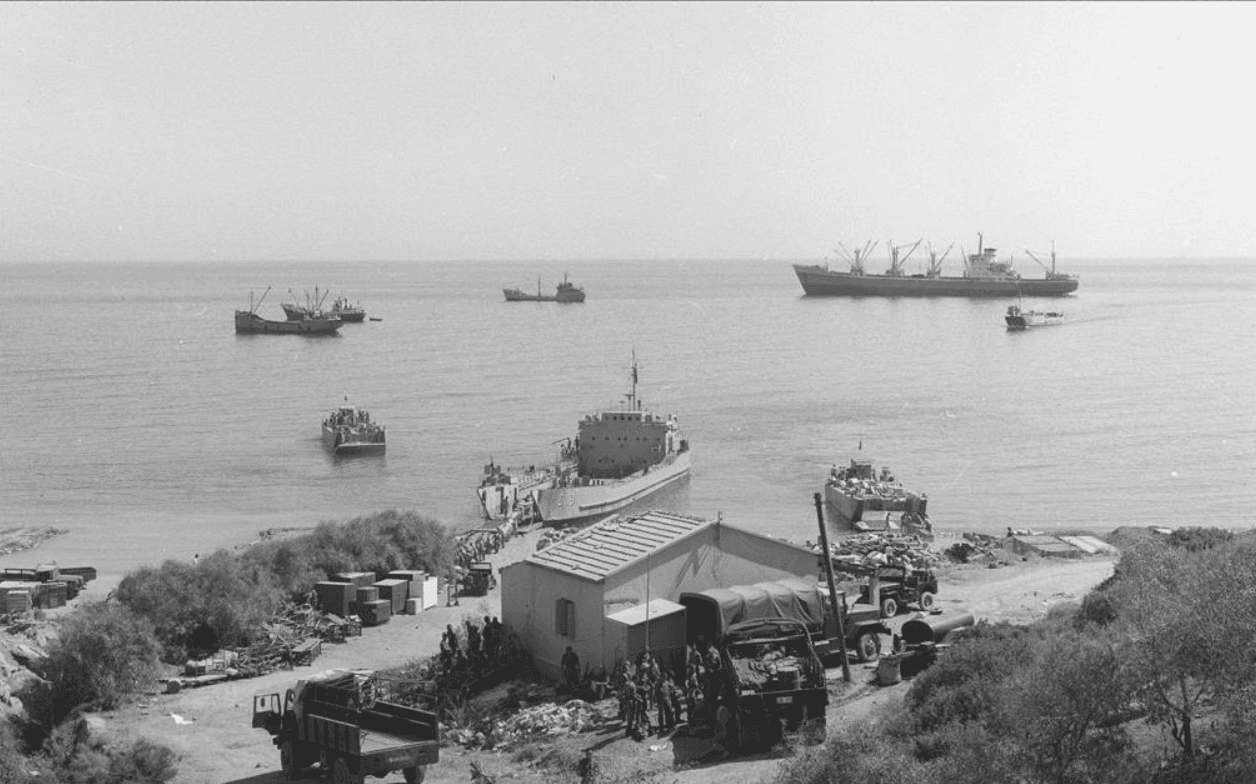
Cyprus Peace Operation (Anadolu Agency)
During the operation, TMT members, composed of local volunteers and trained militiamen, undertook both defensive and offensive missions. TMT units provided radio and communication support along the routes of Turkish ground operations and, in some areas, conducted reconnaissance, sabotage, and guerrilla tactics to weaken Greek Cypriot targets. During this period, the TMT’s civilian intelligence network relayed the locations of Greek Cypriot units to Turkish command, contributing to the success of air operations. TMT members engaged in intense combat in many locations, including the Turkish sector of Nicosia, suffering heavy casualties; some sancağı units were completely besieged.
During the second phase of the Peace Operation on 14 August 1974, when the Turkish military launched a new offensive, many TMT units were directly integrated into Turkish forces and participated in land operations aimed at securing control over northern Cyprus. TMT members, possessing both combat strength and familiarity with the local geography, played a crucial role, guiding Turkish forces in some areas. They also actively participated in civilian evacuations, logistical support, and securing civil corridors.
Following the Cyprus Peace Operation, the Turkish Resistance Organization (TMT) was no longer operating in the shadow of war but within a peace framework. With the establishment of Turkish control over northern Cyprus in 1974, the Turkish Cypriot community had achieved security within defined borders. Within this new political and military context, the underground resistance function of the TMT was no longer necessary. The presence of a formal Turkish Armed Forces presence rendered the continuation of an irregular warfare-based organization strategically and legally unsustainable.
In response, on 13 February 1975, the Turkish Federated State of Cyprus was declared, and a comprehensive reorganization process in defense and security began within the same year. On 1 June 1976, a decision was made to dissolve all military elements of the TMT and establish a new regular military structure: the Security Forces Command (SFC). On 27 June 1976, the “Law on the Establishment of the Security Forces Command” was adopted and entered into force. This structure was designed to operate in full coordination with the Turkish Armed Forces in terms of military discipline and legal status. The command of the SFC was assigned to a Turkish officer appointed by the Republic of Türkiye, and its primary mandate was to ensure internal security during peacetime and the defense of the island during wartime.
The majority of TMT members were integrated into the SFC according to their training and qualifications. Others were appointed as civil servants in various state institutions. Thus, after nearly 19 years of activity, the TMT completed its mission both symbolically and practically.
Akgül, Mehmet Uğraş. Türk Mukavemet Teşkilatı [The Turkish Resistance Organisation]. PhD thesis, Balıkesir Üniversitesi, 2016. ProQuest Dissertations & Theses, 31287627.
Durbilmez, B. "Tarihî Gerçeklerin Âşık Edebiyatına Yansıması Bağlamında Türk Mukavemet Teşkilâtı ve Kıbrıs Mücahitleri." Folklor/Edebiyat 19, no. 76 (2013): 173–193.
Keser, U. “Türk Mukavemet Teşkilatı’nda Muhabere 1955–1974.” *International Journal of Social Inquiry* 8, no. 2 (2015): 61–114. Accessed April 29, 2025.https://dergipark.org.tr/tr/download/article-file/322620
TRT Haber. "Türk Mukavemet Teşkilatı: TMT Nedir?" YouTube video, 5:33. September 9, 2022. Accessed April 29, 2025.http://youtube.com/watch?v=eXYx1kEmUqU
Yüksel, Dilek Yiğit. "Kıbrıs’ta Yaşananlar ve Türk Mukavemet Teşkilatı (1957–1964)." Atatürk Araştırma Merkezi Dergisi 34, no. 98 (November 2018): 311–376.
Yüksel, Dilek Yiğit. “Kıbrıs Türk Milli Mücadelesi (1914–1958).” *Çağdaş Türkiye Tarihi Araştırmaları Dergisi* 8, no. 18 (2009): 161–184.https://dergipark.org.tr/en/pub/aamd/issue/40613/489683
Yüksel, Dilek Yiğit. “Kıbrıs’ta Yaşananlar ve Türk Mukavemet Teşkilatı (1957–1964).” *Atatürk Araştırma Merkezi Dergisi* 34, no. 98 (2018): 311–376.https://dergipark.org.tr/en/pub/aamd/issue/40613/489683
“Dr. Fazıl Küçük Fotoğraf Galerisi.” Dr. Fazıl Küçük Vakfı. Accessed April 29, 2025.https://drfazilkucukvakfi.gov.ct.tr/GALER%C4%B0/FOTO%C4%9ERAFLAR
“Rauf Raif Denktaş.” *KKTC Cumhurbaşkanlığı Resmî Web Sitesi*. Accessed April 29, 2025.https://kktcb.org/tr/cumhurbaskanligi/cumhurbaskanlari/rauf-raif-denktas
“Türk Mukavemet Teşkilatı (TMT).” *Mavi Vatan*. Accessed April 29, 2025.https://mavivatan.net/turk-mukavemet-teskilati-tmt/

Türk Mukavemet Teşkilatı Arması
Turkish Resistance Organization Emblem
Establishment | 1957-11-15 | ||||||||
|---|---|---|---|---|---|---|---|---|---|
Place of Establishment | Lefkoşa, Cyprus | ||||||||
Founders | Rauf Denktaş Kemal Tanrısevdi Dr. Burhan Nalbantoğlu | ||||||||
Purpose of Establishment | To defend and preserve the Cypriot Turkish people against EOKA terrorism | ||||||||
Organizational Structure | Cellular structure (five-member system), district-based military organization | ||||||||
Date of Abolishment | 1976-06-01 | ||||||||
Successor Institution | Command of Security Forces (GKK) | ||||||||
No Discussion Added Yet
Start discussion for "Turkish Resistance Organization (TMT)" article
Founding and Background of the Turkish Resistance Organization
EOKA Terrorism and the Need for Organization
Founding of the TMT
Türkiye’s Role
Organizational Structure
Organizational Model: The Cell System
Territorial System and Military Organization (1958–1974)
Central Command Structure of the TMT
Discipline, Oath, and Identity System
Civil-Defense Integration
Relationship with Türkiye and Activities (1957–1974)
Beginning of the Relationship with Türkiye (1957–1958)
Türkiye’s Strategic Role and Intervention (1958–1963)
Activities and Military Operations (1963–1967)
Erenköy Resistance and Erenköy
Geçitkale-Boğaziçi Incidents and a New Threat Perception (1967)
Role of the TMT Until the 1974 Peace Operation
Cyprus Peace Operationand the TMT
Transition to the Security Forces Command