


This article was automatically translated from the original Turkish version.
Oral Sander’s work titled “Türkiye’s Foreign Policy” examines the foreign policy approaches adopted by the Republic of Türkiye since its founding from a historical perspective. The book provides a detailed analysis of Türkiye’s geopolitical position, its place in the international system, and its efforts to adapt to changing global balances. Sander evaluates Türkiye’s foreign policy not only through historical events but also through the underlying motivations behind them, offering a comprehensive analysis framed within the context of the state’s internal dynamics and international relations theory.
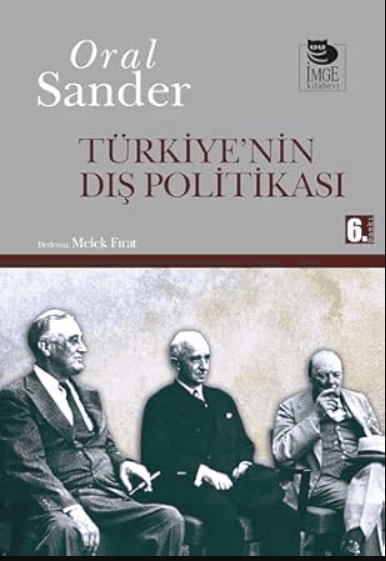
Türkiye’s Foreign Policy
The book emphasizes the critical importance of the early years of the Republic in shaping Türkiye’s foreign policy. Following the Treaty of Lausanne, Türkiye’s integration into the international system began with a peace-oriented foreign policy strategy. Sander notes that the primary objective of foreign policy during this period was the preservation of borders and the consolidation of national sovereignty. Policies aimed at balancing relations with the West are highlighted as defining features of this era, particularly during the 1920s and 1930s.
The book devotes significant attention to Türkiye’s policy of neutrality during World War II. Sander analyzes Türkiye’s efforts to maintain a balance policy during the war to safeguard its security. Furthermore, the transition to multilateral diplomacy in the postwar period, Türkiye’s accession to NATO, and its steps toward becoming part of the Western alliance are discussed in detail. During this process, the historical and theoretical justifications for Türkiye’s alignment with the Western bloc in response to threats from the Soviet Union are examined.
In Sander’s work, the Cyprus issue is presented as a pivotal turning point in Türkiye’s foreign policy. The book provides a detailed analysis of Türkiye’s policies regarding Cyprus from the 1960s onward and the international community’s responses to these policies. Additionally, Türkiye’s relations with both the Western and Eastern blocs during the Cold War are assessed within the context of the era’s global power balances. Türkiye’s strategic importance and regional policies during this period are also highlighted as key topics of discussion.
The book comprehensively addresses the transformations in Türkiye’s foreign policy from the 1980s onward. In particular, it underscores the adoption of an economically oriented approach during Turgut Özal’s tenure. This period saw Türkiye’s efforts to develop relations with the Middle East and the strategies it implemented within this framework. Moreover, following the collapse of the Soviet Union, Türkiye’s relations with the Turkic Republics of Central Asia and its initiatives toward full membership in the European Union are presented as major developments of the era.
In his work “Türkiye’s Foreign Policy,” Oral Sander examines Türkiye’s foreign policy through its historical, economic, and strategic dimensions. The book explains the fundamental dynamics shaping Türkiye’s foreign policy by integrating insights from the state’s internal balances and international relations theories, offering readers a balanced and analytical perspective. Sander provides a detailed account of Türkiye’s position on the international stage and its decision-making processes, drawing on both historical data and analytical frameworks.
Oral Sander, Türkiye'nin Dış Politikası, Derleyici: Melek Fırat, 6. Baskı, İmge Kitabevi Yayınları, 2024

No Discussion Added Yet
Start discussion for "Turkey's Foreign Policy (Book)" article
Content of the Book
The Early Years of the Republic
World War II and Multilateral Diplomacy
The Cyprus Issue and the Cold War Era
Foreign Policy Changes After 1980
Thematic Depth of the Work