


This article was automatically translated from the original Turkish version.
+1 More
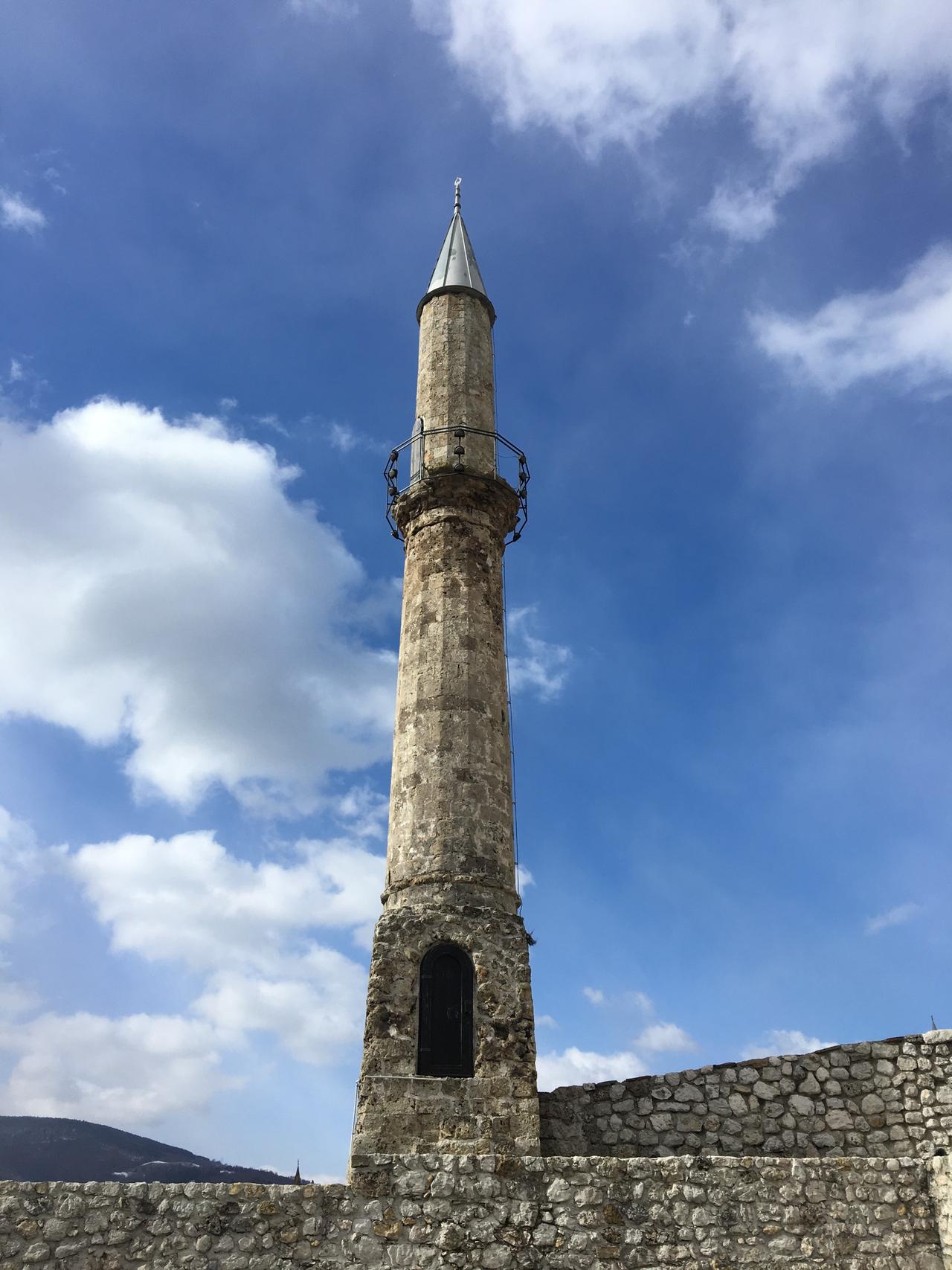
Travnik Castle (Photo: Duygu Şahinler)
Location | Travnik Bosnia and Herzegovina | ||||||||
|---|---|---|---|---|---|---|---|---|---|
Origin(s) | The medieval fortification may have taken shape during the conflicts of the 1430s | ||||||||
Function(s) | Defensive administrative and religious | ||||||||
Current Status | Museum | ||||||||
Travnik Castle is a medieval fortification situated on a steep, inaccessible rocky hill overlooking the Lašva valley, with origins likely dating back to the conflicts of the 1430s. It came under Ottoman control following Fatih Sultan Mehmed’s campaign in Bosnia in 1463. Originally a hilltop fortress covering less than one hectare, it was garrisoned after attacks in 1480, and Sultan Bayezid II ordered the construction of a wooden mosque within its walls. This mosque was destroyed in a fire; only its minaret survives to the present day. During the Ottoman period, the castle evolved into a grand symbol of the town’s political authority, integrating defensive, administrative, and religious functions. The old watchtower and gunpowder magazine inside the castle now serve as a museum, offering the most visible representation of Travnik’s historical development and the Ottoman synthesis of urban architecture.
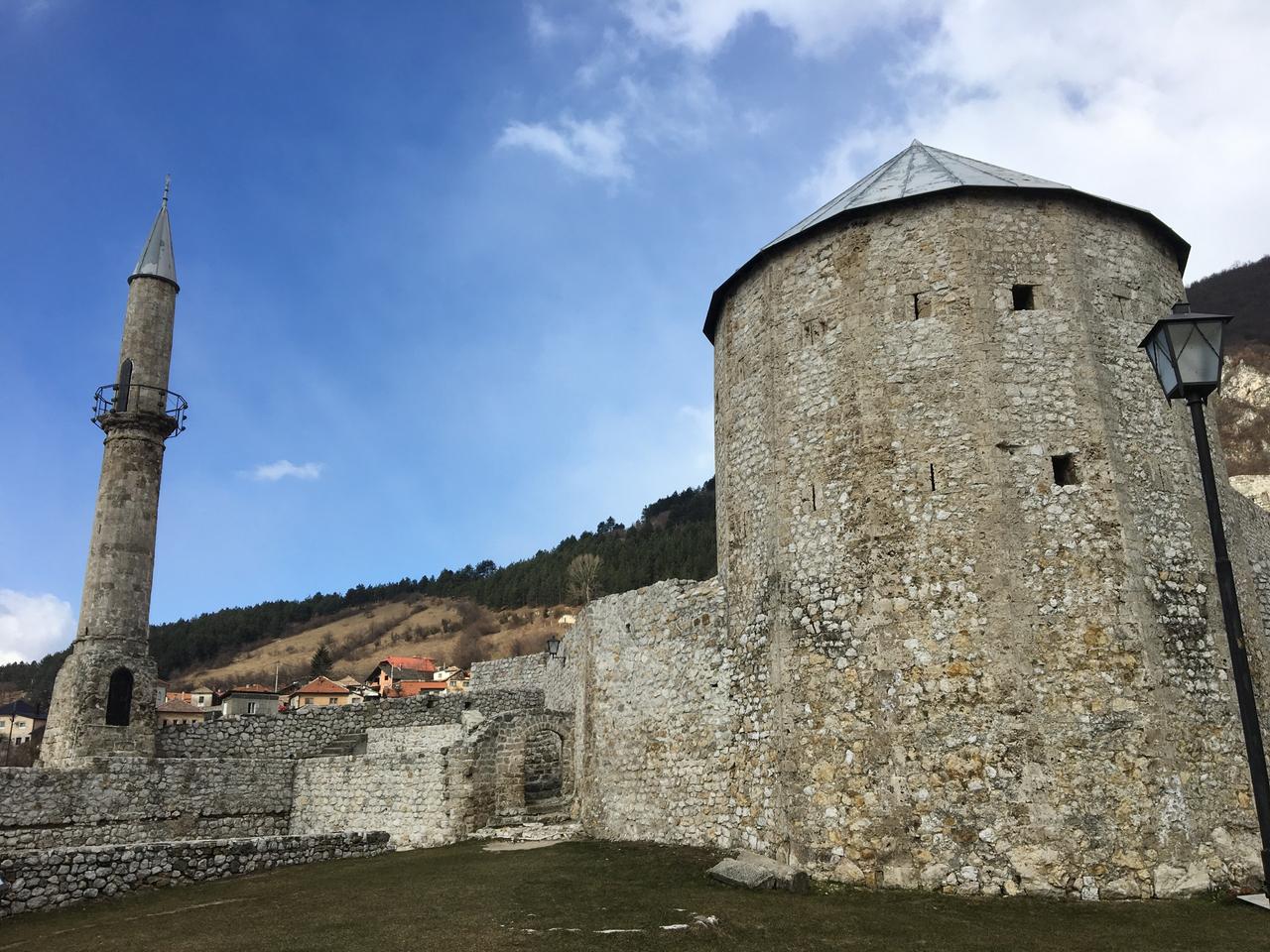
Travnik Castle (Photo: Duygu Şahinler)
Travnik, located approximately one and a half hours from Sarajevo, is one of the settlements that have preserved the Ottoman urban fabric through its architecture, mosques, and castle.
The region where Travnik stands has been open to settlement since prehistoric times. Archaeological finds, coins, and structural remains indicate continuity extending back to the Roman period. The area, depopulated during Slavic incursions in the sixth and seventh centuries, was resettled from the thirteenth century onward. In 1244, the Lašva region was under the rule of Hungarian King Béla II; records from 1371 and 1380 confirm its affiliation with the medieval Bosnian State.
The first clear reference to Travnik appears in the context of Fatih Sultan Mehmed’s 1463 campaign in Bosnia. At that time, Travnik is described as a small fortress on an inaccessible rocky hill above the river. Although local tradition attributes the castle to King Tvrtko II, sources do not corroborate this; the structure was most likely shaped during the wars of the 1430s.
Travnik was captured by Fatih Sultan Mehmed in 1463, ten years after the conquest of Constantinople, and rapidly developed with Ottoman constructions. In the early Ottoman period, the castle occupied less than one hectare on the hilltop and initially had no permanent military garrison. Following Vuk Grgurević’s destructive attack on Sarajevo in 1480, a garrison was stationed in the castle, and Sultan Bayezid II commissioned the construction of a mosque within its walls. A suburban settlement without walls emerged at the base of the hill. According to the 1485 Bosnian General Register, Travnik was a small center of 47 households, subordinate to the market of Lašva.
The northward shift of the frontier after the Ottoman conquest of Jajce and Banaluka in 1528 accelerated Travnik’s growth. Between 1516 and 1562, the town expanded fivefold, transforming from a predominantly Christian village into a mature Muslim town with six Muslim neighborhoods, a Friday mosque (built in 1499 by Dizdar Hasan), and five smaller mosques. Between 1562 and 1604, three additional neighborhoods, four mosques, and five smaller mosques were added. By the seventeenth century, Travnik had risen to become the second largest city in Bosnia.
After the Ottoman conquest, a grand castle was constructed to reflect the empire’s political power and new administrative order. Alongside its defensive function, a wooden mosque was built inside the castle walls. However, this mosque was destroyed in a fire and did not survive; only its minaret remains. Within the castle grounds, an old watchtower and gunpowder magazine still stand and are now used as a museum, offering visitors tangible evidence of both military architecture and the town’s history.
The castle combines the natural defensive advantages of its topography with a balanced Ottoman fortification system based on stone and wood. Functionality is the guiding principle in its outer walls and internal layout. The design provides surveillance against external threats and organizes internal space to meet administrative and religious needs. Its commanding position atop the hill, together with the mosque minaret, has served both as a security focal point and as a defining element of the town’s silhouette.
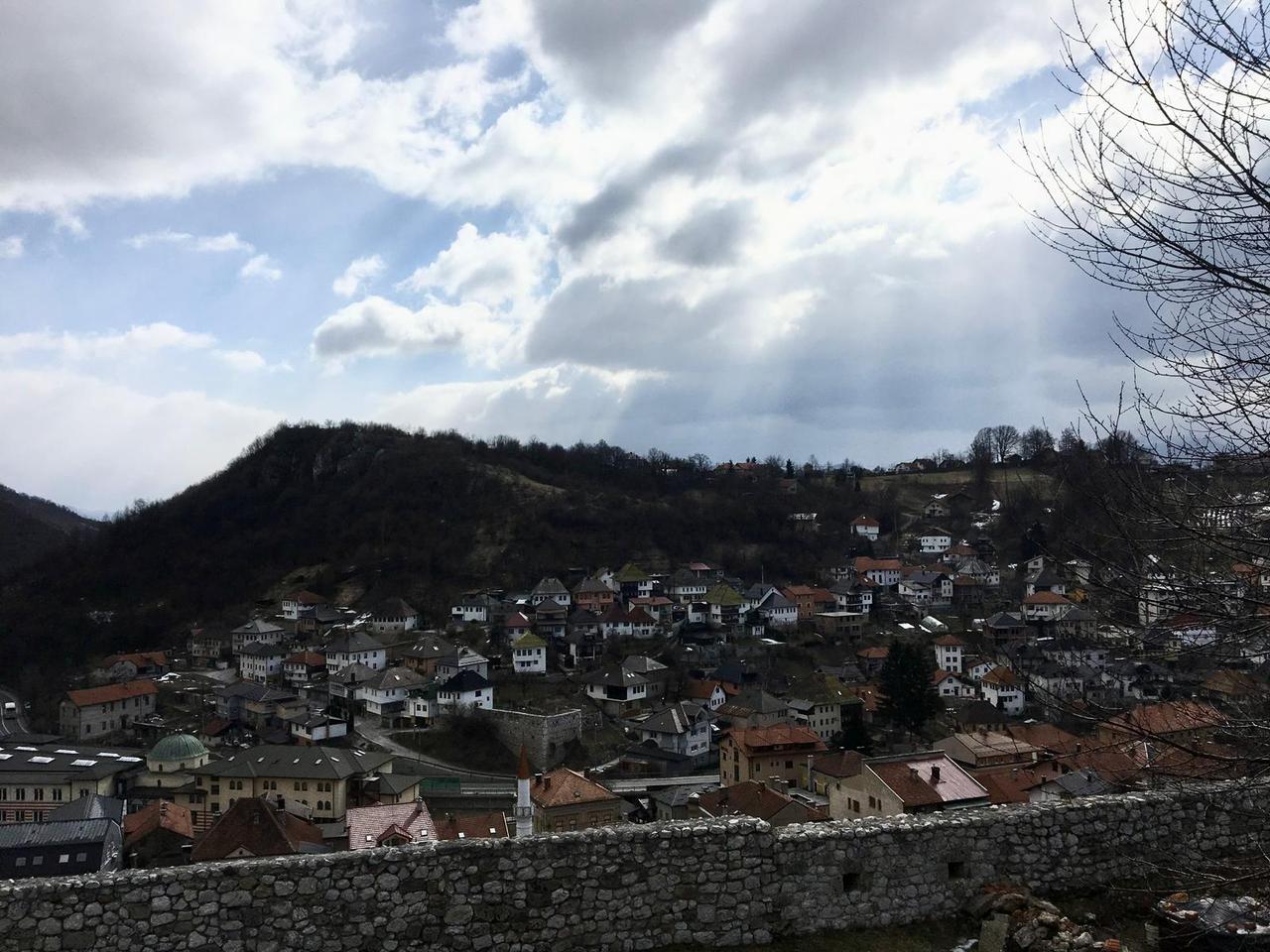
View of Travnik from Travnik Castle (Photo: Duygu Şahinler)
Machiel, Kiel. "TRAVNİK". TDV İslâm Ansiklopedisi. Accessed September 29, 2025. https://islamansiklopedisi.org.tr/travnik
Orhan, Fatih, and İbrahim Caner Türk. "Maddi Kültür Öğelerine Göre Bosna Hersek’te Türk Kültürünün İzleri." I. Uluslararası Bir Bilge Bir Ülke Sempozyumu Bildiriler Kitabı. 2018, pp. 249–259. https://www.academia.edu/download/60969743/Rashas_Asgarov._Aliye_IzzetbegovicIn_Felsefesinde_Entellektuel_Ozgurluk_Dusuncesinin_Baslica_Cizgileri20191021-17644-1pih0wb.pdf#page=262

Travnik Castle (Photo: Duygu Şahinler)
Location | Travnik Bosnia and Herzegovina | ||||||||
|---|---|---|---|---|---|---|---|---|---|
Origin(s) | The medieval fortification may have taken shape during the conflicts of the 1430s | ||||||||
Function(s) | Defensive administrative and religious | ||||||||
Current Status | Museum | ||||||||
Location
Early Period and First Records of the Castle
Ottoman Conquest and Development
Travnik Castle