


This article was automatically translated from the original Turkish version.
Torbeşler
(Generated by Artificial Intelligence)
Primary Definition | Muslim community speaking Macedonian | ||||||||
|---|---|---|---|---|---|---|---|---|---|
Estimated Population | 70,000–80,000 (throughout North Macedonia) | ||||||||
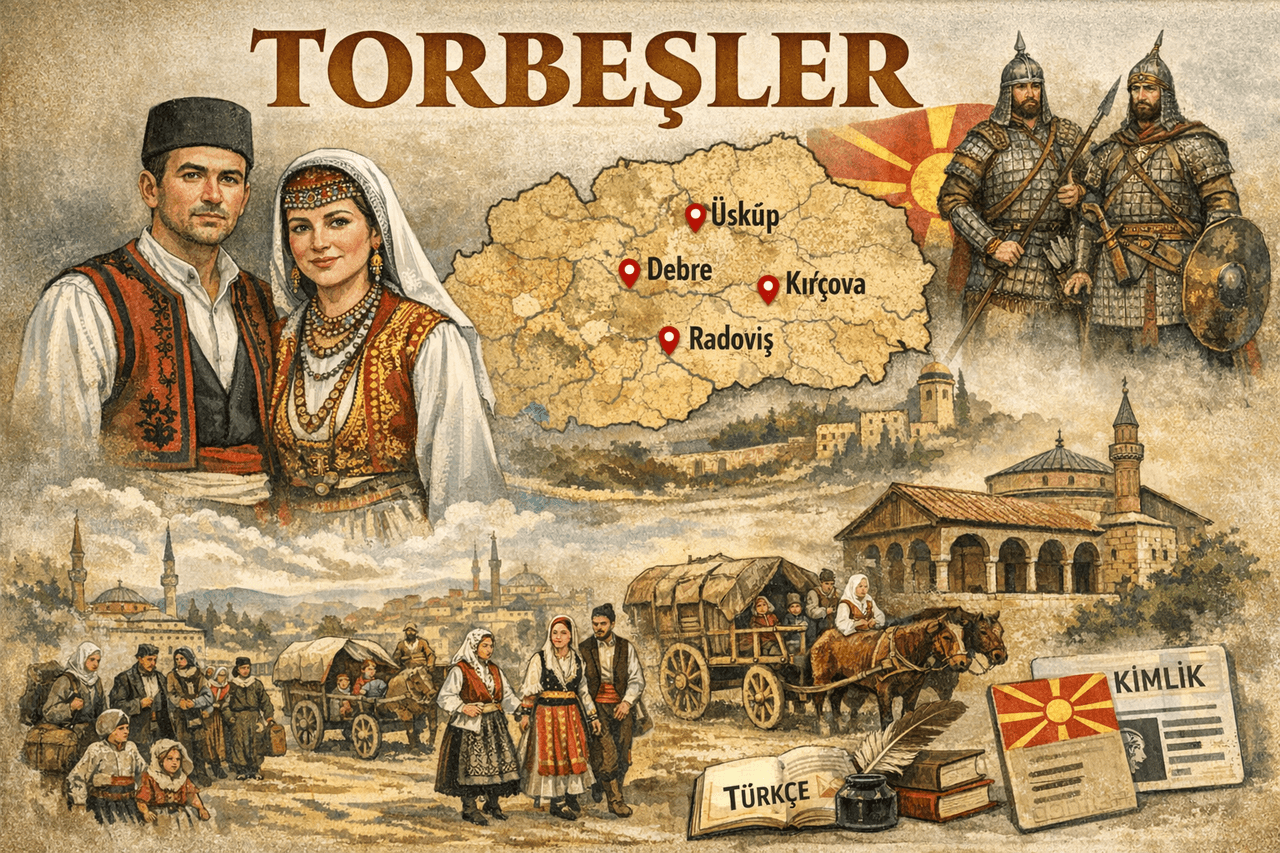
Dense Settlement | Debre (Central Jupa), Radoviš, Kırçova, Struga | ||||||||
Language | Turkish (language of education and culture) Macedonian (native language) | ||||||||
Religion | Islam | ||||||||
Identity Declaration | Turk, Albanian, Macedonian | ||||||||
Political Status | Minority | ||||||||
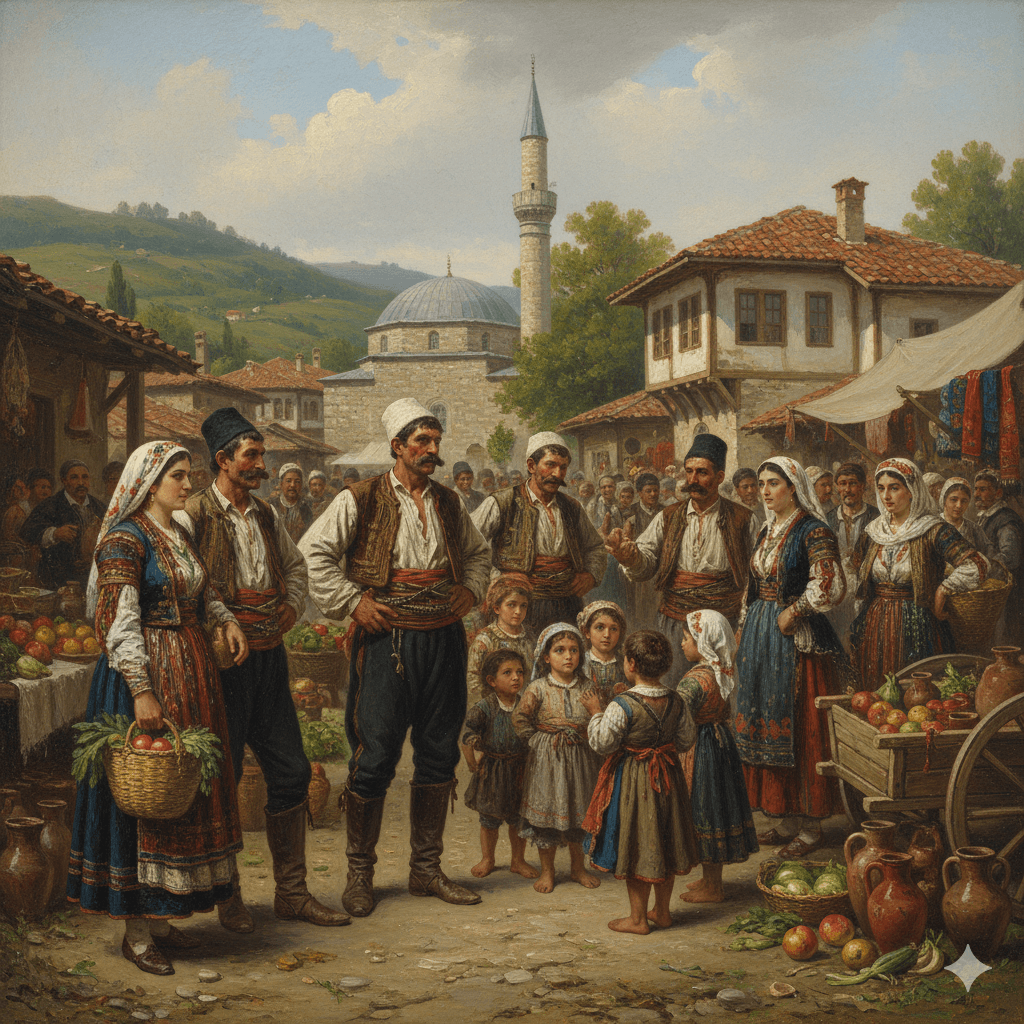
Torbeş are a Muslim community speaking Macedonian, settled in the Balkan region, particularly in the western and south-western parts of North Macedonia. Known in literature as “Macedonian Muslims,” this group possesses a religious and cultural identity distinct from ethnic Macedonians. Indeed, the term “Macedonian Muslim” has been rejected by the Torbeş themselves, and it has been argued that this label functions as an assimilationist tool aimed at incorporating them into a Slavic ethnic identity. Moreover, identity definitions within the community are not homogeneous: some identify as Turkish, others as Albanian, and still others as ethnic Macedonian.
class=\
Various theories have been advanced regarding the ethnic origins of the Torbeş. One widely accepted view holds that they are descendants of Turkic tribes such as the Cumans (Kipchaks) and Pechenegs who settled in the Balkans prior to the Ottoman period. Over time, the community lost its original Turkic linguistic features and adopted Macedonian, the dominant local language, while preserving its Turkish-Islamic identity. On the other hand, the official Macedonian thesis classifies this group as “Islamized Macedonians” and has sought since 1971, through institutions such as the “Cultural and Scientific Center of Macedonian Muslims,” to integrate them under a unified Macedonian identity. However, such initiatives have not gained widespread acceptance within the community. The Torbeş have continued to define themselves primarily through Islam and Turkishness rather than through ethnic Macedonian identity. Nevertheless, academic studies on the origins of the Torbeş go beyond viewing them merely as a “Muslim Macedonian” group. Many researchers argue that the Torbeş share a common origin with the Pomaks and Gorani, and trace their roots to the Pecheneg Turks who were present in the Balkans since the 9th century. Some sources also suggest that they are descendants of the Avars.【2】
According to one folk etymology, the term “Torbeş” derives from “dört-beşler,” meaning “four-fives,” referring to four or five critical historical periods during which the Cumans were forced to change their tribal affiliations in the Balkans. In Ottoman archives, this community was originally designated as “Türkbaş”. Over time, through phonetic evolution, the term came to be pronounced as “Torbeş” among the local population. This interpretation is regarded as one of the official pieces of evidence regarding the community’s origins. Christian neighbors in western Macedonia have also used alternative names such as “Potur” (Poturi) or “Kurki” to refer to them.【5】
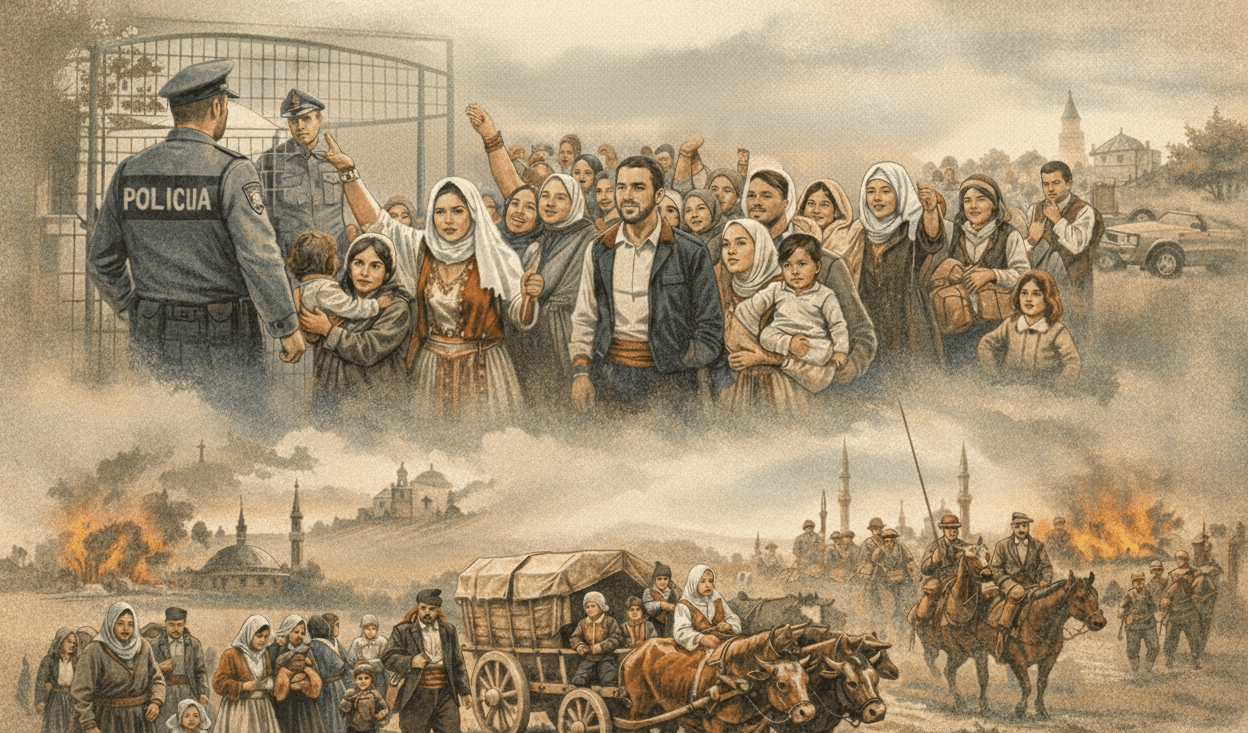
The Russo-Turkish War of 1877–78 (the 93 War) and the subsequent Balkan Wars of 1912–1913 marked the beginning of a mass exodus of Muslim populations from the region toward Anatolia. After the Second World War, the communist regimes in Yugoslavia implemented policies of atheistic propaganda, religious repression, and violations of property rights, triggering a new wave of migration in the 1950s. Policies aimed at homogenizing the population and severing ties with religion compelled the Torbeş to leave their ancestral lands and migrate to Türkiye, which they regarded as their homeland. During this period, thousands of Torbeş families arrived in Türkiye with limited resources.
Upon arriving in Türkiye, the Torbeş were perceived as a community that spoke no Turkish but identified as Turkish and Muslim. In the early years after migration, their use of Macedonian led some local communities to misunderstand them or treat them as “foreigners.” Since speaking Turkish was considered a fundamental criterion of citizenship in the nation-building process of the Republic of Türkiye, the processes of naturalization and social acceptance were initially difficult for this group. However, shared religious values and Turkish affiliation enabled these challenges to be overcome quickly. Indeed, Gökalp anticipated that Torbeş who spoke Macedonian would eventually adopt Turkish due to their Muslim identity:
“The individuals constituting a nation are not today those who speak the nation’s language. Tomorrow, those who will speak this language will be among this group. For example, today the Pomaks speak Bulgarian and the Muslims of Crete speak Greek, yet tomorrow under the influence of Islam they will learn Turkish and abandon their current languages. Thus, the members of a nation are determined not only by language but also by religion.”【6】
The current demographic structure of North Macedonia is built upon the centuries-long coexistence of various ethnic groups, including Macedonians, Turks, Albanians, Serbs, Roma, Vlachs, and Torbeş. It is estimated that the population of the Torbeş, who reject the label “Muslim Macedonian,” numbers between 70,000 and 80,000.【7】 Bougarel, however, estimated their population at 90,000 in 1990.【8】
Under the demographic and administrative policies of the Macedonian state, the Torbeş are officially recorded as part of the Macedonian population. Due to their inclusion in official statistics as Macedonians, precise figures for the Torbeş population cannot be determined. However, according to their own declarations, their population across Macedonia ranges between 100,000 and 150,000. Turks constitute approximately 4 percent of Macedonia’s total population.【9】 According to the Macedonian Constitution, communities whose population exceeds 5 percent of the total population lose their minority status and gain the status of “people.” If the Torbeş were officially recognized as Turks, the combined Turkish and Torbeş population would approach 10 percent of the total, granting them a constitutionally stronger status. However, the Macedonian government’s obstructive policies toward such demands have prevented this outcome.
The exclusion of the Torbeş from the 2001 census as a distinct ethnic category is considered a concrete manifestation of this approach. Similarly, the Ohrid Framework Agreement signed in the same year was negotiated exclusively between Macedonian and Albanian parties, excluding Turks, Serbs, Vlachs, Torbeş, and other minority groups from the process.【10】
A notable feature of the Torbeş is the asymmetric relationship between language and religion. Although they speak Macedonian in daily life, the presence of Turkish vocabulary and religious terminology embedded within this language shapes their worldview.【11】 Culturally, Ottoman-Turkish influence is evident in every aspect of life, from wedding traditions and culinary practices to religious holiday celebrations.
Although linguistically close to the Slavic world, the Torbeş are culturally and emotionally fully integrated within the Turkish-Islamic civilization. For many Torbeş families, the adoption of Macedonian as their mother tongue is not a matter of preference but a historical necessity; therefore, they place great importance on ensuring their children learn Turkish and are raised according to Turkish traditions as a means of preserving their cultural identity.
The Torbeş identity has been a site of political contention, particularly in modern Macedonian history. Macedonian nationalism pursued a strategy of assimilating the Torbeş as “Muslim Macedonians,” leading to the establishment in 1971 of an organization called the “Cultural and Scientific Center of Macedonian Muslims.” The primary aim of this state-backed initiative was to detach the Torbeş from Turkish and Albanian influences and incorporate them into the Macedonian national identity. However, such identity-building efforts failed to gain acceptance within the community and instead provoked confusion and resistance. Today, while a significant majority of the Torbeş identify directly as “Turks,” there are also subgroups who declare themselves as Albanian or Macedonian for political or regional reasons.
Especially from the 1990s onward, restrictions and school closure policies targeting Turkish-language education were implemented in Macedonia. The closure of Turkish-language classrooms or the refusal to open new ones in regions such as Radoviš, Debre (Jupa), and Kırçova has been perceived by the Torbeş community as a cultural attack.【13】 In 1993, the Macedonian government’s rejection of Turkish-language education demands on the grounds that “the Torbeş are not ethnically Turkish” triggered mass protests by families.【14】
During this period, although many Torbeş had lost their original linguistic features over time, a significant portion affirmed their Turkish origins, a view that received considerable support within the community. This identity claim was taken into the political arena through the Macedonian Turkish Democratic Party (TDP), which actively advocated for Torbeş children to receive Turkish-language education. In fact, at a 1990 meeting organized by the TDP’s Kırçova (Kičevo) branch and attended by approximately 600 people, Torbeş families collectively agreed on the need to teach their children Turkish instead of Macedonian. However, Macedonian authorities responded by offering only three hours per week of optional Turkish as a foreign language, a proposal that Torbeş families viewed as inadequate and symbolic.【15】
For approximately five years after independence, the Torbeş families’ petition, signed by 262 individuals, requesting that their children be educated in Turkish-language classes alongside Macedonian ones, remained unanswered by official authorities. In their petition to the Macedonian government, parents explicitly stated their Turkish origins and demanded Turkish education for their children. The government, however, rejected the request, asserting that the Torbeş were not Turks but “Macedonian-origin Muslims.”
After authorities refused to open Turkish-language classes, families began sending their children to the Necati Zekeriya Primary School in the village of Kocacık, approximately nine kilometers away, which offered Turkish instruction. However, this practice was soon halted by police intervention. In response, approximately 60 elderly parents embarked on a hunger strike. On the 25th day of the strike, a temporary solution was reached, and the enrollment of 171 students from Jupa at the school was approved.【17】
class=\
Dikici, Ali. “Türkiye’deki Balkan Muhacirleri Arasında Kaybolan Bir Topluluk: Torbeşler.” *Avrasya Etüdleri* 46, no. 2 (2014): 123–165. Accessed December 23, 2025.https://dergipark.org.tr/tr/pub/avrasya/article/392433
Gökdağ, Bilgehan Atsız. “Makedonya Türklüğünün Ayrılmaz Parçası: Torbeşler.” *Yeni Türkiye*, pp. 1–7. Accessed December 23, 2025.https://www.academia.edu/21765499/G%C3%96KDA%C4%9E_Bilgehan_Ats%C4%B1z_2013_Makedonya_T%C3%BCrkl%C3%BC%C4%9F%C3%BCn%C3%BCn_Ayr%C4%B1lmaz_Par%C3%A7as%C4%B1_Torbe%C5%9Fler_Yeni_T%C3%BCrkiye
Pehlivan, Barış. “Torbeşlerin Kökeni Üzerine Bir İnceleme: Yukarı Vranofça Örneği.” *TSBS Bildiriler Dergisi* 3 (2023): 103–106. Türkiye Sosyal Bilimler Sempozyumu. Accessed December 23, 2025.https://sempozyum.okuokut.org/tsbs/article/view/457/481
Çolakoğlu, Bayram. “Günümüz Makedonya Türkleri.” *BAL-TURK*. Accessed December 23, 2025.https://www.balturk.org.tr/gunumuz-makedonya-turkleri/
İdriz, Enes, and Enver Uysal. “Üsküp’te Müslümanlar: Dinî ve Etnik Kimlik Bağlamında Sosyolojik Bir İnceleme.” *Uludağ Üniversitesi İlahiyat Fakültesi Dergisi* 18, no. 1 (2009): 591–608. Accessed December 23, 2025.https://dergipark.org.tr/en/download/article-file/143718
[2]
Bayram Çolakoğlu, “Günümüz Makedonya Türkleri,” BAL-TURK, erişim tarihi: 23 Aralık 2025, https://www.balturk.org.tr/gunumuz-makedonya-turkleri/
[5]
Bilgehan Atsız Gökdağ, “Makedonya Türklüğünün Ayrılmaz Parçası: Torbeşler,” Yeni Türkiye, s. 1, erişim tarihi: 23 Aralık 2025, https://www.academia.edu/21765499/G%C3%96KDA%C4%9E_Bilgehan_Ats%C4%B1z_2013_Makedonya_T%C3%BCrkl%C3%BC%C4%9F%C3%BCn%C3%BCn_Ayr%C4%B1lmaz_Par%C3%A7as%C4%B1_Torbe%C5%9Fler_Yeni_T%C3%BCrkiye
[6]
Ali Dikici, “Türkiye’deki Balkan Muhacirleri Arasında Kaybolan Bir Topluluk: Torbeşler,” Avrasya Etüdleri 46, no. 2 (2014): 149, erişim tarihi: 23 Aralık 2025.
[7]
Bayram Çolakoğlu, “Günümüz Makedonya Türkleri,” BAL-TURK, erişim tarihi: 23 Aralık 2025,
[8]
Ali Dikici, “Türkiye’deki Balkan Muhacirleri Arasında Kaybolan Bir Topluluk: Torbeşler,” Avrasya Etüdleri 46, no. 2 (2014): sayfa 129, erişim tarihi: 23 Aralık 2025,
[9]
Bilgehan Atsız Gökdağ, “Makedonya Türklüğünün Ayrılmaz Parçası: Torbeşler,” Yeni Türkiye, sayfa 4-5, erişim tarihi: 23 Aralık 2025,
[10]
Bilgehan Atsız Gökdağ, “Makedonya Türklüğünün Ayrılmaz Parçası: Torbeşler,” Yeni Türkiye, sayfa 5, erişim tarihi: 23 Aralık 2025,
[11]
Bayram Çolakoğlu, “Günümüz Makedonya Türkleri,” BAL-TURK, erişim tarihi: 23 Aralık 2025,
[13]
Bilgehan Atsız Gökdağ, “Makedonya Türklüğünün Ayrılmaz Parçası: Torbeşler,” Yeni Türkiye, sayfa 5, erişim tarihi: 23 Aralık 2025,
[14]
Bilgehan Atsız Gökdağ, “Makedonya Türklüğünün Ayrılmaz Parçası: Torbeşler,” Yeni Türkiye, sayfa 5, erişim tarihi: 23 Aralık 2025,
[15]
Bilgehan Atsız Gökdağ, “Makedonya Türklüğünün Ayrılmaz Parçası: Torbeşler,” Yeni Türkiye, sayfa 5-6, erişim tarihi: 23 Aralık 2025,
[17]
Bilgehan Atsız Gökdağ, “Makedonya Türklüğünün Ayrılmaz Parçası: Torbeşler,” Yeni Türkiye, sayfa 5-6, erişim tarihi: 23 Aralık 2025,

Torbeşler
(Generated by Artificial Intelligence)
Primary Definition | Muslim community speaking Macedonian | ||||||||
|---|---|---|---|---|---|---|---|---|---|
Estimated Population | 70,000–80,000 (throughout North Macedonia) | ||||||||
Dense Settlement | Debre (Central Jupa), Radoviš, Kırçova, Struga | ||||||||
Language | Turkish (language of education and culture) Macedonian (native language) | ||||||||
Religion | Islam | ||||||||
Identity Declaration | Turk, Albanian, Macedonian | ||||||||
Political Status | Minority | ||||||||
Historical Origins and Ethnic Identity Debates
The Concepts of Torbeş and Türkbaş
Migration to Türkiye and Integration Challenges
Population and Settlement Areas in North Macedonia
Language and Cultural Structure
Political Approaches to Identity Debates
The Issue of Turkish Language Education