


This article was automatically translated from the original Turkish version.
+1 More
Crying is the production of tears by humans as a result of intense emotional responses. This biological behavior manifests as a way for people to express emotions such as pain, happiness, anger, empathy, and many other feelings. Crying is considered a uniquely human behavior and involves three main types of tears: basal tears, reflex tears, and emotional tears.
The evolutionary origin of crying is linked to animals’ vocal responses to seek help from their environment. In humans, this behavior emerges as a response to strong emotional stimuli. In children, the incomplete development of lacrimal glands indicates that crying remains a mechanism for seeking assistance from caregivers. In adults, emotional tears can be triggered by a broad range of emotions including physical pain, relational distress, empathetic crying, social pain, moral sentiments, or sentimental feelings.
Crying is a behavior that occurs when individuals experience intense emotional responses, triggered by interactions among specific regions of the brain. This interaction initiates various psychological and physiological reactions.
Crying typically arises as a response to an emotional stimulus, a stressful or painful situation, an empathetic reaction, or a profound sense of relief. The human brain generates emotional responses to environmental stimuli. The foundation of crying lies in how the brain processes these emotional responses.
The crying process is controlled by the limbic system, the brain region responsible for managing emotional functions. This region activates when a person responds to an emotional stimulus.
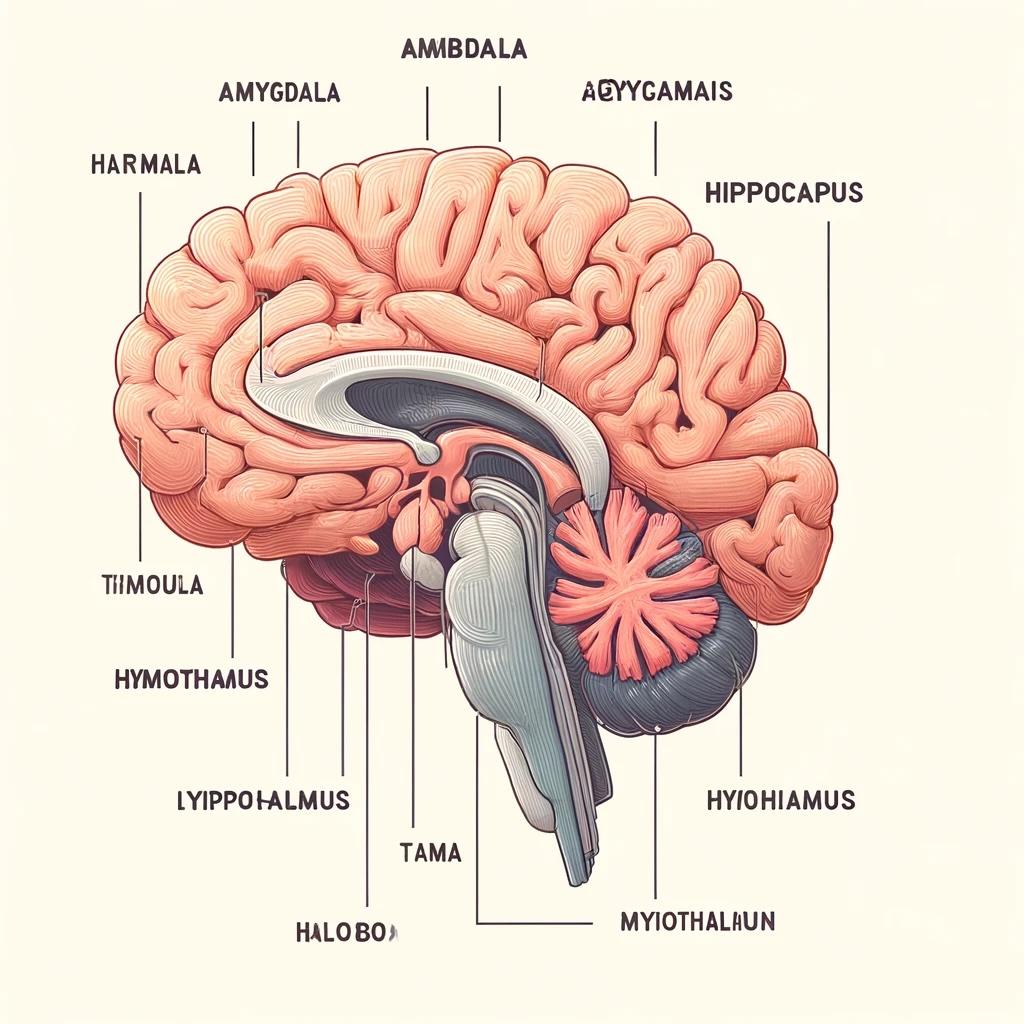
Brain regions. (Generated by artificial intelligence.)
During crying, tear production is carried out by the lacrimal glands. Signals from the pons region of the brain are sent to the lacrimal glands, increasing tear production in the eyes.
During crying, chemicals such as oxytocin and endorphins are released in the brain. These chemicals enhance the calming and healing effects of crying:
The release of these chemicals demonstrates that crying provides not only emotional relief but also physical healing.
Crying emerges as a result of interactions between the limbic system and the autonomic nervous system in response to emotional stimuli. Structures in the brain such as the amygdala, hypothalamus, and pons trigger the physiological processes of crying and stimulate tear production. Crying induces chemical changes in the body that lead to both psychological and physiological relaxation. This complex neural interaction helps us understand the emotional and health-related benefits of crying.
Crying has been shown to have numerous positive effects on health. It functions as a mechanism to expel stress hormones and bodily toxins. Emotional crying promotes physical relaxation and restores both physiological and psychological balance. Research indicates that crying strengthens the immune system, improves heart health, and helps reduce hypertension. Additionally, the emotional release experienced during crying is one of its positive aspects, as it allows individuals to shed the emotional burden of an event.
The positive health effects of crying have been recognized since ancient times. Since ancient Greece and Rome, crying has been viewed as having a purgative function, a perspective now also accepted in psychology. Crying aids in the elimination of stress hormones and toxins from the body. This process triggers the release of oxytocin and endorphins (endogenous opioids). These chemicals alleviate both emotional and physical pain, creating a general sense of well-being.
Another positive effect of crying is its ability to strengthen social bonds. When people cry, others respond with empathy, providing emotional support and closeness. Research has shown that emotional crying reinforces social connections and fosters stronger bonds between individuals.
Excessive or persistent crying can lead to emotional imbalances. Chronic crying may be a symptom of psychological disorders such as depression. Additionally, if crying is perceived as inappropriate in social settings, it can lead to feelings of shame or social exclusion. Societal norms that suggest men should not cry can inhibit emotional expression in men and contribute to emotional unhealthiness.
Some individuals are unable to cry due to conditions such as depression. This inability to express internal emotional pain can lead to emotional suppression, which may worsen psychological health.

Crying does not only provide psychological relief but also enhances emotional functioning. Psychologically, crying allows individuals to express their pain and sadness, leading to emotional catharsis and healing. Physiologically, crying calms the body and regulates heart rate. Additionally, hormones such as prolactin released during crying reduce stress and promote recovery.
The emotional crying centers in the brain guide individuals toward healthier connections with their environment. These connections play a vital role in emotional healing, and social support reinforces the therapeutic effects of crying.
Crying is a natural response that provides emotional relief and catharsis. Emotional tears play a crucial role in releasing stress and inducing bodily relaxation. By strengthening social bonds and enhancing empathy, crying contributes to psychological and physiological healing in society. However, excessive and uncontrolled crying may indicate psychological health issues and may require professional intervention.
American Academy of Ophthalmology. "All About Emotional Tears." American Academy of Ophthalmology, n.d. Accessed March 18, 2025.https://www.aao.org/eye-health/tips-prevention/all-about-emotional-tears
Harvard Health Blog. "Is Crying Good for You?" Harvard Health Publishing, March 1, 2021. Accessed March 18, 2025.https://www.health.harvard.edu/blog/is-crying-good-for-you-2021030122020.
News-Medical. "How Crying Could Actually Boost Your Mood." News-Medical, n.d. Accessed March 18, 2025.https://www.news-medical.net/health/How-Crying-Could-Actually-Boost-Your-Mood.aspx.
Pexels. "Duvara Yaslanmış Kişi." Accessed March 18, 2025.https://www.pexels.com/tr-tr/fotograf/duvara-yaslanmis-kisi-236151/.
University of Miami. "Why Do We Cry?" University of Miami News, June 2024. Accessed March 18, 2025.https://news.miami.edu/stories/2024/06/why-do-we-cry.html.
Vingerhoets, Ad J. J., et al. "Crying and Health: Popular and Scientific Conceptions." ResearchGate, 2007. Accessed March 18, 2025.https://www.researchgate.net/publication/26571593_Crying_and_Health_Popular_and_Scientific_Conceptions
Vingerhoets, Ad J. J., et al. "The Benefits of Crying in Emotional and Physical Health." National Center for Biotechnology Information, 2018. Accessed March 18, 2025.https://pmc.ncbi.nlm.nih.gov/articles/PMC6201288/.
Vingerhoets, Ad J. J., et al. "The Relation Between Crying and Health: An Overview of the Literature." *Psychology, Health & Medicine* 24, no. 7 (2019): 823-832. Accessed March 18, 2025.https://link.springer.com/article/10.1007/s10286-018-0526-y.
Vingerhoets, Ad J. J., et al. "The Riddle of Human Emotional Crying: A Challenge for Emotion Researchers." ResearchGate, 2015. Accessed March 18, 2025.https://www.researchgate.net/publication/277972445_The_Riddle_of_Human_Emotional_Crying_A_Challenge_for_Emotion_Researchers
Vingerhoets, Ad J. J., et al. "Why Only Women Cry: A Social Function of Crying." *Frontiers in Psychology* 5 (2014): 502. Accessed March 18, 2025.https://www.frontiersin.org/journals/psychology/articles/10.3389/fpsyg.2014.00502/full

Why Does It Occur?
How Does It Occur?
Onset of Crying
Events in the Brain
Limbic System
Pons Region
Autonomic Nervous System
Tear Production
Chemical Reactions
Effects on Health
Positive Effects
Negative Effects
Psychological and Physiological Effects