


This article was automatically translated from the original Turkish version.
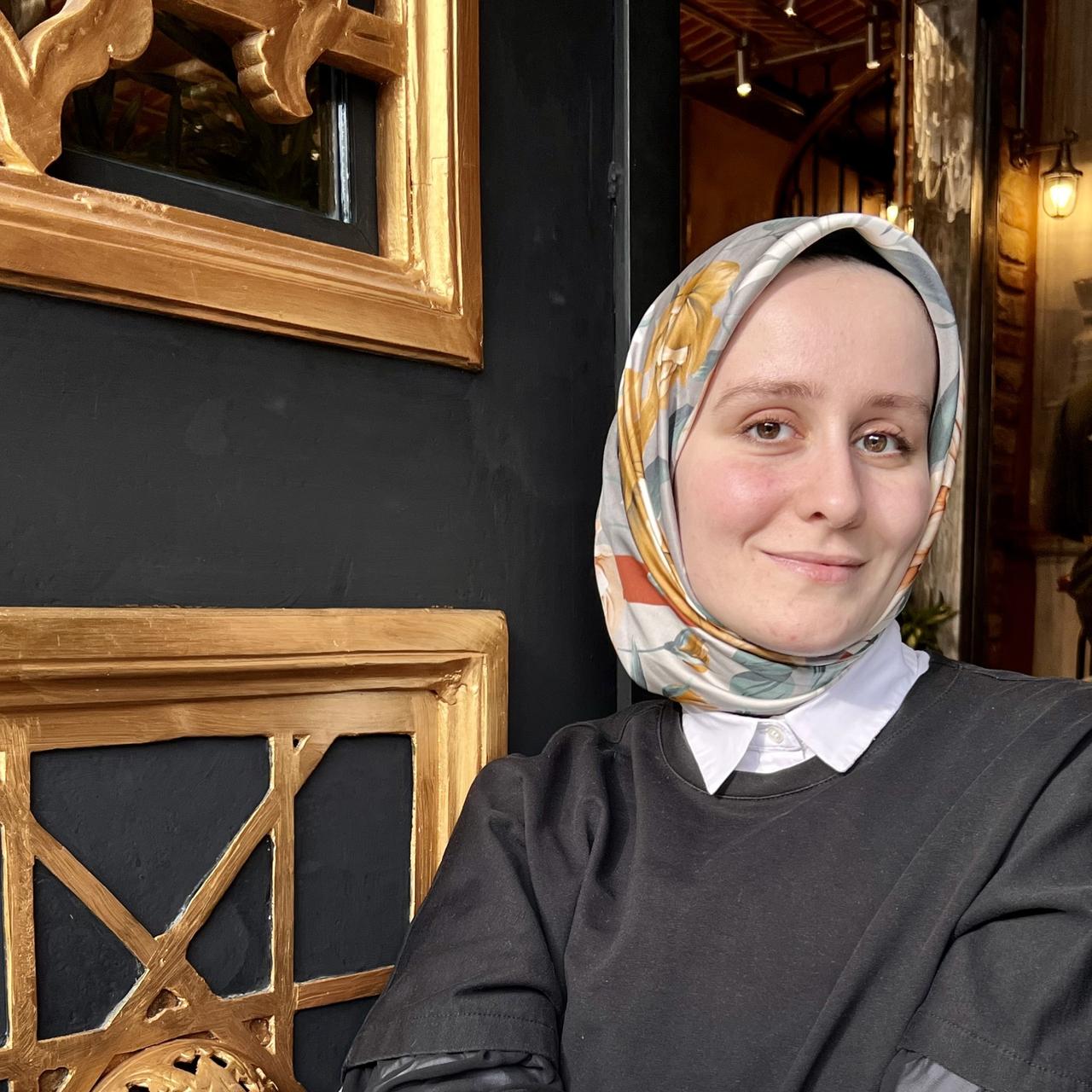
Üsküdar is a district of Istanbul unlike any other, characterized by its steep slopes, fountains erected at nearly every street end, tombs, mosques, and the call to prayer echoing back and forth across its squares even today. If you were to count the minarets you see from the moment you board the ferry at the waterfront until it departs, who knows how many centuries you would be witnessing… Before you stand the Mihrimah Sultan and Yeni Valide Camileri; beside them, Şemsi Paşa Mosque, also known as Kuşkonmaz Camii; behind them, Aziz Mahmud Hüdayi, guardian of the Bosphorus, with his Baroque-style Ayazma Mosque; and from the Fatih era, Rumî Mehmet Paşa…
“The Golden City” of Üsküdar is also the heir to the legacy of three great Ottoman valide sultans. Their külliyes, constructed in successive periods, are commonly referred to as the old, middle, and new. The first is the Atik Valide Sultan Külliyesi, commissioned by Nurbanu Valide Sultan; the second is the Çinili Cami Külliyesi, built for Kösem Valide Sultan; and the last is the Yeni Valide Külliyesi, constructed by Gülnûş Emetullah Sultan.
Located in the Toptaşı neighborhood of Üsküdar, the mosque was commissioned by Nurbanu Valide Sultan, wife of Selim II and mother of Murad III. The külliye, completed between 1570 and 1579, originally comprised a mosque, medrese, tekke, sıbyan mektebi, darülkurra, darülhadis, tabhane, kervansaray, hamam, imarethane, darüşşifa, and fountains. The design and construction of the mosque are attributed to Mimar Sinan, while later additions are believed to have been completed by other architects, notably Davud Ağa, due to Sinan’s advancing age.
Approximately sixty years after the mosque’s completion, Kösem Valide Sultan built another külliye nearby in Üsküdar. To distinguish it from the earlier structure, the prefix “atik,” meaning “old” in Arabic, was added to its name. The mosque became known as Atik Valide Sultan, Valide-i Atik, or Eski Valide. Evliya Çelebi, however, referred to it in his writings as “Orta Valide Sultan,” a designation said to derive either from the status of the valide sultan or from the mosque’s central location in Üsküdar.【1】
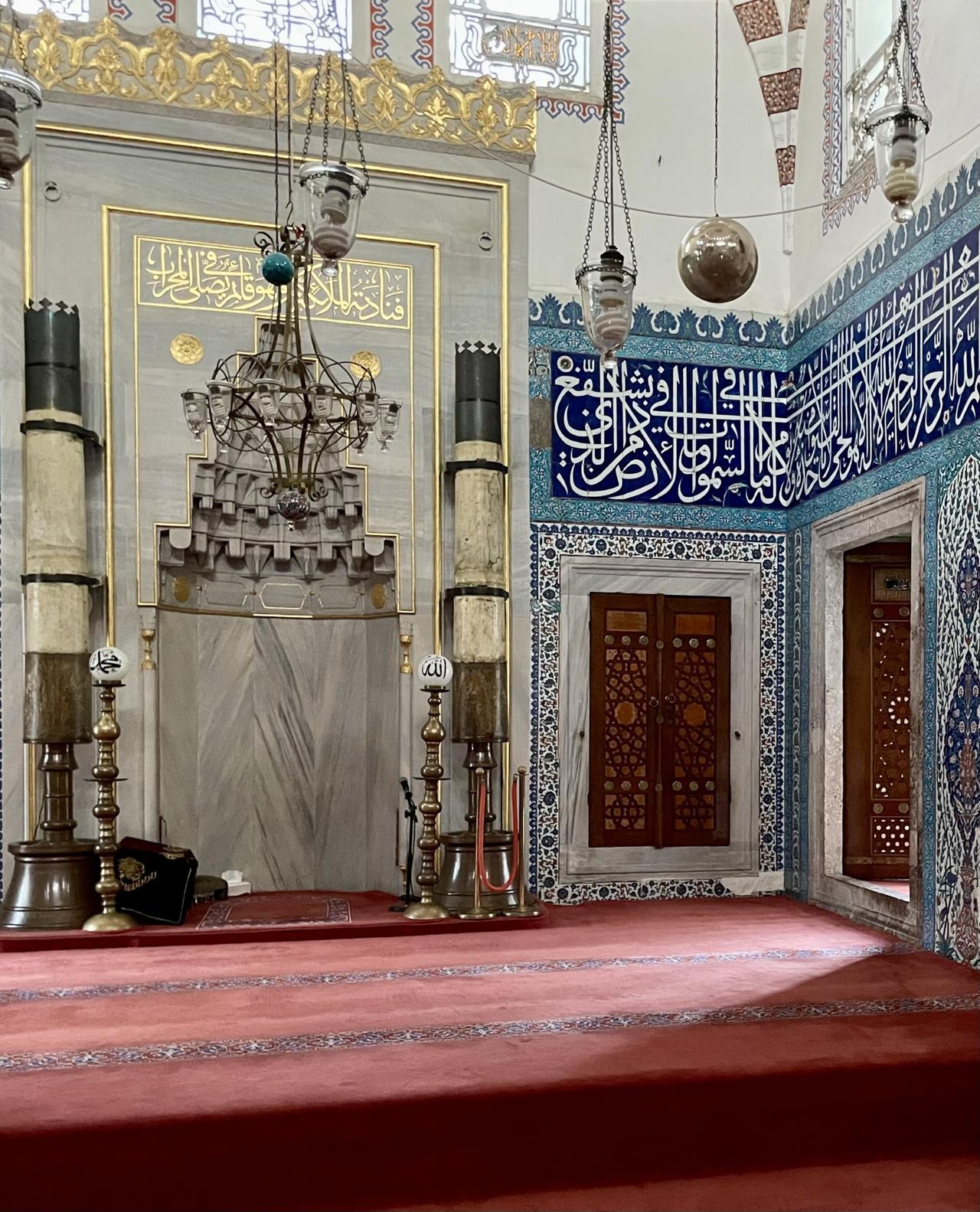
Interior of Atik Valide Sultan Mosque (Photo: Neriman Sena Külünk)
The interior of the mosque is adorned with striking Iznik tiles. With dozens of windows illuminating the walls, it is nearly impossible to describe the vibrant interplay of colors when sunlight floods the space. Moreover, this mosque is one of only two in Istanbul believed to house the Hızır makam. According to tradition, Sheikh Abdülkadir El Hüseyni El Nakşibendi (d. 1738), a descendant of Hz. Abdülkadir Geylani, saw Hızır Aleyhisselam near the lower part of the minaret, on the right side of the final prayer hall. Sources report that devotees have since shown particular reverence for this spot.【2】
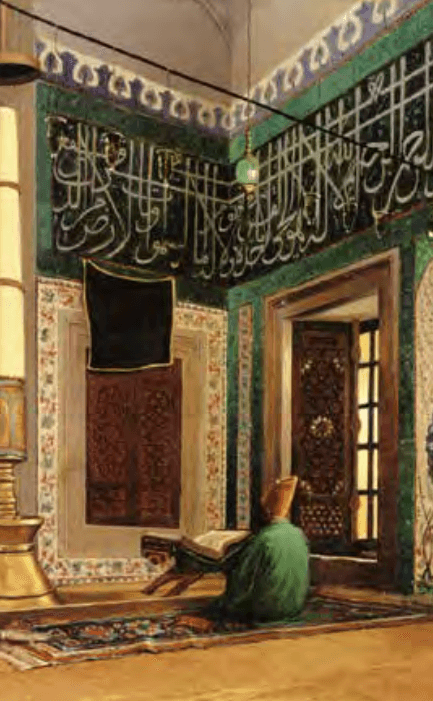
Man Reading the Quran in Atik Valide, Painting by Osman Hamdi Bey, 1875 (Gülcan Kaplan)
Within the külliye, the darülhadis, darülkurra, imarethane, and darüşşifa were originally used for their intended purposes. However, from the late 18th century onward, the complex served various functions: as a military barracks, an asylum for the mentally ill, a prison, and later a high school. Today, the buildings house the Faculty of Letters at Fatih Sultan Mehmet University.
As you walk through the faculty, it is hard not to imagine the pleasure of studying history here. Sitting in its cool courtyard, it is strange to think that once, within these very walls, prisoners including Necip Fazıl, Nihal Atsız, and Nazım Hikmet were held. Yet we can still take comfort in knowing that this area has been preserved and restored.
The külliye was commissioned by Mâhpeyker Kösem Valide Sultan, wife of Ahmed I and mother of Murad IV and Ibrahim I, during Ibrahim’s reign between 1640 and 1648. It lies approximately 500 meters from Atik Valide Camii. Compared to Atik Valide, this külliye is far more modest in scale. Historical sources note that, chronologically situated between Atik Valide and Yeni Valide Camileri, it is also referred to as Orta Valide Camii.
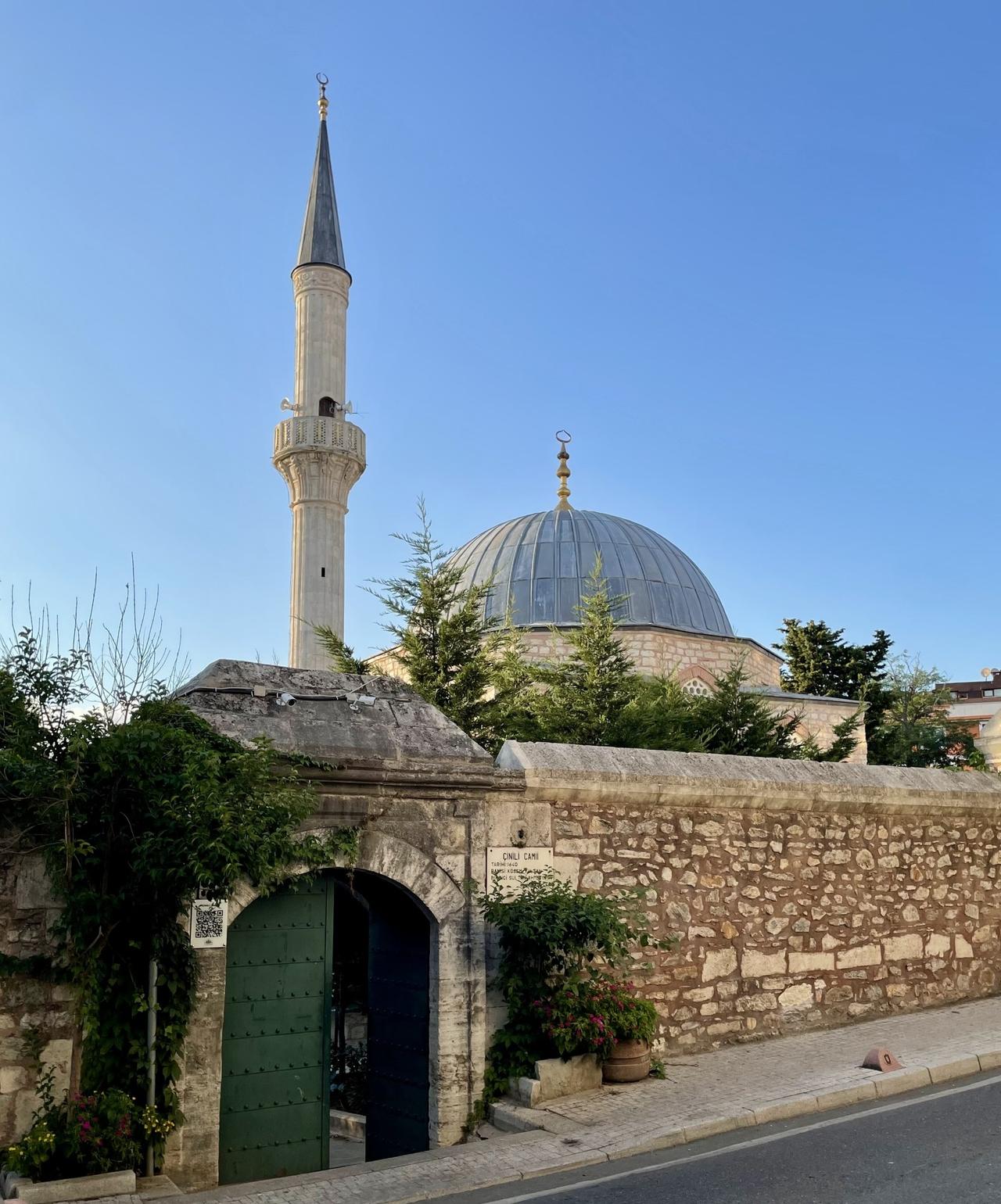
Çinili Camii, Entrance from Çinili Mescit Sokak (Photo: Neriman Sena Külünk)
The külliye consists of a mosque, medrese, sebil, hamam, sıbyan mektebi, and fountain. From the outside, the complex spreads harmoniously across an uneven terrain.
The interior of the mosque is decorated with tiles in blue, navy, white, purple, green, red, and black. The harmony of colors extends to the walls of the outer prayer hall. The marble minbar, window lintels, and meticulously detailed tiles demand careful attention—time must be taken to appreciate the craftsmanship, despite the mosque’s modest size. Of course, this is possible only if the space is open. While the outer prayer area is always accessible for prayer, it is closed for most of the day except during call to prayer times.
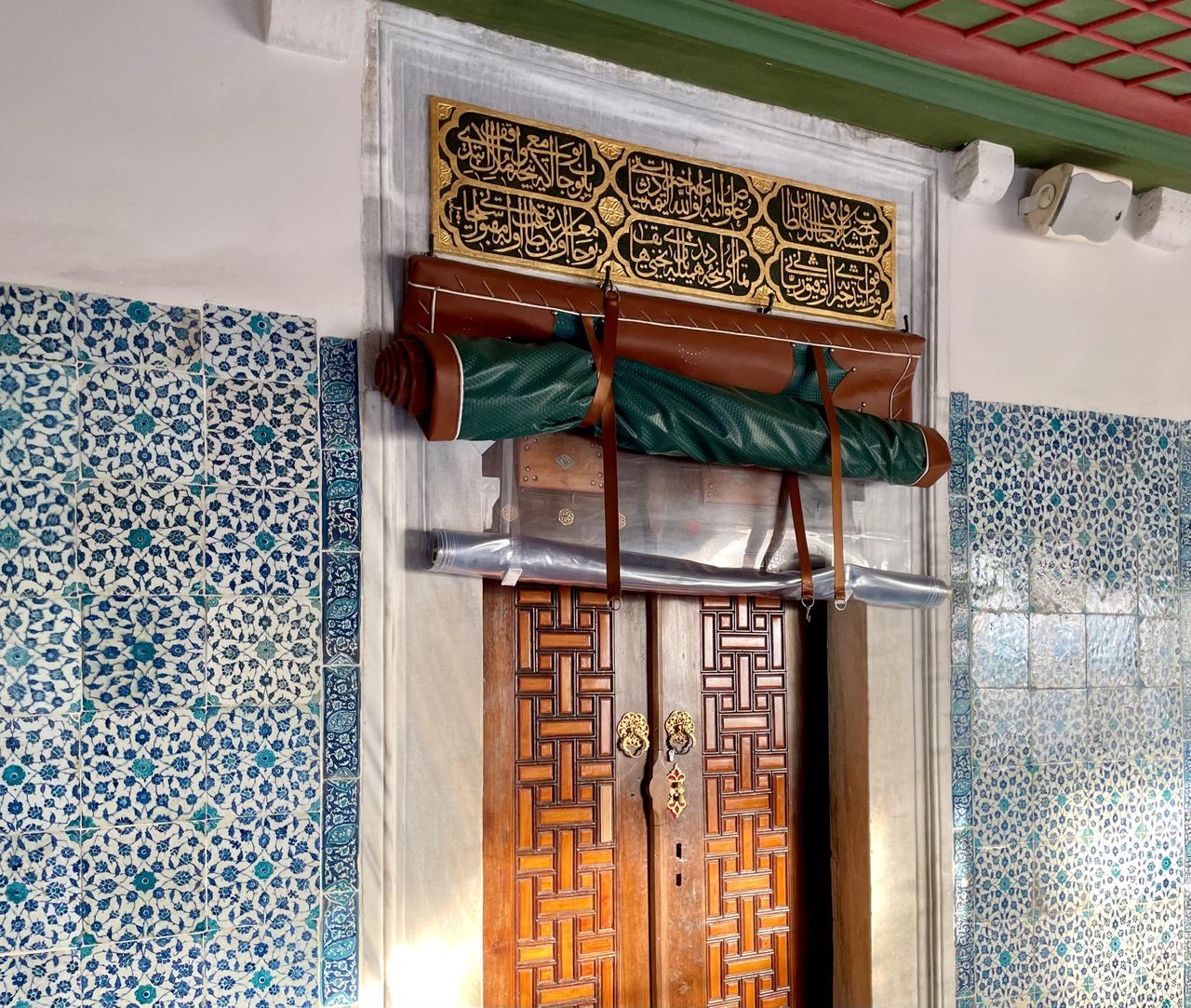
Inscription on the Gate and Tilework in the Outer Prayer Hall (Photo: Neriman Sena Külünk)
The inscription above the mosque’s gate contains verses by the poet Himmet:
"Always the grace of the exalted Valide Sultan
Her noble deeds are done for the sake of God alone
She endowed this mosque with countless properties
And made her charitable acts blessed by the Divine
When completed, Himmetâ declared its history
May the obedience shown in this mosque be pleasing to the Almighty (H. 1050)"【3】
The final valide külliye in Üsküdar is the Yeni Valide Camii, located at the ferry square. Commissioned by Gülnûş Emetullah Valide Sultan, mother of Sultan Ahmed III during the Tulip Era, the mosque was completed in 1711. Like the others, this külliye is known as Yeni Valide or Valide-i Cedid.
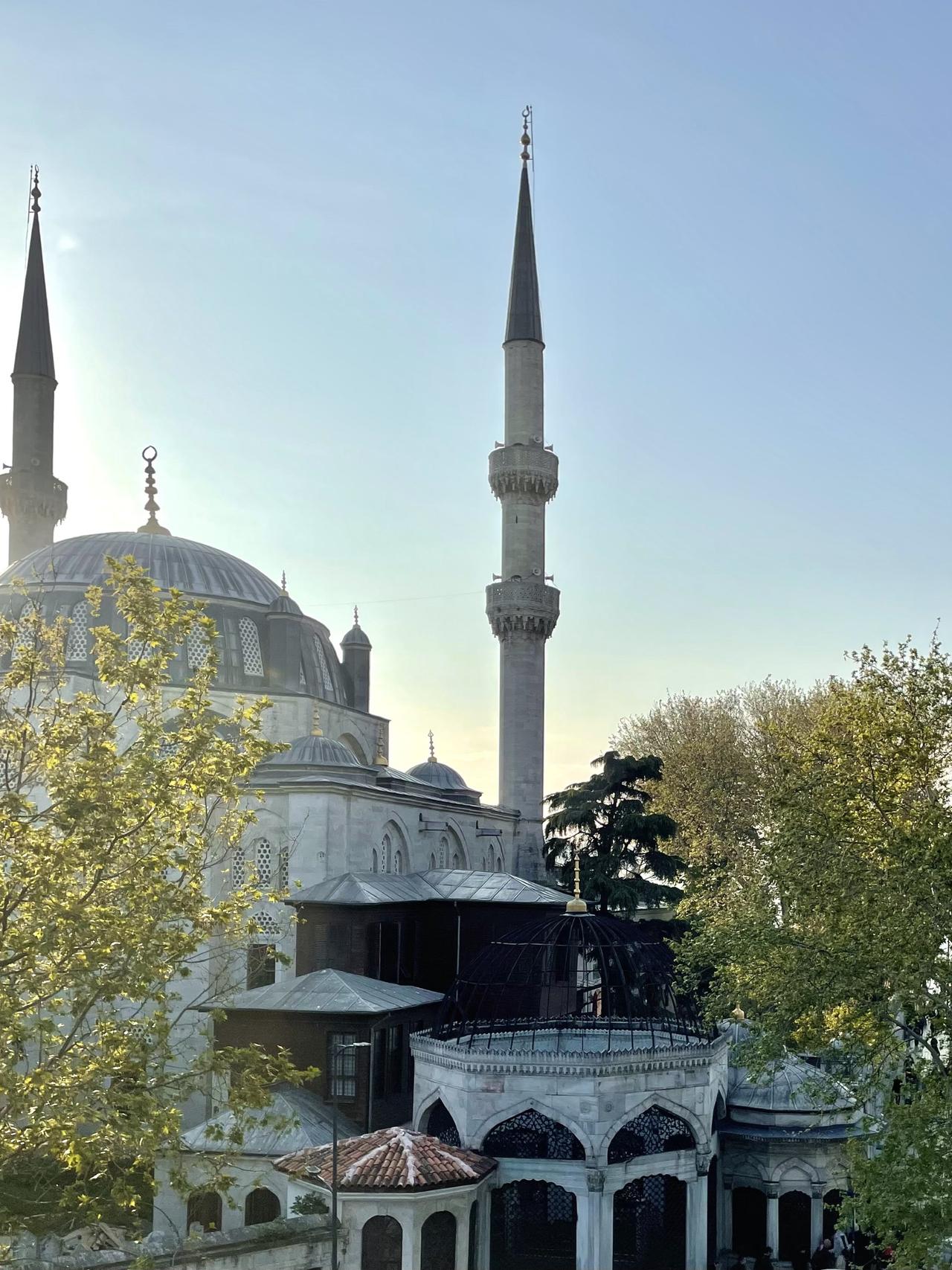
Yeni Valide Sultan Mosque, Tomb, and Sebil (Photo: Neriman Sena Külünk)
The külliye includes a mosque, imaret, türbe, sebil, fountain, şadırvan, mektep, and muvakkithane. As you descend from Hakimiyet-i Milliye Caddesi, the türbe—resembling a birdcage—is the first feature on the left. Throughout the complex, the elegance of the Tulip Era style and the refined taste of its patron, the valide sultan, are evident. The sebil and fountain following the türbe, the staircase leading upward from the entrance, the fountain in the courtyard that echoes a birdcage, and the birdhouses embedded in the outer walls all bear the unmistakable imprint of the era.
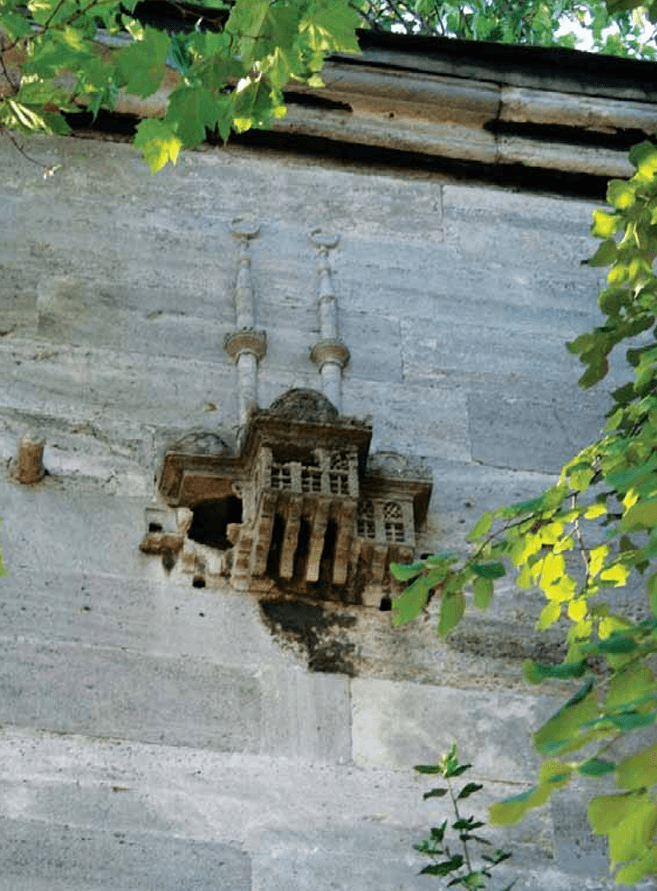
Birdhouse on the Wall of Yeni Valide Mosque (Nusret Çam)
Due to its central location, Yeni Valide Camii is crowded throughout the day, but this is especially true during Ramadan. The courtyard becomes a bustling scene: flowers dripping from the fountain beneath the lights of mahya, balloons, sweetmakers, and children enjoying the long-forgotten “old Ramadan spirit.” The experience of hearing the call to prayer echoed between Yeni Valide and Mihrimah Sultan Camileri is uniquely sublime.
Kaplan, Gülcan. "Üsküdar Atik Valide Sultan Camii Çini Süsleme Programı." In *Uluslararası Üsküdar Sempozyumu XI Bildiriler C.3*, edited by Dr. Coşkun Yılmaz, pp. 26–60. Üsküdar Belediyesi, İstanbul, 2017.https://isamveri.org/pdfdrg/D264872/2017/2017_KAPLANG.pdf
Konyalı, İbrahim Hakkı. "Çinili Cami." In *İstanbul Ansiklopedisi*, edited by Reşad Ekrem Koçu, Volume 7:4009-4011. Istanbul: Reşad Ekrem Koçu ve Mehmet Ali Akbay İstanbul Ansiklopedisi ve Neşriyat Kollektif Şirketi, 1965.https://archive.org/details/istansiklopedisi_201912/I.%20A.%207.%20CILT/page/n277/mode/1up
Konyalı, İbrahim Hakkı. *Abideleri ve Kitabeleriyle Üsküdar Tarihi-I.* Istanbul: Üsküdar Belediyesi Kültür Yayınları, 2021.https://www.uskudar.bel.tr/userfiles/files/Uskudar%20Tarihi%20cilt-1.pdf
Sezgin Orman, Tülay. "Yeni Vâlide Külliyesi." *Türkiye Diyanet Vakfı İslam Ansiklopedisi* 43: 433-435. İstanbul: TDV Yayınları, 2013.
Yücel, Erdem. "Eski Vâlide Camii ve Külliyesi." In *İstanbul Ansiklopedisi*, edited by Reşad Ekrem Koçu, Volume 10:5300-5303. İstanbul: Koçu Yayınları Mehmed Koçu, 1971.
Çam, Nusret. "Üsküdar’daki Kuş Evleri ve Bunların Arkasındaki Dünya." In *6. Uluslararası Üsküdar Sempozyumu Bildiriler Kitabı C.1*, 26-60, İstanbul, 2007.https://www.uskudar.bel.tr/userfiles/files/1.cilt/6_sempozyum_cilt_01.pdf
[1]
İbrahim Hakkı Konyalı, Abideleri ve Kitabeleriyle Üsküdar Tarihi-I, (İstanbul: Üsküdar Belediyesi Kültür Yayınları, 2021), 129.
https://www.uskudar.bel.tr/userfiles/files/Uskudar%20Tarihi%20cilt-1.pdf
[2]
Erdem Yücel, "Eski Vâlide Camii ve Külliyesi," İstanbul Ansiklopedisi içinde, ed. Reşad Ekrem Koçu (İstanbul: Koçu Yayınları Mehmed Koçu, 1971) 10:5300. https://archive.org/details/istansiklopedisi_201912/I.A.%2010.%20CILT/page/n58/mode/1up
[3]
İbrahim Hakkı Konyalı, "Çinili Cami," İstanbul Ansiklopedisi içinde, ed. Reşad Ekrem Koçu (İstanbul: Reşad Ekrem Koçu ve Mehmet Ali Akbay İstanbul Ansiklopedisi ve Neşriyat Kollektif Şirketi, 1965) 7:4010. https://archive.org/details/istansiklopedisi_201912/I.%20A.%207.%20CILT/page/n277/mode/1up
Atik Valide Sultan Külliyesi
Çinili Cami Külliyesi
Yeni Valide Sultan Külliyesi