


This article was automatically translated from the original Turkish version.
+1 More
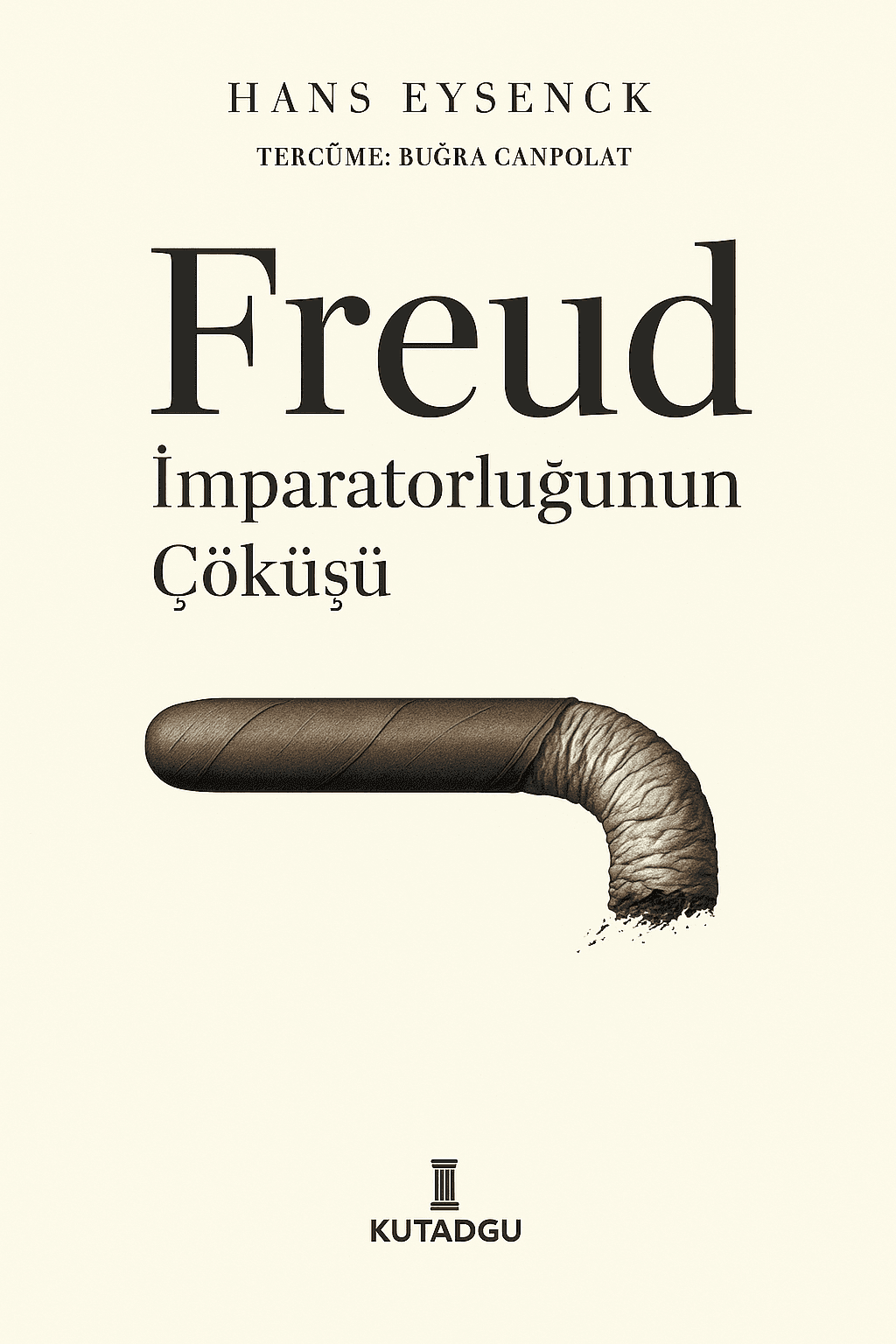
The Collapse of the Freudian Empire
Author(s) | H. J. Eysenck | ||||||||
|---|---|---|---|---|---|---|---|---|---|
Publisher(s) | Kutadgu Yayınları | ||||||||
Translator(s) | Buğra Canpolat | ||||||||
Number of Pages | 304 pages | ||||||||
Type(s) | Psychology | ||||||||
The Decline and Fall of the Freudian Empire (Original title: The Decline and Fall of the Freudian Empire), is a book published in 1985 by British psychologist Hans Jürgen Eysenck. In this work, Eysenck questions the scientific validity of Sigmund Freud’s psychoanalytic theories and evaluates the place of psychoanalysis within modern psychology from a critical perspective. The book centers on the claim that Freud’s theories lack empirical support and argues that psychoanalysis should be regarded not as a science but as a system of belief.
Hans Eysenck, one of the most prominent psychologists of the 20th century, is known for his commitment to experimental psychology. The Decline and Fall of the Freudian Empire serves as a summary of Eysenck’s long-standing criticisms of psychoanalysis. The book was written at a time when Freud’s theories were beginning to be questioned by the scientific community. While addressing the question of whether psychoanalysis qualifies as a scientific discipline, Eysenck discusses the widespread influence of Freud’s ideas in popular culture and their limited acceptance within academic psychology.
Eysenck criticizes Freud’s psychoanalytic theories on several key grounds:
Eysenck argues that Freud’s theories fail to meet the criteria of testability and falsifiability required of scientific hypotheses. Core psychoanalytic concepts such as the unconscious, id, ego, and superego are more speculative than empirically verifiable. According to Eysenck, these concepts offer a philosophical framework rather than a scientific theory. The book points out that Freud’s ideas—including dream analysis and the theory of childhood sexual development—are not supported by controlled experiments.
Eysenck challenges the effectiveness of psychoanalytic therapy, asserting that it is less effective than more empirically grounded approaches such as behavioral therapy or cognitive-behavioral therapy. He claims that psychoanalytic treatments are lengthy and costly, yet demonstrate limited measurable success in improving patients’ conditions. To support this claim, Eysenck cites various clinical studies and meta-analyses.
Eysenck notes that Freud’s theories were strongly shaped by the social and cultural dynamics of 19th-century Vienna. In particular, Freud’s emphasis on sexuality is interpreted as a reaction against the repressive norms of his time. Eysenck argues that this context undermines the claim that Freud’s theories represent universal scientific truths.
The Decline and Fall of the Freudian Empire attracted significant attention upon its publication, both within academic circles and among the general public. Eysenck’s harsh criticisms sparked debates among psychoanalytically oriented academics and practitioners. The book rekindled ongoing discussions about the scientific status of psychoanalysis and is regarded as a key work highlighting the methodological differences between behaviorist psychology and psychoanalysis.
Academics focused on experimental psychology have generally viewed Eysenck’s book as a valuable exposure of psychoanalysis’s scientific weaknesses. However, proponents of psychoanalysis have countered that Eysenck’s critique is biased and overlooks the cultural and philosophical contributions of Freud’s theories. The book deepened methodological debates within psychology and raised fundamental questions about the future of psychoanalysis as a scientific discipline.
Eysenck’s book also examines the influence of Freud’s theories on popular culture. Throughout the 20th century, psychoanalysis left a profound mark on literature, cinema, and the arts. Eysenck argues that this influence stems not from the scientific validity of Freud’s ideas but from their narrative power. In this regard, the book has also served as a resource for those seeking to understand psychoanalysis’s role in popular culture.
Eysenck, Hans J. Freud İmparatorluğunun Çöküşü. Çev. Buğra Canpolat. İstanbul: Kutadgu Yayınları, 2024.

The Collapse of the Freudian Empire
Author(s) | H. J. Eysenck | ||||||||
|---|---|---|---|---|---|---|---|---|---|
Publisher(s) | Kutadgu Yayınları | ||||||||
Translator(s) | Buğra Canpolat | ||||||||
Number of Pages | 304 pages | ||||||||
Type(s) | Psychology | ||||||||
No Discussion Added Yet
Start discussion for "The Collapse of the Freud Empire (Book)" article
Historical Context and Content of the Book
Critiques of Freud’s Psychoanalysis
Scientific Validity and Falsifiability
Therapeutic Efficacy
Historical and Cultural Context
Impact and Controversies
Reception in Academic Circles
Impact on Popular Culture