This article was automatically translated from the original Turkish version.
+1 More
Official Name | Kingdom of Thailand | ||||||||
|---|---|---|---|---|---|---|---|---|---|
Head of State | Anutin Charnvirakul | ||||||||
Form of Government | Constitutional Monarchy | ||||||||
Capital | Bangkok | ||||||||
Area | 513.120 km² | ||||||||
Neighboring Countries | Malaysia Myanmar Laos Cambodia | ||||||||
Climate | Tropical monsoon climate influenced | ||||||||
Time Zone | UTC +7 (Thailand Time – Indochina Time) | ||||||||
Telephone Area Code | 66 | ||||||||
Official Language | Thai | ||||||||
Currency | Thai Baht (THB) | ||||||||
Religion | Christianity (Catholic and Protestant) %1.2 Islam %5 Theravada Buddhism %93 Other %0.8 | ||||||||
Ethnic Groups | Malay %2 Thai (Siamese) %86 Thai people of Chinese origin %10 Ethnic minorities %2 | ||||||||
Official National Anthem | Phleng Chat Thai | ||||||||
Population (2025) | 65.951.210 million | ||||||||
GDP (2025) | 558.573 (IMF - 2025 estimate) | ||||||||
GDP per Capita (2025) | 7.942 (IMF - 2025 estimate) | ||||||||
Internet Domain Code | .th | ||||||||
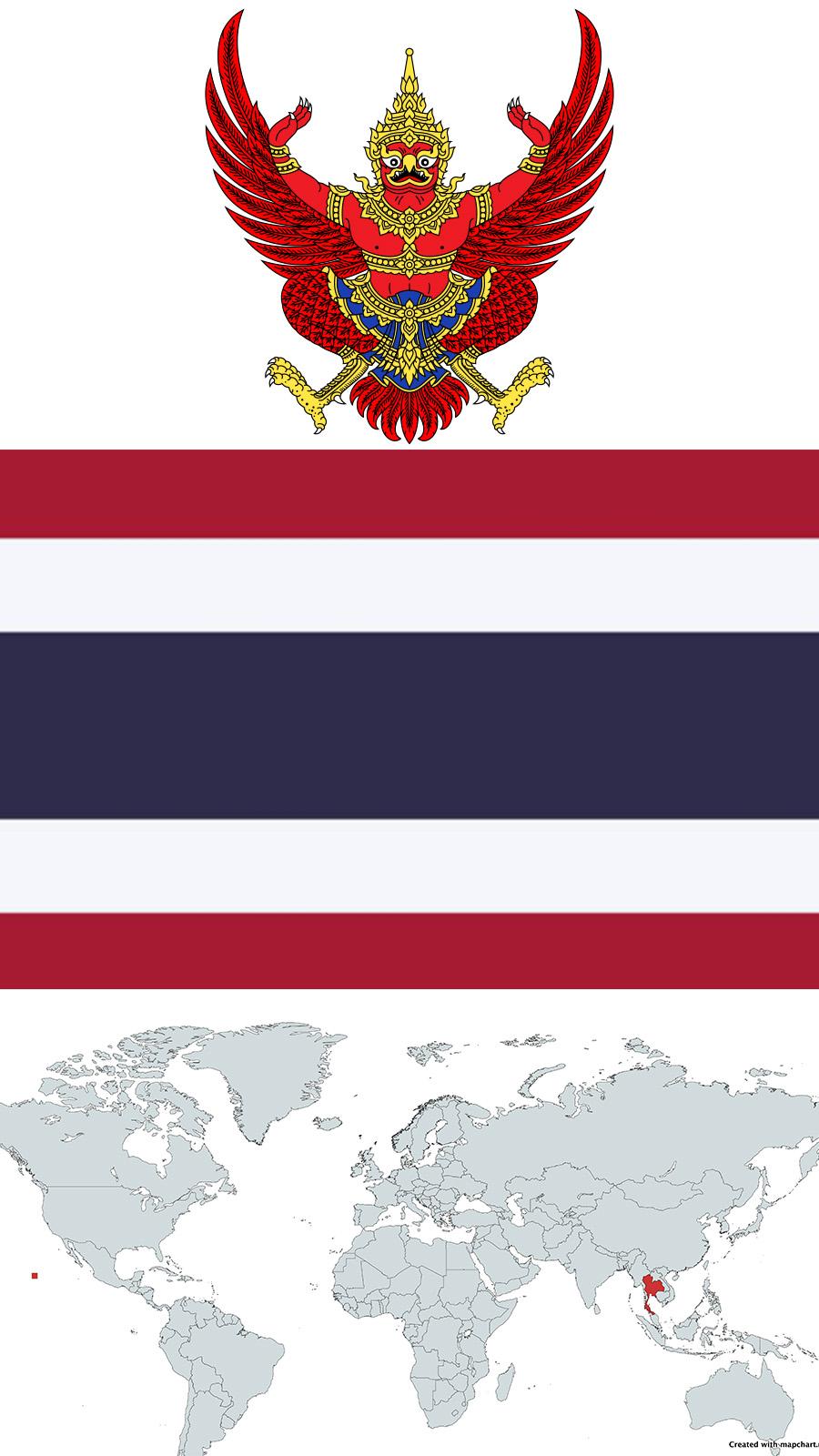
Thailand is a country located in Southeast Asia, east of the Indian subcontinent, centered around the Mekong River basin and the Chao Phraya Delta. It is bordered by Myanmar and Laos to the north, Laos and Cambodia to the east, Malaysia to the south, and the Andaman Sea to the west. With an area of 513,115 km², the country has a population of 65,951,210 and its capital is Bangkok. It is divided into 76 provinces (changwat) and the special administrative region of Bangkok, totaling 77 administrative units. The official language is Thai and the currency is the Thai Baht. In Thailand, which has a tropical monsoon climate, the annual average temperature is approximately 28°C.
Thailand is governed as a constitutional monarchy. The head of state is the king, who represents the monarchy; however, executive power is exercised by the prime minister and the cabinet. Since 1932, the country has been governed by a multi-party parliamentary system in which the military exerts significant influence on politics. The coalition government formed under the leadership of the Pheu Thai Party following the 2023 general elections constitutes the current political structure.
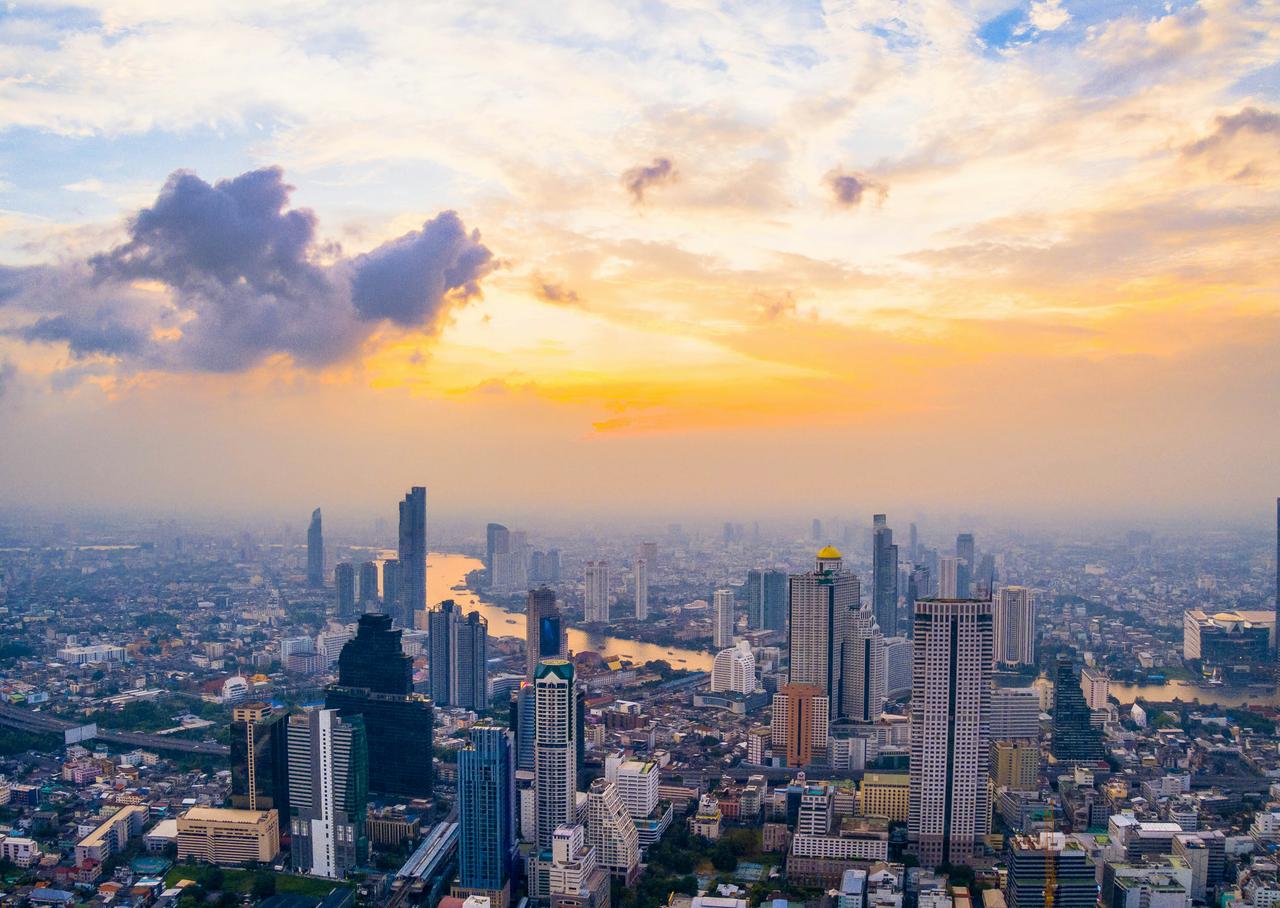
Bangkok (unsplash)
Thailand’s national anthem, Phleng Chat Thai, was first adopted in 1932. It was introduced during the transition from absolute monarchy to constitutional monarchy and later revised in 1939 and 1945. The current version is based on the 1945 revision. The national anthem is played daily at 08:00 and 18:00 in public places, and the public is expected to stand in respect during its performance.
The Thai flag consists of five horizontal stripes. The outer red stripes represent the nation, the inner white stripes represent religion, and the central thick navy blue stripe represents the monarchy. The flag was officially adopted in 1917 and is also known as “Trairanga” (Three Colors). The flag and anthem are among the primary symbols of the Thai nation and serve as emblems of national identity and loyalty.
Phleng Chat Thai (Ingen)
Information on the early history of the Thai people is primarily derived from areas outside modern-day Thailand, especially the Yunnan region of southern China. There are no original Thai sources from this period; historical knowledge is largely transmitted through Chinese records, local legends, and traditions. The manuscript History of the Southern Princes, written in 1537 and revised in 1776, is one of the primary sources on early Thai history.
In Chinese sources, the Thai people were referred to by various names such as “Hsi-nan,” “P’u-jen,” “Tüen-jen,” and “Lu-chwe,” while the Thais themselves identified as “Tai” and their land as “Nan Chao.” Initially residing in mountain villages in western Yunnan, the Tai gradually interacted with other groups to form a political structure. According to Chinese records, the Tai people are mentioned as early as the Xia Dynasty, traditionally dated to 2205 BCE.
The Nan Chao Kingdom, established in Yunnan between 649 and 902, played a crucial role in shaping Thai identity. With its capital at Dali, the kingdom promoted Buddhism, constructed temples, and supported religious practices with state backing. The ruling elite included Tai monarchs, and the majority of the population was Tai. Nan Chao developed political relations with China and Tibet and emerged as a regional power. The kingdom was destroyed in 1253 by the Mongol invasion led by Kublai Khan, an event that triggered the migration of the Tai people into Southeast Asia.
Following the migration of the Thai people, the first organized political structure in Thai territory was the Sukhothai Kingdom. Founded under the leadership of Sri Indradit, it gained strength by capturing Angkor in 1238. During the reign of King Ramkhamhaeng (1275–1317), significant administrative and legal reforms were implemented, the Thai alphabet was developed, and a strong military was established. After the king’s death, the Sukhothai Kingdom weakened and was succeeded by the Ayutthaya Kingdom, founded in 1350 around the Chao Phraya River.
Ayutthaya expanded its control by absorbing Sukhothai’s territories and subjugating Lanna and other Thai city-states. It captured Angkor in 1432 and controlled the Tenasserim coast in the 1540s. During the reign of King Trailok (1448–1488), a feudal administrative system was adopted, and foreign trade and diplomacy flourished. In the 16th century, Ayutthaya faced threats from Burma and was forced to pay tribute in 1569. King Narasuen, who ascended the throne in 1590, revitalized the kingdom.
Ayutthaya established intensive commercial ties with China, India, Iran, and the Arab world, becoming a hub for Muslim and European merchants. During the reign of King Narai (1657–1688), European influence at court increased, but declined after 1688. The kingdom was destroyed in 1767 by a Burmese invasion and replaced by a short-lived capital centered in Thonburi.
In 1782, General Chao Phraya Chakkri ascended the throne as King Rama I, founding the Chakkri Dynasty and moving the capital to Bangkok. During the reigns of Rama II and Rama III (1809–1851), borders were expanded and trade agreements were signed with Britain. Under Rama IV (1851–1868), relations with Western states intensified and the modernization process began.
During the reign of Rama V (Chulalongkorn, 1868–1910), slavery was abolished and comprehensive reforms were introduced in law, education, transportation, and administration. In 1909, a treaty with Britain ceded certain territories in the Malay Peninsula to Britain, while Patani and Satun were incorporated into Thailand. During this period, Thailand preserved its independence as a buffer state between British and French colonial territories.
In the 20th century, Rama VI introduced compulsory education. During the reign of Rama VII (1925–1935), demands for a constitution grew. In 1932, a military coup ended absolute monarchy and established a constitutional monarchy. Rama VIII, who ascended the throne in 1935, died in 1946 and was succeeded by Rama IX (Bhumibol Adulyadej).
During the premiership of Phibul Songgram from 1938, the country’s name was changed from Siam to Thailand. During World War II, Thailand allied with Japan; after the war, Pridi Phanomyang, a leader of the anti-Japanese resistance, became prime minister. Rama IX, crowned in 1950, became the longest-reigning monarch in Thai history.
During the Cold War, Thailand developed close ties with the United States and sided with the Western bloc in the Korean and Vietnam Wars. It joined SEATO in 1954 and served as a base for U.S. air operations in the 1960s. SEATO was formally dissolved in 1979.
Since 1947, Thailand has experienced numerous military coups. Student movements in 1973 paved the way for a return to civilian rule, but military interventions occurred again in 1976 and 1977. In 1991, the military seized power, and in 1997 a new constitution aimed at democratization was adopted. In 2006, Prime Minister Thaksin Shinawatra was removed from office, and another coup occurred in 2014 under General Prayut Chan-o-cha.
The new constitution enacted in 2017 established the framework for a transition from military oversight to civilian rule. In 2019, Prayut continued as civilian prime minister. Following the 2023 elections, a coalition government led by the Pheu Thai Party appointed Paetongtarn, daughter of Thaksin Shinawatra, as prime minister.
Thailand is a landlocked country in Southeast Asia. Located at the center of the Indochinese Peninsula, it shares land borders with Myanmar (Burma) to the north and west, Laos to the northeast and east, Cambodia to the east, and Malaysia to the south. It also has coastlines along the Andaman Sea to the southwest and the Gulf of Thailand, which connects to the South China Sea to the southeast.
Thailand’s area is approximately 513,120 km². The country has a narrow, elongated shape extending from north to south. Mountainous regions from the north merge with broad alluvial plains in the central region. Central Thailand is the country’s most important agricultural zone. The Chao Phraya River, which flows through this region, extends to Bangkok, and its delta is one of the most densely populated areas in the country.
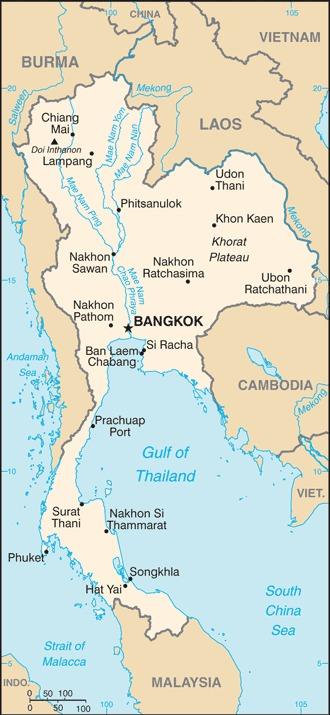
Thailand Country Map (CIA)
The northern and western regions of Thailand contain mountainous areas that include the country’s highest peaks. These areas serve as a natural boundary between Thailand and Myanmar. The mountainous regions are covered with natural forests and surrounded by narrow alluvial valleys. The highest point is Doi Inthanon Mountain at 2,565 meters. Southern Thailand also features hilly and mountainous terrain, where rubber production and tropical fruit cultivation are prominent.
The central region of Thailand consists of a vast and fertile plain formed by the Chao Phraya River. This plain, due to its alluvial soil structure, is the country’s most important agricultural area and is known as “Asia’s Rice Bowl.” Bangkok, the country’s administrative, commercial, and political center, is also located in this region.
Narrow valleys in the northern mountainous areas, enriched by alluvial deposits, provide suitable land for agriculture and contribute to the development of settlements.
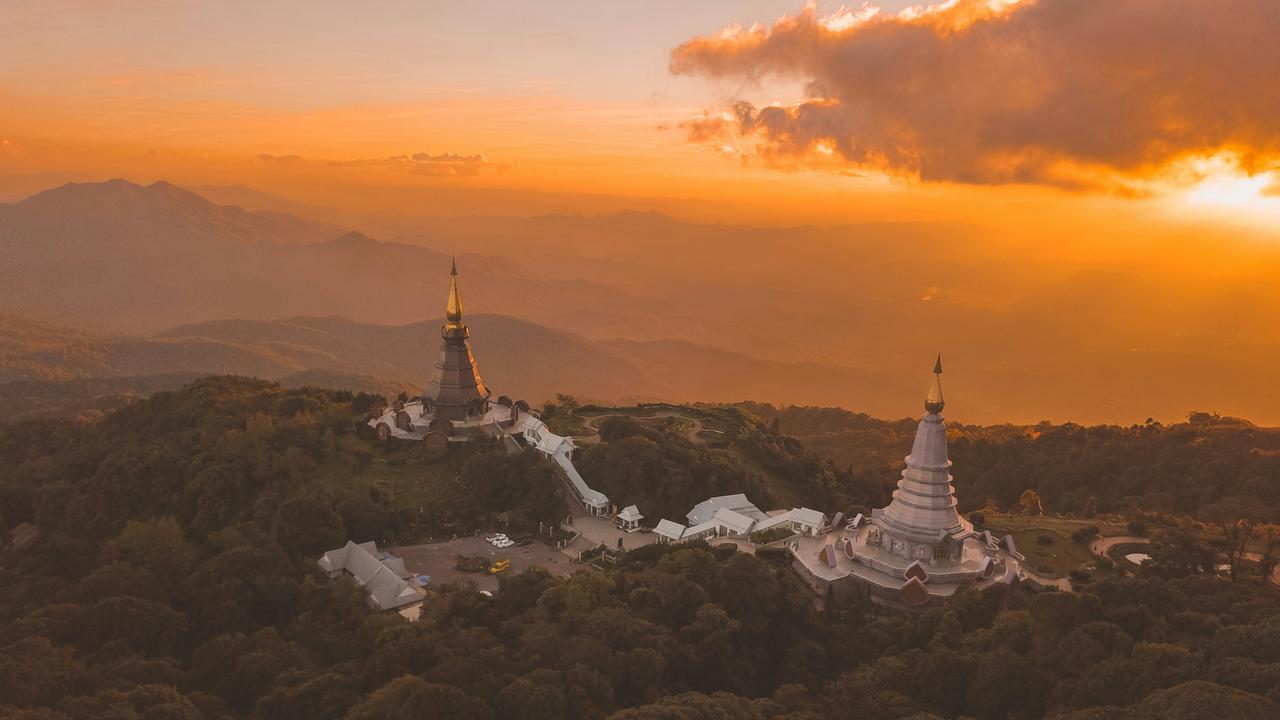
Doi Inthanon Mountain (unsplash)
The main river system in Thailand is the Chao Phraya River, which nourishes the central alluvial plain and serves as the primary source for agricultural production. The Khorat Plateau in the northeast is bordered by the Mekong River, which forms the boundary between Thailand and Laos and shapes the country’s eastern geography.
One of the country’s significant lakes is Songkhla Lake in the south, covering an area of approximately 1,290 square kilometers. This lake is important both ecologically and economically.
Thailand is under the influence of a tropical monsoon climate. Temperatures remain high throughout the year, and the seasons are divided into three main periods: hot season, rainy season, and cool season. These periods are shaped by the Southeast Asian monsoon cycle.
The rainy season, driven by southwest monsoons, typically begins in May and lasts until October. During this period, heavy rainfall occurs across much of the country, especially along the southern coasts. The cool season, from November to February, is the driest and relatively mildest period of the year. The hot season, occurring in March and April, sees the highest temperatures.
Thailand’s vegetation varies according to climatic conditions. Monsoon forests are widespread across the country. These forests consist of deciduous trees that leaf out seasonally with rainfall. Mangrove forests are found along coastal areas, while tropical rainforests are dense in mountainous regions. Scrublands and sparse woodlands dominate arid zones.
In areas where agriculture is widespread, the natural vegetation has largely been replaced by farmland.
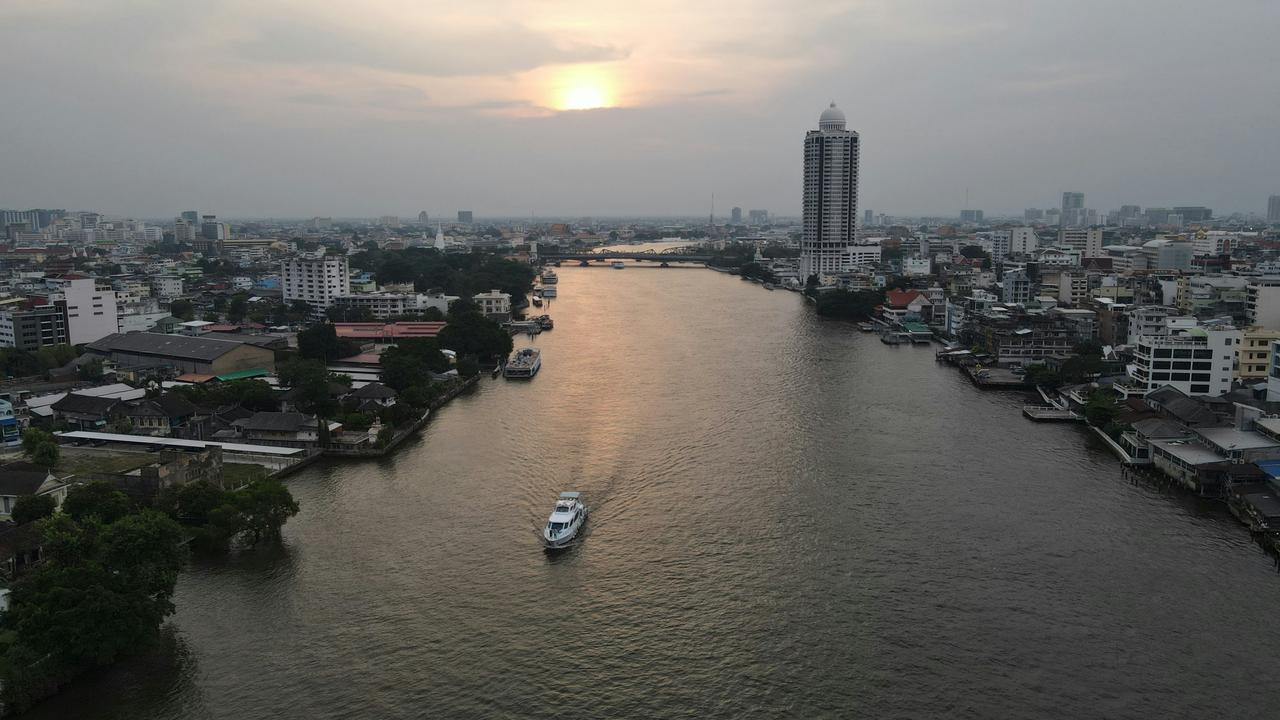
Chao Phraya River Flowing Through the City (unsplash)
Thailand possesses diverse underground resources. Its main minerals include zinc, gypsum, and lignite. Lignite is an important source of energy, with approximately 1.4 billion tons of recoverable coal reserves in the country.
Petroleum and natural gas play a significant role in Thailand’s energy sources. Exploration activities in the Gulf of Thailand have identified proven oil reserves of 453 million barrels. These reserves include not only crude oil but also liquid natural gas components. Natural gas reserves are estimated at 300.15 billion cubic meters. Additionally, it is estimated that further oil and gas reserves exist in an area of approximately 2,600 square kilometers, although sovereignty over this maritime region remains disputed between Thailand and Cambodia. Negotiations on this area have been ongoing for a long time between the two countries.
As of 2023, Thailand’s daily crude oil production reached 409,000 barrels, placing it 30th globally in production volume. In the same year, annual natural gas production was approximately 30 billion cubic meters, giving Thailand a 1% global share and ranking it 24th globally.
Thailand’s total land area consists of 27.5% agricultural land, 25% forests, and 34% unclassified areas. The most productive agricultural region is the Central Plains belt. Crops such as maize, cassava, cotton, and pineapple are cultivated in upland areas, while rubber production is concentrated in the southern regions. Rice cultivation is highly significant, with nearly half of the arable land dedicated to rice paddies. Over the past 30 years, arable land has increased by approximately 20 million hectares, primarily through expansion rather than improved productivity. However, urbanization and soil salinization are expected to reduce arable land over time.
In terms of water resources, Thailand is among the countries experiencing a decline in renewable freshwater per capita. Between 2011 and 2021, per capita freshwater availability decreased by 4%, reaching 3.13 cubic meters in 2021.
Thailand, seeking diversity in energy production and natural resource use, is taking steps to utilize its potential to meet domestic consumption and enhance energy security.
Thailand’s energy infrastructure is largely based on electricity generation and energy imports. Electricity production across the country is carried out by the state-owned Electricity Generating Authority of Thailand (EGAT) and the private sector. Thailand relies on various fossil fuels, primarily natural gas, and hydroelectric power for energy production. Demand for energy is increasing, making the country increasingly dependent on imports to ensure energy security. Alternative energy strategies are being developed, with investments directed toward renewable sources such as biomass and solar energy.
The transportation infrastructure is supported by an extensive network of roads, railways, maritime routes, and air transport. Bangkok, in particular, serves as Thailand’s transportation hub.
Highways have developed through a network of motorways connecting various regions of the country. The government prioritizes road construction to support both rural and intercity transportation.
Rail transport is managed by the state-owned State Railway of Thailand (SRT). In recent years, high-speed rail projects have gained prominence, with infrastructure investments planned in cooperation with China. Additionally, modern systems such as the MRT (metro) and BTS Skytrain are used for urban transit in Bangkok.
In air transport, Thailand is one of Asia’s major aviation hubs. Bangkok’s Suvarnabhumi International Airport handles heavy regional and global air traffic. Numerous international and domestic airports operate across the country.
Maritime transport is strategically important for both commercial shipping and tourism. With coastlines on the Andaman Sea and the Gulf of Thailand, Thailand offers a significant logistics network through its various ports.
Thailand is among the developing economies of Southeast Asia. The country has an export-oriented economic structure. The Thai economy exhibits a diversified structure based on strong industrial production, agricultural exports, and a growing services sector. The manufacturing sector, in particular, makes a significant contribution to the country’s gross domestic product (GDP). Energy demand is largely met through imports.
Since the 1980s, Thailand’s economy has shifted from an agriculture-based structure toward industry and services, and is now undergoing a transformation guided by digital economy and green development goals. Under the “Industry 4.0” strategy, Thailand has prioritized digitalization and high-value-added production. Additionally, under the “bio-circular-green economy” model, sectors such as agriculture and food, healthcare, energy and biochemicals, tourism, and the creative economy have gained priority.
In 2024, Thailand’s nominal GDP was approximately $526.5 billion. 【1】 It is projected to reach $558.6 billion in 2025. Per capita national income is estimated at $7,493 in 2024 and $7,942 in 2025. The real GDP growth rate is forecast at 2.5% in 2024 and 2.0% in 2025.
Consumer price inflation averaged 0.4% in 2024 and is projected to remain at 0.2% in 2025. The unemployment rate is 1% in both years. The current account balance as a percentage of GDP is projected at 2.5% in 2024 and 1.7% in 2025. 【3】
The government’s total debt as a percentage of GDP was 63.2% in 2024 and is projected to rise to 64.9% in 2025. 【4】
These indicators reflect Thailand’s economy, characterized by low unemployment, stable growth performance, controlled inflation, and a trade surplus. Thailand is the 31st largest economy in the world by nominal GDP as of 2025.
Although agriculture has traditionally held a significant place in Thailand’s economy, its share has declined in recent years while still providing employment to a large rural population. Rice is the country’s most important agricultural product, produced intensively in the fertile plains around the Chao Phraya River. Tropical fruits, rubber, palm oil, and sugarcane are also major agricultural exports. Livestock activities primarily serve domestic consumption.
The industrial sector plays a dominant role in Thailand’s economic growth. Automotive, electronics, food processing, textiles, and petrochemicals are leading industries. The automotive industry, in particular, has positioned Thailand as “Asia’s Detroit,” with production geared toward both domestic consumption and exports. Thailand also serves as a regional manufacturing hub for major multinational corporations. Electronics and digital hardware production have increased significantly in recent years.
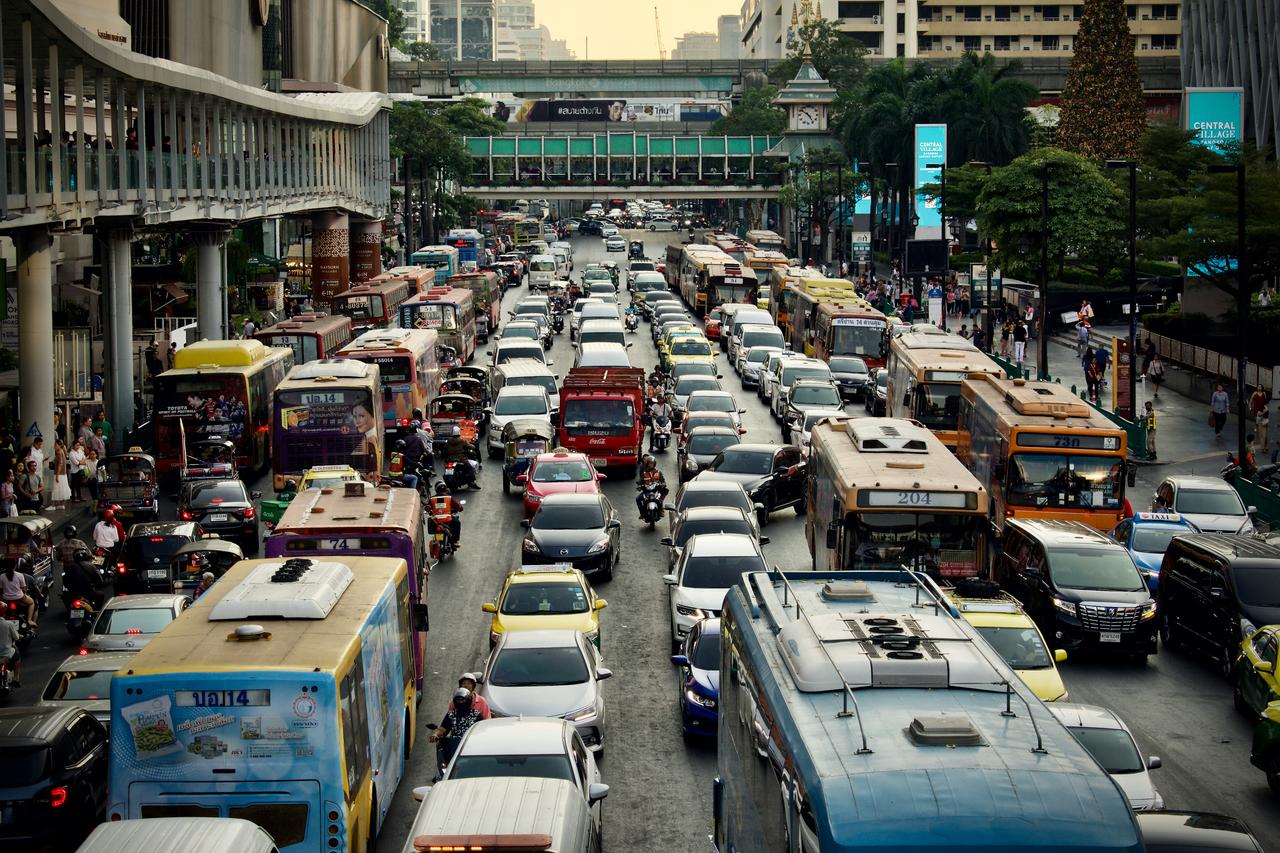
Thailand Traffic (unsplash)
Tourism is one of the most dynamic sectors within Thailand’s services industry. The country has become a major international destination due to its natural beauty and cultural richness. The financial system is supported by a well-developed banking infrastructure, with banking and insurance sectors operating under modern regulations, primarily centered in Bangkok.
Thailand has a highly open economy in terms of foreign trade. Major exports include electronic goods, automobiles and spare parts, food products, and agricultural raw materials. Imports are concentrated in energy, industrial inputs, and high-technology products. Thailand maintains close commercial relations with ASEAN countries, with China, Japan, the United States, and the European Union among its primary trading partners.
As of 2025, Thailand’s total population is 65,951,210. The population growth rate has significantly declined in recent years, with an aging population and falling fertility rates becoming prominent. The median age has risen, and the fertility rate has fallen below the replacement level. This trend has placed Thailand in the advanced stages of the demographic transition.
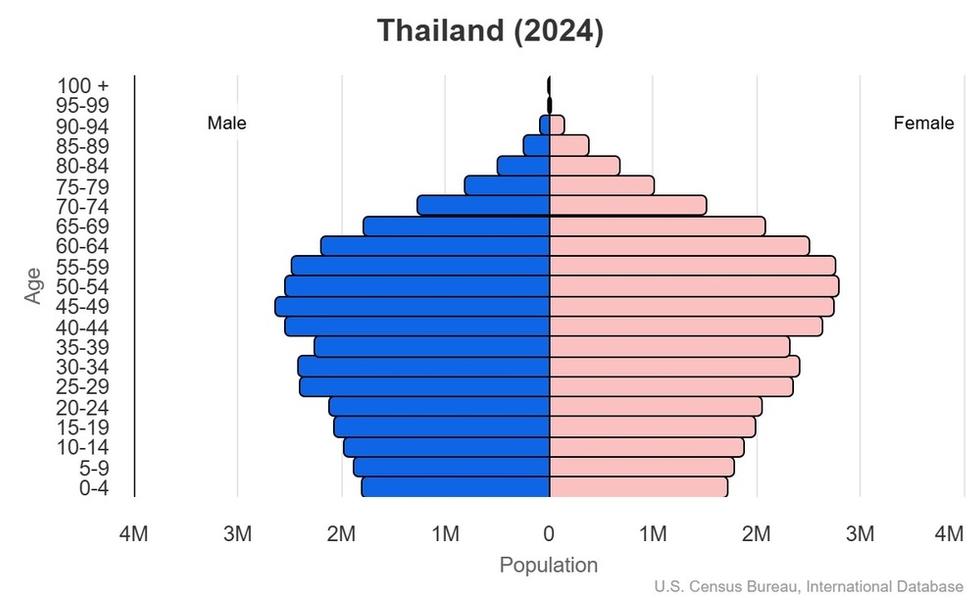
2024 Population Distribution (CIA)
Thailand’s population is unevenly distributed geographically. The most densely populated region is the central area encompassing Bangkok and its surroundings. Urbanization is increasing, with internal migration from rural areas to urban centers continuing.
Bangkok, as the country’s economic, administrative, and transportation hub, attracts significant migration, while rural areas such as the northeast experience population loss.
The majority of Thailand’s population consists of the Thai (Tai) people. Chinese-Thais constitute a numerically significant minority within the population. The Chinese-origin population is particularly influential in urban economic life. Additionally, various upland ethnic groups such as the Karen, Hmong, Lahu, and Akha reside in northern regions. In the south, Malay-origin Muslim communities represent a notable demographic.
Low fertility and an aging population are creating demographic trends that may lead to a shrinking labor supply in the long term. To mitigate this, the government has turned to migrant labor, employing migrants primarily from neighboring countries such as Myanmar, Cambodia, and Laos in construction, agriculture, and service sectors. However, this migration flow has also created challenges in social and economic integration.
The most widespread religion in Thailand is Buddhism. Approximately 93% of the population adheres to Theravada Buddhism. Buddhism is a fundamental element of Thai identity and cultural structure. The Muslim minority population, concentrated in the southern regions, is predominantly of Malay origin and follows Islam. Christianity, Hinduism, and various local beliefs are also represented in smaller proportions.
Thailand’s education system is centrally controlled by the government. The Ministry of Education is responsible for curriculum, teacher appointments, and institutional organization. According to the Thai Constitution, education is compulsory and free for all citizens. Basic education lasts 12 years, comprising six years of primary school, three years of lower secondary school, and three years of upper secondary school.
The higher education system has also expanded. Public and private universities are spread across various regions of the country, with Bangkok being the main center. Chulalongkorn University, Thammasat University, and Mahidol University are among Thailand’s leading higher education institutions.
Specialized educational institutions exist for those pursuing military careers. Officer candidates receive training at institutions such as the Armed Forces Academies Preparatory School (AFAPS), where they establish early connections with other security agencies.
Regional disparities and urban-rural differences in education are notable. Schools in Bangkok and its vicinity generally have better physical infrastructure and teaching resources. In rural areas, qualified teaching staff and facilities remain limited.
Thailand’s cultural structure has been shaped historically around monarchy, Buddhism, and traditional Thai values. Social values are based on hierarchy, respect, and harmony. Reverence for the royal family and religious institutions defines the core norms of Thai society. Showing respect to Buddhist monks, elders, and state officials is a cultural obligation. The concept of “not losing face,” as it is often described, leads individuals to avoid conflict in social interactions.
Thailand’s traditional literature is largely religious in content. A significant portion of literary production is directly or indirectly linked to Buddhism and Hinduism. Cultural elements acquired by the Thai people before their migration from southern China were reshaped through Buddhism and reflected in literature. Traditional Thai literature is typically composed in poetic form, with emotional narratives expressed through various verse structures.
Literature is divided into two main categories: written and oral. Oral literature consists of folk tales, legends, epics, and poems. Written literature developed primarily within royal circles. Thai literature encompasses texts reflecting both popular and courtly culture. Major works in Thai literature include:
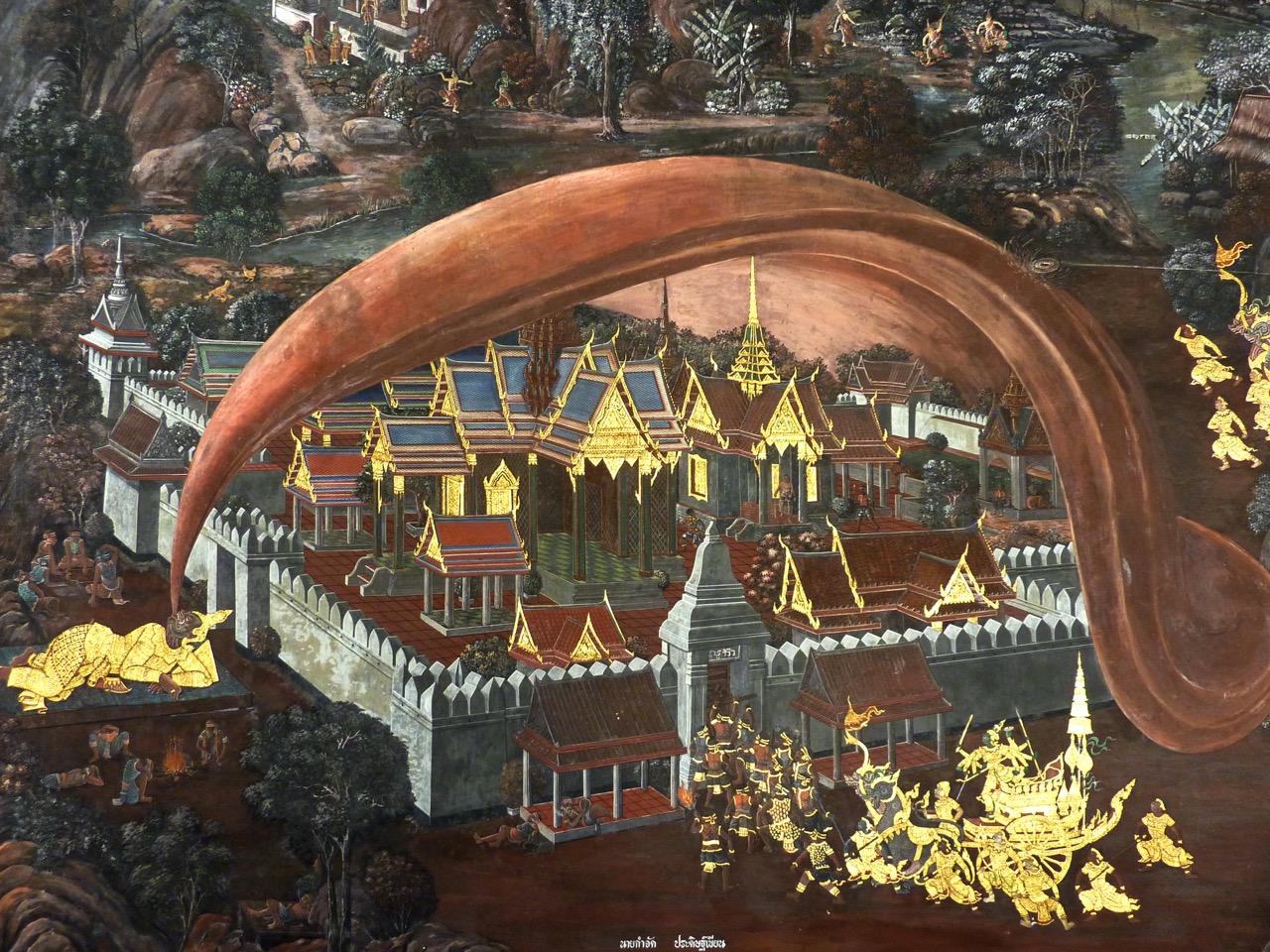
Scene from the Ramakien Epic, Wall of the Grand Palace, Thailand (flickr)
In modern Thai literature, Western influence has led to increased use of prose.
Thai performing arts form a multifaceted cultural domain shaped by religious beliefs, folk traditions, and royal court influences. Buddhism, Hinduism, and animist beliefs have significantly influenced their development. This art form is an important cultural heritage reflecting Thai social structure, moral values, and aesthetic sensibilities. Thai performing arts are broadly categorized into music and song, dramatic arts, and theater.
Thai music features a diatonic scale similar to Chinese music. It lacks the major/minor distinctions found in Western music and is characterized by unique tonal sequences. Music is used in religious ceremonies and traditional festivals to strengthen spiritual feelings and reinforce social bonds. Music is performed in two main forms:
Traditional Thai musical instruments include the pin (stringed instrument), can (reed wind instrument), wooden xylophone, flute, and violin. Oral musical traditions such as ninni lullabies are also part of the traditional repertoire.
Thai dramatic arts rely on body movement, vocal expression, dance, music, and props to convey narratives. Traditional performances are largely ritual in origin.
Khon, Classical Dance-Drama (Thai PBS World)
Thai visual arts have evolved historically through religious beliefs, environmental conditions, and interactions with neighboring cultures. Visual arts constitute a vital cultural domain reflecting societal religious values, aesthetic understanding, and cultural identity.
Thai architecture, particularly in temples (wat) and palace structures, is distinguished by its traditional style. Two main architectural types are prominent in classical design:
Roofs are covered with colorful ceramic tiles. Facade decorations use gold leaf and colored glass mosaics, creating a luminous effect in sunlight. Notable examples include the Emerald Buddha Temple, Wat Benchamabophit, Wat Suthat Thepwararam, and Wat Pho in Bangkok.
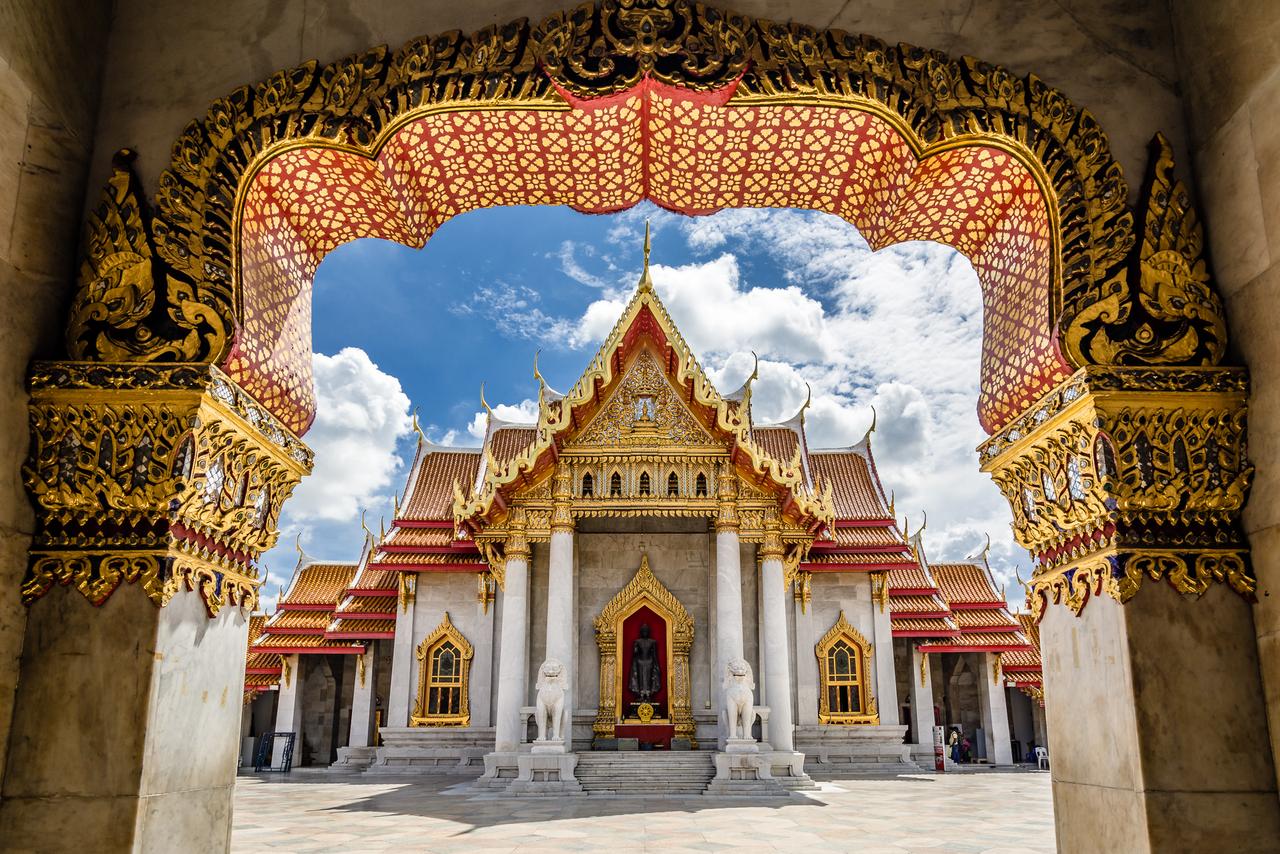
Wat Suthat Thepwararam (flickr)
Traditional Thai painting developed primarily as mural art. These murals, located on temple walls, depict the life of the Buddha and Jataka tales. Traditional Thai paintings depict figures conventionally, without using Western techniques such as perspective or shading. Simplicity and narrative clarity are emphasized in compositions.
UNESCO World Heritage Sites include the ruins of ancient capitals such as Ayutthaya and Sukhothai. These areas are notable for their architectural monuments and urban planning that document the historical development of Thai kingdoms. Additionally, the Ban Chiang archaeological site hosts some of the most important prehistoric findings in Southeast Asia.
Historical structures and archaeological sites are concentrated especially around the Chao Phraya River and in northern regions. Buddhist temples, palace complexes, and ancient city ruins reflect the historical evolution of Thai architecture and art.
Museums and cultural institutions serve to preserve and promote cultural heritage. The National Museum in Bangkok houses an extensive collection on Thai history, art, and archaeological artifacts. Local cultural centers also conduct educational and promotional activities in traditional crafts, music, and dance.
The diversity of plant products and food production capacity have made Thailand one of the leading countries in world cuisine. Tropical fruits, rice, various vegetables, and spices are widely consumed. As of 2023, Thailand ranks among the top 15 countries globally in food exports and stands out as a major global food production and export hub.
Thai cuisine is characterized by a balanced blend of sweet, sour, salty, and spicy flavors. Sauces, fresh herbs, coconut milk, lemongrass, kaffir lime leaves, and fish sauce form the essential ingredients of Thai dishes.
Thai cuisine offers a unique range of flavors derived from its rich agricultural products, tropical fruits, and aromatic herbs. The information provided emphasizes Thailand’s position among the world’s leading food producers and how this production capacity directly influences its cuisine.
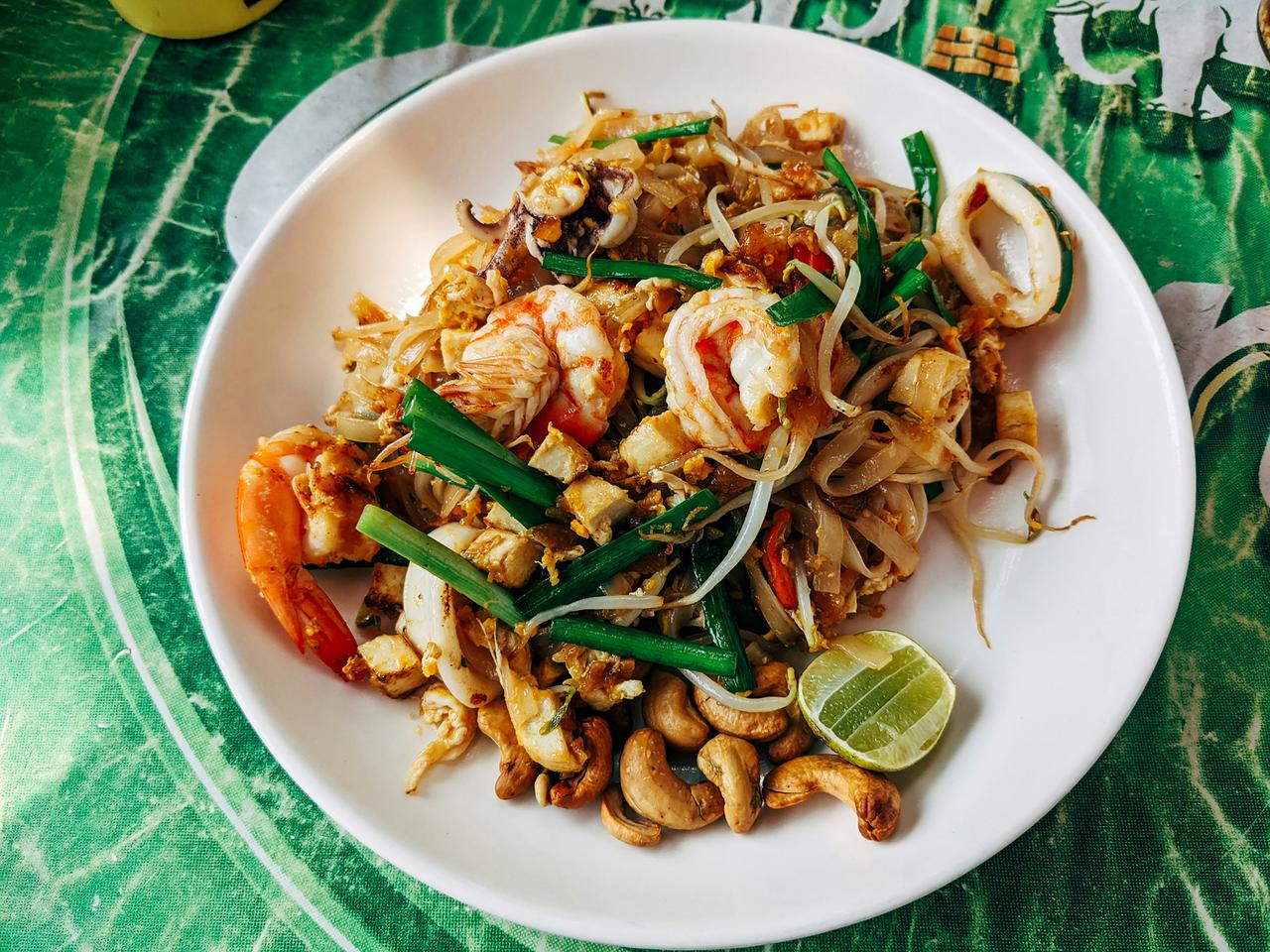
Pad Thai (unsplash)
Thailand is one of the most visited countries in Southeast Asia. Centers such as Bangkok, Chiang Mai, Phuket, Pattaya, and Krabi are prominent for both cultural and beach tourism.
A significant portion of tourists visiting Thailand come from Asia-Pacific countries. Tourist flows originate from China, India, Malaysia, South Korea, and Japan. Additionally, long-haul tourists from Europe and the United States are drawn to the country’s historical sites, spa centers, and natural parks.
Tourist profiles are increasingly oriented toward health tourism and cultural/historical heritage tourism. Cities such as Bangkok, Chiang Mai, and Pattaya stand out for their advanced private hospitals and service infrastructure in health tourism.
Tourism is a major source of income for Thailand’s economy. Tourism-generated foreign exchange contributes to the country’s trade balance and creates employment. Many sectors, including accommodation, transportation, food and beverage, and entertainment, are directly linked to tourism.
The Thai government continues to invest in infrastructure and promotional campaigns to develop the tourism sector. Expansions in transportation infrastructure—such as new airports and high-speed rail projects—are aimed at facilitating tourist access to the country.
The Ministry of Tourism and related agencies are implementing various projects to promote sustainable tourism. Preserving cultural heritage sites, reducing environmental impacts, and ensuring local communities benefit from tourism revenues are key focuses of these policies.
Tourism activities in Thailand are heavily concentrated in specific hub cities. Bangkok, the capital, serves as both the administrative and tourism center of the country. The city offers a multifaceted tourist experience with modern shopping malls, street markets, and temples. Bangkok is also the primary entry point for international tourists to Thailand.
Chiang Mai stands out for its historical character, mountainous landscape, and traditional festivals. Located in northern Thailand, it is one of the centers of cultural tourism. Temples, traditional craft workshops, and surrounding ethnic communities are key attractions for tourists.
Phuket, located in southern Thailand, is the country’s most famous coastal destination. With its white sandy beaches, diving centers, and resort hotels, it is the epicenter of beach tourism. Krabi and Pattaya are also popular destinations with similar coastal tourism infrastructure.
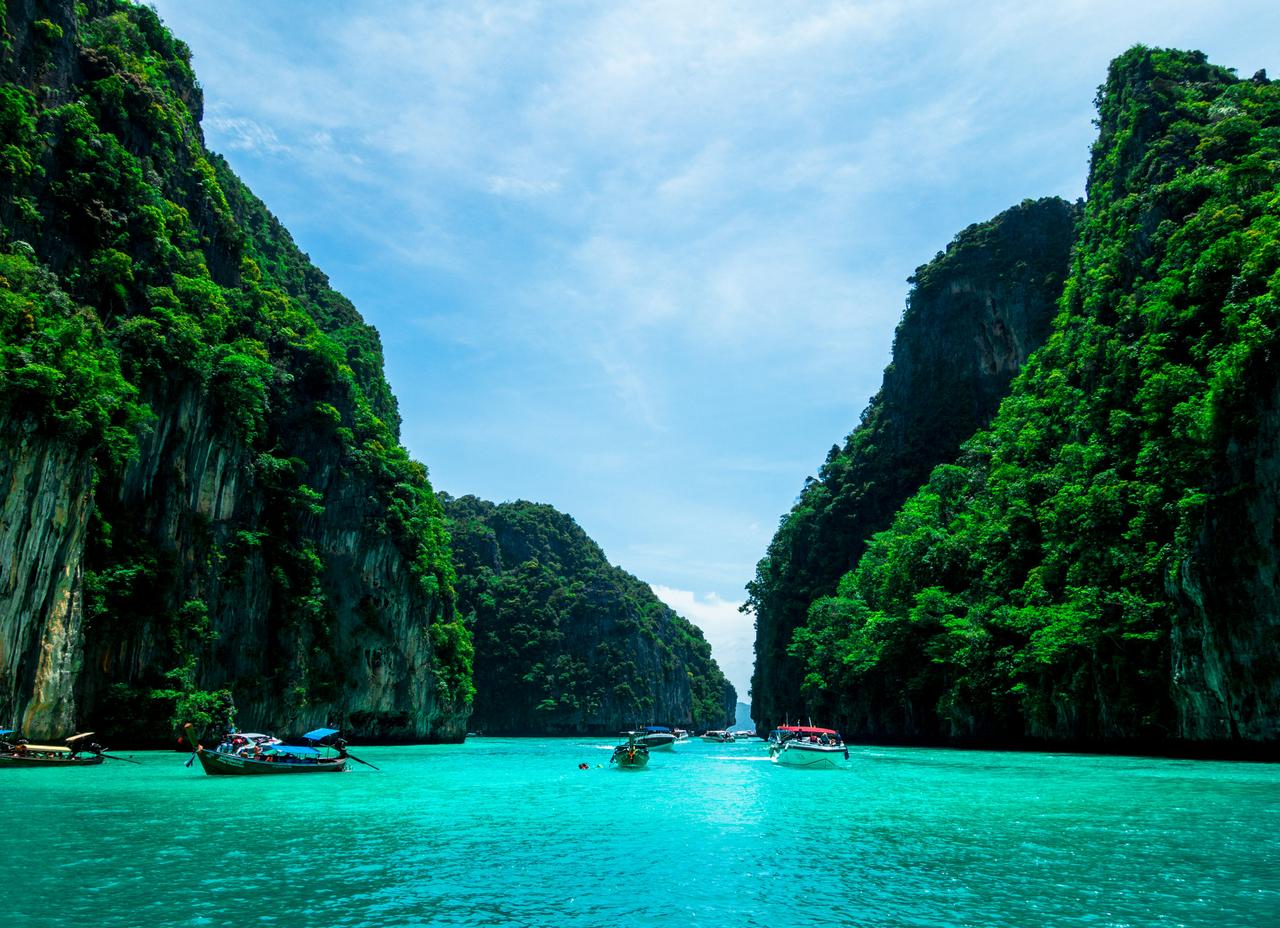
Phuket (unsplash)
Numerous national parks and nature conservation areas exist throughout the country. These parks offer nature-based activities such as camping, safaris, and birdwatching for both local and international tourists. Additionally, natural features such as waterfalls, caves, and hot springs in some regions hold tourist value.
Thailand’s foreign policy has historically focused on maintaining a balance among major powers. This approach became particularly prominent from the late 19th century as Western colonial powers expanded their influence in Southeast Asia. Thailand (formerly Siam) was the only country in the region to preserve its independence while others were colonized.
During the Cold War, Thailand developed close relations with the Western Bloc and strengthened defense cooperation with the United States. During this period, Thailand was viewed as a regional ally in the fight against communism. As a founding member of ASEAN, Thailand contributed to regional stability and cooperation.
In the 21st century, Thailand has continued a foreign policy emphasizing multilateral diplomacy and economic relations. Economic ties with the People’s Republic of China have expanded, with cooperation increasing in infrastructure, defense, and technology. Strategic ties with countries such as the United States, Japan, and South Korea have also been maintained. However, Thailand’s foreign policy has been influenced by domestic political developments; military coups and the civil-military balance have at times created uncertainty in international relations.
As of 2024, Thailand’s foreign policy emphasizes border security, defense cooperation, and the preservation of regional peace. The Thai government maintains a pragmatic approach in relations with neighboring countries and closely monitors instability along its borders, such as developments in Myanmar. Additionally, appointments in defense and security reflect indirect influences from foreign policy orientations.
Thailand’s foreign policy is based on a balance-of-power approach with major countries and the cultivation of multilateral relations. The country focuses on economic cooperation, security issues, and border management in its bilateral relations with neighboring states.
Thailand and China share strong relations rooted in historical and cultural ties. In the 21st century, economic relations between the two countries have further developed, with increased cooperation in infrastructure, defense, and technology. While some senior Thai military appointments have been linked to Chinese military training backgrounds or connections to the Thai royal family through Germany, these links are discernible in appointment backgrounds rather than official foreign policy documents. Additionally, Thailand’s procurement of Chinese submarines as part of its defense cooperation represents a component of the strategic relationship between the two countries.
Since the Cold War, Thailand and the United States have established a strong defense and security partnership. Thailand is viewed as one of the United States’ traditional allies in Southeast Asia. Ongoing cooperation includes military training, joint exercises, and strategic defense initiatives. However, domestic political developments such as coups and civil-military relations have periodically affected this relationship.
Due to symbolic cultural and educational ties between the Thai royal family and Germany, bilateral relations in these areas are notable. In 2024, Admiral Jirapol Wongwit, appointed Commander of the Royal Thai Navy, graduated from the Marineschule Mürwik in Germany, illustrating defense ties between the two countries. Additionally, Thailand’s procurement of German engines for Chinese-made submarines demonstrates ongoing technical and diplomatic engagement with Germany.
Thailand is engaged in military-technological cooperation with Sweden as part of its air force modernization program. As of 2024, Air Force Commander Air Chief Marshal Panpakdee Pattanakul has been actively involved in the procurement of Swedish-made Gripen fighter jets.
Thailand-Cambodia bilateral relations are shaped by historical, geographical, and security-related factors. Thailand-Cambodia Border Conflicts (2025) refer to a military crisis that arose from ongoing border disputes escalating into armed conflict. The two countries share a land border, and occasional tensions in border areas have strained bilateral relations. Nevertheless, efforts to maintain regional stability continue.
As of 2024, the Thai government has intensified security measures against increased smuggling, irregular migration, and human trafficking along the Cambodia border. Under its internal security strategy, military presence has been strengthened along the border, with the First Army Region and Fourth Army Region playing active roles in border security.
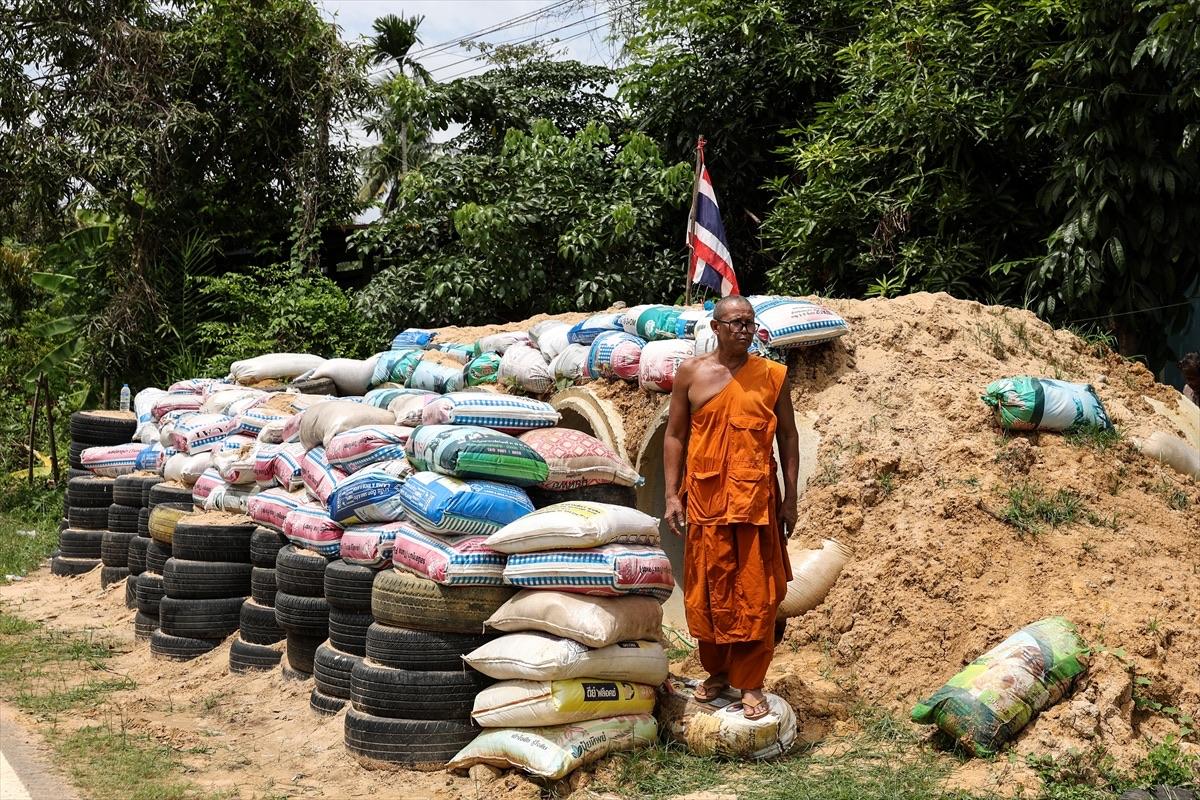
Civilians Taking Shelter in Surin (AA)
In military appointments, instability along the Thailand-Cambodia border has been taken into account; officers from powerful military factions such as Burapha Phayak and Wongthewan have been assigned to strategic positions in border management.
The ASEAN framework also plays a significant role in bilateral relations. As ASEAN members, Thailand and Cambodia maintain regional dialogue and cooperation and have pledged to address cross-border issues through diplomatic channels.
Diplomatic relations between Thailand and Türkiye are maintained within a multifaceted and friendly framework. Both countries prioritize regional stability, economic cooperation, and multilateral diplomacy. Relations are being developed in trade, tourism, defense industry, and cultural fields.
In 2023, a series of diplomatic and cultural events under the theme of “Year of Türkiye” in Thailand attracted attention. As part of these events, a delegation from the Royal Thai Navy gathered information on Turkish warships constructed under the MİLGEM (National Ship) project and held discussions on cooperation potential.
Additionally, defense industry contacts have occurred between the two countries; Thailand has shown keen interest in Turkish defense technologies and shipbuilding capabilities. In this context, Turkish defense products are being evaluated as alternative supply options in Thailand.
In cultural diplomacy, promotional activities conducted by Türkiye’s embassy in Thailand and various cultural-art events aim to strengthen mutual understanding between the two peoples. The Thai public recognizes Türkiye for its historical richness, cuisine, and natural beauty; Türkiye emphasizes Thailand as an important friendly and partner country in Southeast Asia.
Relations between Thailand and its western neighbor Myanmar are shaped primarily by border security, smuggling, and migration issues. In 2024, the Thai government closely monitored the security situation along the Myanmar border, and military policies in this region became an integral part of its internal security strategy.
Thailand is a member of various regional and international organizations. These memberships enable the country to pursue a balanced foreign policy, enhance economic cooperation, and establish joint mechanisms in the field of security.
Thailand is one of the founding members of the Association of Southeast Asian Nations (ASEAN), the most important regional organization among Southeast Asian countries. Within ASEAN, Thailand develops diplomatic, economic, and security-based cooperation with neighboring countries and actively contributes to regional integration.
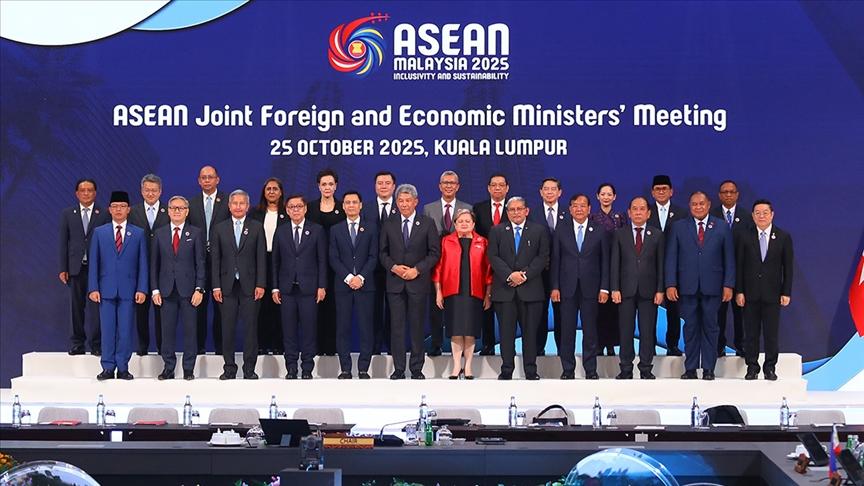
47th Association of Southeast Asian Nations (ASEAN) Summit (AA)
Other regional and international organizations of which Thailand is a member include:
The Royal Thai Armed Forces consist of the Royal Thai Army, Royal Thai Navy, Royal Thai Air Force, and police forces, structured to preserve the regime, ensure border security, and safeguard the monarchy. The military structure also plays a decisive role in domestic politics, shaping power balances primarily through high-level appointments.
In 2024, a total of 808 promotions were carried out, of which only 23 were awarded to female officers. This number represents a decrease of five compared to 2023. A total of 588 generals were appointed, and 321 colonels and equivalent-ranking officers were promoted to the rank of major general.
The Pheu Thai government appointed the civilian Phumtham Wechayachai as Minister of Defense. However, real control within the ministry remains with generals close to the palace and military factions.
Government initiatives to reduce mandatory conscription, limit defense budgets, and regulate arms acquisitions have been only partially accepted by the military. Particularly, instability along the Myanmar border and unrest in southern Thailand have been used by the military to justify limiting civilian interference, citing strategic priorities.
Thailand’s defense industry is structured according to its national security strategy, focusing on modernization, technology transfer, and enhancing domestic production capacity. The country’s defense policy is based on strengthening the armed forces, maintaining combat readiness, balancing regional arms races, and building modern military infrastructure.
Before the COVID-19 pandemic, Thailand’s annual defense budget was approximately $6–7 billion. After the pandemic, this figure declined to the $5–6 billion range. In 2023, the defense budget amounted to approximately 1% of the country’s gross domestic product (GDP). Approximately 49% of the budget was allocated to the Royal Thai Army, 20% to the Royal Thai Navy, and 18% to the Royal Thai Air Force. The remaining funds were distributed among the Ministry of Defense Permanent Secretariat, the Royal Thai Armed Forces Headquarters, and the Defense Technology Institute (DTI).
Key factors influencing the development of Thailand’s defense industry include internal security challenges in the southern provinces of Pattani, Yala, and Narathiwat, human trafficking, border conflicts, and political instability. In this context, the Thai government considers the development of a domestic defense industry a strategic priority, implementing policies to reduce dependence on imports, encourage technology transfer, and strengthen national security.
Thailand’s defense industry is one of the 12 “S-curves” sectors identified under the Eastern Economic Corridor (EEC) initiative. The Defense Industry Zone (DFIZ), established under public-private partnerships, aims to enhance defense infrastructure through participation by domestic and foreign companies. Structuring the defense industry infrastructure within the DFIZ seeks to enhance Thailand’s self-reliance.
The Ministry of Defense has implemented the Ministry of Defense Restructuring Plan covering 2023–2028. This plan sets goals including reducing military personnel, acquiring modern defense equipment, enhancing operational capabilities against multi-faceted threats, adapting to changing security environments, and closing units with redundant functions.
Additionally, the Ministry of Defense, under the International Military Security Cooperation Plan for 2023–2028, aims to strengthen relations with the armed forces of friendly countries. This plan encompasses joint military exercises, high-level commander visits, military education programs, bilateral and multilateral consultations, and memoranda of understanding. The goal is to reinforce military trust among friendly nations.
Thailand remains largely dependent on imports for defense equipment, primarily sourcing major defense systems from the United States. However, guided by policies supporting domestic production, Thailand is open to opportunities for sales and joint development of advanced systems such as unmanned aerial, ground, and maritime vehicles.
Anadolu Ajansı. “Tayland ve Kamboçya, sınır çatışmalarının ardından ASEAN'da 'barış anlaşmasına' imza attı.” Accessed November 19, 2025.https://www.aa.com.tr/tr/dunya/tayland-ve-kambocya-sinir-catismalarinin-ardindan-aseanda-baris-anlasmasina-imza-atti/3726852
Anandajoti. “054 Ramakien Murals JPG.” flickr. Accessed November 19, 2025.https://flic.kr/p/eWDLK7
Avcı, Meral, and İsmail Hakkı Göksoy. “TAYLAND.” *TDV İslam Ansiklopedisi.* Accessed November 19, 2025.https://islamansiklopedisi.org.tr/tayland
Bangkok Ticaret Office. "THAILAND SOCIAL ETIQUETTE." *Ticaret.gov.tr.* Accessed November 19, 2025.https://ticaret.gov.tr/data/5f89317513b876cde848e4be/Tayland%20Sosyal%20G%C3%B6rg%C3%BC%20Kurallar%C4%B1.pdf
Chambers, Paul. “Military Appointments as Guardian Tactic against Civilian Control: Comprehending Thailand’s 2024 Military Reshuffles.” ISEAS, no. 82 (2024): 1–17. Accessed November 19, 2025.https://www.iseas.edu.sg/wp-content/uploads/2025/03/ISEAS_Perspective_2024_82.pdf
Department of Cultural Promotion. *Culture Ways of Life and Wisdom.* His Majesty King Bhumibol Adulyadej, 1964.https://image.mfa.go.th/mfa/0/uK8Kxy2oDV/Culture_Ways_of_Life_and_Wisdom_-_Part_1.pdf
Flowdzine Creativity. “a river with boats and buildings along it JPG.” Unsplash. Accessed November 19, 2025.https://unsplash.com/photos/a-river-with-boats-and-buildings-along-it-R4WPOuG3RGM
Ingen. "เพลงชาติไทย - National Anthem of Thailand." YouTube. Accessed November 19, 2025.https://www.youtube.com/watch?v=8iOPUfwavFM&list=RD8iOPUfwavFM&start_radio=1
International Trade Administration. “Defense and Security.” TRADE. Accessed November 19, 2025.https://www.trade.gov/country-commercial-guides/thailand-defense-and-security
Karakoç, Edanur. “Tayland-Kamboçya Sınır Çatışmaları (2025).” *KÜRE Ansiklopedi.* Accessed November 19, 2025.https://kureansiklopedi.com/tr/detay/tayland-kambocya-sinir-catismalari-2025-74cba
M. Carthew, M.D. “THE HISTORY OF THE THAI IN YUNNAN.” Siam Society. Accessed November 19, 2025.https://thesiamsociety.org/wp-content/uploads/1952/03/JSS_040_1b_Carthew_HistoryOfThaiInYunnan.pdf
MapChart. "World Map: Simple." MapChart. Accessed November 19, 2025.https://www.mapchart.net/world.html
Ministry of Foreign Affairs of the Republic of Turkey. "Country Profile." mfa.gov.tr. Accessed November 19, 2025.https://www.mfa.gov.tr/tayland-kunyesi.tr.mfa
Ministry of Foreign Affairs of the Republic of Turkey. "Tayland'ın Ekonomisi." mfa.gov.tr. Accessed November 19, 2025.https://www.mfa.gov.tr/tayland_ekonomisi.tr.mfa
Ministry of Foreign Affairs of the Republic of Turkey. "Tayland'ın Siyasi Görünümü." mfa.gov.tr. Accessed November 19, 2025.https://www.mfa.gov.tr/tayland-siyasi-gorunumu.tr.mfa
Ministry of Foreign Affairs of the Republic of Turkey. "Turkey–Thailand Relations." mfa.gov.tr. Accessed November 19, 2025.https://www.mfa.gov.tr/turkiye-tayland-siyasi-iliskileri.tr.mfa
Ministry of Foreign Affairs, Kingdom of Thailand. “Diplomatic History of Thailand.” mfa.go.th. Accessed November 19, 2025.https://www.mfa.go.th/en/page/diplomatic-history-of-thailand
Ministry of Trade of the Republic of Türkiye. "Thailand Country Profile." General Directorate of International Agreements and the European Union. Accessed November 19, 2025.https://ticaret.gov.tr/data/63567e4c13b87685689c414e/Tayland%20%C3%9Clke%20Profili%20%202025.pdf
Ministry of Trade of the Republic of Türkiye. "Thailand Market Information." General Directorate of International Agreements and European Union. Accessed November 19, 2025.https://ticaret.gov.tr/data/6218964513b876a954a13f84/Tayland%20Pazar%20Bilgileri%20rev1%2014.05.2025.pdf
Mohan, Bharath. “Doi Inthanon National Park, Ban Luang, Thailand JPG.” Unsplash. Accessed November 19, 2025.https://unsplash.com/photos/birds-eye-photography-of-two-monuments-during-golden-hour-JHZye99eeaU
Nürnberger, Marco. “Wat Benchamabophit JPG.” flickr. Accessed November 19, 2025.https://flic.kr/p/MwAuLc
Office of the Historian. “A Guide to the United States’ History of Recognition, Diplomatic, and Consular Relations, by Country, since 1776: Thailand.” history.state.gov. Accessed November 19, 2025.https://history.state.gov/countries/thailand
Prince, Waithayakon, Wan. *A Diplomatic History of Thailand.* National Library of Thailand Cataloging in Publication, 2022.Accessed Adresi
Rajadhon, Phya Anuman. *Introducing Cultural Thailand in Outline.* Bangkok: The Fine Arts Department, 2015.https://finearts.go.th/storage/contents/file/x5vkzgu7zsQrSUCb60xLQorRTVfNQAtylSoxAUJ5.pdf
Sawasdee Thailand. "Actions Taken by Foreign Ministry on Thai-Cambodian Border Situation and Related Issues." thailand.go.th. Accessed November 19, 2025.https://www.thailand.go.th/issue-focus-detail/-----256
Sawasdee Thailand. "Administrative system of Thailand." thailand.go.th. Accessed November 19, 2025.https://www.thailand.go.th/page/thai-politic
Sawasdee Thailand. "Religions in Thailand." thailand.go.th. Accessed November 19, 2025.https://www.thailand.go.th/page/religion
Sawasdee Thailand. "The Thai National Anthem." thailand.go.th. Accessed November 19, 2025.https://www.thailand.go.th/page/anthem
Sawasdee Thailand. "The Thai baht, official currency of Thailand." thailand.go.th. Accessed November 19, 2025.https://www.thailand.go.th/page/thai-currency
Sawasdee Thailand. "The flag of Thailand." thailand.go.th. Accessed November 19, 2025.https://www.thailand.go.th/page/flag
Shun, Idiot. “cars parked on the side of the road during daytime JPG.” Unsplash. Accessed November 19, 2025.https://unsplash.com/photos/cars-parked-on-the-side-of-the-road-during-daytime-cekJ1XXx1Rk
Swigunski, Mike. “boats on sea near mountain during daytime JPG.” Unsplash. Accessed November 19, 2025.https://unsplash.com/photos/boats-on-sea-near-mountain-during-daytime-Of_u2aPwugw
T.C. Ministry of Trade. "Tayland." ticaret.gov.tr. Accessed November 19, 2025.https://ticaret.gov.tr/yurtdisi-teskilati/guney-dogu-asya/tayland/genel-bilgiler
Thai PBS World. "A Khon Reawakening." YouTube. Accessed November 19, 2025.https://www.youtube.com/watch?v=rs_1suwguGk
The World Factbook. "Thailand." CIA. Accessed November 19, 2025.https://www.cia.gov/the-world-factbook/countries/thailand/
UNITED NATIONS ESCAP. "General Information on Thailand." ESCAP. Accessed November 19, 2025.https://www.unescap.org/sites/default/files/General_Information_TH.pdf
Waranont (Joe). “high angle photo of buildings JPG.” Unsplash. Accessed November 19, 2025.https://unsplash.com/photos/high-angle-photo-of-buildings-BvNNxnzds4U
Winkler, Markus. “Pad Thai JPG.” Unsplash. Accessed November 19, 2025.https://unsplash.com/photos/a-plate-of-food-4WPOb7eIpJ0
[1]
T.C. Ticaret Bakanlığı, “Tayland Ülke Profili,” Uluslararası Anlaşmalar ve Avrupa Birliği Genel Müdürlüğü, syf 4, https://ticaret.gov.tr/data/63567e4c13b87685689c414e/Tayland%20%C3%9Clke%20Profili%20%202025.pdf
[3]
T.C. Ticaret Bakanlığı, “Tayland Ülke Profili,” Uluslararası Anlaşmalar ve Avrupa Birliği Genel Müdürlüğü, syf 4,
[4]
T.C. Ticaret Bakanlığı, “Tayland Ülke Profili,” Uluslararası Anlaşmalar ve Avrupa Birliği Genel Müdürlüğü, syf 4,

Official Name | Kingdom of Thailand | ||||||||
|---|---|---|---|---|---|---|---|---|---|
Head of State | Anutin Charnvirakul | ||||||||
Form of Government | Constitutional Monarchy | ||||||||
Capital | Bangkok | ||||||||
Area | 513.120 km² | ||||||||
Neighboring Countries | Malaysia Myanmar Laos Cambodia | ||||||||
Climate | Tropical monsoon climate influenced | ||||||||
Time Zone | UTC +7 (Thailand Time – Indochina Time) | ||||||||
Telephone Area Code | 66 | ||||||||
Official Language | Thai | ||||||||
Currency | Thai Baht (THB) | ||||||||
Religion | Christianity (Catholic and Protestant) %1.2 Islam %5 Theravada Buddhism %93 Other %0.8 | ||||||||
Ethnic Groups | Malay %2 Thai (Siamese) %86 Thai people of Chinese origin %10 Ethnic minorities %2 | ||||||||
Official National Anthem | Phleng Chat Thai | ||||||||
Population (2025) | 65.951.210 million | ||||||||
GDP (2025) | 558.573 (IMF - 2025 estimate) | ||||||||
GDP per Capita (2025) | 7.942 (IMF - 2025 estimate) | ||||||||
Internet Domain Code | .th | ||||||||
National Anthem
Flag
History
Early Period and the Nan Chao Kingdom
Sukhothai and Ayutthaya Periods
Chakkri Dynasty and the Bangkok Era
Transition to Constitutional Monarchy and the Modern Era
Military Interventions and Political Developments
Geography
Geographical Location
Landforms
Mountains, Plains, and Valleys
Rivers and Lakes
Climate and Vegetation
Natural Resources and Energy
Energy and Transportation Infrastructure
Economy
Key Economic Indicators
Sectoral Distribution
Foreign Trade
Demography and Education
Religious Distribution
Education
Culture and Tourism
Literature
Performing Arts
Visual Arts
Architecture
Painting
Cultural Heritage and Preservation
Culinary Culture
Traditional Dishes and Signature Flavors
Tourism Sector
Tourism Policies
Tourist Regions and Attractions
Foreign Policy and Security
Bilateral Relations
People’s Republic of China
United States
Germany
Sweden
Cambodia
Türkiye
Myanmar
International Organizations
Military
Defense Industry