


This article was automatically translated from the original Turkish version.
Taylorism is a management philosophy developed in the early 20th century by Frederic Winslow Taylor and also known as the "Scientific Management Approach". This approach aimed to maximize productivity during a period of rapid industrialization.
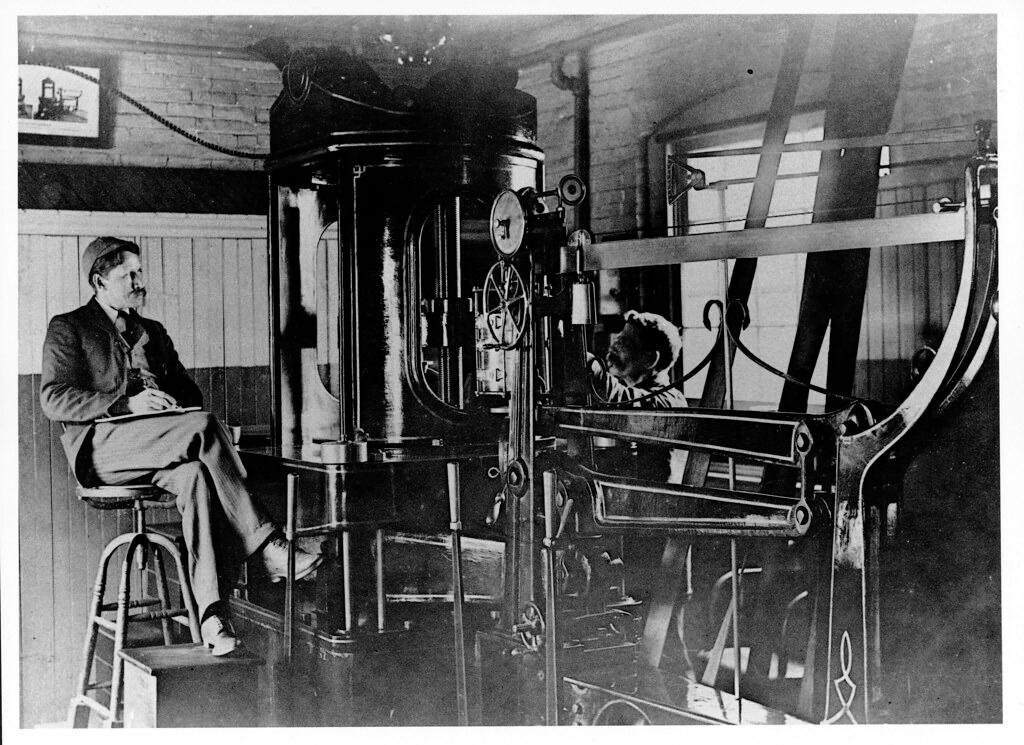
Frederic Winslow Taylor was born on 20 March 1856 in Philadelphia into a family of lawyers. He earned a degree in mechanical engineering from the Stevens Institute of Technology in New Jersey at the age of 25 while working full time. He began his career as a machinist and technical draftsman at the "Enterprise Hydraulic Shop" in Philadelphia and later held various positions at a hydraulic factory and the Midvale Steel Company. He quickly rose through the ranks to become machine operator, general foreman, maintenance department head, and chief of the technical drawing section, becoming chief engineer at age 37. Taylor died on 21 March 1915, one day after his 59th birthday, from influenza contracted during a trip.
Taylor lived during a time when the Industrial Revolution had increased production but also brought social, economic, and cultural problems. Especially after the American Civil War, small factories transformed into large enterprises, leading to an increase in worker issues such as low wages, carelessness, unsafe conditions, and inadequacy.
Taylor observed that without public education and with existing wage systems, these problems could not be resolved. He saw the solution in the core of production itself and in paying extra for extra output. At Midvale, he developed a system that ensured workers received higher pay based on their actual production.
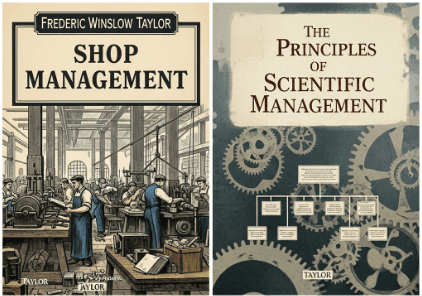
Taylor's scientific management approach emerged to increase production and enhance worker productivity. In his books "Shop Management" and "The Principles of Scientific Management", he outlined the following four fundamental principles:
class=\
For these principles to succeed, it was necessary to adopt the understanding that the goal should be increasing production rather than merely pursuing profit, as this would ultimately lead to increased enterprise revenue and higher worker wages.
class=\
class=\
Among the strengths of scientific management are the increased work productivity achieved through coordinated teamwork and the continuous opportunity for innovation, especially on production lines. The American and Japanese production miracles are regarded as legacies of scientific management. Scientific management ensured that tasks were performed more efficiently and rationally, while scientific training and personnel selection enhanced worker effectiveness. Additionally, it promoted managerial consensus and specialization by resolving organizational problems through rational approaches.
Scientific management has also been criticized for its weaknesses. In organizations that strictly follow standardized procedures, delays in innovation and slow adaptation to mental change have triggered resistance. The belief that increased production would lead to layoffs caused workers to deliberately slow down their pace. The reluctance of enterprises to share rising profits with workers contributed over time to the formation of labor unions and the deterioration of employer-worker relations.
Taylorism failed to fully recognize workers' economic, physical, and social needs; most research was oriented toward increasing profitability. Scientific management did not examine issues of worker "job satisfaction" or "human needs," focusing instead on higher wages. This led workers who disliked their jobs to prefer leaving them. Workers became mechanized in Taylor's workplaces, losing creativity and having their human behaviors ignored. Criticisms also include the hierarchical structure's acceptance, the narrow focus on profit within the scientific approach, and its use as a tool of manipulation.
The principles of Taylorism retain relevance in many areas today. At the core of low cost, high quality, and fast service relationships lies Taylorism. Taylor's idea of "defining work and specialization" has evolved into "standardized work methods." The understanding of teamwork, adaptation, and cooperation stems from Taylorism's concept of collaboration. Scheduling workers' time and implementing shift systems originated from Taylorism. Modern personnel selection methods such as psychotechnical tests are also rooted in Taylorism. The application and development of Taylor's theories have led to evolution in modern management. Social rights such as workplace safety, worker health, and leave for maternity or other reasons have been granted to employees. Increased productivity and quality have led to lower costs.
Berber, Aykut. “100 Yıl Öncesine Bir Yolculuk: ‘Genel ve Endüstriyel Yönetim’ ve Fransa’da Fayolizm-Taylorizm Kutuplaşması.” *İstanbul Üniversitesi İşletme Fakültesi Dergisi* 45, no. Özel Sayı (June 9, 2016): 118–132. Accessed June 17, 2025.https://dergipark.org.tr/en/download/article-file/327576
Economic Dictionary. "Taylorism." Accessed June 1, 2025.https://www.iktisatsozlugu.com/tr/nedir/taylorizm/4515
Ekonomim.com. "Taylorizm Nedir?" Accessed June 17, 2025.https://www.ekonomim.com/sozluk/taylorizm.
Köroğlu, Veli, and Murat Koç. “Stratejik Yönetim Açısından Taylorizm Prensiplerinin Zamanımıza Yansımaları.” *Çağ Üniversitesi Sosyal Bilimler Dergisi* 14, no. 1 (2017): 1–12. Accessed June 1, 2025.https://dergipark.org.tr/tr/download/article-file/696238
ryngoksu. "Ford and Taylor Scientific Management (Edited)." YouTube video, 3:13. May 27, 2008.https://www.youtube.com/watch?v=8PdmNbqtDdI

No Discussion Added Yet
Start discussion for "Taylorism Scientific Management Approach" article
Life and Career
Origins of Scientific Management Thought
Fundamental Principles of Taylorism
The principles of Taylorism can be summarized as follows
Strengths of Scientific Management
Weaknesses of Scientific Management
Relevance of Taylorism Today