This article was automatically translated from the original Turkish version.
Geographical Boundary | Mersin Province Tarsus District | ||||||||
|---|---|---|---|---|---|---|---|---|---|
Geographical Indication Type | Mahreç Sign | ||||||||
Application Date | 2017-05-26 | ||||||||
Registration Date | 2017-11-01 | ||||||||
Applicant/Registrant | Tarsus Chamber of Commerce and Industry | ||||||||
Registration Number | 226 | ||||||||
Product / Product Group | Meals and Soups | ||||||||
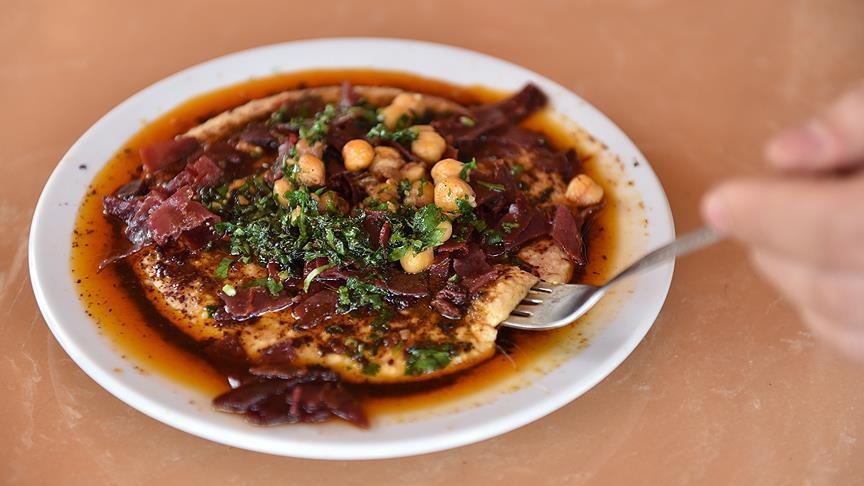
Tarsus hummus, Mersin Province’s Tarsus district, is a traditional dish characterized by its hot consumption and local features in preparation technique and presentation. The product is based on the process of pounding cooked chickpeas with a mallet in a hammered copper bowl until they reach a specific consistency, then mixing them with tahini and other ingredients. Tarsus hummus is officially registered as a geographical indication under Law No. 6769 on Industrial Property, with its geographical boundary limited to Tarsus district of Mersin Province.
It is noted that the production of hummus in Tarsus began in the 1920s and has continued uninterrupted to the present day.【1】 Over time, it has become one of the distinguishing elements of Tarsus culinary culture. Traditional Tarsus hummus competitions held during Hıdırellez festivities at Eshab-ı Kehf contribute to preserving the craftsmanship and cultural transmission of the dish.
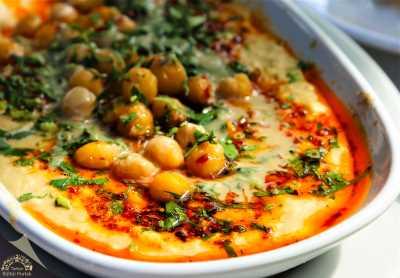
Tarsus Hummus (Culture Portal)
Tarsus hummus has been registered as a geographical indication under the category of distinctive sign. The application was submitted on 26 May 2017 and the product was officially registered on 1 November 2017. The registering institution is the Tarsus Chamber of Commerce and Industry. The geographical boundary is defined as Tarsus district of Mersin Province. The product is intended to be marketed under a designated brand.
The dish is based on a coarse paste made by pounding cooked chickpeas with a mallet. The hummus mixture is prepared by adding tahini, lemon juice or lemon salt, garlic, and salt, and is served hot. Drizzling heated oil and crushed red pepper on top, and optionally adding pastırma, are common presentation methods.
The distinctive characteristics of the product include pounding the chickpeas with a mallet rather than using machinery, preserving the coarse texture, achieving the appropriate viscosity through skilled preparation, and serving it hot.
The primary raw materials used in Tarsus hummus production are chickpeas, tahini, lemon juice or lemon salt, garlic, salt, and water. Tahini made from local sesame varieties harvested in the Çukurova region is preferred.
Chickpeas are soaked in water for periods determined by the season, then boiled and allowed to rest. The cooked chickpeas are pounded with a mallet in a tin-coated hammered copper bowl. After pounding, tahini and other ingredients are added to prepare the hummus paste. The paste is kept warm using a bain-marie method to prevent cooling and preserve its nutritional value.
Tarsus hummus is served with hot sauces made from olive oil, sunflower oil, or butter. Tahini is drizzled over the surface, and the central temperature is expected to reach approximately 65 °C. The product is consumed fresh and is typically served with bread.
It must not contain foreign odors or flavors. There should be no surface drying, and spices must be evenly distributed. The texture must be neither too runny nor too dense; it should leave a soft sensation in the mouth. Serving the product hot is defined as a fundamental requirement.
Inspections are carried out by a monitoring body composed of representatives from the Municipality, District Directorate of Agriculture, and Chamber of Commerce, under the coordination of the Tarsus Chamber of Commerce and Industry. Inspections evaluate production methods, consistency, presentation style, and compliance with the geographical indication.
Anadolu Ajansı. "Tarsus humusu ile gastronomi turizminde öne çıkmak istiyor." Accessed January 7, 2026.https://www.aa.com.tr/tr/turkiye/tarsus-humusu-ile-gastronomi-turizminde-one-cikmak-istiyor/1085530
Deger, Zeynep İrem. “Tarsus Humusu.” *Türkiye Turizm Ansiklopedisi*, 2017. Accessed January 7, 2026.https://turkiyeturizmansiklopedisi.com/tarsus-humusu
Turk Patent and Trademark Office. "Tarsus Humusu Geographical Indication Registration Certificate (No: 226)." Geographical Indications Portal. Accessed January 7, 2026.https://ci.turkpatent.gov.tr/Files/GeographicalSigns/226.pdf
Turk Patent and Trademark Office. "Tarsus Humusu." *Coğrafi İşaretler Portalı.* Accessed January 16, 2026.https://ci.turkpatent.gov.tr/cografi-isaretler/detay/38283
Türkiye Kültür Portalı. "Tarsus Humusu." kulturportali.gov.tr. Accessed January 7, 2026.https://www.kulturportali.gov.tr/portal/tarsushumusu
[1]
Türk Patent ve Marka Kurumu, "Tarsus Humusu Coğrafi İşaret Sicil Belgesi (No: 226)," Coğrafi İşaretler Portalı, s. 2. Erişim Tarihi: 7 Ocak 2026, https://ci.turkpatent.gov.tr/Files/GeographicalSigns/226.pdf

Geographical Boundary | Mersin Province Tarsus District | ||||||||
|---|---|---|---|---|---|---|---|---|---|
Geographical Indication Type | Mahreç Sign | ||||||||
Application Date | 2017-05-26 | ||||||||
Registration Date | 2017-11-01 | ||||||||
Applicant/Registrant | Tarsus Chamber of Commerce and Industry | ||||||||
Registration Number | 226 | ||||||||
Product / Product Group | Meals and Soups | ||||||||
Historical Background
Geographical Indication and Legal Status
Product Definition and Distinctive Characteristics
Production Process
Raw Materials
Preparation Steps
Presentation Method
Physical and Sensory Characteristics
Inspection and Control