This article was automatically translated from the original Turkish version.
Original Title of the Work | Les Hasards heureux de l’escarpolette | ||||||||
|---|---|---|---|---|---|---|---|---|---|
Artist | Jean-Honoré Fragonard | ||||||||
Technique | Oil on canvas | ||||||||
Canvas Dimensions | 81 × 64.2 cm | ||||||||
Style | Rococo | ||||||||
Location / Collection | London, The Wallace Collection | ||||||||
Year of Production | 1767–1768 | ||||||||
The Swing (French: The Swing) is an oil on canvas painting completed in 1767 by the French painter Jean-Honoré Fragonard. The work depicts a young woman swinging in a garden setting surrounded by figures whose positions movements and spatial arrangement form the composition’s center.
The painting is displayed in the Wallace Collection London and reflects the aristocratic lifestyle and leisure culture of the period. The painting exhibits characteristic features of the Rococo style through its use of light and shadow color palette and figure relationships.
The origin of the work is recorded in the diaries and memoirs of the writer Charles Collé. In late 1767 the history painter Gabriel-François Doyen declined a commission to paint an unnamed aristocrat’s mistress on a swing and recommended Fragonard instead. At the time Fragonard was shifting his career from large-scale royal history paintings to smaller more sophisticated cabinet pictures; this transition was partly a response to financial difficulties stemming from payments from the royal art administration.【1】 The commission was seen either as a catalyst for this career change or as a timely opportunity.
The Swing (Salıncak) Tablosunun Tarihçesi Kompozisyonu ve Stil Özelliklerinin Ele Alınması Hakkında (Smarthistory)
The original commission specified that the figure pushing the swing should be a priest. However Fragonard depicted this figure as an elderly man and enriched the composition both aesthetically and symbolically by adding numerous elements such as a barking dog a Cupid statue a rose bush and putti.
The painting’s title became widely known through an engraving made in 1782 by Nicolas de Launay titled Les hasards heureux de l’escarpolette (The Happy Accidents of the Swing). This print enabled the painting to reach a broader aristocratic collecting audience and solidified its reputation.
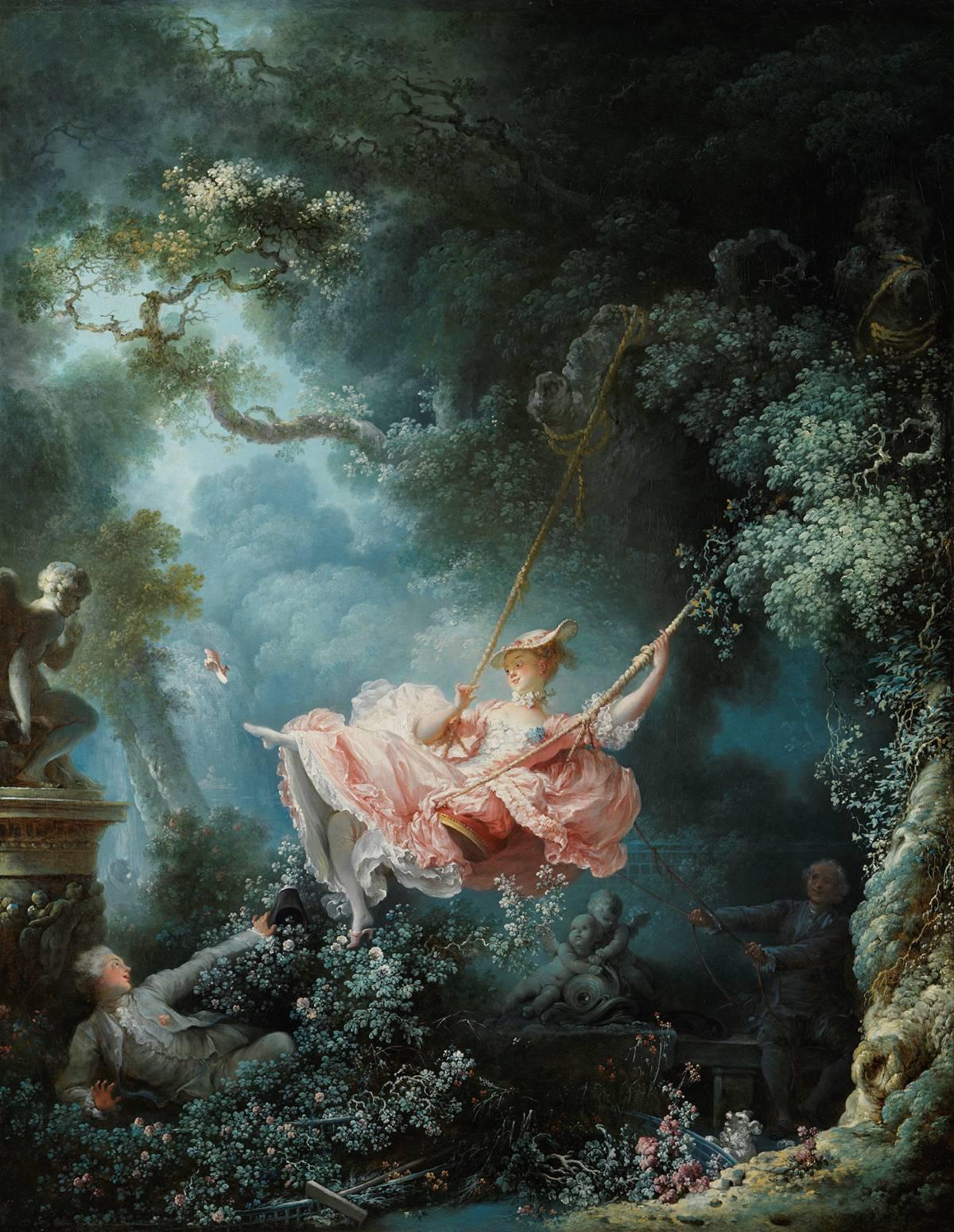
The Swing (Salıncak) Jean-Honoré Fragonard (The Wallace Collection)
The painting symbolizes the rebirth of Fragonard’s career. Created for a small and discerning audience it incorporates both erotic themes and references to art history and classical masters. This famous work fundamentally altered perceptions of Rococo style by fusing traditional Rococo elements with a pre-Romantic expressive mode to convey a powerful unrestrained and sensual nature.
The Swing depicts a scene of aristocratic leisure typical of the Rococo period. The painting centers on a young woman swinging in a large garden. Her pink dress and raised foot emphasize the vitality of motion. The elderly man pushing the swing is positioned on the right while below him a young man in the rose bush watches her skirt. This arrangement reveals to the viewer the hidden romantic and erotic dynamics of the scene.
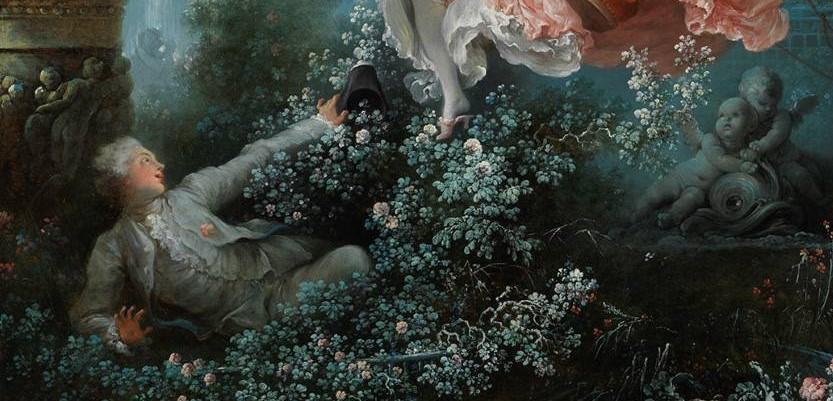
Detail of the Man Watching the Skirt (The Wallace Collection)
Natural and architectural elements are carefully arranged within the composition. Large tree branches frame the swing adding depth to the scene while leaves and shadows define the spatial volume.
Fragonard emphasizes the characteristic features of the Rococo style through a lively color palette fluid light and shadow transitions and expressive brushwork. The composition directs the viewer’s eye from the center of the scene outward creating both movement and dramatic effect. The placement gestures and details of the figures reveal Fragonard’s response to his patron’s libertine desires.
The Swing features on its left side various elements symbolizing unrestrained desire. Most prominent is the raised left leg of the woman on the swing. Her high-heeled shoe flying into the air draws attention to a marble Cupid statue on the left. This statue represents Cupid the mythological god of erotic love and was modeled after a famous 1755 sculpture by Étienne-Maurice Falconet created for King XV Louis’s former mistress Madame de Pompadour.
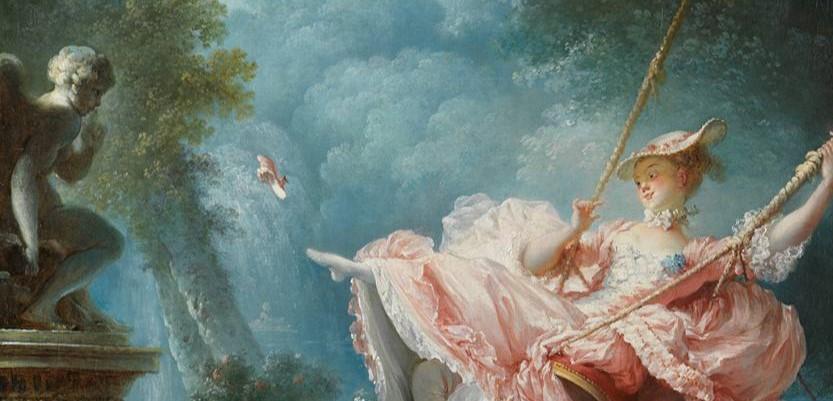
Detail of the Cupid Statue and Woman with Flying Heel on the Left Side of the Painting ()
In both the painting and the statue Cupid raises one finger to his lips while drawing an arrow from its quiver with the other. Fragonard depicts Cupid facing the woman on the swing positioning them as secret allies sharing a hidden bond within the scene.
In contrast to the unrestrained desires on the left the right side of the composition contains restrictive symbols. Beside the garden cage and fountain the elderly man pushing the swing is likely the woman’s husband. His smiling gaze toward his wife suggests his unawareness of her secret lover. The glances and gestures connecting the three figures form a reversed V-shape visually reinforcing their roles in this love triangle. The ropes the husband uses to pull the swing resemble reins symbolizing marital bonds and the societal constraints placed on female sexuality during the period.
The two putti standing on the pedestal beside the husband reinforce the themes of control and discipline. These winged figures recall the Cupid on the left but one of them looks at the woman with concern creating a contrast with the conspiratorial and secretive Cupid on the left. Similarly the barking white dog at the husband’s feet threatens the woman’s behavior as a symbol of fidelity and warning. While the Cupid on the left guards secret desires the dog on the right represents the danger of exposing infidelity.
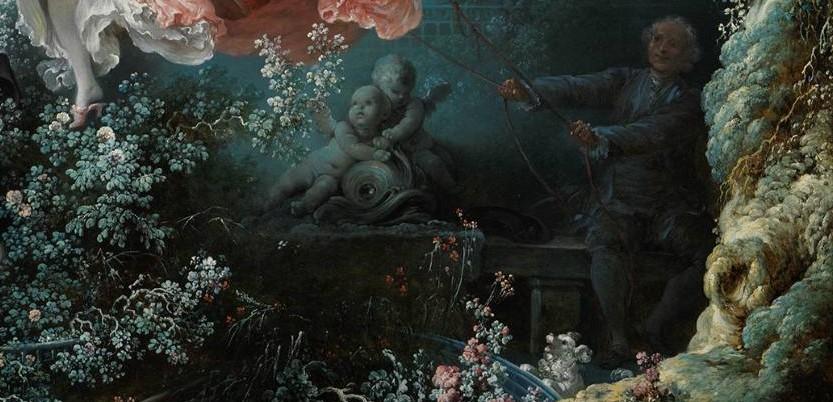
Detail of the Elderly Man Winged Figures and Dog (The Wallace Collection)
The Swing clearly demonstrates Fragonard’s approach to technique and style during the Rococo period. The painting measures 81 x 64.2 cm and is executed in oil on canvas. The oil paint is applied with rapid and lively brushstrokes enhancing the figures’ motion and the scene’s dynamism. Fragonard favors light tones and pastel colors to imbue the scene with delicacy and playfulness. Pink green and blue tones particularly highlight the female figure and natural elements directing the viewer’s attention to the center of the scene.
The balance of light and shadow in the composition enables the figures to appear three-dimensional and creates a sense of depth. Leaves branches and architectural elements define the spatial volume while the swing’s motion imparts rhythmic flow to the scene. Fragonard employs varied brush techniques to render both figures and natural elements achieving rich textural variety.
The painting serves as a vital reference for understanding the social and cultural context of Rococo art by reflecting the aristocratic leisure culture and private lifestyle of the era. Fragonard’s arrangement of the scene the interplay of glances and the dynamic composition clearly express the erotic and lighthearted tone of the period.
Artistically The Swing highlights the defining traits of the Rococo style—lightness elegance movement and color palette—while Fragonard’s brushwork use of light and shadow and textural variety ensure its high technical value. Moreover the work has frequently served as a reference for later artists and designers inspiring engravings caricatures and modern visual art. In these respects The Swing is regarded as a major representative of Rococo painting both historically and artistically and is considered a foundational work for understanding the characteristic features of 18th-century French art.
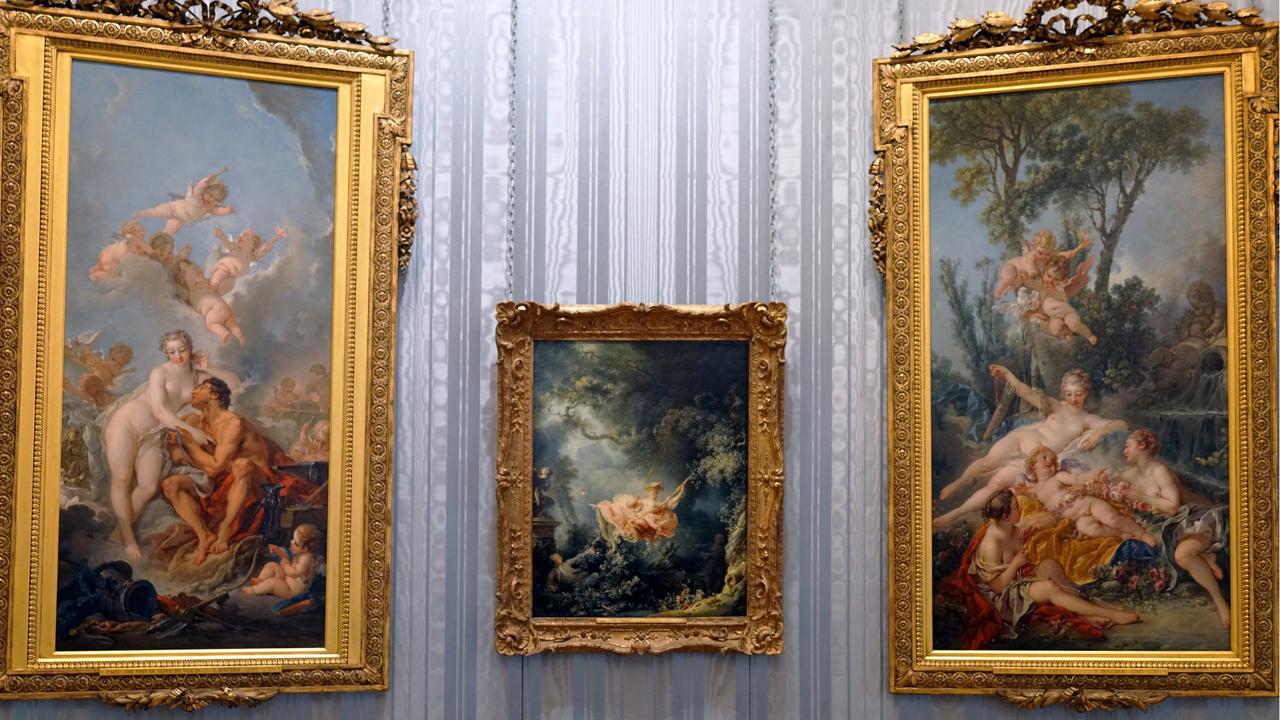
The Swing although originally commissioned for a private collection is now displayed in the Wallace Collection. The painting is part of the museum’s permanent collection offering visitors a prime example of 18th-century French Rococo painting.
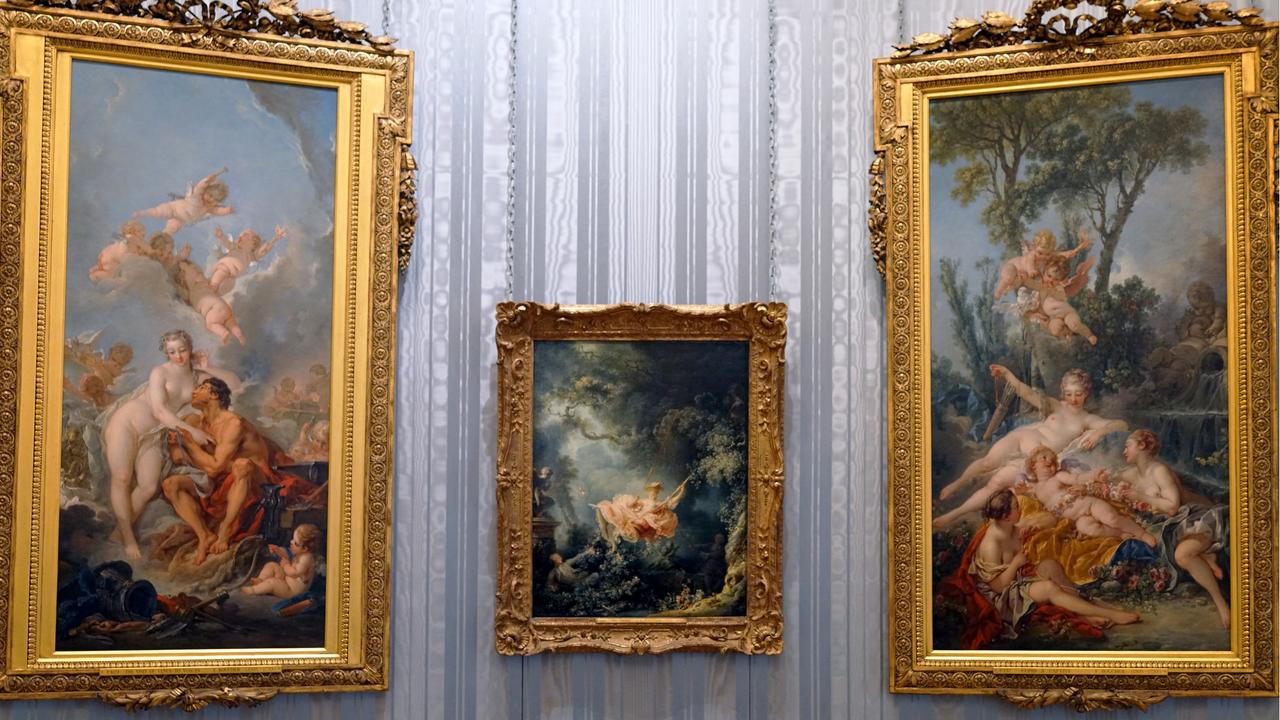
The Swing Painting at The Wallace Collection London (Flickr)
Throughout its exhibition history the painting has been the subject of numerous studies examinations and publications and is recognized as a reference work for understanding Rococo art Fragonard’s style and the aristocratic culture of the period. Additionally the painting has been widely presented in exhibitions and digital platforms becoming an important source for modern art lovers and designers.
Bruckbauer, Ashley. "Jean-Honoré Fragonard, The Swing." Smarthistory. Accessed January 24, 2026.https://smarthistory.org/jean-honore-fragonard-the-swing/
Google Arts & Culture. "Les hasards heureux de l’escarpolette (The Swing)." Google Arts & Culture. Accessed January 24, 2026.
Smarthistory. "Everything You Need to Know About Fragonard’s The Swing." YouTube, 4:30. Accessed January 24, 2026.https://www.youtube.com/watch?v=bE4BBy2lczM
Wallace Collection. "Fragonard’s The Swing." The Wallace Collection. Accessed January 24, 2026.https://www.wallacecollection.org/explore/explore-in-depth/fragonards-the-swing/
Wallace Collection. "Les hasards heureux de l'escarpolette (The Swing)." The Wallace Collection. Accessed January 24, 2026.https://www.wallacecollection.org/explore/collection/search-the-collection/les-hazards-heureux-de-lescarpolette-swing/
Wallace Collection. "The Commission." The Wallace Collection. Accessed January 24, 2026.https://www.wallacecollection.org/explore/explore-in-depth/fragonards-the-swing/origins-of-the-swing/the-commission/
Zucker, Steven. "Fragonard, The Swing." Flickr. Accessed January 24, 2026.https://www.flickr.com/photos/profzucker/49758842498/
[1]
Google Arts & Culture, ''Les hasards heureux de l’escarpolette (The Swing),'' Google Arts & Culture, Erişim: 24 Ocak 2026, https://artsandculture.google.com/asset/les-hasards-heureux-de-l-escarpolette-the-swing/AwGOZA2ibSHJnQ?hl=en

Original Title of the Work | Les Hasards heureux de l’escarpolette | ||||||||
|---|---|---|---|---|---|---|---|---|---|
Artist | Jean-Honoré Fragonard | ||||||||
Technique | Oil on canvas | ||||||||
Canvas Dimensions | 81 × 64.2 cm | ||||||||
Style | Rococo | ||||||||
Location / Collection | London, The Wallace Collection | ||||||||
Year of Production | 1767–1768 | ||||||||
Historical Background
Subject and Composition
Details and Symbols
Technical and Stylistic Features
Artistic Significance
Exhibition